
These Pickled Beet Deviled Eggs combine the tangy, earthy sweetness of traditional Pennsylvania Dutch pickles with the creamy, savory richness of a classic stuffed egg. Their striking fuchsia hue and sophisticated flavor profile make them the undisputed showstopper of any brunch or holiday gathering.
Gourmet Pickled Beet Deviled Eggs
Ingredients
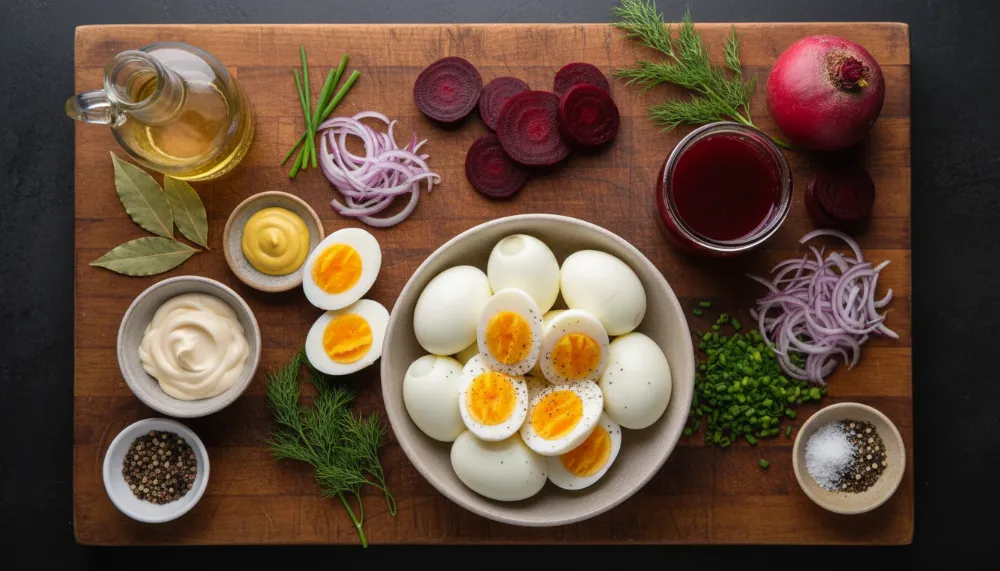
- 12 Large Eggs (Hard-boiled and peeled)
- 1 Can (15 oz) Sliced Beets (Reserve the juice)
- 1 Cup Apple Cider Vinegar
- 1/3 Cup Granulated Sugar
- 1 Teaspoon Whole Peppercorns
- 1/2 Cup Mayonnaise
- 1 Tablespoon Yellow Mustard
- 1 Teaspoon Smoked Paprika
- 1 Pinch Coarse Sea Salt
Instructions
- 1 Combine beet juice, apple cider vinegar, sugar, and peppercorns in a saucepan. Simmer until sugar dissolves, then let cool completely.
- 2 Place peeled hard-boiled eggs in a glass jar. Pour the cooled brine over them and refrigerate for at least 12 hours for a light ring, or 24 hours for deep fuchsia.
- 3 Remove eggs from brine and pat dry. Slice each egg in half lengthwise and carefully scoop out the yolks into a food processor or bowl.
- 4 Blend yolks with mayonnaise, mustard, smoked paprika, and salt until ultra-smooth.
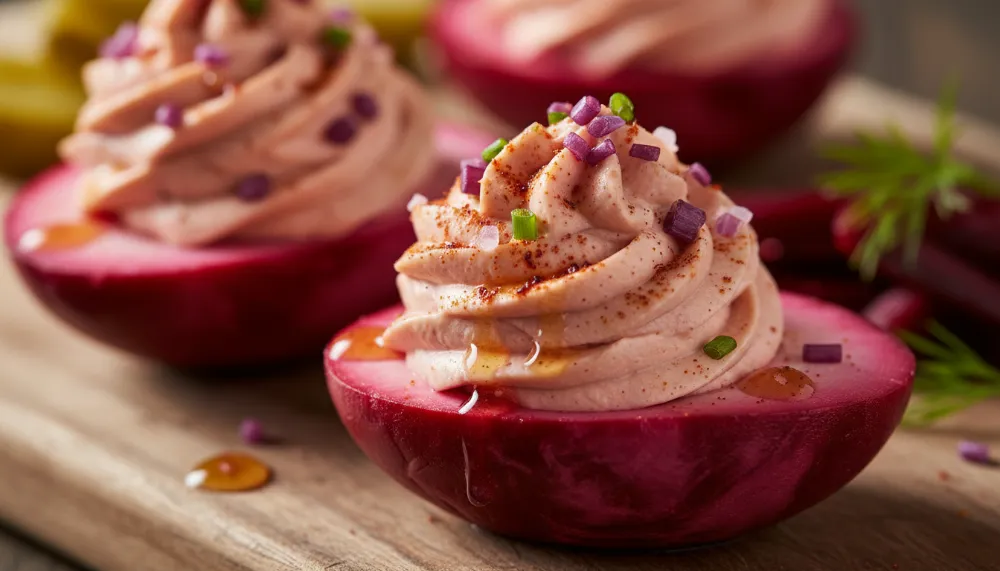
- 5 Pipe the yolk mixture back into the vibrant pink egg whites. Garnish with fresh dill and serve chilled.
The Fascinating Evolution of Pickled Beet Deviled Eggs
Pickled Beet Deviled Eggs are not merely a colorful side dish, they are a culinary intersection where ancient Roman snacking habits meet the ingenious preservation techniques of 18th-century European immigrants. To truly appreciate the Pickled Beet Deviled Egg, one must understand its dual heritage. The “deviling” of eggs began in Ancient Rome, where hard-boiled eggs were served as a first course, or *gustatio*, often dressed with spicy, piquant sauces. However, the specific term “deviled” didn’t surface until 1786 in Great Britain, where it was used to describe any food prepared with high heat or pungent spices like mustard and pepper.
Parallel to the development of the stuffed egg was the tradition of pickling. German immigrants, particularly those who settled in the Pennsylvania region during the mid-1700s, brought with them a deep knowledge of fermentation and vinegar-based preservation. Faced with the need to make seasonal harvests and fresh eggs last through the winter, they combined them. By submerging hard-boiled eggs in a brine of beets, sugar, and vinegar, they not only preserved the protein but also created a visually stunning centerpiece for their traditional “Relish Trays.” The fusion of these two techniques, the pickling of the white and the deviling of the yolk, represents a modern evolution of resourcefulness turned into gourmet art.
The Science of the Fuchsia Soak
What makes the Pickled Beet Deviled Egg so captivating is the osmotic process that occurs during the brine soak. When you submerge a porous egg white in a solution of beet juice and apple cider vinegar, the natural pigments, known as betalains, migrate into the egg. If you soak the eggs for a mere 2 to 4 hours, you will achieve a delicate pink rim, leaving a bright white center. However, for the signature look that defines high-end Pickled Beet Deviled Eggs, a 12 to 24-hour soak is required. This allows the vinegar to cure the outer layer of the egg white, giving it a firmer, more toothsome texture while the color penetrates deep toward the yolk cavity.
It is vital to use the right equipment for this process. A Rubbermaid Brilliance Glass Storage Set is perfect for this stage because glass is non-reactive. Plastic containers can be permanently stained by the beet juice, and metal containers may impart a metallic tang to the delicate brine.
Mastering the Texture: Achieving the Silky Yolk Filling
While the color of Pickled Beet Deviled Eggs gets the initial attention, the texture of the yolk filling is what determines the quality of the dish. A common mistake is simply mashing the yolks with a fork, which leads to a grainy consistency. For a truly professional result, you should use a high-powered tool. The Ninja BN751 Professional Plus DUO Blender is an exceptional choice here. Its 1000W motor can emulsify the yolks, mayonnaise, and mustard into a mousse-like consistency that is light, airy, and free of lumps.
If you prefer a slightly more traditional approach with more control over the batch size, the Cuisinart 8 Cup Food Processor is a meal prep essential that ensures every ingredient is evenly distributed. When the filling is ultra-smooth, it pipes more beautifully, allowing you to use star tips for a decorative, professional finish that holds its shape on the platter.
Professional Flavor Variations (No Pork, No Alcohol)
To elevate your Pickled Beet Deviled Eggs for a specific event or palate, consider these four professional variations. Each of these avoids pork and alcohol, focusing instead on bold, natural flavors.
1. The “Smoke & Fire” (Beef-Focused)
This variation adds a depth of rugged flavor to the delicate egg. Incorporate a half-teaspoon of chipotle in adobo (which uses vinegar rather than alcohol) into the yolk base. To replace the traditional pork bacon, use the Cosori 9-in-1 TurboBlaze Air Fryer to crisp up thin strips of beef bacon or finely shredded beef brisket. The air fryer renders the fat perfectly, creating a crunch that contrasts beautifully with the creamy yolk. Garnish with a thin slice of fresh jalapeño for a heat-focused finish.
2. The “Curry & Crunch” (Vegetarian)
The earthy notes of the beet brine pair exceptionally well with warm spices. Blend your yolks with yellow curry powder and a hint of ginger. For the crunch factor, use the air fryer to roast seasoned pepitas (pumpkin seeds) or even chickpeas. This provides a smoky, pork-free texture that satisfies the need for a savory topping without using meat products.
3. The “Mediterranean Garden” (Poultry-Focused)
For a lighter, zestier profile, swap a portion of the mayonnaise for thick Greek yogurt and add lemon zest. Instead of pork, use crispy chicken skin. You can achieve this by seasoning chicken skin and pressing it between two baking sheets in the oven until brittle. Break it into small shards and place them atop the yolk mixture. A garnish of fresh dill and capers completes this garden-fresh profile.
4. The “Seaside Zest” (Pescatarian)
If you enjoy seafood, try mashing the yolks with a teaspoon of prepared horseradish. This provides a sharp “bite” that cuts through the richness of the egg. Top each egg with a small piece of cold-smoked salmon or a tiny, chilled shrimp. The saltiness of the seafood replaces the need for extra sodium and adds a luxurious feel to the appetizer.
Nutritional Benefits: A Nutrient-Dense Powerhouse
Beyond their aesthetic appeal, Pickled Beet Deviled Eggs are a nutritional powerhouse. Each egg provides high-quality protein containing all nine essential amino acids. The yolks are one of the best dietary sources of choline, a nutrient essential for brain health and neurotransmitter function.
Furthermore, the pickling process adds the benefits of the beet itself. Beets are rich in betalains and polyphenols, antioxidants that help combat oxidative stress in the body. By using apple cider vinegar in the brine, you also introduce a mild acidity that can aid in digestion. While these eggs are higher in sodium than a plain boiled egg due to the pickling liquid, they remain a satisfying, low-carb snack that provides long-lasting energy.
The Importance of Storage and Longevity
Because Pickled Beet Deviled Eggs involve both a curing process and a perishable filling, storage is key. Once the eggs are removed from the brine, they should be consumed within 2 to 3 days for peak flavor. If you find yourself with an abundance of hard-boiled eggs that haven’t been deviled yet, the FoodSaver Vacuum Sealer Machine is an excellent way to keep your ingredients fresh. While you wouldn’t vacuum seal the finished deviled egg, you can seal the plain hard-boiled eggs or the beet brine components to extend their shelf life before assembly.
For transporting these to a party, the Rubbermaid Brilliance Glass Storage Set is again the winner. The airtight, leak-proof lids ensure that the beet juice doesn’t escape and the eggs don’t absorb any other odors from the refrigerator. Their stackable design makes them easy to organize during a busy holiday prep session.
Pro-Tips for the Perfect Presentation
1. **The Peel:** To ensure your Pickled Beet Deviled Eggs look professional, use older eggs (about a week old) for easier peeling. Shock them in an ice bath immediately after boiling to separate the membrane from the shell.
2. **The Slice:** Use a sharp, thin knife and wipe it clean between every single cut. This prevents the fuchsia residue from the outside of the white from smearing onto the clean yellow yolk cavity.
3. **The Filling:** Always chill your yolk filling for 30 minutes before piping. This helps it hold its shape, especially if you are using a large decorative tip.
4. **The Garnish:** Add your garnishes (like dill, beef bacon, or paprika) just before serving. If you add them too early, the moisture from the yolk can cause the paprika to bleed or the herbs to wilt.
By following these steps and utilizing the right tools, you can transform the humble deviled egg into a sophisticated, multi-layered culinary experience that honors tradition while embracing modern gourmet standards.