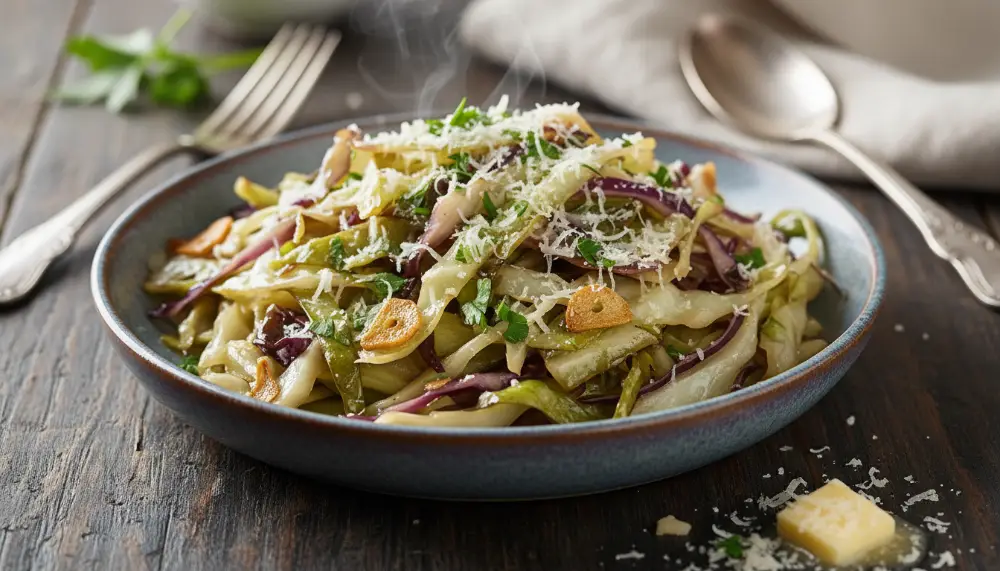

Experience a transformational side dish where humble cabbage becomes a gourmet centerpiece with just a few pantry staples. This Sautéed Cabbage with Garlic Butter and Parmesan is the ultimate crowd-pleaser that delivers restaurant-quality flavor in under twenty minutes.
Sautéed Cabbage with Garlic Butter and Parmesan
Ingredients
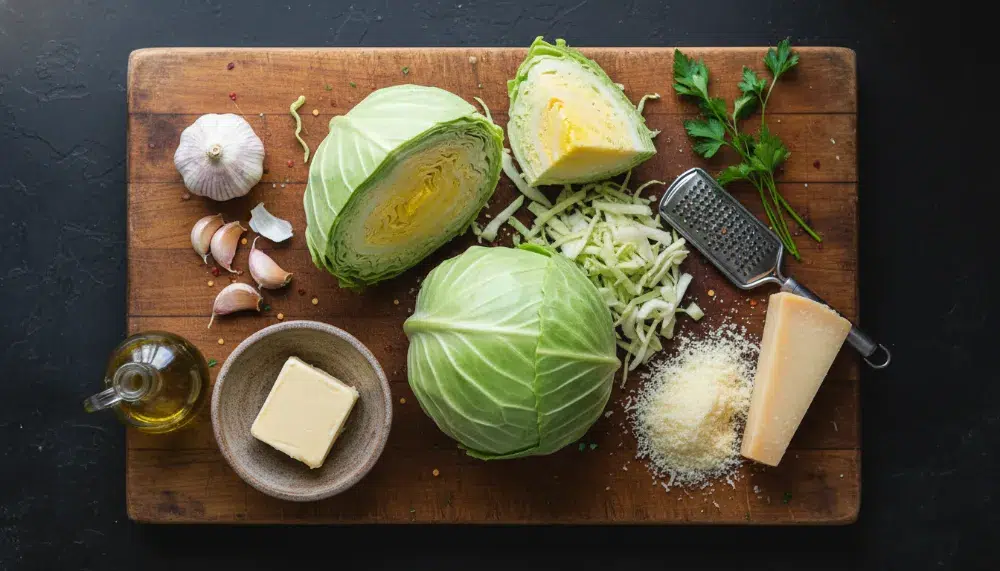
- 1 Large Head Green Cabbage (cored and thinly sliced)
- 4 Tablespoons Unsalted Butter
- 4 Cloves Fresh Garlic (minced)
- 1/2 Cup Shredded Parmesan Cheese
- 1 Tablespoon Apple Cider Vinegar (replaces wine)
- 1 Teaspoon Sea Salt
- 1/2 Teaspoon Cracked Black Pepper
- 1/2 Teaspoon Red Pepper Flakes
Instructions
- 1 Heat a large skillet or Dutch oven over medium-high heat and melt the butter until foaming.
- 2 Add the minced garlic and red pepper flakes, sautéing for 60 seconds until fragrant but not browned.
- 3 Toss in the sliced cabbage, stirring to coat every ribbon in the garlic butter.
- 4 Cook for 10-12 minutes, stirring occasionally, until the cabbage is tender and the edges begin to caramelize into a golden brown.
- 5 Deglaze the pan with apple cider vinegar, scraping up any browned bits from the bottom.
- 6 Remove from heat, stir in the Parmesan cheese, and season with salt and black pepper to taste. Serve immediately.
The History and Evolution of Sautéed Cabbage
The origins of sautéed cabbage are rooted in the culinary traditions of Northern and Eastern Europe, where the vegetable has been a dietary staple for thousands of years. Wild cabbage originated in the Mediterranean and Asia over 4,000 years ago, and it was later domesticated in Europe by the Celts around 1000 B.C. The Romans considered it a luxury vegetable and were among the first to document cooking it with fats and aromatics like garlic. This early appreciation for the vegetable set the stage for what we now know as Sautéed Cabbage with Garlic Butter and Parmesan.
In Ireland and Germany, cabbage was traditionally boiled or stewed with animal fats, often serving as the primary source of nutrition during lean winter months. The shift toward “sautéing,” which is pan-frying in butter, became more prominent as culinary techniques evolved and the desire to preserve texture grew. By sautéing rather than boiling, chefs were able to enhance the natural sugars through caramelization, a process known as the Maillard reaction. While the combination of cabbage and butter is centuries old, the inclusion of Parmesan is a contemporary Western fusion, borrowing from Italian techniques where hard cheeses were used to add umami and saltiness to simple vegetables.
Why This Recipe Works: The Science of Sautéing
When you prepare Sautéed Cabbage with Garlic Butter and Parmesan, you are participating in a chemical transformation. Cabbage contains a high water content and natural sugars. When it hits a hot pan with butter, the water begins to evaporate, concentrating the flavor. As the heat continues, the sugars caramelize, creating those delicious brown edges that provide a nutty, sweet contrast to the savory garlic.
To achieve the perfect texture, the use of high-quality tools is essential. For instance, the Cuisinart 8 Cup Food Processor (https://amzn.to/47Nhbg8) is a meal prep essential because it allows you to slice a whole head of cabbage into uniform ribbons in seconds, ensuring that every piece cooks at the same rate and prevents the dreaded “soggy in some places, raw in others” result.
Nutritional Impact of Sautéed Cabbage
Sautéed cabbage is a nutrient-dense, low-carbohydrate dish that packs a significant punch for your health. A standard serving of Sautéed Cabbage with Garlic Butter and Parmesan is exceptionally high in Vitamin C, often providing over 100% of your daily value, which supports immune function and skin health. It is also a powerhouse of Vitamin K, essential for bone health and proper blood clotting.
Furthermore, cabbage contains polyphenols and glucosinolates, which are antioxidants known for their anti-inflammatory properties. By adding Parmesan, you introduce a boost of calcium and protein, making this side dish more satiating than a simple salad. For those focused on heart health, the fiber content in cabbage (4 to 6 grams per serving) helps maintain healthy cholesterol levels and aids in digestion.
Professional Flavor Variations (Pork-Free & Alcohol-Free)
Professional chefs often use this dish as a blank canvas. To elevate the flavor profile while strictly avoiding pork and alcohol, consider these professional adaptations:
- Smoked Chicken or Turkey: To replicate the smoky depth traditionally provided by cured meats, professionals use finely diced smoked chicken breast. This adds a savory meatiness without using pork products.
- Ground Beef and Sage: Sautéing lean ground beef with the cabbage creates a hearty, main-course version of the dish. The earthiness of the sage pairs perfectly with the sweetness of the caramelized cabbage.
- Miso Butter: For a deep umami boost, whisk a teaspoon of white miso into the butter before sautéing. This creates a fermented complexity that rivals any restaurant dish.
- Toasted Seeds: Professional chefs often add toasted caraway seeds or mustard seeds. Caraway is a classic pairing that aids in the digestion of cruciferous vegetables.
Essential Tools for Gourmet Results
To make the best Sautéed Cabbage with Garlic Butter and Parmesan, you need the right equipment. Beyond the food processor mentioned earlier, we recommend the following items to elevate your kitchen game:
- Ninja BN751 Professional Plus DUO Blender: (https://amzn.to/3LCDyNR) While this recipe uses whole garlic, if you want to create a creamy garlic-parmesan emulsion to pour over the top, this 1000W motor blender is perfect for creating smooth sauces and harissa pastes.
- Cosori 9-in-1 TurboBlaze Air Fryer 6 Qt: (https://amzn.to/4hRWmVq) If you want a bit of crunch, you can actually air fry some of the cabbage leaves separately to use as a garnish. It roasts vegetables perfectly and is ideal for large family capacities.
- FoodSaver Vacuum Sealer Machine: (https://amzn.to/4qWgVnS) Cabbage is a large vegetable. If you only use half a head, use this vacuum sealer to keep the other half fresh for weeks, preventing the oxidation that causes cabbage to turn bitter.
Mastering the Technique: Sautéing vs. Braising
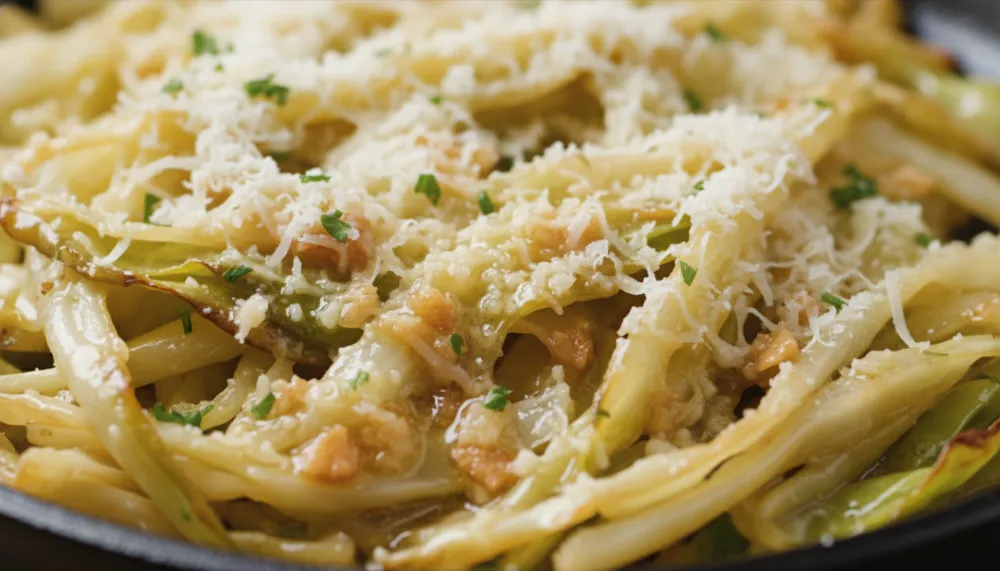
It is important to understand the difference between a sauté and a braise when dealing with Sautéed Cabbage with Garlic Butter and Parmesan. Braising involves cooking the cabbage in a significant amount of liquid for a long period, resulting in a very soft, almost melting texture. Sautéing, however, uses high heat and minimal liquid, preserving the “snap” of the vegetable while developing a deep char.
The key to a successful sauté is not crowding the pan. If you add too much cabbage at once, the temperature of the skillet drops, and the cabbage will steam in its own moisture rather than brown. If you are cooking for a large group, work in batches. Once the cabbage is cooked, store it in the Rubbermaid Brilliance Glass Storage Set (https://amzn.to/4oD0YkY). These are leak-proof and stackable, making them the gold standard for meal prep storage.
Replacing Alcohol in Gourmet Cooking
Many traditional recipes for Sautéed Cabbage with Garlic Butter and Parmesan call for a splash of white wine to deglaze the pan. However, you can achieve even better results without alcohol. Apple cider vinegar, as used in our recipe, provides a fruity acidity that balances the richness of the butter. Alternatively, you can use a high-quality chicken or vegetable broth for a more savory finish. If you want a bright, floral note, fresh lemon juice and zest are excellent substitutes that enhance the garlic and Parmesan without the need for wine.
Frequently Asked Questions
Can I use red cabbage instead of green?
Yes, but keep in mind that red cabbage is denser and may require an additional 3 to 5 minutes of cooking time. It will also turn the garlic and cheese a slightly purplish hue, which is visually striking but different from the traditional look.
How do I prevent the garlic from burning?
Garlic burns quickly at high temperatures. Always add your garlic after the butter has melted and just a minute before you add the cabbage. The moisture from the cabbage will immediately lower the pan’s temperature, protecting the delicate garlic bits.
Is this recipe meal-prep friendly?
Absolutely. Sautéed cabbage actually tastes better the next day as the garlic and Parmesan flavors have more time to meld. Just ensure you reheat it in a pan rather than a microwave to maintain some of that charred texture.