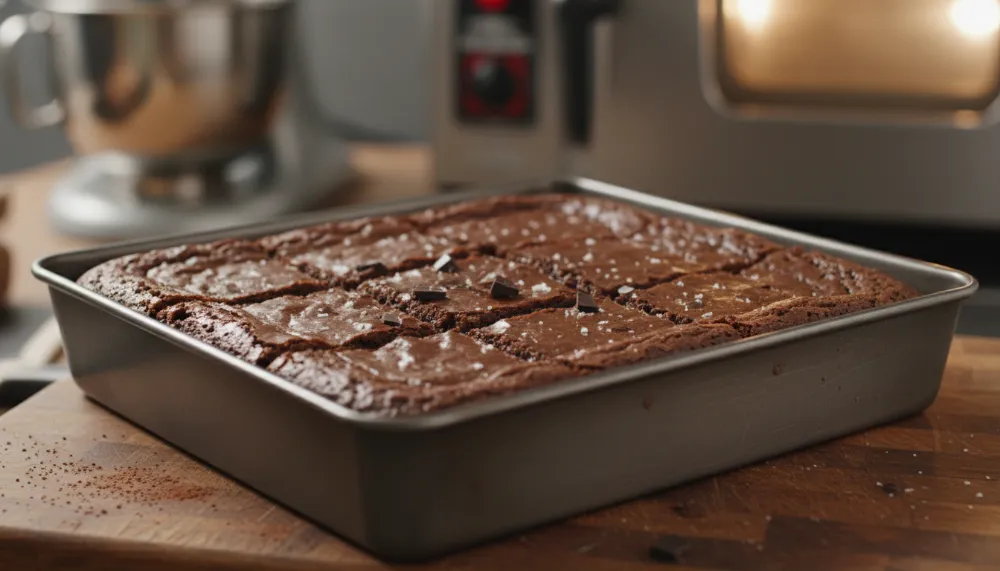

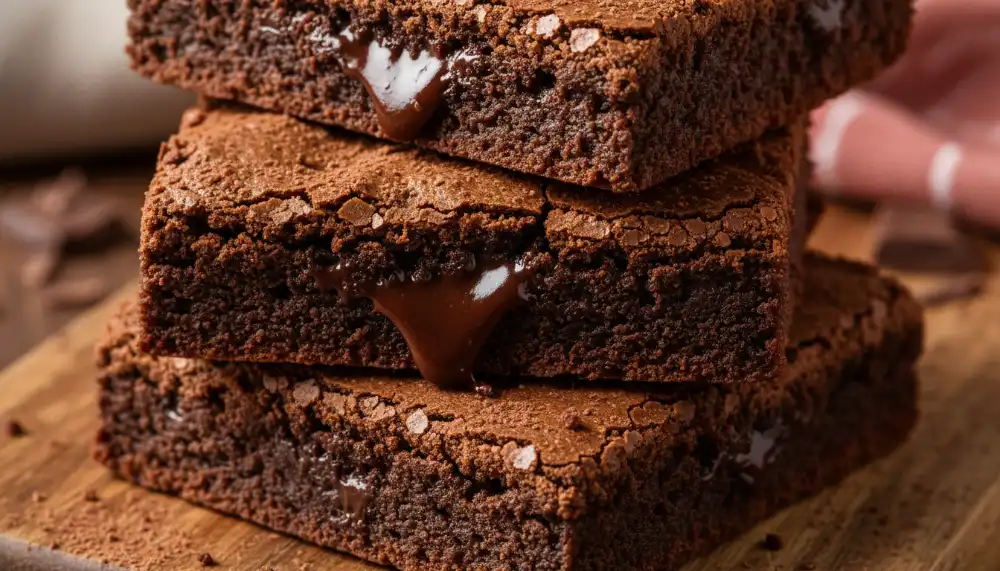
Experience the decadence of a perfectly baked square that balances a crackly, tissue-thin top with a rich, molten heart. These Classic Fudgy Brownies are the gold standard of American baking, delivering an intense chocolate hit that defines pure indulgence.
Classic Fudgy Brownies
Ingredients
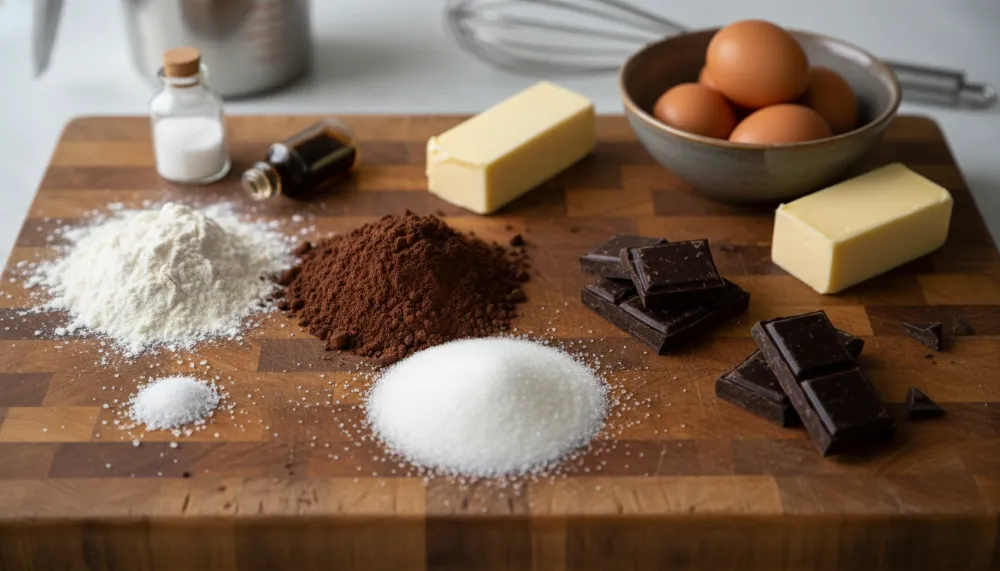
- 1 1 cup (225g) Unsalted Butter, melted and browned
- 2 8 oz (225g) High-quality Bittersweet Chocolate (70% cocoa)
- 3 1 ½ cups (300g) Granulated Sugar
- 4 ½ cup (100g) Light Brown Sugar, packed
- 5 3 Large Eggs, room temperature
- 6 2 tbsp Pure Maple Syrup or Orange Juice (alcohol-free aromatic)
- 7 ¾ cup (95g) All-Purpose Flour
- 8 ¼ cup (25g) Unsweetened Dutch-processed Cocoa Powder
- 9 1 tsp Flaky Sea Salt
Instructions
- 1 Preheat oven to 350°F (175°C) and line an 8×8 inch pan with parchment paper.
- 2 Melt the butter in a saucepan over medium heat, cooking until it smells nutty and the milk solids are golden brown.
- 3 Remove from heat and immediately stir in chopped chocolate until smooth. Let cool slightly.
- 4 In a large bowl, whisk sugars, eggs, and maple syrup/juice vigorously for 2-3 minutes until pale and frothy.
- 5 Fold in the chocolate-butter mixture. Gently sift in flour and cocoa powder, then fold until just combined.
- 6 Pour batter into the pan and sprinkle with sea salt. Bake for 25-30 minutes until edges are set but the center remains slightly soft.
The Fascinating Origin of the Classic Fudgy Brownie
The history of Classic Fudgy Brownies is as rich as their flavor profile. Unlike many ancient desserts that evolved over centuries, the brownie is a distinctly American creation with a documented lineage dating back to the late 19th century. The most credible origin story begins at the Palmer House Hotel in Chicago during the 1893 World’s Columbian Exposition. Bertha Palmer, a renowned socialite and wife of the hotel’s owner, needed a dessert that was portable yet sophisticated. She requested something smaller than a piece of cake but more substantial than a cookie, essentially a treat that could be easily tucked into a lady’s boxed lunch. The result was the original Palmer House brownie, which featured a dense chocolate base, walnuts, and an apricot glaze. While that original recipe differs slightly from modern versions, it established the framework for the dense, fudgy texture we crave today.
Interestingly, the transition from this socialite treat to the “Bangor Brownie” involved a series of culinary evolutions. Early cookbooks, such as the 1896 edition of Fannie Farmer’s Boston Cooking-School Cook Book, actually featured molasses-based squares that lacked chocolate entirely. It wasn’t until the 1905 and 1906 editions that chocolate became the star of the show. Many legends suggest the fudge-like consistency was a happy accident, a housewife in Maine allegedly forgot to add baking powder to a chocolate cake, creating a flat, dense, and delicious mistake. Regardless of the exact moment the leavener was dropped, by the early 20th century, Classic Fudgy Brownies had become a staple of the American kitchen.
The Science of Fudginess vs. Cakiness
What separates a Classic Fudgy Brownie from its cakey cousin? It all comes down to the ratio of fat to flour. To achieve that signature dense, almost truffle-like interior, a recipe must prioritize high fat content (from butter and chocolate) while keeping the flour content minimal. In a fudgy recipe, the absence of chemical leaveners like baking powder or baking soda is critical. Without these agents to create air pockets, the batter remains compact during the baking process, resulting in a moisture-rich crumb.
Another scientific pillar of the perfect brownie is the “crackly top.” This thin, meringue-like layer is achieved by dissolving the sugar completely into the eggs. When you whisk the sugar and eggs together vigorously, you create a stable foam that rises to the surface as the brownie bakes, drying out into that beautiful, shiny crust. To make this process even more efficient, professional bakers often use a high-powered tool like the Ninja BN751 Professional Plus DUO Blender (https://amzn.to/3LCDyNR), which is perfect for processing sugars or creating smooth nut pastes for swirl variations.
Choosing the Right Chocolate
For Classic Fudgy Brownies, the quality of chocolate is paramount. Since the recipe relies on chocolate for both flavor and structural integrity, using a bar with 60% to 70% cocoa solids is recommended. Milk chocolate often contains too much sugar and not enough cocoa butter, which can lead to a greasy, overly sweet brownie. When melting your chocolate, consistency is key, using a Cuisinart 8 Cup Food Processor (https://amzn.to/47Nhbg8) can help you quickly chop chocolate bars into uniform bits, ensuring an even melt without scorched spots.
Professional Flavor Variations for the Modern Palate
Once you have mastered the base recipe, the possibilities for elevation are endless. Professional pastry chefs use several techniques to add depth to the chocolate without overshadowing it. One common trick is the inclusion of espresso powder. This addition doesn’t make the brownie taste like coffee, rather, it acts as a flavor amplifier, highlighting the darker notes of the cocoa. Because our dietary guidelines exclude alcohol, using a high-quality maple syrup or even a splash of dark balsamic vinegar can provide a similar aromatic complexity that vanilla extract usually offers.
The Savory-Sweet Contrast: Beef Bacon and Beyond
To cater to modern palates that enjoy a savory twist, consider adding a salty element. While many recipes suggest pork products, a high-end, dietary-compliant alternative is crispy beef bacon. Finely diced and rendered until crunchy, beef bacon provides a smoky, salty counterpoint to the rich chocolate. Alternatively, smoked vegetarian bits or roasted chickpeas can add texture and saltiness. For those looking to prep these savory additions, the Cosori 9-in-1 TurboBlaze Air Fryer 6 Qt (https://amzn.to/4hRWmVq) is an incredible tool for roasting chickpeas or crisping beef bacon to perfection before folding them into the batter.
Nutritional Overview of Classic Fudgy Brownies
While brownies are undoubtedly a treat, understanding their nutritional profile helps in mindful indulgence. A standard 2-inch square brownie typically contains between 150 and 270 calories. The majority of these calories come from fats and carbohydrates. Because fudgy brownies use a significant amount of real butter and dark chocolate, they provide a source of healthy fats and even some antioxidants from the cocoa. However, the sugar content remains high, which is why balancing the sweetness with sea salt or bitter cocoa is both a culinary and nutritional strategy. A single serving generally provides about 2g to 4g of protein, depending on whether nuts are added, and about 100mg of sodium.
Storing and Preserving Your Batch
One of the greatest challenges with Classic Fudgy Brownies is preventing them from drying out. Because they have such a high moisture content, exposure to air can quickly turn a fudgy center into a crumbly one. To maintain that just-baked texture, it is essential to store them in an airtight environment. The Rubbermaid Brilliance Glass Storage Set of 9 (https://amzn.to/4oD0YkY) is ideal for this, as the leak-proof, airtight seals keep the moisture locked in. If you have made a massive batch for future events, consider using a FoodSaver Vacuum Sealer Machine (https://amzn.to/4qWgVnS) to prevent freezer burn and keep the ingredients fresh for months.
The Brown Butter Technique
To truly elevate your Classic Fudgy Brownies to a professional level, never skip the “Beurre Noisette” or brown butter step. By cooking the butter until the milk solids toast, you introduce a deep, nutty aroma that standard melted butter simply cannot match. This step adds a layer of sophistication that mimics the complexity of aged extracts without the need for alcohol. When the hot brown butter hits the chopped dark chocolate, it creates a silky ganache-like base that is the foundation of any award-winning brownie.
Frequently Asked Questions
Why did my brownies come out cakey? This usually happens if you over-measured the flour or added a leavening agent like baking powder. To ensure fudginess, always use a kitchen scale for the flour and avoid whisking the batter too much after the flour is added, as this develops gluten.
How do I get the shiny, crackly top? The secret is in the eggs and sugar. You must whisk the sugar and eggs together until the mixture is light, thick, and pale. This ensures the sugar is fully dissolved and creates that meringue-like crust on top.
Can I substitute the butter? While oil can be used, it won’t provide the same depth of flavor or the ability to create brown butter. If you must substitute, use a high-quality vegetable oil, but be aware the flavor will be less complex.