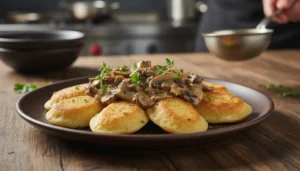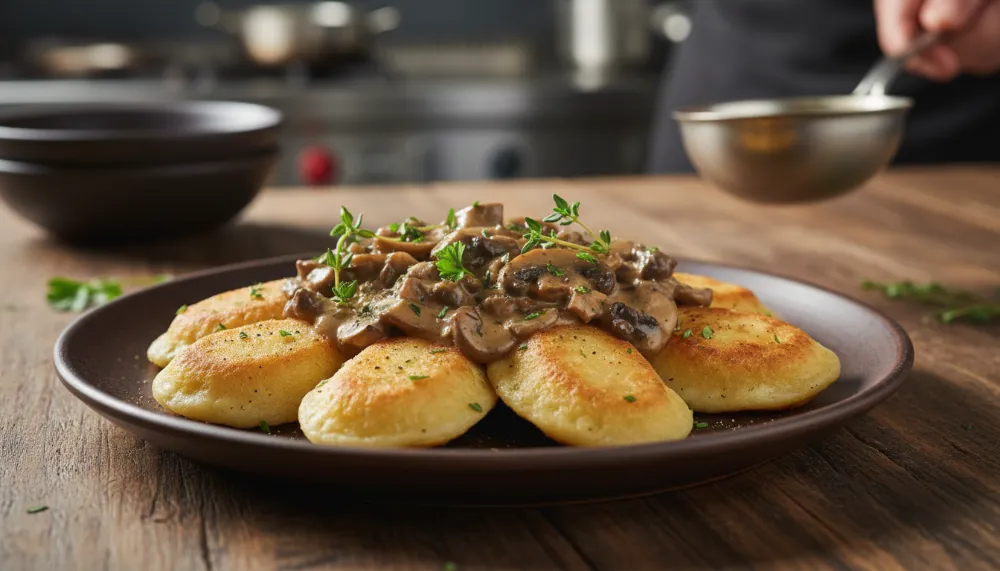

Experience the ultimate comfort of authentic Polish Potato Dumplings (Kopytka) with Mushroom Sauce, a dish that combines pillowy textures with the deep, earthy flavors of the forest. These traditional ‘little hooves’ are the gold standard of Central European soul food, offering a hearty and satisfying meal perfect for any occasion.
Polish Potato Dumplings (Kopytka) with Mushroom Sauce
Ingredients
- 1 1 kg Starchy Potatoes (peeled and boiled)
- 2 250g All-purpose Flour (plus extra for dusting)
- 3 1 Large Egg
- 4 1 tsp Fine Sea Salt
- 5 500g Fresh Cremini or Wild Mushrooms (sliced)
- 6 1 Large Onion (finely diced)
- 7 2 Garlic Cloves (minced)
- 8 200ml Heavy Cream
- 9 1 tbsp Apple Cider Vinegar
- 10 1/2 cup Beef or Vegetable Broth
- 11 Fresh Dill (for garnish)
Instructions
- 1 Press warm boiled potatoes through a ricer or mash until completely smooth. Let them cool slightly.
- 2 Add flour, egg, and salt to the potatoes. Knead quickly into a soft, uniform dough without overworking.
- 3 Roll dough into long ropes about 2cm thick. Cut diagonally into 3cm diamond shapes.
- 4 Boil Kopytka in salted water. Once they float to the surface, cook for 1 more minute and drain.
- 5 Sauté onions and mushrooms in butter until golden. Add garlic, then deglaze with vinegar and broth.
- 6 Stir in heavy cream and simmer until thickened. Season with salt and pepper.
- 7 Toss the warm dumplings in the sauce and serve immediately, garnished with fresh dill.
The Historical Legacy of Kopytka
Polish Potato Dumplings, affectionately known as Kopytka, are a cornerstone of Central European culinary heritage. The name, which translates to “little hooves,” is derived from the distinct diagonal cut that gives the dumplings their trapezoidal or diamond shape. This dish is the epitome of the Polish “peasant kitchen” philosophy, where nothing was wasted, and simple ingredients were transformed into something extraordinary. Historically, potatoes became a dominant crop in Poland between the 17th and 19th centuries. Legend credits King Jan III Sobieski with bringing potato seeds back from Vienna, but it was the rural population that truly mastered their use. Kopytka emerged as the perfect solution for using up leftover boiled potatoes from the previous night’s supper, ensuring every bit of food provided sustenance to hardworking families.
During the 20th century, Kopytka found a permanent home in Poland’s “Milk Bars” (Bar mleczny). These state-subsidized canteens were designed to offer high-quality, nourishing, and affordable meals to the public. Kopytka with mushroom sauce became a staple on these menus, beloved for its ability to provide comfort and energy. Unlike Italian gnocchi, which are often light and airy, Kopytka have a slightly more resilient, chewy texture that allows them to stand up to the robust, creamy gravies typical of Polish cooking. This structural integrity is what makes them the perfect vessel for a thick, velvety mushroom sauce.
The Anatomy of the Perfect Dumpling
Creating the perfect Kopytka requires an understanding of potato chemistry. To achieve that coveted pillowy-yet-firm texture, you must use starchy potatoes, such as Russet or Yukon Gold. These varieties have a high starch content and low moisture, which is critical for the dough’s consistency. If the potatoes are too waxy, they will hold too much water, forcing you to add more flour to the dough. Excess flour is the enemy of a good dumpling, as it leads to a gummy, heavy result rather than the light, cloud-like texture we aim for.
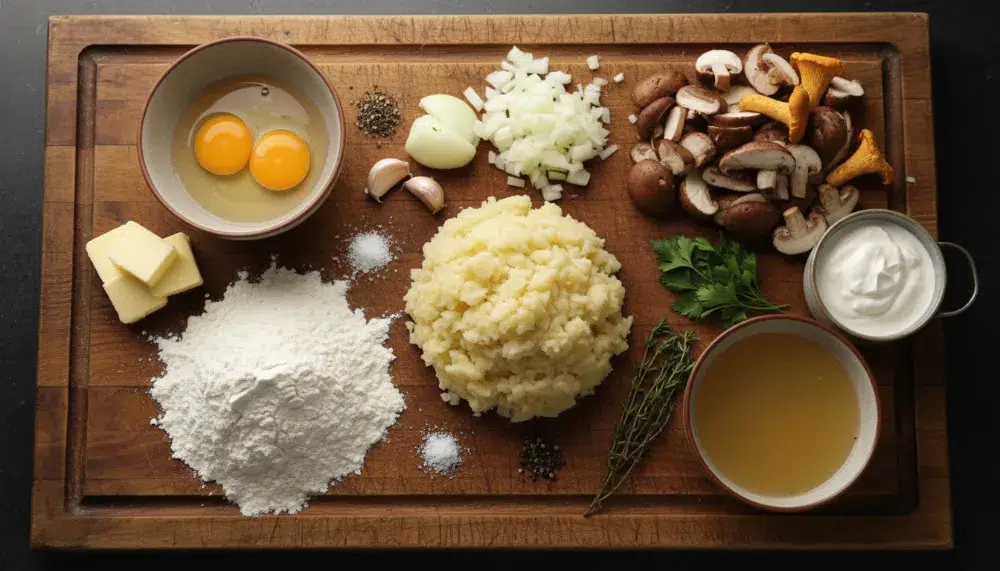
Professional chefs often recommend boiling the potatoes “in their uniforms” (with the skins on). This prevents the potato flesh from absorbing water during the boiling process. Once cooked, peeling and immediately ricing the potatoes while they are still warm is the secret to a smooth dough. A Cuisinart 8 Cup Food Processor (https://amzn.to/47Nhbg8) can be an essential tool for fast prep if you are handling large batches of mushrooms for the sauce, ensuring uniform slices that cook evenly. When mixing the dough, the goal is to incorporate the flour and egg just until the mixture comes together. Over-kneading develops the gluten in the flour, which will make the Kopytka tough. The resulting dough should be soft, slightly tacky, but manageable enough to roll into long, elegant ropes.
Mushroom Sauce: An Umami Masterclass
While the dumplings are the heart of the dish, the mushroom sauce is its soul. In Poland, mushroom hunting is practically a national sport, and the best sauces are made with a mix of fresh and dried wild mushrooms. For this recipe, we focus on creating deep umami flavors without the use of pork or alcohol. Instead of deglazing the pan with wine, we use a combination of apple cider vinegar and a high-quality beef or vegetable broth. The acidity of the vinegar mimics the brightness of wine, cutting through the richness of the heavy cream, while the broth provides the savory backbone usually offered by meat-based fats.
To maximize the flavor of your mushrooms, sauté them in a wide pan over high heat. You want them to brown and develop a crust, not just steam in their own juices. This Maillard reaction is where the complex, earthy flavor profiles are born. Adding a teaspoon of Dijon mustard or a splash of soy sauce to the cream can further enhance the depth of flavor. If you find your sauce is too thick, a splash of the starchy dumpling water is the perfect thinning agent, as it helps the sauce cling to the Kopytka. For the smoothest possible sauce texture, some modern variations involve blending a small portion of the sautéed mushrooms with the cream using a Ninja BN751 Professional Plus DUO Blender (https://amzn.to/3LCDyNR) before stirring it back into the whole mushrooms. This creates a multi-layered mushroom experience that is truly professional.
Nutritional Profile and Health Benefits
Polish Potato Dumplings (Kopytka) with Mushroom Sauce are more than just comfort food, they are nutritionally dense. A standard serving provides approximately 400 calories, primarily from complex carbohydrates in the potatoes and flour, which provide sustained energy. Potatoes are an excellent source of Potassium and Vitamin B6, essential for heart health and brain function. The mushrooms contribute significantly to the dish’s nutritional value, providing Vitamin D and Selenium, a powerful antioxidant. When using fresh forest mushrooms, you are also adding a boost of dietary fiber to your meal.
Advanced Culinary Techniques and Variations
Once you have mastered the basic recipe, there are several ways to elevate this dish. Professional Polish chefs often experiment with the dough by infusing it with herbs. Finely chopped fresh dill or lovage can be folded into the potato mash before the flour is added. This not only adds a beautiful green fleck to the dumplings but also introduces a bright, aromatic lift that contrasts perfectly with the heavy mushroom sauce.
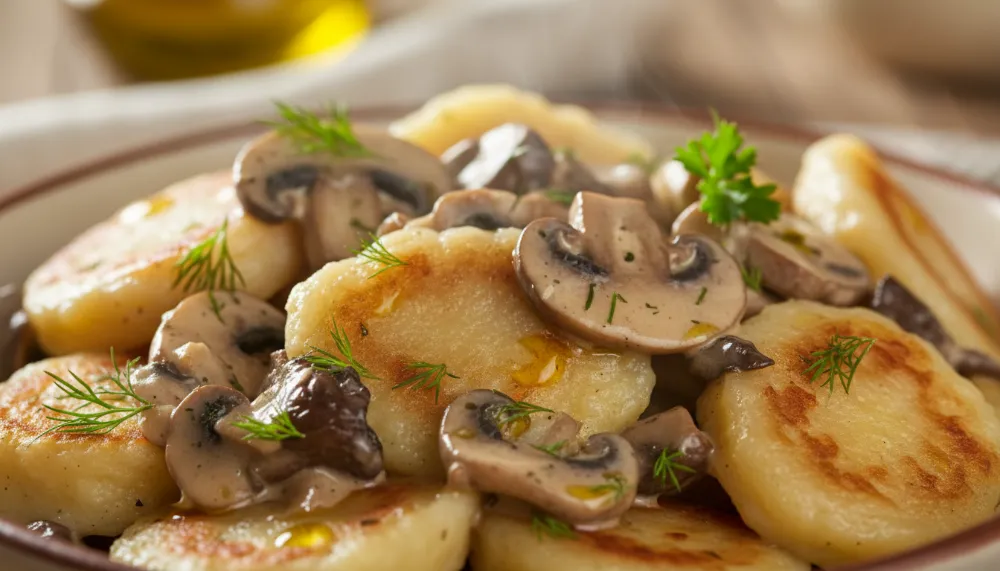
Another professional variation is the “Trio of Kopytka,” often seen in high-end Warsaw bistros. This involves dividing the dough into three parts and adding natural colorants to two of them. A spoonful of roasted beet puree creates a deep magenta dumpling, while blanched and blended spinach creates a vibrant green. When served together with the traditional white dumplings and covered in mushroom sauce, the visual impact is stunning. For those who prefer a bit of crunch, you can pan-fry the boiled Kopytka in a little butter until they develop a golden, crispy exterior before tossing them in the sauce. This adds a textural dimension that is highly addictive.
Pairing and Serving Suggestions
While Kopytka with mushroom sauce is a complete meal on its own, it also serves as an exceptional side dish. Traditionally, it pairs beautifully with slow-cooked beef goulash or a roasted chicken. The starchiness of the dumplings is the perfect counterpoint to acidic side dishes like pickled beets (ćwikła) or a mizeria (cucumber and sour cream salad). These acidic elements help cleanse the palate between bites of the rich, creamy sauce.
For a modern twist, consider serving the dish with a side of vegetables prepared in a Cosori 9-in-1 TurboBlaze Air Fryer 6 Qt (https://amzn.to/4hRWmVq). Roasting Brussels sprouts or carrots in the air fryer provides a charred, nutty flavor that complements the earthiness of the mushrooms. To garnish, beyond the traditional dill, you might consider a sprinkle of toasted breadcrumbs mixed with butter, known as the “Polonaise” style, which adds a delightful sandy crunch to the soft dumplings.
Storage and Reheating for Meal Prep
Kopytka is an excellent candidate for meal prep. The dumplings can be made in large batches and frozen before boiling. Simply lay the raw cut dumplings on a baking sheet to freeze individually before transferring them to a container. Using a FoodSaver Vacuum Sealer Machine (https://amzn.to/4qWgVnS) is highly recommended to prevent freezer burn and keep the dumplings fresh for up to three months. When you are ready to eat, you can boil them directly from frozen.
For leftover cooked dumplings and sauce, store them in a Rubbermaid Brilliance Glass Storage Set (https://amzn.to/4oD0YkY). These leak-proof, stackable containers are perfect for maintaining the quality of the sauce without it absorbing refrigerator odors. To reheat, it is best to use a skillet with a splash of milk or broth to loosen the sauce, rather than a microwave, which can make the dumplings rubbery. Gently warm them over medium-low heat until the sauce is simmering and the dumplings are heated through.