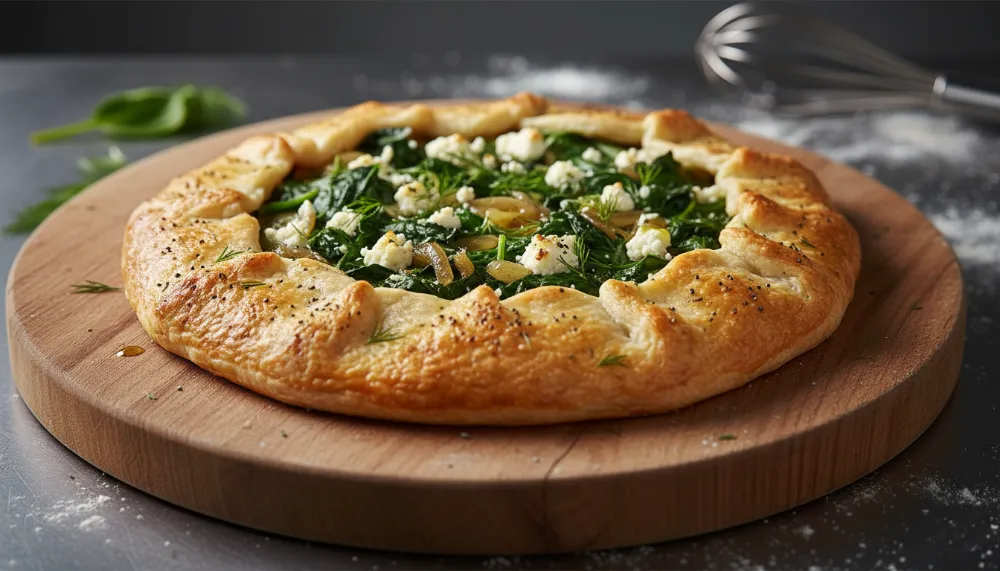

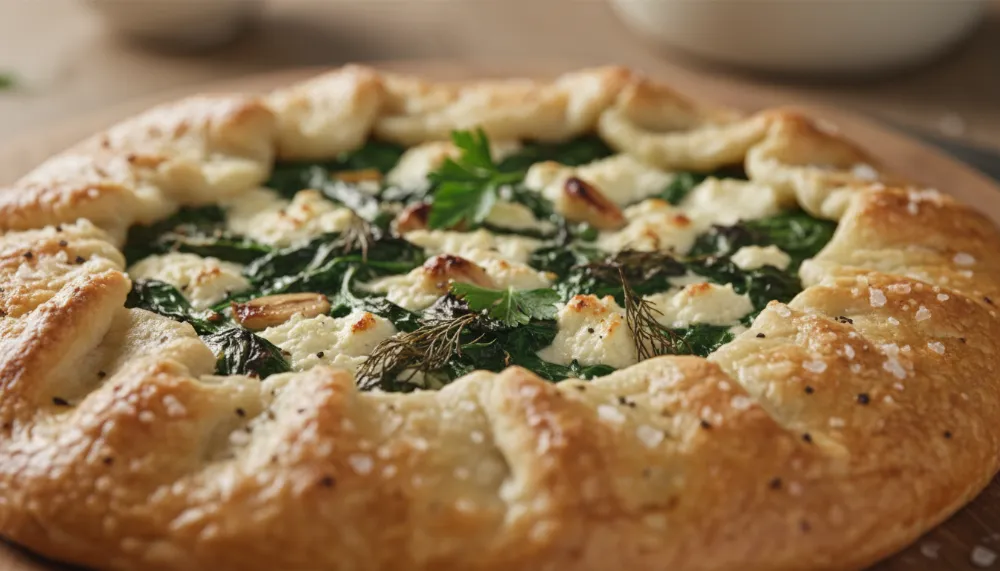
This rustic Spinach Feta Galette combines a buttery, shatteringly flaky crust with a savory Mediterranean filling of earthy greens and tangy cheese. It is the perfect, sophisticated centerpiece for any brunch or dinner party that requires minimal equipment but delivers maximum flavor.
Golden Spinach Feta Galette
Ingredients
- 1. 1 1/2 cups All-purpose flour (chilled)
- 2. 1/2 cup Unsalted butter (frozen and cubed)
- 3. 1/4 cup Ice-cold water
- 4. 1 pound Fresh baby spinach
- 5. 6 oz Greek-style Feta cheese (crumbled)
- 6. 2 Large shallots (finely minced)
- 7. 3 cloves Garlic (pressed)
- 8. 1 tbsp Lemon juice
- 9. 1/4 tsp Ground nutmeg
- 10. 1 Egg (beaten for wash)
Instructions
- 1. Pulse flour and frozen butter in a food processor until pea-sized crumbs form. Gradually add ice water until the dough just holds together. Shape into a disc, wrap, and chill for at least 1 hour.
- 2. Sauté shallots and garlic in olive oil until translucent. Add spinach in batches, cooking until wilted. Squeeze out ALL excess moisture using a kitchen towel.
- 3. Mix the dried spinach with crumbled feta, lemon juice, nutmeg, and black pepper.
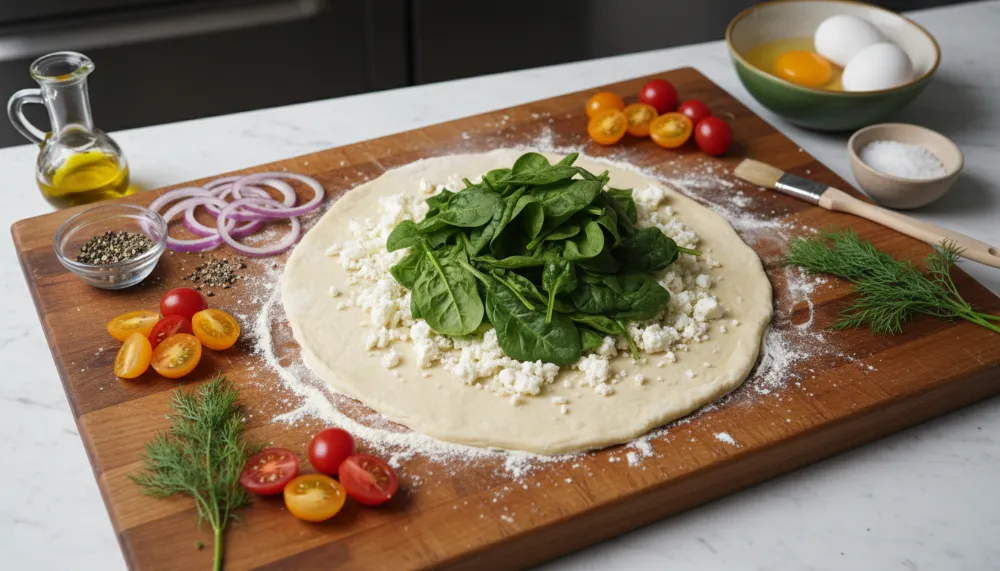
- 4. Roll out dough on parchment paper into a 12-inch circle. Pile the filling in the center, leaving a 2-inch border.
- 5. Fold the edges of the dough over the filling, pleating as you go. Brush the crust with egg wash.
- 6. Bake at 400°F (200°C) for 35 to 40 minutes until the crust is deeply golden brown. Let cool for 10 minutes before slicing.
The Historical Journey of the Galette
The Spinach Feta Galette is a fascinating culinary hybrid, a marriage of French pastry technique and Mediterranean flavor profiles. To understand this dish, one must first look at the term “galette” itself. Originating from the Old French word gale, which literally translates to a flat cake, the galette represents the most ancient form of pastry. Unlike the formal, fluted tarts of Parisian patisseries, the galette is rustic, free-form, and deeply rooted in the rural traditions of Normandy and Brittany. Historically, these were often made with buckwheat flour, a hardy crop that thrived in the cool, damp climates of northern France.
While the crust is distinctly French, the soul of the filling belongs to the Aegean. The combination of spinach and salted white cheese, known most famously as spanakopita in Greece, has been a staple for over four centuries. This flavor profile evolved from layered Roman cheese dishes and was perfected during the Ottoman Empire. In the modern era, the Spinach Feta Galette has emerged as a favorite in the “bistronomy” movement, where chefs prioritize high-quality, seasonal ingredients over complex, rigid presentations. It offers the same satisfaction as a quiche but with a much higher crust-to-filling ratio, highlighting the textural contrast between the buttery pastry and the tender greens.
The Science of the Perfect Flaky Crust
The success of a Spinach Feta Galette hinges entirely on the quality of the pastry. To achieve that signature shatteringly flaky texture, one must master the science of cold fat. When frozen butter is pulsed into flour, it creates small, distinct pockets of fat. As the galette hits the high heat of the oven, the water within those butter pockets evaporates instantly, creating steam. This steam expands, pushing the layers of dough apart before the heat sets the structure. This is why using a high-quality food processor like the Cuisinart 8 Cup Food Processor (Check Price) is essential, it allows you to chop the butter into the flour quickly without the heat from your hands melting the fat.
Hydration and Gluten Management
Another critical factor is hydration. You want to use just enough ice-cold water to bind the flour. Over-hydrating the dough leads to excessive gluten development, resulting in a tough, bread-like crust rather than a flaky one. Professionals often add a teaspoon of apple cider vinegar or lemon juice to the water. The acid helps to weaken the gluten strands, ensuring the crust remains tender even if it is handled slightly too much during the rolling process. Remember, when rolling out your Spinach Feta Galette, perfection is the enemy of the good, the uneven, rustic edges are exactly what give this dish its charm.
Mastering the Spinach Filling
The most common mistake when making a Spinach Feta Galette is a “soggy bottom.” Spinach is composed of approximately 90% water. If you simply sauté the spinach and add it to the pastry, that moisture will leak out during baking, ruining the crust. The professional secret is a two-step process: first, sauté the spinach with your aromatics like shallots and garlic until completely wilted. Second, once cooled, place the spinach in a clean kitchen towel and squeeze it with all your might. You will be shocked at how much green liquid is extracted. This concentrated, dry spinach base is what allows the feta to shine without making the pastry mushy.
Professional Variations and Flavor Twists
While the classic version is iconic, many world-renowned chefs have put their own spin on the Spinach Feta Galette. For instance, Yotam Ottolenghi often introduces North African elements by incorporating chermoula, a vibrant paste of garlic, cumin, and preserved lemon, into the spinach mixture. This adds a bright, citrusy acidity that cuts through the richness of the butter and cheese. If you are making your own sauces or pastes from scratch, the Ninja BN751 Professional Plus DUO Blender (Check Price) is an incredible tool for achieving that perfectly smooth consistency for your herb infusions.
Adding Non-Pork Proteins
For those looking for a heartier meal, you can easily integrate proteins into your galette. Since we strictly avoid pork, excellent alternatives include crumbled chicken sausage seasoned with sage or small, spiced beef meatballs. Another professional favorite is adding a layer of roasted chickpeas for a nutty crunch. To get that perfect roast on your chickpeas before they go into the galette, the Cosori 9-in-1 TurboBlaze Air Fryer 6 Qt (Check Price) is highly recommended for its speed and even heat distribution.
Nutritional Excellence of the Galette
Beyond its incredible taste, the Spinach Feta Galette is a nutritional powerhouse. Spinach is one of the densest sources of Vitamin K, essential for bone health and proper blood clotting. It also provides significant amounts of Vitamin A and folate. Feta cheese, while salty, is lower in fat and calories than many aged cheeses like cheddar or parmesan. To balance the sodium, chefs often use nutmeg and lemon zest to provide “perceived saltiness” without actually adding more salt to the recipe. This creates a complex, layered flavor profile that satisfies the palate without being overwhelming.
Pairing and Serving Suggestions
Serving a Spinach Feta Galette is an art in itself. Because the dish is rich and buttery, it pairs exceptionally well with bright, acidic side dishes. A simple arugula salad with a lemon-tahini dressing is a classic choice. For a non-alcoholic beverage pairing, consider a sparkling apple cider or a ginger-infused white grape juice. The effervescence helps cleanse the palate between bites of the flaky, savory pastry. For more ideas on sides and accompaniments, you can explore our full range of vegetable-forward recipes at our recipe index.
Storage and Meal Prep Tips
The Spinach Feta Galette is an excellent candidate for meal prep. You can prepare the dough and the spinach filling up to two days in advance. In fact, letting the dough rest in the refrigerator for an extended period often results in an even more tender crust. Once baked, the galette stays fresh in the fridge for up to three days. For the best storage results, we recommend the Rubbermaid Brilliance Glass Storage Set (Check Price), which features leak-proof lids that keep the pastry from absorbing other fridge odors. If you want to freeze individual slices for long-term use, the FoodSaver Vacuum Sealer Machine (Check Price) is a lifesaver, as it prevents freezer burn and keeps the crust’s texture intact when you eventually reheat it in the oven.
Final Thoughts on This Rustic Classic
The beauty of the Spinach Feta Galette lies in its imperfection. Whether you are a seasoned baker or a novice in the kitchen, this recipe is forgiving and deeply rewarding. It represents a slower, more intentional way of cooking, where the quality of the butter and the freshness of the greens are the true stars. By following these professional techniques, from the frozen-butter crust to the properly dried spinach filling, you will create a dish that is as beautiful as it is delicious. Enjoy the process of folding the edges, the aroma of nutmeg and garlic wafting from the oven, and the sound of that first, crispy slice being cut.