
Sourdough focaccia is a revelation for bread lovers who prioritize digestive wellness and artisanal flavor. This gut friendly sourdough focaccia utilizes a long cold fermentation process to break down gluten and phytic acid, making every bite light, airy, and remarkably gentle on your stomach.
Gut Friendly Sourdough Focaccia
30 MIN
25 MIN
8 PERS
Ingredients
- • 100g Active Sourdough Starter
- • 375g Warm Water
- • 10g Raw Honey
- • 500g Organic Bread Flour
- • 10g Fine Sea Salt
- • 40g Extra Virgin Olive Oil
- • 50g Beef Bresaola (Thinly sliced)
- • 2 sprigs Fresh Rosemary
- • 3 cloves Garlic, sliced
- • 2 tbsp Beef Broth (for deglazing onions)
Instructions
- 1 Whisk starter, water, and honey in a large bowl. Mix in flour and salt until a shaggy dough forms. Rest for 30 minutes.
- 2 Perform 4 sets of stretch and folds every 30 minutes. Cover and ferment at room temperature for 2 hours.
- 3 Cold ferment in the refrigerator for 12–24 hours to maximize gut health benefits.
- 4 Sauté onions with beef broth (no alcohol) to caramelize. Set aside to cool.
- 5 Transfer dough to an oiled 9×13 pan. Let rise for 2-4 hours until bubbly and jiggly.
- 6 Preheat oven to 425°F. Drizzle oil, dimple the dough, and add garlic, rosemary, and onions.
- 7 Bake for 25 minutes. Top with beef bresaola immediately after removing from oven.
The Science of Gut Friendly Sourdough Focaccia
Why is sourdough so much easier on the human digestive tract than modern, yeast-risen breads? The secret lies in the fermentation. When we talk about a Gut Friendly Sourdough Focaccia, we are referring to the intricate dance between wild yeast and lactic acid bacteria (LAB). Unlike commercial yeast, which works rapidly to inflate dough with CO2, the wild culture in sourdough takes its time. During this slow process, the bacteria produce enzymes that break down gluten, a protein many find difficult to process, into smaller, more manageable amino acids.
Furthermore, the long fermentation period significantly reduces phytic acid, an anti-nutrient found in grains that can block the absorption of minerals like magnesium, iron, and zinc. By neutralizing phytic acid, your Gut Friendly Sourdough Focaccia actually makes the nutrients in the bread more bioavailable to your body. Using a tool like the Cuisinart 8 Cup Food Processor to quickly slice garlic or onions for your toppings ensures you are adding prebiotic-rich fibers without extra effort, further supporting your microbiome.
Maximizing Health with Cold Fermentation
To truly achieve a Gut Friendly Sourdough Focaccia, the cold fermentation step is non-negotiable. While you can technically bake sourdough in a few hours, the real magic happens between hours 12 and 24 in the refrigerator. The cold temperature slows down the yeast significantly but allows the lactic acid bacteria to keep working. This creates a more complex flavor profile and ensures the gluten is thoroughly “pre-digested” before it even hits your plate.
The result of this patience is a crust that is crispy and a crumb that is airy and light. If you are meal prepping for the week, storing your prepared dough or even finished slices in Rubbermaid Brilliance Glass Storage Containers will keep everything airtight and fresh. For those who want to keep their bread for longer periods, the FoodSaver Vacuum Sealer Machine is an excellent way to prevent freezer burn and preserve that artisanal quality.
Flavor Without the Irritants: Beef Broth and Bresaola
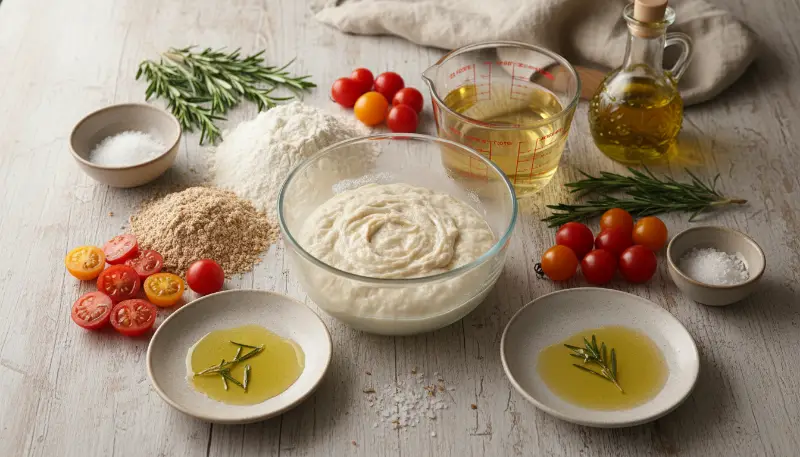
Traditional focaccia often utilizes wine for caramelizing onions or various pork-based cured meats. However, to maintain a gut-friendly profile that avoids inflammatory alcohol and heavy pork fats, we utilize rich alternatives. Caramelizing onions in a high-quality beef broth provides a deep, savory umami flavor that mimics the complexity of red wine without the alcohol. This technique ensures that your Gut Friendly Sourdough Focaccia remains inclusive and easier for the liver and gut to process.
When it comes to meat, lean beef bresaola is the perfect substitute for heavier meats. It is air-dried, salted, and highly digestible. Adding it to the focaccia immediately after baking allows the residual heat to warm the beef, releasing its aroma without toughening the fibers. If you’re roasting chickpeas or other vegetable garnishes for your focaccia, the Cosori 9-in-1 TurboBlaze Air Fryer is a fantastic way to get that perfect crunch without excessive oil.
The Role of Prebiotics in Sourdough
Your gut bacteria thrive on specific fibers known as prebiotics. By topping your Gut Friendly Sourdough Focaccia with garlic, red onions, and fresh rosemary, you are essentially providing a feast for your microbiome. Garlic and onions are rich in inulin, a type of prebiotic fiber that feeds the “good” bacteria in your colon. When combined with the probiotic-like benefits of the sourdough process, you have a functional food that tastes like a luxury treat.
For making accompanying sauces, like a garlic-tahini drizzle or a sun-dried tomato spread (using beef broth for consistency), the Ninja BN751 Professional Plus DUO Blender is your best friend. It emulsifies these gut-loving ingredients into a silk-smooth topping that enhances the Gut Friendly Sourdough Focaccia experience.
Mastering the Stretch and Fold Technique
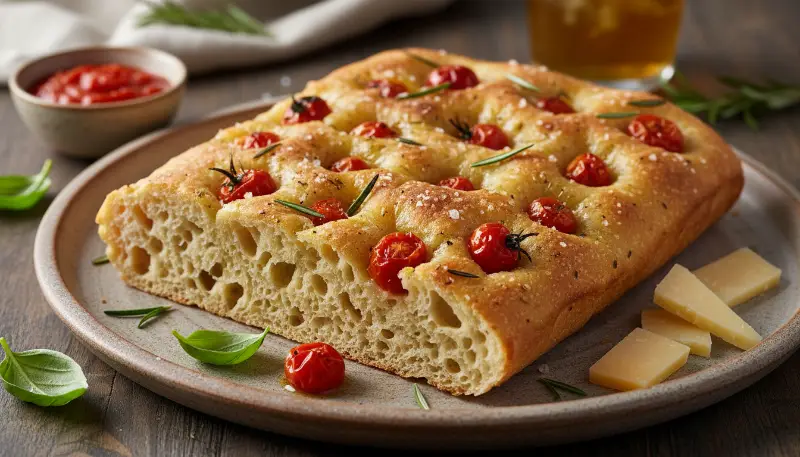
The texture of your Gut Friendly Sourdough Focaccia is determined by how you handle the dough. Unlike traditional bread, we do not “knead” focaccia. Instead, we use a series of stretches and folds. This builds gluten strength without compressing the air bubbles that make the bread so light. Each time you fold the dough, you are creating layers of strength. This results in the iconic “focaccia bubbles” that everyone loves to see during the final proofing stage.
Proper hydration is also key. A Gut Friendly Sourdough Focaccia usually sits around 75-80% hydration. This high water content is essential for the steam to create those large, open pockets during baking. It also makes the final product softer and less taxing on the digestive system compared to dense, low-hydration commercial breads.
Can I use whole wheat flour for gut friendly sourdough focaccia?
Yes, you can substitute up to 20% of the bread flour with whole wheat or spelt flour. However, keep in mind that whole grains contain more phytic acid, so ensuring a full 24-hour cold fermentation is even more critical for a truly Gut Friendly Sourdough Focaccia.
Why does my sourdough focaccia feel gummy?
Gummy bread usually happens for two reasons: under-baking or cutting the bread while it is still hot. Sourdough continues to “cook” and set its internal structure as it cools. For the best Gut Friendly Sourdough Focaccia, wait at least 30-60 minutes before slicing.
What is the best way to replace wine in recipes?
As seen in this Gut Friendly Sourdough Focaccia, beef broth combined with a teaspoon of balsamic vinegar or lemon juice is the best alcohol-free replacement. It provides the acidity and depth of flavor needed for savory toppings.
Is sourdough gluten-free?
No, sourdough is not gluten-free, but the fermentation process significantly reduces the gluten content. Many people with mild sensitivities find that a Gut Friendly Sourdough Focaccia is much easier to tolerate than standard bread.