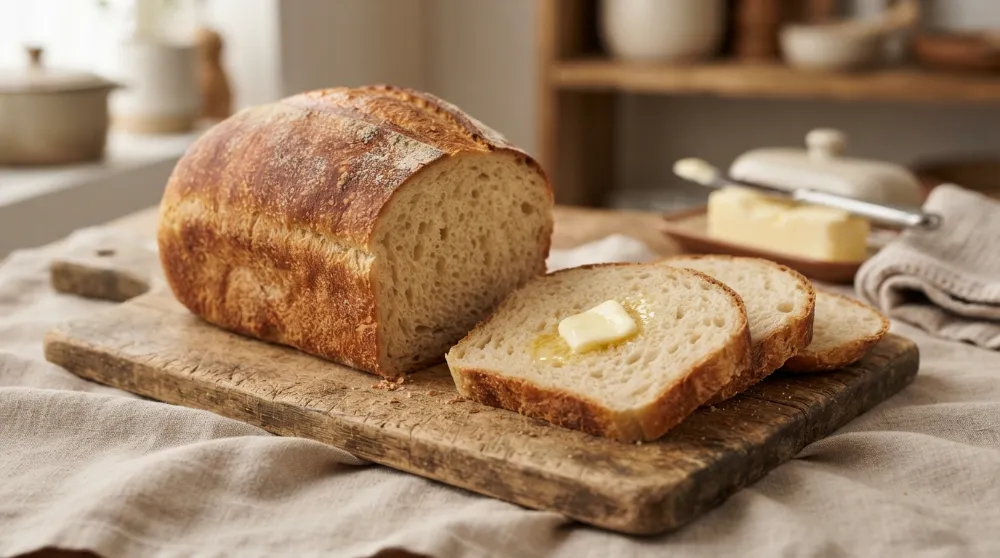

Don’t let your valuable starter go to waste when you can turn it into this ultra-soft, golden-brown Sourdough Discard Sandwich Bread. This easy hybrid recipe guarantees a perfect rise and a beautifully tender crumb that makes the ultimate canvas for your favorite morning toast or midday sandwiches.
Easy Sourdough Discard Sandwich Bread
Ingredients
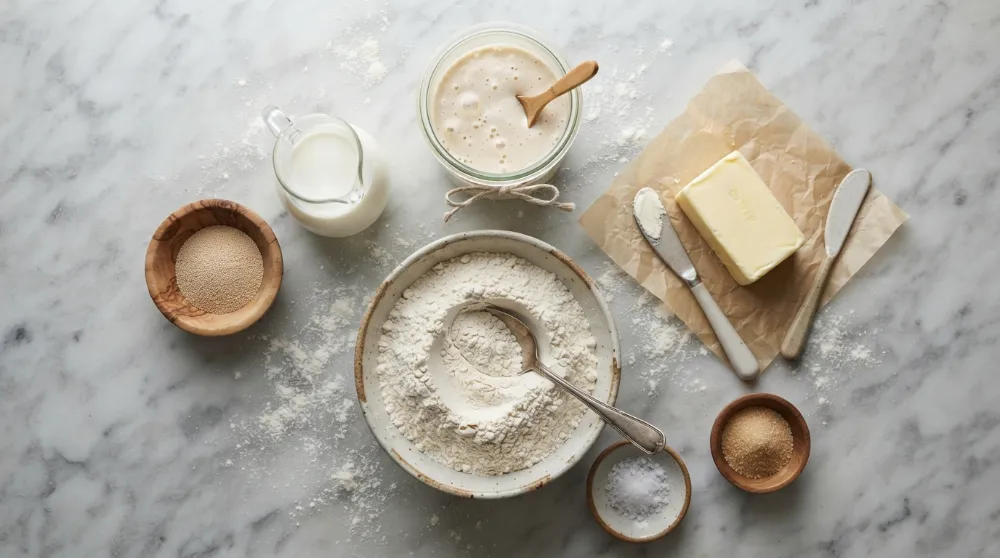
- 1/2 cup (120g) sourdough discard (unfed, room temperature)
- 1/2 cup (120ml) warm whole milk (110°F)
- 1/2 cup (120ml) warm water (110°F)
- 2.25 tsp (7g) active dry yeast
- 2 tbsp (42g) raw honey
- 3 cups (360g) unbleached all-purpose flour
- 4 tbsp (56g) unsalted butter (melted and slightly cooled)
- 1.5 tsp (9g) fine sea salt
Instructions
- 1 In a large bowl, whisk together the warm water, warm milk, honey, and active dry yeast. Let it sit for 5 to 10 minutes until frothy.
- 2 Whisk in the room-temperature sourdough discard and the melted butter until fully incorporated.
- 3 Add the flour and fine sea salt, then stir until a shaggy dough forms.
- 4 Knead the dough for 8 to 10 minutes by hand (or 5 to 7 minutes on medium-low speed in a stand mixer) until smooth, elastic, and slightly tacky.
- 5 Shape into a smooth ball and place in a lightly oiled bowl. Cover and let rise in a warm spot for about 1 hour, or until doubled in size.
- 6 Punch down the dough, turn out onto a floured surface, and roll out into an 8×4 inch rectangle. Roll tightly into a log.
- 7 Place seam-side down in a greased 8.5 x 4.5-inch loaf pan. Cover loosely and let rise for 45 to 60 minutes, or until the dough rises 1 inch above the rim.
- 8 Bake at 375°F (190°C) for 30 to 35 minutes until deep golden brown and the internal temperature is 195°F to 200°F. Cool completely before slicing.
Nutrition Facts
The Historical Origin and Development of Fermented Bread
Sourdough is the oldest form of leavened bread in human history, with rich archaeological evidence of wild-yeast fermentation dating back to 3,700 BC in Switzerland and historical records pointing to widespread use in Ancient Egypt and Rome. For millennia, bakers relied entirely on wild yeasts and lactic acid bacteria harvested from the environment to rise their dough. This natural fermentation process changed dramatically in the late 19th and early 20th centuries with the advent of industrially produced, isolated commercial baker’s yeast, which prioritized speed and consistency over complex flavor development.
Historically, the concept of discarding starter was virtually unheard of. Pioneer bakers in the American West or traditional European home bakers maintained their starters as stiff, dry balls of dough or kept liquid cultures on a continuous baking schedule. They merely pinched off a portion of the risen dough to save as the leaven for the next day’s bake, ensuring zero waste. The modern dilemma of sourdough discard emerged with the resurgence of artisan home baking, which saw a monumental rise during global lockdowns. To keep a small, jarred sourdough culture active and healthy, bakers must regularly discard a portion of the mixture before feeding it fresh flour and water. Without doing so, the volume of the starter would quickly grow exponentially, becoming completely unmanageable.
This Sourdough Discard Sandwich Bread was born as a highly functional, delicious hybrid loaf. It pairs commercial yeast, such as active dry yeast, to guarantee a rapid, reliable 2-to-3-hour rise and a soft, fluffy, uniform crumb, with unfed sourdough discard, which contributes a rich, complex tang and tenderizes the bread. This approach allows bakers to create a soft, easily sliceable sandwich bread with the flavor benefits of wild fermentation in a fraction of the time.
Demystifying the Sourdough Discard Paradox
For many home bakers, throwing away a half-cup of flour mixture every day feels incredibly wasteful. This is why the culinary community rallied to develop innovative ways to utilize this byproduct. When you feed your sourdough starter, you are refreshing the microbial colony of wild yeast and lactic acid bacteria. If you did not discard a portion of the starter before each feeding, you would need to add an ever-increasing, exponential amount of flour and water to keep the colony active. Within a couple of weeks, you would be feeding your starter with ten-pound bags of flour, resulting in a bucket-sized culture. To maintain a manageable quantity of starter, a portion must be removed. Rather than letting this acid-rich, flavorful batter go to waste, we channel its unique chemical characteristics into our baking.
Sourdough discard might not have the leavening power required to lift a heavy, crusty artisan loaf on its own, but it is packed with complex organic acids, enzymes, and partially broken-down starches. When incorporated into a standard sandwich loaf, this discard functions as a powerful natural dough conditioner, introducing an unmistakable artisanal flavor profile while maintaining a fast, reliable rise. It is the ultimate kitchen hack for reducing waste while elevating your daily carbohydrate intake.
The Chemistry of the Hybrid Loaf: Why It Works
The secret to the spectacular texture of this Sourdough Discard Sandwich Bread lies in its hybrid nature. Traditional sourdough bread relies entirely on wild yeast, which is slow, highly sensitive to ambient temperature, and often unpredictable. On the other hand, conventional sandwich bread relies solely on commercial baker’s yeast, which works incredibly fast but often lacks depth of flavor. By combining these two elements, we create the perfect baking synergy.
The commercial yeast acts as the structural engine, driving the fermentation forward at a predictable, rapid pace, ensuring that your sandwich loaf rises beautifully to a towering height in under two hours. Simultaneously, the unfed sourdough discard acts as the flavor and texture engine. The lactic and acetic acids in the discard break down some of the gluten bonds just enough to tenderize the crumb, resulting in an exceptionally soft slice that does not crumble when spread with cold butter or loaded with heavy sandwich ingredients. Furthermore, because the discard has already undergone fermentation, it contains pre-gelatinized starches that help the bread retain moisture. This prevents the loaf from drying out and staling as quickly as typical homemade yeasted breads do, giving you a longer shelf life without having to rely on chemical additives or industrial preservatives.
Nutritional Profile and Extensive Health Benefits
Incorporating sourdough discard into your daily sandwich bread is not just about reducing waste and enhancing flavor, it also brings significant nutritional advantages. Even though this recipe utilizes commercial yeast for its rapid rise, the presence of the pre-fermented discard elevates the nutritional profile of the finished loaf. First, consider the phenomenon of phytic acid degradation. Grains naturally contain phytic acid, an anti-nutrient that binds to vital minerals in the gut, making them difficult for your body to absorb. The lactic acid bacteria present in the sourdough discard produce phytase enzymes during their growth cycles. When you mix the discard into your dough, these enzymes work to break down the phytic acid, which significantly increases the bioaccessibility of essential minerals like iron, zinc, calcium, and magnesium.
Second, the long-term fermentation that the discard underwent prior to being used begins the pre-digestion of proteins, including gluten, and complex starches. This structural breakdown makes discard-enriched breads much easier on sensitive digestive systems, allowing many people who typically experience mild bloating or discomfort from standard white bread to enjoy sandwiches without issue. Third, the organic acids, particularly lactic and acetic acids, lower the glycemic index of the bread. This slower rate of starch digestion leads to a more gradual absorption of glucose into the bloodstream, preventing sharp blood sugar spikes and helping you feel fuller for longer. Finally, these organic acids act as natural preservatives, keeping your bread free from mold and spoilage without any synthetic ingredients.
Step-by-Step Baker’s Guide to Master Sourdough Discard Sandwich Bread
To consistently achieve a bakery-quality loaf, there are several key professional techniques you must master. First, pay close attention to the hydration balance of your dough. Sourdough discard can vary significantly in consistency depending on how long it has been sitting in your refrigerator and the flour-to-water ratio you used to feed your starter. If your discard is very runny, you may need to add an extra tablespoon or two of flour to the dough during the kneading stage. Conversely, if your discard is stiff, you might need a tiny splash of additional warm water. The ideal dough should feel soft, supple, and slightly tacky, but not sticky or difficult to handle.
Next, let’s talk about temperature control. Yeast thrives in a warm, draft-free environment, ideally between 75°F and 82°F. If your kitchen is cool, your rise times will be significantly longer. To create the ultimate proofing environment, you can use innovative kitchen appliances. Alternatively, you can use your oven with the oven light turned on to create a cozy proofing chamber.
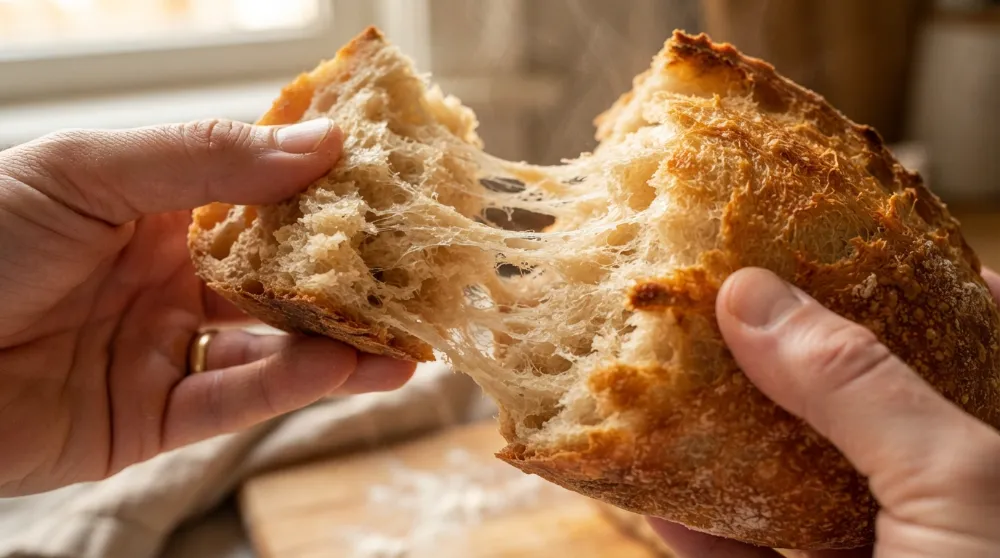
Kneading is another critical step where patience pays off. Whether you are kneading by hand or using a stand mixer, you must develop a strong gluten network. You will know your dough is fully kneaded when it passes the “windowpane test.” To perform this, pinch off a small piece of dough and gently stretch it from the center. If you can stretch it thin enough to see light passing through without the dough tearing, your gluten structure is perfectly developed.
When shaping your loaf, flatten the dough into a tight rectangle and roll it up firmly, pinching the seams together at each turn. This tight rolling prevents large, unsightly air pockets from forming inside your sandwich slices, ensuring a uniform, professional crumb structure that holds condiments beautifully. Finally, do not rush the cooling process. As tempting as it is to slice into a warm, fresh-out-of-the-oven loaf, doing so will ruin the internal texture. Slicing too early traps steam inside, leading to a gummy, dense crumb. Allow the loaf to rest on a wire cooling rack for at least one hour before slicing.
Professional Flavor Variations (Savory and Sweet)
One of the greatest joys of making Sourdough Discard Sandwich Bread is its incredible versatility. Once you master the base recipe, you can easily customize it to suit your culinary cravings.
Savory Variations
- Roasted Garlic, Rosemary, and Parmigiano-Reggiano: Slowly roast a head of garlic until soft and sweet, then mash it into a paste. Fold this garlic paste, along with finely chopped fresh rosemary and a generous handful of aged, grated Parmigiano-Reggiano cheese, into the dough during the final stages of kneading. This aromatic combination creates a deeply flavorful bread that elevates grilled cheese sandwiches to legendary status.
- Sun-Dried Tomato and Basil: Add chopped, oil-packed sun-dried tomatoes (making sure to drain them thoroughly first) and dried sweet basil to your flour mixture. You can even replace a portion of the butter in the recipe with the flavorful tomato oil from the jar to infuse the entire loaf with a beautiful orange hue and a rich herb aroma.
- Sharp Cheddar and Jalapeño: Fold cubed sharp cheddar cheese, which melts into delicious, gooey pockets during baking, and finely diced, deseeded jalapeños directly into the dough. This creates a wonderfully spicy, savory bread that pairs beautifully with savory soups and stews.
Sweet and Rustic Variations
- Cinnamon Raisin Swirl: Before the final shaping, roll the dough out flat into a large rectangle. Brush the surface lightly with melted butter and sprinkle it generously with ground cinnamon, brown sugar, and plump raisins. Roll the dough tightly into a log, place it in your loaf pan, and bake as directed. This variation makes the most incredible French toast you will ever taste.
- Honey Whole Wheat with a Seeded Crust: Replace half of the all-purpose flour with stone-ground whole wheat flour and swap the sugar for rich, raw honey. Before placing the shaped loaf in the oven, brush the top with water and roll it in a mixture of toasted sesame seeds, flaxseeds, and rolled oats for an artisanal look and a delicious, nutty crunch.
- Apple Cinnamon and Nutmeg: Incorporating finely chopped dehydrated apples (to prevent adding excess moisture to the dough) along with ground cinnamon and a pinch of nutmeg. This variation makes an outstanding rustic breakfast bread.
Essential Kitchen Tools for Bread Bakers
Investing in high-quality kitchen gear can transform your bread-making experience from a chore into an effortless, highly rewarding hobby. First and foremost, a reliable heating and proofing system makes a huge difference. The Cosori 9-in-1 TurboBlaze Air Fryer 6 Qt features precise heating and a PFAS-free ceramic coating, making it an excellent option for warming up ingredients or quick reheating. For hands-off proofing, the Instant Pot Duo 7-in-1 Electric Pressure Cooker (6-Qt) is a savior with its yogurt-maker setting, which holds the exact temperature wild yeast loves. If you ever want to make small-batch bread rolls or quick bakes, the Instant Vortex 6-Quart XL Air Fryer and the Ninja Crispi 4-in-1 Glass Air Fryer offer incredible multi-tier baking functionalities that circulate heat evenly for a beautiful, golden crust.
For preparing ingredients like fresh herbs, jalapeños, or nuts to fold into your savory doughs, the Hamilton Beach Electric Vegetable Chopper offers an easy Stack and Press design that saves you valuable prep time. If you want to blend honey, butter, and herbs into a smooth compound spread to serve alongside your fresh bread, the powerful NutriBullet 600 W Personal Blender (NBR-0601) or the professional-grade Ninja NutriPlus Personal Blender will get the job done in seconds. Finally, nothing pairs better with a warm slice of homemade bread than a fresh cup of coffee, brewed perfectly with the Keurig K-Express Coffee Maker, which features a bold brew option and a spacious reservoir to keep your morning routine running smoothly.
Troubleshooting Common Bread Baking Pitfalls
Even with a straightforward recipe, baking can occasionally present challenges. Here are the most common pitfalls and how to avoid them:
Why is my sandwich bread so heavy and dense?
A dense loaf is usually the result of under-kneading or under-proofing. If the gluten network isn’t fully developed, it cannot trap the gas bubbles produced by the yeast, resulting in a heavy crumb. Make sure to perform the windowpane test to verify gluten development. Additionally, ensure your proofing environment is warm enough, cold drafts will slow the yeast down significantly.
Why did my bread collapse in the oven?
This is classic over-proofing. If you let the dough rise too long during its second rise in the loaf pan, the yeast will run out of food and the gluten structure will become over-stretched. When the heat of the oven hits the loaf, the air bubbles expand rapidly and then pop, causing the center of the loaf to collapse. Aim to bake the dough when it has risen about 1 inch above the rim of the pan and springs back slowly when gently poked with a finger.
Why is the crust too hard?
If you prefer an ultra-soft, store-bought style crust, brush the top of the loaf with melted butter or a bit of milk immediately after taking it out of the oven. The fat and moisture will trap steam as the bread cools, softening the outer crust perfectly.