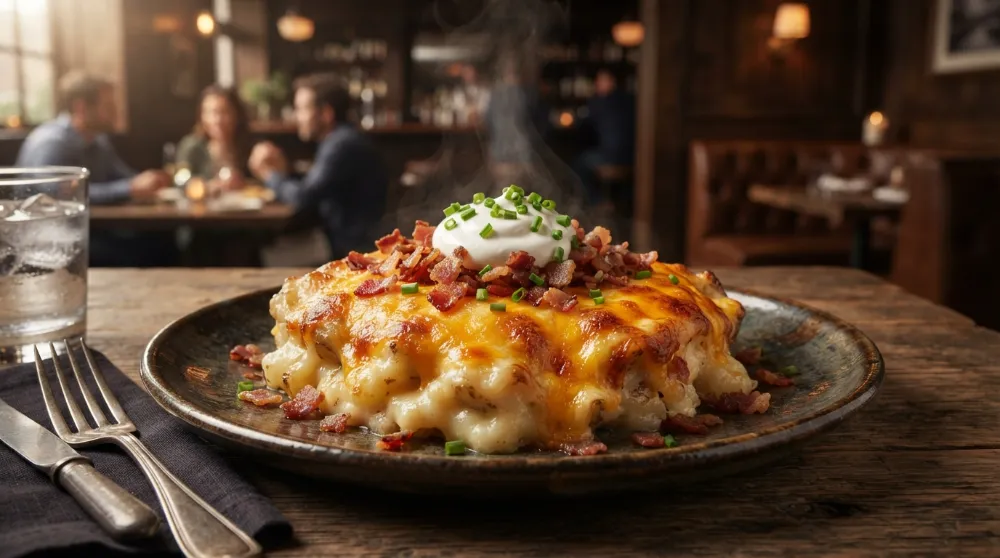

Bring the cozy warmth of a classic steakhouse right to your family dinner table with this decadent, ultra-creamy Loaded Baked Potato Casserole. This crowd-pleasing dish transforms humble potatoes into a velvety, cheese-laden masterpiece that will have everyone asking for seconds.
Loaded Baked Potato Casserole
20 mins
40 mins
60 mins
8 servings
American
Side Dish / Main
Easy
Ingredients
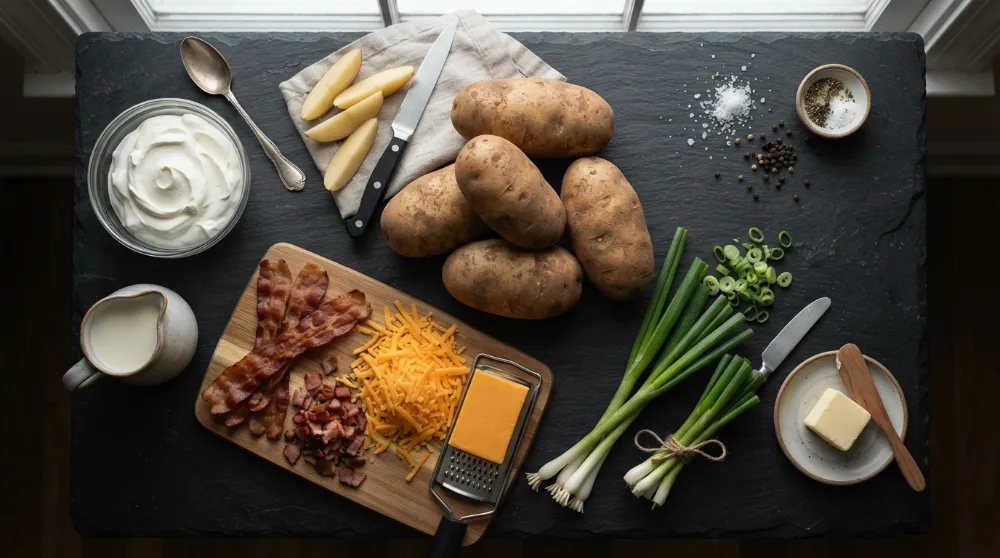
- 3 lbs Russet potatoes, peeled and cut into 1-inch cubes
- 1/2 cup unsalted butter, softened
- 1 cup full-fat sour cream
- 1/2 cup heavy whipping cream
- 2 cups sharp cheddar cheese, shredded (divided)
- 1 cup cooked beef bacon, chopped and crisped (divided)
- 1/2 cup fresh chives or green onions, finely chopped
- 1 tbsp garlic powder
- 1 tsp sea salt
- 1/2 tsp freshly cracked black pepper
Instructions
- 1 Preheat your oven to 375°F (190°C) and lightly grease a 9×13-inch baking dish.
- 2 Place the cubed potatoes in a large pot, cover with cold salted water, and bring to a boil. Cook for 12 to 15 minutes, or until easily pierced with a fork. Drain well.
- 3 In a large bowl, mash the hot potatoes with the softened butter, sour cream, heavy cream, garlic powder, salt, and black pepper. Keep some texture rather than making it completely smooth.
- 4 Gently fold in half of the cheddar cheese (1 cup), half of the crispy beef bacon (1/2 cup), and half of the chopped chives.
- 5 Spread the mixture evenly into the prepared baking dish. Bake uncovered for 20 minutes.
- 6 Sprinkle the remaining cheddar cheese and crispy beef bacon over the top, then bake for another 10 to 15 minutes until the cheese is melted and bubbling.
- 7 Garnish with the remaining fresh chives before slicing and serving.
Nutrition Facts
420 kcal
30g
15g
28g
3g
The Historical Journey of the Potato and the Casserole
The history of the Loaded Baked Potato Casserole is a fascinating tale that connects ancient farming traditions with modern American comfort food. It begins thousands of years ago in the high-altitude Andes of South America, where the Incas first cultivated the potato. To cook their harvest, they built underground earth ovens called huatias, layering volcanic rocks, soil, and hot coals to steam the tubers naturally. This ancient technique laid the foundation for the classic baked potato we know today.
When Spanish explorers introduced the potato to Europe, it slowly transformed from an exotic curiosity into a critical working-class staple. By the 19th century, baked potatoes, known as “jacket potatoes,” were popular street food in London, sold hot on street corners during damp winter months. Soon, home cooks began experimenting with “twice-baking” to add extra flavor. American recipe books like the 1880 edition of Buckeye Cookery shared recipes for “Potatoes Standing in Their Jackets,” where baked potato flesh was scooped out, whipped with rich dairy, and re-baked.
In the early 20th century, the potato became even more popular in America. In 1908, Hazen Titus, the dining superintendent for the Northern Pacific Railway, began serving giant, slow-baked Idaho russet potatoes to travelers, making them a famous regional treat. Decades later, during the mid-20th century, busy families embraced casseroles, named after the French word for “saucepan,” because they were easy, oven-ready, and perfect for sharing. Clever cooks realized they could save time by skipping the individual potato skins and mashing the potatoes en masse, layering them in a single baking dish with cheese, sour cream, and smoky toppings. This simple twist created the modern Loaded Baked Potato Casserole we love today.
Selecting Your Spuds: Russet vs. Yukon Gold
The secret to an extraordinary Loaded Baked Potato Casserole lies in choosing the right type of potato. Different potatoes contain different starches, which drastically affects the final texture of your dish. Choosing the right variety ensures your casserole is fluffy and rich, rather than heavy or gluey.
Russet Potatoes (The Fluffy Standard): Russets are high in starch (specifically amylose) and low in moisture. When cooked, their cells separate easily, creating a light, dry, and exceptionally fluffy texture. This makes them perfect for soaking up heavy cream, melted butter, and sour cream without turning greasy. If you want a classic steakhouse-style casserole with a light, airy bite, Russets are your best choice.
Yukon Gold Potatoes (The Buttery Premium): Yukon Golds have a medium starch level and a naturally buttery flavor and golden color. They hold their shape slightly better than Russets, which gives the casserole a velvety, dense, and rustic texture. For a creamier, richer casserole with a bit more bite, use Yukon Golds, or try a 50/50 blend of both Russets and Yukon Golds to get the best of both worlds.
The Culinary Science of the Perfect Mash
To get a perfectly creamy texture, it helps to understand a little kitchen science. When potatoes cook, their starch molecules absorb water and swell, a process called starch gelatinization. If these swollen starch cells are worked too hard, they break open and release too much starch, which makes your potatoes sticky, gummy, and heavy.
To avoid a gluey casserole, handle your potatoes gently. Avoid using high-speed blenders or food processors, which spin too fast and break down the starch cells. While high-powered appliances like the NutriBullet 600 W Personal Blender or the Ninja NutriPlus Personal Blender are perfect for smooth sauces and smoothies, they will turn potatoes into a sticky paste. Instead, use a classic hand masher, a potato ricer, or a food mill. These tools break up the potatoes gently, keeping the starch cells intact and ensuring your casserole stays light, fluffy, and incredibly smooth.
Advanced Pre-Cooking Methods for Maximum Flavor
While boiling your potatoes is quick and easy, trying different cooking methods can bring out even deeper flavors in your casserole. Here are a few great ways to prep your potatoes:
- Air Frying: For an amazing, rich flavor, roast your potatoes whole in the Cosori 9-in-1 TurboBlaze Air Fryer 6 Qt or the Instant Vortex 6-Quart XL Air Fryer. Baking them in an air fryer dries out the potato flesh slightly, concentrating their natural flavor and allowing them to soak up even more delicious butter and sour cream. Once baked, simply scoop out the fluffy centers and mash. You can also use the versatile Ninja Crispi 4-in-1 Glass Air Fryer to easily monitor your potatoes as they roast to golden perfection.
- Pressure Cooking: If you are short on time, use the Instant Pot Duo 7-in-1 Electric Pressure Cooker (6-Qt). Steaming cubed potatoes under pressure takes just a few minutes and locks in their natural flavor without letting them absorb excess water, which can sometimes happen when boiling.
- Slow Cooking: If you are hosting a party or potluck, you can build and cook your casserole directly in the Crock-Pot 7-Qt Oval Slow Cooker. Simply layer your mashed potato mixture inside, top with cheese and crispy beef bacon, and heat on low for 2 to 3 hours until hot, melty, and ready to serve.
Premium Toppings and Ingredients (Pork-Free)
A great loaded potato casserole relies on high-quality, delicious toppings. To keep this recipe entirely pork-free, we swap classic bacon for savory, smoky beef or turkey options that deliver the perfect crunch and flavor:
- Smoky Beef Bacon: This is the ultimate swap for pork bacon. Made from cured beef belly, it crisps up beautifully in a hot skillet and brings a deep, rich, steakhouse-style smokiness to the dish. For perfectly uniform toppings, use the Hamilton Beach Electric Vegetable Chopper to quickly and easily prep your crispy beef bacon and fresh chives.
- Crispy Turkey Bacon: A lighter option that still offers a delicious smoky flavor and a satisfying crunch. Cook it until shatteringly crisp before crumbling it over your cheese layer.
- Sautéed Mushrooms: For a delicious vegetarian twist, skip the meat and sauté cremini or shiitake mushrooms in butter with a pinch of garlic salt and smoked paprika.
Professional Flavor Variations
Take your casserole to the next level with these three delicious, gourmet variations:
1. Smoked Beef & Aged White Cheddar (The Steakhouse Classic)
This premium variation brings the rich, bold flavors of a high-end steakhouse right to your table. Start with a base of fluffy Russet potatoes mashed with unsalted butter, sour cream, and a spoonful of roasted garlic paste. Next, fold in plenty of sharp white cheddar and a sprinkle of smoked Gouda for a deep, complex flavor. Top the dish with a generous layer of crispy, thick-cut beef bacon and finely snipped fresh chives.
2. Truffled Wild Mushroom & Gruyere (The Earthy Gourmet)
Perfect for vegetarians or anyone who loves earthy flavors, this elegant variation is rich and comforting. Mash buttery Yukon Gold potatoes with heavy cream, butter, and a splash of rich, savory vegetable broth. Top with cremini, oyster, and shiitake mushrooms sautéed in fresh thyme, garlic, and a tiny splash of apple cider vinegar for brightness. Layer with melted Swiss Gruyere and creamy Fontina cheese, then finish with a light drizzle of white truffle oil.
3. Buffalo Chicken & Monterey Jack (The Spicy Pub Blend)
Turn your side dish into a hearty, protein-packed main course. Mix your mashed potatoes with cream cheese and sour cream for an ultra-creamy base. Fold in tender shredded rotisserie chicken tossed in a tangy, vinegar-based buffalo hot sauce. Cover with shredded Monterey Jack cheese and a sprinkle of blue cheese crumbles, bake until golden, and finish with a drizzle of cool buttermilk ranch and fresh green scallions.
Nutritional Deep-Dive: Standard vs. Lighter Preparation
The nutritional profile of this comforting dish can be easily customized to fit your lifestyle and dietary preferences:
Standard Rich Preparation: Prepared with full-fat sour cream, heavy cream, butter, and sharp cheddar, a hearty 1-cup serving contains roughly 420 calories, 28 grams of fat, and 15 grams of protein. This traditional version is incredibly rich, satisfying, and perfect for special holiday meals and family gatherings.
Lighter Modified Preparation: You can easily lighten up this recipe without losing its signature creaminess. Simply swap the sour cream for high-protein, plain Greek yogurt, replace the heavy cream with low-sodium chicken or vegetable broth, and use a reduced-fat cheddar cheese. This simple swap cuts the calories down to about 220 per serving and lowers the fat while boosting the protein, making it an excellent option for healthy weekday dinners.
The Power of Potato Micronutrients
Beyond being pure comfort food, potatoes offer some great health benefits. They are naturally packed with potassium, an essential mineral that supports heart health, healthy blood pressure, and muscle function. In fact, a single serving of this casserole contains more potassium than a banana! Potatoes also provide a healthy dose of Vitamin C, a powerful antioxidant, while the cheese and dairy layers supply calcium to support strong bones.
Perfect Pairings and Serving Contexts
This versatile Loaded Baked Potato Casserole pairs wonderfully with a variety of delicious main dishes. Serve it alongside a juicy, pan-seared steak, roasted chicken, or tender beef brisket. To balance out the rich, cheesy flavors, add a bright, fresh side dish like a crisp green salad, roasted asparagus, or steamed garlic green beans.
After enjoying this comforting, hearty meal, treat your guests to a warm cup of freshly brewed coffee, easily prepared using the Keurig K-Express Coffee Maker, for the perfect ending to a wonderful dinner.
Leftovers, Freezing, and Reheating Best Practices
This casserole makes incredible leftovers and is simple to store and reheat:
- Refrigerating: Let the casserole cool completely to room temperature. Cover the baking dish tightly with aluminum foil or transfer the leftovers to an airtight container. Store in the refrigerator for up to 3 to 4 days.
- Freezing: You can easily freeze this casserole for future quick dinners. Assemble the potato mixture in a freezer-safe dish, but skip the final cheese and beef bacon toppings. Wrap the dish securely in plastic wrap and aluminum foil, and freeze for up to 3 months. When ready to bake, thaw the casserole in the refrigerator overnight, top with fresh cheese and beef bacon, and bake as directed, adding 10 extra minutes to the bake time if needed.
- Reheating: To keep the potatoes from drying out, reheat individual portions in the microwave at medium power, or place the entire covered casserole dish back in a 350°F (175°C) oven for 15 to 20 minutes until hot and bubbling.