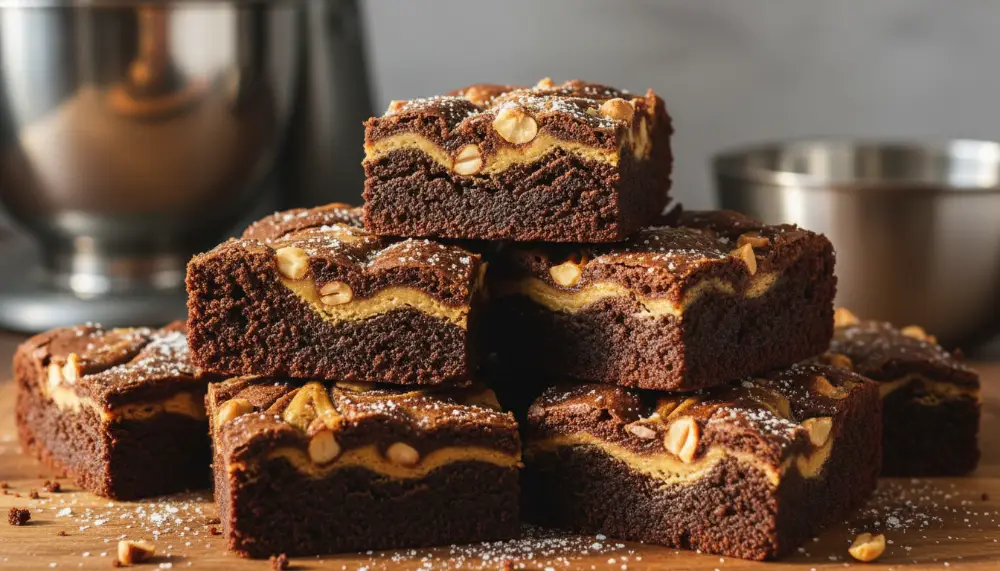

Indulge in the ultimate fusion of rich, dark chocolate and creamy, salted peanut butter with these decadent Peanut Butter Brownies. This recipe delivers a dense, fudge-like texture that perfectly balances the savory notes of roasted nuts with the sweetness of premium cocoa.
World-Class Peanut Butter Brownies
Ingredients
- 1 cup Unsalted Butter, melted and cooled
- 2 cups Granulated Sugar
- 4 Large Eggs, room temperature
- 1 tbsp Pure Vanilla Extract
- 3/4 cup Dutch-Process Cocoa Powder
- 1 cup All-Purpose Flour
- 1/2 tsp Salt
- 1/2 cup Creamy Peanut Butter
- 1/4 cup Powdered Sugar (for the swirl)
Instructions
- Preheat your oven to 350°F (175°C) and line an 8×8 inch baking pan with parchment paper.
- In a large bowl, whisk the melted butter and granulated sugar until well combined.
- Add the eggs one at a time, beating well after each addition. Stir in the vanilla extract.
- Sift in the cocoa powder, flour, and salt. Fold gently until just combined. Pour into the prepared pan.
- In a small bowl, mix the peanut butter and powdered sugar. Drop spoonfuls onto the brownie batter.
- Use a knife to swirl the peanut butter into the chocolate. Bake for 30-35 minutes.
- Cool completely before slicing to ensure the fudgiest texture.
The Rich History of the Peanut Butter Brownie
The journey of the brownie is a fascinating tale of American culinary ingenuity. While the original brownie was born at the Palmer House Hotel in Chicago in 1893, it was a much simpler confection featuring walnuts and an apricot glaze. Bertha Palmer, a socialite who wanted a dessert that could be easily carried in boxed lunches at the World’s Columbian Exposition, never could have imagined the evolution her request would spark. The Peanut Butter Brownie, however, owes its existence to the stabilization of peanut butter in the 1920s. Before this, peanut oil would separate, making it difficult to use in consistent baking. Once brands like Peter Pan and Skippy mastered the shelf-stable formula, home cooks began experimenting. By the time H.B. Reese popularized the chocolate and peanut butter pairing in 1928, the stage was set for the ultimate dessert mashup. Today, Peanut Butter Brownies are a staple of American culture, representing the perfect balance of salty, savory peanuts and rich, indulgent cocoa.
Essential Tools for Baking Perfection
To achieve the professional level of texture and flavor found in high-end patisseries, using the right equipment is non-negotiable. For many of the components of this recipe, such as creating a smooth peanut butter base or managing large batches of batter, we recommend the following professional tools:
- Ninja BN751 Professional Plus DUO Blender: https://amzn.to/3LCDyNR (Why Perfect: Its 1000W motor is ideal for making homemade nut butters or blending the swirl ingredients to a silky consistency).
- Cosori 9-in-1 TurboBlaze Air Fryer 6 Qt: https://amzn.to/4hRWmVq (Why Perfect: It roasts raw peanuts to perfection before you grind them, ensuring a deep, toasted flavor for your brownies).
- Cuisinart 8 Cup Food Processor: https://amzn.to/47Nhbg8 (Why Perfect: Essential for fast chopping of chocolate chunks or mixing a dense brownie batter without over-aerating it).
- Rubbermaid Brilliance Glass Storage Set of 9: https://amzn.to/4oD0YkY (Why Perfect: These are leak-proof and stackable, making them the best choice for storing your finished brownies to keep them moist).
- FoodSaver Vacuum Sealer Machine: https://amzn.to/4qWgVnS (Why Perfect: If you are making massive batches, this machine prevents freezer burn and keeps your brownies fresh for months).
The Science of the Fudgy Texture
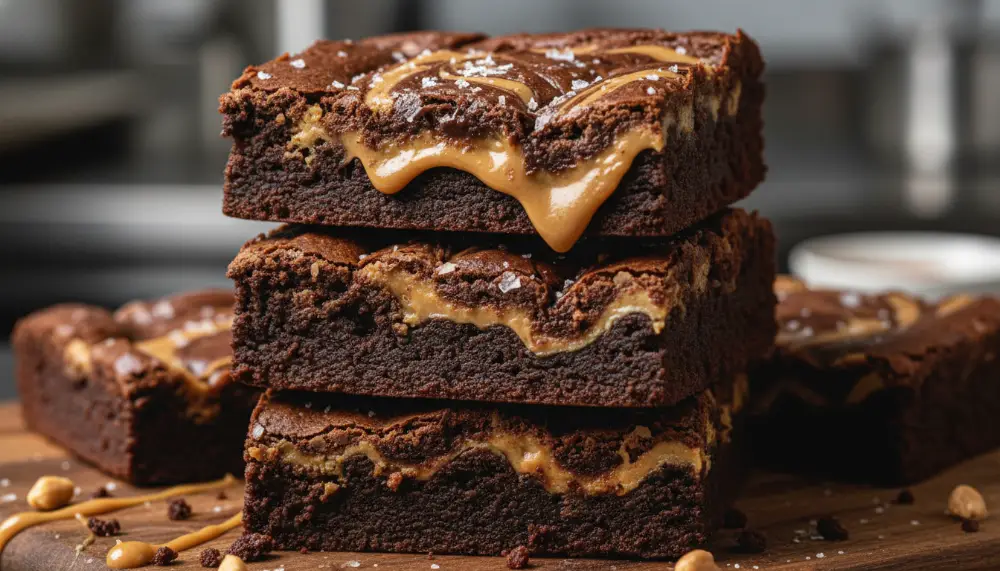
The distinction between a cake-like brownie and a fudgy brownie lies in the ratio of fat to flour. For Peanut Butter Brownies, achieving that dense, almost truffle-like consistency requires a high fat content, provided here by both the butter and the natural oils in the peanut butter. When you whisk the sugar and butter, you are not looking to incorporate air, unlike in a sponge cake. Instead, you want a heavy, saturated mixture. The addition of Dutch-process cocoa powder is another professional secret, it has been treated with an alkalizing agent to reduce acidity, resulting in a darker color and a smoother, more mellow chocolate flavor that complements the saltiness of the peanut butter perfectly. Use a splash of dark cherry juice if you want to deepen the cocoa profile without using coffee extracts, the slight acidity of the juice highlights the fruity notes of the chocolate. When baking, remember that the brownies will continue to set as they cool, taking them out when the center is still slightly wobbly is the key to avoiding a dry, crumbly result.
Professional Variations to Elevate Your Bake
The Buckeye Layered Brownie
In professional settings, the “Buckeye” variation is highly sought after. This involves baking a standard fudgy brownie base, allowing it to cool, and then spreading a thick layer of peanut butter fudge (a mix of peanut butter, butter, and powdered sugar) over the top. The entire tray is then glazed with a dark chocolate ganache. This creates a triple-layered masterpiece that is as visually stunning as it is delicious.
Salted Peanut Marbling
For those who prefer a more savory dessert, chefs often use “natural” peanut butter, which contains only peanuts and salt. This is swirled into the batter along with a handful of whole roasted peanuts. Before the brownies go into the oven, a generous sprinkling of flaky sea salt is added to the top. This enhances the cocoa notes and provides a crunch that contrasts beautifully with the soft brownie.
Espresso-Infused Mocha PB Brownies
Chocolate and coffee are natural partners. By adding a tablespoon of highly concentrated espresso or a dash of cherry juice to the batter, you create a complex flavor profile. The bitterness of the coffee or the tartness of the juice acts as a foil to the sweetness of the sugar, making the peanut butter swirl stand out even more. This is a common technique used in specialty cafes to create a “gourmet” experience.
Nutritional Analysis and Dietary Considerations
Peanut Butter Brownies are an indulgent treat, and understanding their nutritional makeup helps in balancing them within a diet. A standard serving contains approximately 450 calories, with a significant portion of that coming from healthy fats found in peanuts. While traditional brownies are low in protein, the addition of peanut butter increases the protein content to about 7-10 grams per square. This makes them slightly more satiating than their chocolate-only counterparts. For those with specific needs, ensure you are using high-quality ingredients and avoid any processed additives. If you are looking to reduce the sugar, you can substitute a portion of the granulated sugar with coconut sugar, which offers a caramel-like depth that pairs wonderfully with the nuts.
Storage and Longevity Tips
Because of the high moisture content from the peanut butter, these brownies stay fresh longer than standard cakes. To maintain their texture, store them in an airtight container at room temperature for up to four days. If you prefer a firmer, chewier brownie, refrigeration is an excellent option. For long-term storage, Peanut Butter Brownies freeze exceptionally well. Wrap individual squares in parchment paper and then place them in a vacuum-sealed bag using your FoodSaver machine. This prevents the absorption of other freezer odors and keeps the texture intact for up to three months. When you are ready to eat, simply thaw at room temperature or give them a quick 10-second blast in the microwave for a molten experience.