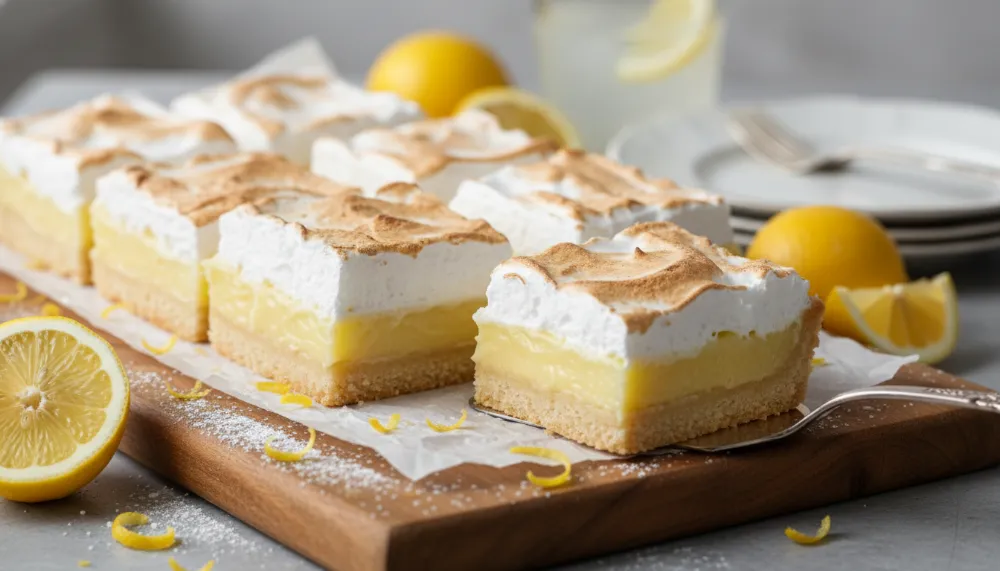

These Lemon Meringue Pie Bars offer the perfect harmony of buttery shortbread, tangy citrus curd, and cloud-like toasted meringue in every portable bite. They are the ultimate crowd-pleasing dessert for any gathering where you want the elegance of a classic pie with the convenience of a handheld square.
Lemon Meringue Pie Bars
Ingredients
- 1 2 cups All-purpose flour (for the crust)
- 2 1/2 cup Confectioners sugar (for the crust)
- 3 1 cup Unsalted butter, cold and cubed
- 4 1 1/2 cups Granulated sugar (for filling)
- 5 1/4 cup Cornstarch
- 6 1/2 cup Fresh lemon juice
- 7 2 tbsp Lemon zest
- 8 4 Large egg yolks
- 9 4 Large egg whites (room temperature for meringue)
- 10 1/2 tsp Cream of tartar
- 11 1/2 cup Granulated sugar (for meringue)
Instructions
- 1 Preheat oven to 350°F (175°C) and line a 9×9 inch baking pan with parchment paper.
- 2 Pulse flour, confectioners sugar, and butter in a food processor until crumbly. Press into the pan and bake for 20 minutes.
- 3 Whisk sugar, cornstarch, lemon juice, zest, and yolks in a saucepan over medium heat until thickened. Pour over the hot crust.
- 4 Whip egg whites and cream of tartar to soft peaks. Gradually add sugar until stiff, glossy peaks form.
- 5 Spread meringue over the lemon layer, sealing the edges. Bake for 10-15 minutes until golden brown. Cool completely, then refrigerate for 4 hours before slicing.
The Fascinating History of Lemon Meringue Pie Bars
To understand the genius behind the Lemon Meringue Pie Bar, one must look at the marriage of two American culinary staples: the Victorian-era lemon meringue pie and the mid-century modern lemon bar. This fusion represents a evolution of convenience without sacrificing the luxury of flavor.
The original lemon meringue pie has its roots in the early 1800s in Philadelphia. Elizabeth Goodfellow, a renowned pastry chef and teacher, is often credited with the creation of the lemon custard and meringue combination. Before her innovation, lemon puddings and meringues existed separately, but she famously used the leftover egg whites from her yolk-heavy custards to create a decorative, light topping. This was later documented by her student Eliza Leslie and became a staple of American dessert culture. Fast forward to the 1960s, and the world saw the rise of the “lemon bar,” a dense, shortbread-based treat popularized in the Chicago Tribune by Eleanor Mickelson. Combining these two, taking the structural integrity of the bar and adding the whimsical height of the meringue, created the modern Lemon Meringue Pie Bar we adore today.
The Science of the Perfect Shortbread Crust
A Lemon Meringue Pie Bar is only as strong as its foundation. The shortbread crust must be sturdy enough to hold the weight of the curd and meringue, yet delicate enough to melt in your mouth. To achieve this, we use the “rubbing-in” method, where cold butter is integrated into the flour and sugar until it resembles coarse crumbs. This prevents the gluten from over-developing, ensuring a tender, flaky base.
For the most consistent results, a Cuisinart 8 Cup Food Processor is essential for fast chopping and slicing during meal prep. It allows you to pulse the cold butter into the flour in seconds, keeping the fat cold and preventing it from melting before it hits the oven. When that cold fat eventually meets the heat, it creates tiny pockets of steam, resulting in that signature shortbread snap.
Mastering the Tangy Lemon Filling
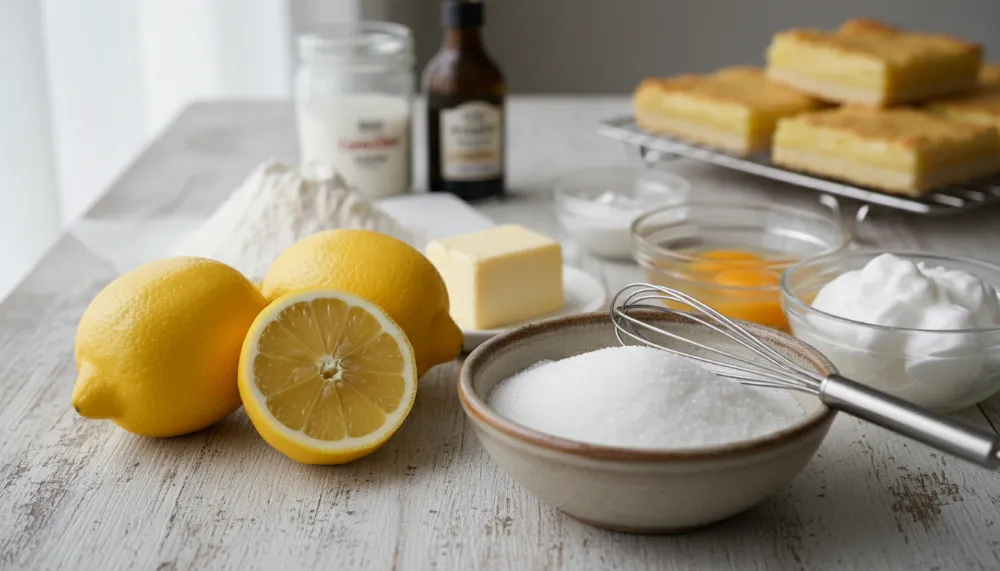
The heart of these Lemon Meringue Pie Bars is the lemon curd filling. A professional-grade filling requires a precise balance of acidity, sweetness, and thickening agents. We use a combination of egg yolks for richness and cornstarch for stability. The cornstarch is vital here because, unlike a traditional pie which is served in a dish, these bars must stand upright on their own after being sliced.
When preparing your filling, the quality of your lemon juice and zest makes all the difference. Avoid the bottled stuff at all costs, fresh lemons provide the bright, floral notes necessary to cut through the sweetness of the meringue. If you find your curd has any lumps from the egg yolks, using a high-powered blender like the Ninja BN751 Professional Plus DUO Blender can help you achieve an ultra-smooth consistency, ensuring every bite is velvety and luxurious.
Meringue Mechanics: Getting the Peak
Meringue can be intimidating, but it is simply a foam of air bubbles trapped in egg white proteins. For these Lemon Meringue Pie Bars, we typically use a French meringue method, which is whipped at room temperature. The addition of cream of tartar is a non-negotiable step, as it acts as a stabilizer, preventing the egg white proteins from collapsing and “weeping” or releasing moisture onto the curd.
When whipping your whites, ensure your bowl is completely free of any grease or stray yolk. Even a single drop of fat will prevent the proteins from bonding. Start on a low speed and gradually increase to high, adding the sugar one tablespoon at a time. This slow addition allows the sugar to dissolve completely, preventing a grainy texture in the finished product.
Nutritional Deep Dive
While these bars are an indulgent treat, understanding their profile helps in planning them as part of a balanced lifestyle. A standard 2×2-inch square provides approximately 230 calories. The primary macronutrients include 11g of fat and 30g of carbohydrates, with 22g of that coming from sugars. However, you are also getting a boost of Vitamin C from the fresh lemon juice and 4g of protein from the high egg content.
For those looking for professional substitutions, you can replace the butter with a high-quality plant-based fat to reduce saturated fat, though the flavor profile will shift slightly. Because we use cornstarch as a thickener, these bars avoid any animal-derived gelatins, making them a fantastic vegetarian-friendly dessert option.
Professional Flavor Variations to Elevate Your Bars
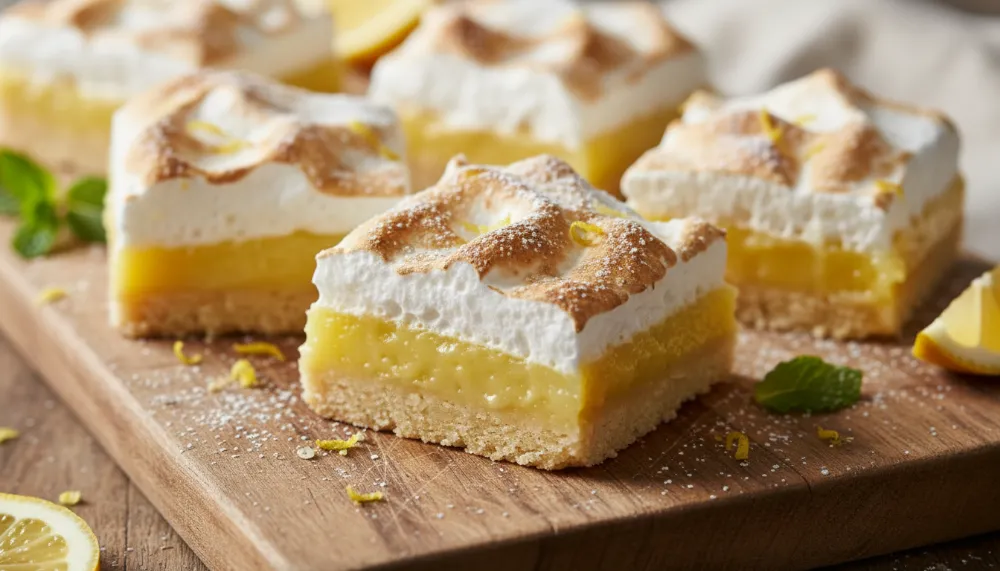
Once you have mastered the classic Lemon Meringue Pie Bars, you can begin to experiment with professional-level flavor infusions. Pastry chefs often look for ways to add complexity to the simple lemon profile:
- Botanical Infusions: Rub fresh basil or culinary lavender into your sugar before mixing the curd. The herbal notes provide a sophisticated counterpoint to the tart lemon.
- Citrus Blends: Try a mix of Meyer lemons and Yuzu. Meyer lemons are sweeter and more floral, while Yuzu adds a complex, mandarin-like aroma.
- Spiced Crusts: Add a teaspoon of ground ginger to your shortbread crust. The warmth of the ginger creates a beautiful contrast with the cold, citrusy topping.
- The Salty-Sweet Swap: For a modern twist, use a crushed saltine or buttery cracker base. To get the perfect toast on these crackers before adding the curd, the Cosori 9-in-1 TurboBlaze Air Fryer 6 Qt is excellent, as it roasts chickpeas, vegetables, and even nut-based crust components perfectly with its large family capacity.
Tips for the Perfect Slice
The biggest challenge with Lemon Meringue Pie Bars is getting clean, beautiful squares. To achieve professional results, you must exercise patience. The bars need to be completely cold before you even think about cutting them. Refrigerating them for at least four hours, or even overnight, allows the curd to set fully.
When you are ready to slice, use a very sharp knife and dip it in hot water before every single cut. Wipe the blade clean after each pass. This prevents the meringue from sticking to the knife and tearing away from the filling. If you want that classic toasted look, you can use a kitchen torch on the meringue after slicing for a more dramatic, charred appearance on the individual peaks.
Storing and Make-Ahead Advice
Lemon Meringue Pie Bars are best enjoyed within 24 to 48 hours of baking. Because the meringue is high in sugar and moisture, it can begin to absorb humidity from the air, which leads to “beading” (small droplets of syrup forming on the surface). To minimize this, store the bars in a single layer in an airtight container in the refrigerator.
While the crust can be made in advance and frozen, the finished bar with the meringue does not freeze well, as the delicate structure of the egg whites will break down upon thawing. For the best experience, assemble and bake the meringue on the day you plan to serve, or the evening before.