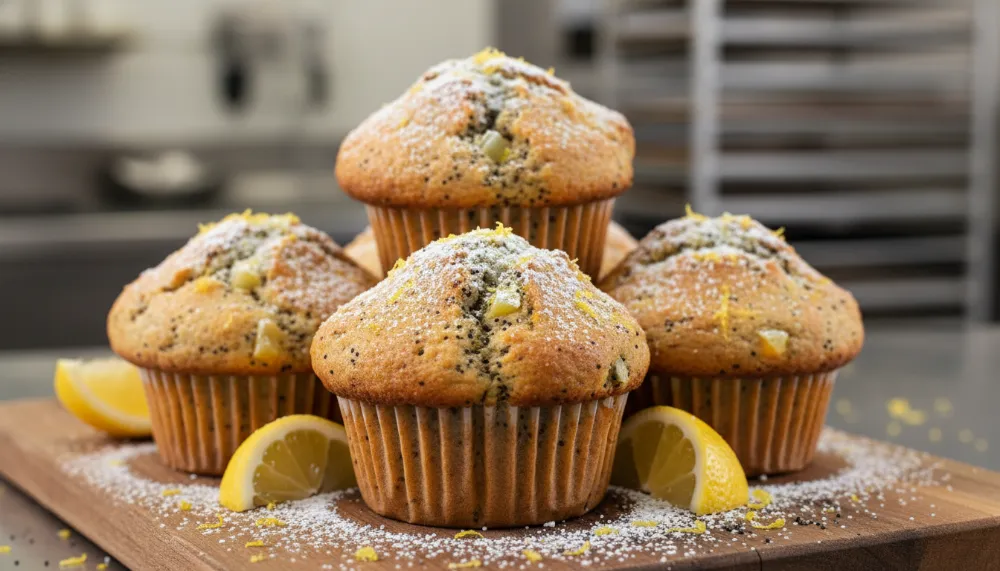

These GF Lemon Poppy Seed Muffins represent the perfect marriage of bright, sun-ripened citrus and the delicate, nutty crunch of ancient poppy seeds. Designed for the discerning home baker, this recipe delivers a bakery-quality crumb that is completely gluten-free without ever compromising on texture or flavor.
GF Lemon Poppy Seed Muffins
Ingredients
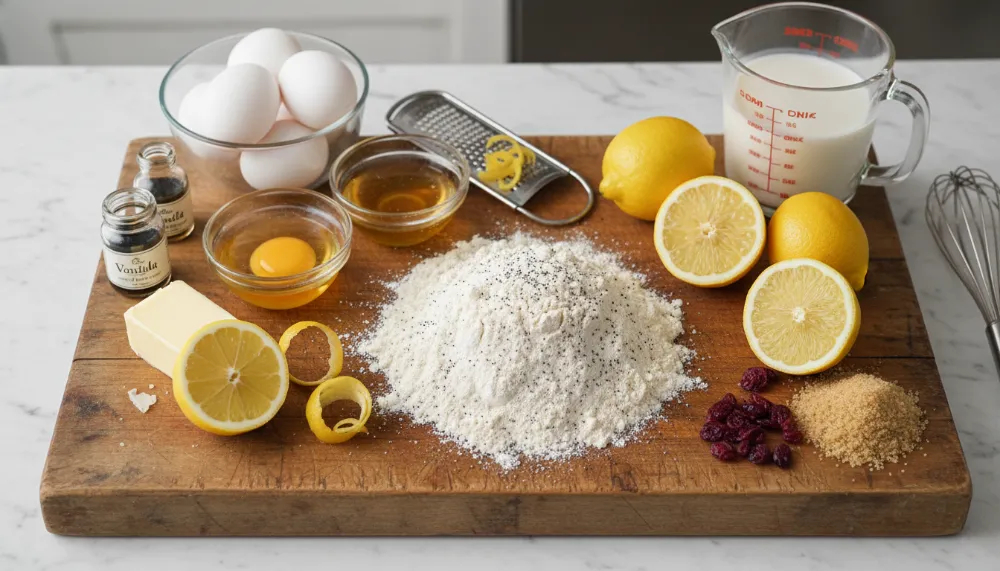
- 1 2 cups Gluten-Free All-Purpose Flour Blend (with Xanthan Gum)
- 2 1/2 cup Almond Flour (for moisture and texture)
- 3 1 cup Granulated Sugar
- 4 2 tablespoons Poppy Seeds
- 5 1 tablespoon Baking Powder & 1/2 teaspoon Baking Soda
- 6 1/2 teaspoon Fine Sea Salt
- 7 2 large Eggs (room temperature)
- 8 1 cup Plain Yogurt or Sour Cream (no alcohol-based additives)
- 9 1/2 cup Avocado Oil or Melted Ghee
- 10 3 tablespoons Fresh Lemon Zest & 1/4 cup Fresh Lemon Juice
Instructions
- 1 Preheat oven to 400°F (200°C) and line a muffin tin with papers.
- 2 In a large bowl, whisk together the GF flour, almond flour, poppy seeds, baking powder, baking soda, and salt.
- 3 In a separate bowl, rub the lemon zest into the sugar with your fingertips until fragrant and moist.
- 4 Add eggs, yogurt, oil, and lemon juice to the sugar mixture, whisking until smooth.
- 5 Fold the wet ingredients into the dry until just combined, do not overmix.
- 6 Scoop batter into muffin tins. Bake at 400°F for 5 minutes, then reduce heat to 350°F and bake for another 12-15 minutes.
The Fascinating History of GF Lemon Poppy Seed Muffins
The culinary journey of the GF Lemon Poppy Seed Muffins is a tale of two vastly different worlds coming together. Poppy seeds, the tiny, slate-blue gems we love today, have been cultivated for over 5,000 years. Ancient Mesopotamian and Sumerian civilizations recognized them as early as 3400 BCE, using them for both their oil and their subtle, nutty flavor. By the time the Greeks and Romans rose to power, poppy seeds were staple ingredients, often used as a source of energy for athletes and as a common seasoning in honey cakes. In Medieval Europe, particularly across Poland, Hungary, and Germany, poppy seed pastries became central to cultural celebrations, though these were often dense, yeast-leavened breads quite different from the muffins we recognize today.
Lemons, on the other hand, made their way from Northeast India and China to the Mediterranean during the height of the Roman Empire. However, it wasn’t until the late 20th century in North American bakeries that the specific pairing of lemon and poppy seeds became a household favorite. The transition to GF Lemon Poppy Seed Muffins occurred as the gluten-free movement gained momentum in the early 2000s. Bakers began experimenting with rice flours and almond meals to replicate the light, airy texture of traditional wheat muffins, eventually perfecting the recipes we enjoy today.
Why Gluten-Free Baking Requires a Different Approach
When making lemon poppy seed GF treats, you aren’t just swapping flour, you are managing moisture and structure. Traditional wheat flour contains gluten, which acts as the “glue” holding the muffin together. In gluten free lemon muffins, we rely on alternative proteins and binders like Xanthan gum to provide that necessary elasticity. Using a high-quality food processor, like the Cuisinart 8 Cup Food Processor, can help you blend your own custom flour mixes or finely process citrus zest to ensure it is evenly distributed throughout the batter.
The Role of Almond Flour in Easy GF Baking
One of the secrets to the best GF Lemon Poppy Seed Muffins is the inclusion of almond flour. While many blends rely solely on rice or potato starch, almond flour adds essential healthy fats and proteins. This not only improves the nutritional profile but also ensures the muffins stay moist for days. Gluten-free baked goods are notorious for drying out quickly, but the natural oils in almonds provide a buffer against staling. For those who prefer to make their own almond flour from whole blanched almonds, the Ninja BN751 Professional Plus DUO Blender is a perfect tool, as its 1000W motor can pulverize nuts into a fine, powdery meal in seconds.
Mastering the Lemon Flavor without Alcohol
Many traditional recipes call for lemon or vanilla extracts, which almost always contain an alcohol base. In keeping with our strict dietary guidelines, we achieve a powerful, bright citrus profile using only fresh lemon components. The key is the “Lemon Sugar” technique. By rubbing fresh lemon zest into granulated sugar, the abrasive nature of the sugar crystals ruptures the zest’s oil sacs, releasing concentrated aromatic oils. This creates a depth of flavor that extracts simply cannot mimic. Furthermore, substituting fresh lemon juice for water or milk in the batter provides the necessary acidity to react with the baking soda, ensuring a high, beautiful rise.
Nutritional Deep Dive: The Power of Poppy Seeds
While often viewed as a mere decoration, poppy seeds are a nutritional powerhouse. They are incredibly dense in minerals, particularly calcium, iron, and magnesium. A single serving of GF Lemon Poppy Seed Muffins can provide a significant percentage of your daily calcium needs. Additionally, poppy seeds contain oleic and linoleic acids, which are heart-healthy fats. When combined with the Vitamin C from fresh lemons, these muffins offer more than just empty calories, they provide a boost of antioxidants and essential minerals.
The Essential Kitchen Kit for Muffin Mastery
To achieve consistent, professional results with your almond flour muffins, having the right equipment is non-negotiable. Beyond the blender and food processor mentioned earlier, storage is where many bakers fail. To prevent your muffins from absorbing odors or becoming mushy, I highly recommend the Rubbermaid Brilliance Glass Storage Set. These leak-proof, airtight containers are perfect for meal prep, keeping your muffins fresh and portable. For those who like to bake in massive batches, using the FoodSaver Vacuum Sealer Machine allows you to freeze individual muffins without the risk of freezer burn, ensuring they taste just as fresh three months from now as they did on day one.
Can You Air Fry a Muffin?
A modern twist on baking these GF Lemon Poppy Seed Muffins involves the use of air fryers. The Cosori 9-in-1 TurboBlaze Air Fryer is surprisingly effective for small-batch baking. Because air fryers circulate heat more efficiently than standard ovens, they can produce a muffin with a perfectly crisp “top” while keeping the interior tender. If you are using an air fryer, reduce the temperature by 25 degrees and check for doneness 5 minutes earlier than you would in a conventional oven.
Professional Variations to Elevate Your Baking
Once you have mastered the base recipe for GF Lemon Poppy Seed Muffins, you can begin to experiment with sophisticated flavor profiles. Here are a few professional recommendations:
- Meyer Lemon and Ginger: Replace standard lemons with Meyer lemons for a sweeter, more floral note, and add a teaspoon of fresh ginger juice to the wet ingredients for a spicy kick.
- Citrus Trio: Use a combination of lemon, lime, and orange zest to create a complex, multi-layered citrus experience.
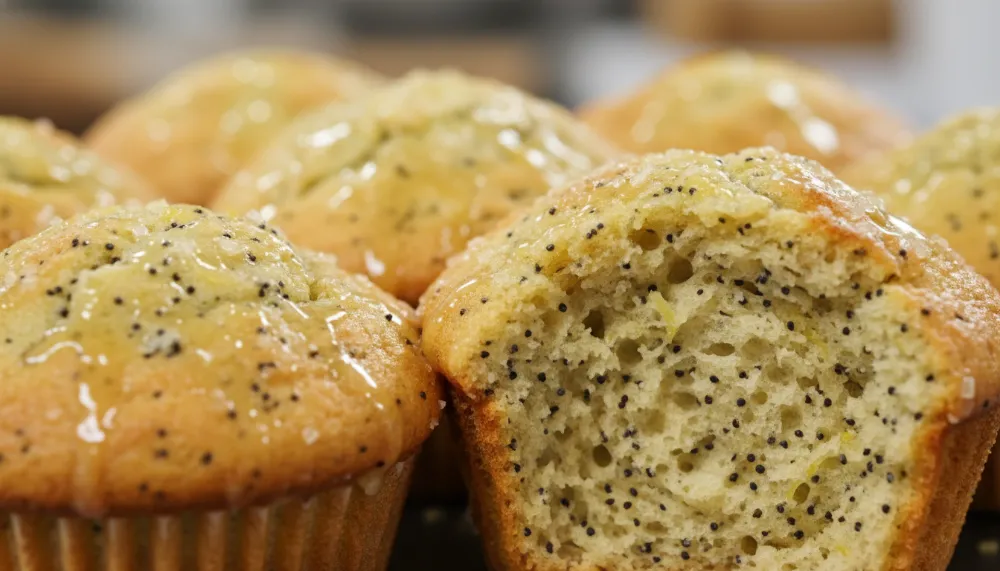
- Honey Glazed: Instead of a sugar-based icing, brush the warm muffins with a mixture of warmed honey and lemon juice for a natural, glossy finish.
Troubleshooting Common Gluten-Free Muffin Issues
If your lemon poppy seed GF muffins are coming out too dense, it is likely due to the temperature of your ingredients. Always ensure your eggs and yogurt are at room temperature before mixing. Cold ingredients can cause the melted fats to solidify, creating a lumpy batter that doesn’t rise correctly. If the muffins are crumbling, you may need to increase the Xanthan gum by a 1/4 teaspoon or allow the batter to rest for 30 minutes before baking. This resting period allows the gluten-free flours to fully hydrate, resulting in a much stronger structure.
The Importance of High-Quality Ingredients
In gluten free lemon muffins, the quality of your flour blend is paramount. Look for blends that use a mix of brown rice flour, sweet white rice flour, and starches like tapioca or arrowroot. Avoid blends that are heavy on bean flours, as these can impart a bitter, earthy taste that clashes with the bright lemon. Similarly, always use fresh-squeezed lemon juice rather than the bottled variety, as bottled juice often contains preservatives that can alter the chemical reaction with your leavening agents.