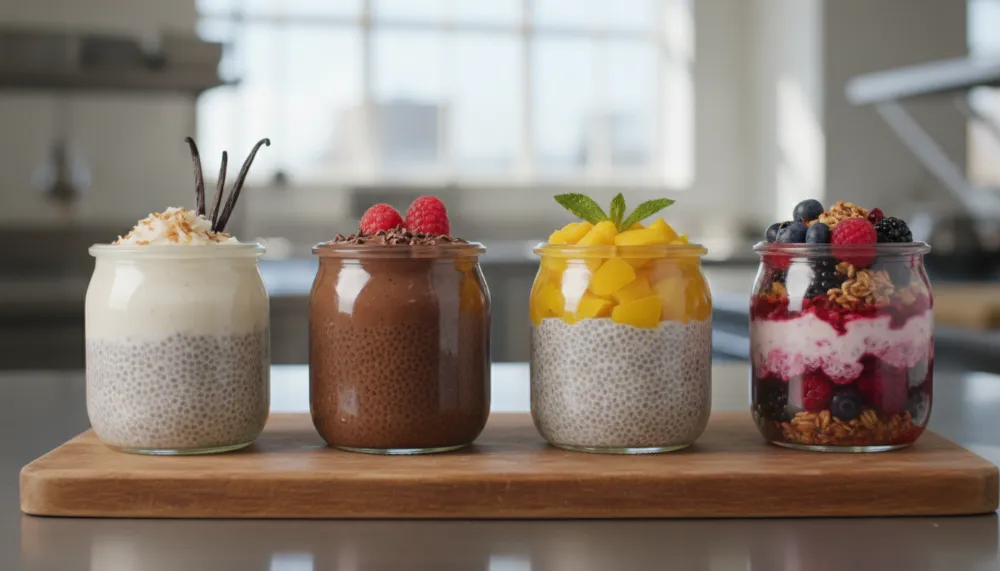

Experience the ultimate breakfast versatility with these four gourmet chia pudding recipes that transform ancient seeds into a decadent, nutrient-dense meal prep staple. Whether you crave the depth of vanilla bean or the zing of tropical mango, these variations provide the perfect fuel for your day.
Chia Pudding 4 Ways – Vanilla, Chocolate, Mango, Berry
Ingredients
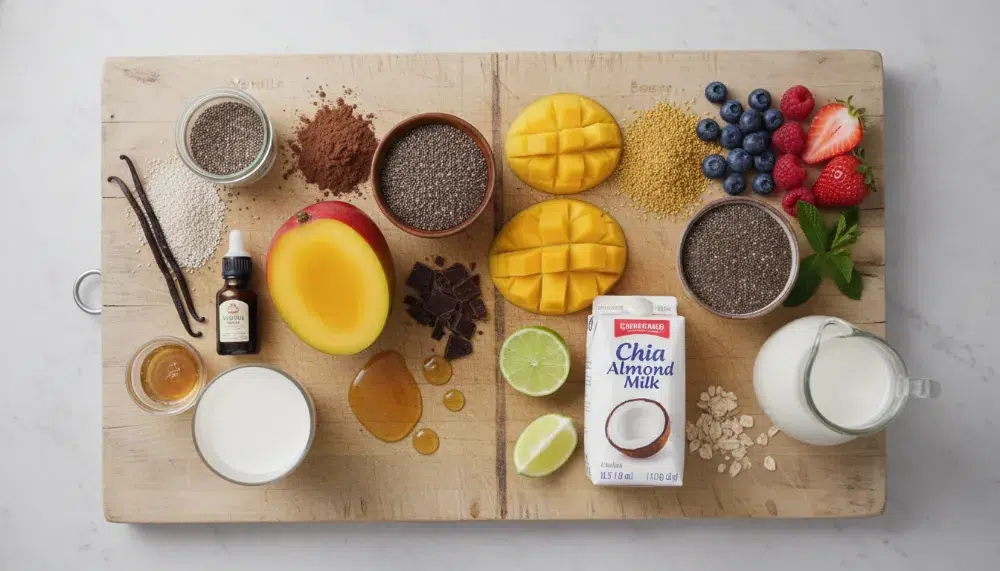
- 1 1 cup Chia seeds (divided across 4 jars)
- 2 4 cups Milk of choice (Coconut, Almond, or Oat)
- 3 1 Vanilla bean pod (scraped)
- 4 2 tbsp Dark cacao powder
- 5 1/2 cup Fresh mango puree
- 6 1/2 cup Mixed berries with pomegranate juice reduction
- 7 4 tbsp Maple syrup or date syrup
Instructions
- 1 In 4 separate jars, place 1/4 cup chia seeds each.
- 2 Add 1 cup of milk and 1 tbsp sweetener to each jar.
- 3 Stir in flavorings: Vanilla bean for jar 1, cacao for jar 2, mango for jar 3, and berry reduction for jar 4.
- 4 Whisk thoroughly, wait 5 minutes, then whisk again to prevent clumping.
- 5 Refrigerate for at least 4 hours or overnight until thickened.
The Ancient Superfood: History of Chia Seeds
The story of the chia seed, scientifically known as Salvia hispanica, begins in the fertile valleys of Mesoamerica. Dating back to 3500 B.C., these tiny seeds were far more than a simple food source for the Aztec and Mayan civilizations, they were a pillar of society. In the Mayan language, the word “chia” actually translates to “strength.” This was no exaggeration, as Aztec warriors were known to sustain themselves for an entire day on a single tablespoon of these seeds. They were so highly valued that they were used as a form of currency and even as sacred offerings during religious rituals.
Following the Spanish conquest in the 16th century, the cultivation of chia was suppressed due to its deep ties to indigenous traditions. This period is often referred to as the “Great Silence,” where the knowledge of chia was preserved only in small, mountainous pockets of Mexico and Guatemala. It wasn’t until the late 20th century that global nutritionists rediscovered this ancient crop, bringing its immense health benefits back to the modern table. Today, Chia Pudding 4 Ways – Vanilla, Chocolate, Mango, Berry represents the culinary evolution of this warrior’s food, combining historical resilience with modern flavor profiles.
Nutritional Density: Why Your Body Craves Chia
From a professional nutritional standpoint, chia seeds are a biological marvel. When we look at Chia Pudding 4 Ways – Vanilla, Chocolate, Mango, Berry, we are looking at a meal that provides a complete protein profile, meaning it contains all nine essential amino acids that the human body cannot produce on its own. Just two tablespoons of these seeds offer roughly 11 grams of fiber, which is nearly 40% of the recommended daily intake for most adults. This fiber is key to digestive health and provides a slow, steady release of energy throughout the day.
Furthermore, chia seeds are the richest plant-based source of Alpha-linolenic acid (Omega-3 fatty acids). These healthy fats are crucial for brain health and reducing inflammation. When you prepare these recipes, you are also consuming significant amounts of manganese, magnesium, and phosphorus, minerals that are essential for bone density and metabolic function. The antioxidants found in chia, such as quercetin and chlorogenic acid, help protect the body against oxidative stress, making this pudding a true functional food.
The Science of Texture: How Chia Becomes Pudding
The transformation of a dry seed into a silky pudding is a result of the seed’s mucilaginous properties. When chia seeds come into contact with liquid, their outer shell develops a gel-like coating. This gel can hold up to 12 times the seed’s weight in water. To ensure a professional, smooth consistency without clumps, the initial whisking process is vital. For those who prefer an ultra-smooth, mousse-like texture, using a high-quality blender is recommended. We suggest the Ninja BN751 Professional Plus DUO Blender to pulverize the seeds and milk into a perfectly homogenous mixture.
Variation 1: Madagascar Vanilla Bean
Pure Elegance in a Jar
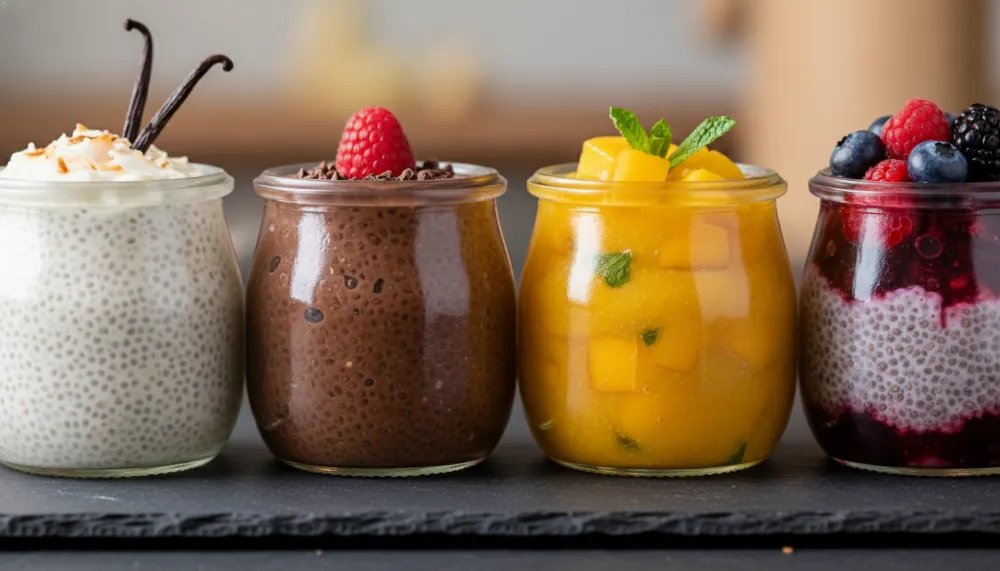
For the vanilla variation, we avoid alcohol-based extracts in favor of the raw intensity of a Madagascar vanilla bean. This provides a floral, complex sweetness that artificial flavorings simply cannot replicate. By scraping the seeds directly into a base of whole-fat coconut milk, you create a creamy, luxurious mouthfeel. To achieve the best results, use a Cuisinart 8 Cup Food Processor to blend the vanilla bean seeds evenly through the milk before adding the chia. Garnish with a sprinkle of ground cinnamon and fresh mint to enhance the aromatic experience.
Variation 2: Dark Cacao & Sea Salt
The Professional Chocolate Profile
This variation is designed for those who appreciate high-quality chocolate. By using Dutch-processed cacao powder, you achieve a deep color and a mellow, smooth flavor. To balance the bitterness of the cacao, we use date syrup or a high-quality maple syrup. A crucial professional tip: always add a pinch of flaked sea salt. Salt acts as a flavor enhancer, cutting through the richness and making the chocolate notes pop. This version is best served cold, topped with raw cacao nibs for a satisfying crunch that contrasts the creamy base.
Variation 3: Alphonso Mango & Lime
Tropical Acidity and Brightness
Inspired by the classic desserts of Southeast Asia, this mango variation utilizes the natural sweetness of Alphonso mangoes. These mangoes are preferred by chefs because they lack the fibrous texture found in other varieties. By layering a fresh mango puree with a lime-infused chia base, you create a vibrant, acidic balance that is incredibly refreshing. Using the Cosori 9-in-1 TurboBlaze Air Fryer 6 Qt, you can even lightly toast coconut flakes to top this pudding, adding a nutty, smoky dimension to the tropical fruit.
Variation 4: Forest Berry & White Balsamic
A Sophisticated Berry Coulis
To elevate the berry variation, we create a coulis using raspberries and blueberries simmered in pomegranate juice. This replaces the need for wine or alcohol while providing a deep, ruby-red color and tart flavor. Adding a few drops of white balsamic vinegar or fresh lemon juice at the end of the reduction provides a professional “kick” that brightens the entire dish. This acidity is essential for balancing the natural sweetness of the berries and the creaminess of the oat milk base.
Professional Meal Prep and Storage
The beauty of Chia Pudding 4 Ways – Vanilla, Chocolate, Mango, Berry lies in its meal-prep potential. Because the seeds continue to hydrate over time, these puddings can be made up to five days in advance. To keep them at peak freshness, storage is key. We highly recommend the Rubbermaid Brilliance Glass Storage Set of 9, as these containers are completely leak-proof and stack beautifully in the refrigerator. For those looking to extend the life of their fresh fruit toppings, using a FoodSaver Vacuum Sealer Machine on your bulk berries or mangoes before processing can prevent oxidation and maintain nutrient integrity.
Troubleshooting Your Chia Pudding
If your pudding is too thin, simply whisk in an extra tablespoon of chia seeds and let it sit for another hour. If it is too thick, splash in a little more milk. Remember that different types of milk have different fat contents, which will affect the final thickness. Cashew milk and full-fat coconut milk will yield the thickest results, while almond milk and oat milk provide a lighter, more liquid consistency. Regardless of the base, the double-whisk method, whisking once at the start and once after five minutes, is the golden rule for avoiding the dreaded “chia clumps” at the bottom of the jar.