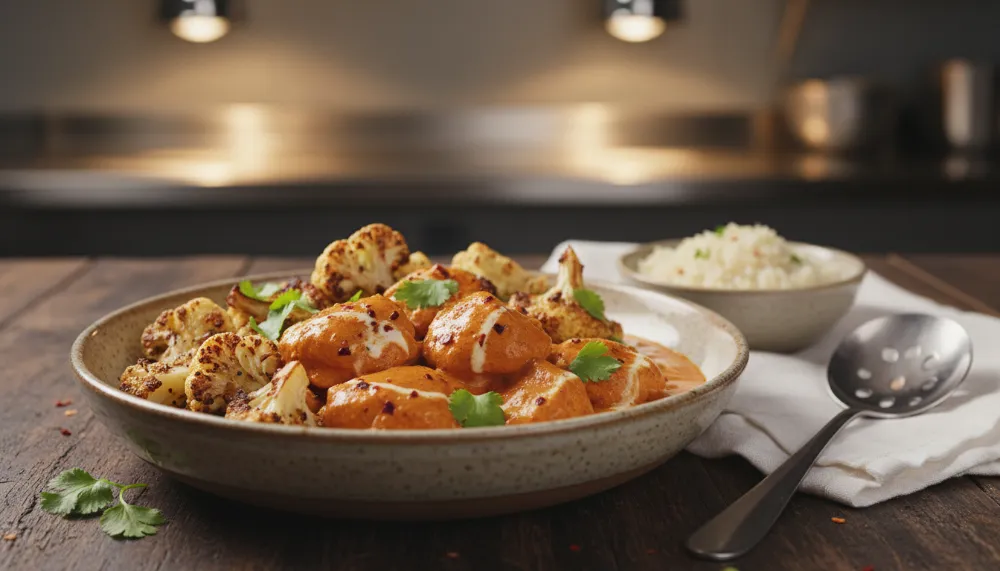

Experience the rich, velvety decadence of Butter Chicken with Cauliflower Low-Carb, a masterpiece of spice and cream that delivers restaurant-quality flavor while keeping your health goals perfectly on track. This dish marries the traditional soul of Delhi’s most famous curry with the modern necessity of a grain-free, nutrient-dense lifestyle.
Butter Chicken with Cauliflower Low-Carb
Ingredients
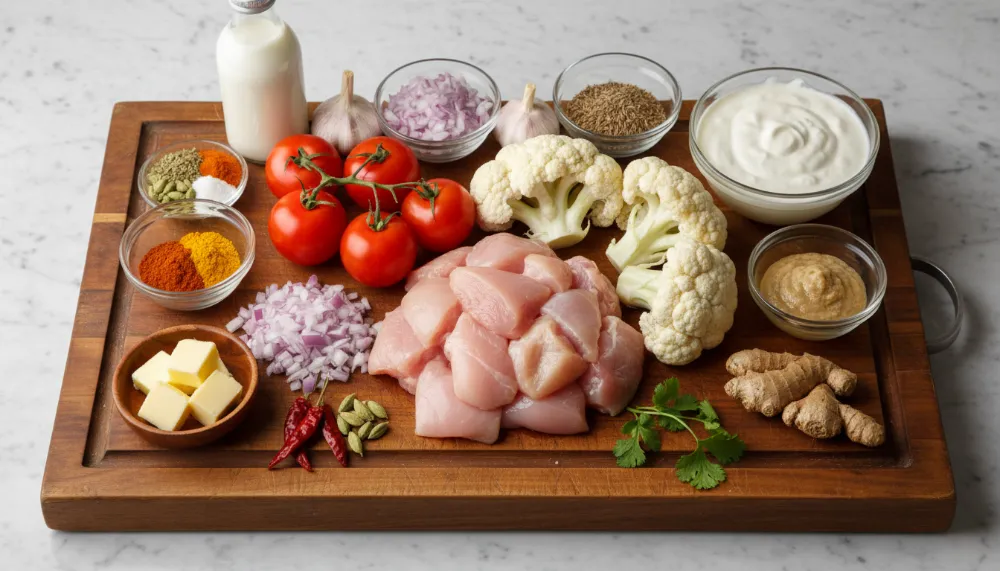
- 1 2 lbs Boneless Skinless Chicken Thighs, cut into bite-sized pieces
- 2 1 Large Head of Cauliflower, cut into small florets
- 3 1/2 cup Ghee or Unsalted Butter
- 4 1 cup Heavy Cream (or Full-Fat Coconut Cream)
- 5 1.5 cups Tomato Puree (Sugar-free)
- 6 2 tbsp Ginger-Garlic Paste
- 7 2 tbsp Garam Masala and 1 tsp Smoked Paprika
- 8 1 tbsp Dried Fenugreek Leaves (Kasuri Methi)
Instructions
- 1 Marinate the chicken in ginger-garlic paste, 1 tbsp garam masala, and a splash of lemon juice for at least 30 minutes.
- 2 Heat 2 tbsp ghee in a large pan and sear the chicken until golden brown, then remove and set aside.
- 3 In the same pan, add remaining ghee and the cauliflower florets. Sauté for 5-7 minutes until slightly tender and browned.
- 4 Pour in the tomato puree and remaining spices. Simmer for 10 minutes on medium-low heat.
- 5 Stir in the heavy cream and return the chicken to the pan. Simmer until the sauce thickens and chicken is cooked through.
- 6 Garnish with crushed dried fenugreek leaves and fresh cilantro before serving.
The Historical Journey of Butter Chicken
The story of Butter Chicken, or Murgh Makhani, is as rich as the sauce itself. It began in the late 1940s in Delhi, India, specifically within the kitchen of the famous Moti Mahal restaurant. Following the Partition, chefs Kundan Lal Gujral, Kundan Lal Jaggi, and Thakur Dass sought a way to utilize leftover tandoori chicken. Because the tandoor (clay oven) often dried out the meat by the end of the night, they developed a luscious, buttery tomato gravy to rehydrate and tenderize the chicken. This “accidental” invention transformed the culinary landscape of North India forever.
In its original form, Butter Chicken is paired with buttery naan or aromatic basmati rice. However, as dietary needs evolved, the Butter Chicken with Cauliflower Low-Carb variation became a staple for those seeking the same depth of flavor without the glycemic impact of grains. Cauliflower acts as a culinary chameleon, absorbing the complex spices and heavy fats while providing a satisfying, fibrous texture that mimics the mouthfeel of traditional accompaniments.
Nutritional Deep Dive: Why It Works
Adapting this classic into a Butter Chicken with Cauliflower Low-Carb version creates a nutritional powerhouse. By focusing on high-quality fats and lean proteins, you achieve higher satiety levels, which is essential for any sustainable dietary plan. Below is the typical nutritional profile for a professional serving (approx. 350g):
| Nutrient | Amount | Low-Carb Benefit |
|---|---|---|
| Calories | 515 kcal | Efficient energy source. |
| Total Fat | 38g | Promotes ketosis and flavor. |
| Protein | 42g | Muscle maintenance and repair. |
| Net Carbs | 9g | Stable blood sugar levels. |
Professional Flavor Variations and Techniques
To elevate your Butter Chicken with Cauliflower Low-Carb from a home meal to a five-star experience, professionals utilize specific techniques that enhance the aromatic profile. One such technique is “blooming” the spices. By frying your garam masala and turmeric in hot ghee before adding the liquid components, you release the fat-soluble oils within the spices, creating a much more vibrant and complex sauce.
The Role of Ghee vs. Butter
While the name implies butter, many professional chefs prefer ghee (clarified butter). Ghee has a higher smoke point, allowing you to sear the chicken at higher temperatures without the milk solids burning. This results in a nuttier, more toasted aroma that acts as a foundation for the entire dish. If you choose to use standard butter, add it toward the end of the simmering process to preserve its fresh, creamy flavor.
The Secret of Kasuri Methi
If you have ever wondered why restaurant butter chicken has a specific, addictive scent, the answer is Kasuri Methi (dried fenugreek leaves). These leaves are slightly bitter and maple-scented. To release their full potential, crush them between your palms directly over the simmering pot in the final three minutes of cooking. This provides the savory-sweet balance that defines an authentic Murgh Makhani.
Essential Tools for Culinary Success
To achieve the perfect velvety consistency for your Butter Chicken with Cauliflower Low-Carb, having the right kitchen equipment is non-negotiable. The sauce must be smooth, the chicken perfectly seared, and the cauliflower cooked to just the right bite.
- Ninja BN751 Professional Plus DUO Blender: https://amzn.to/3LCDyNR (Why Perfect: Use this to blend your tomato and spice base into a silk-like consistency. Its 1000W motor ensures no grainy spice bits remain).
- Cosori 9-in-1 TurboBlaze Air Fryer 6 Qt: https://amzn.to/4hRWmVq (Why Perfect: For an alternative texture, air-fry your cauliflower florets with a light dusting of turmeric before adding them to the sauce).
- Cuisinart 8 Cup Food Processor: https://amzn.to/47Nhbg8 (Why Perfect: If you prefer cauliflower “rice” rather than florets, this makes the prep work instantaneous).
The Cauliflower Evolution: Florets vs. Rice
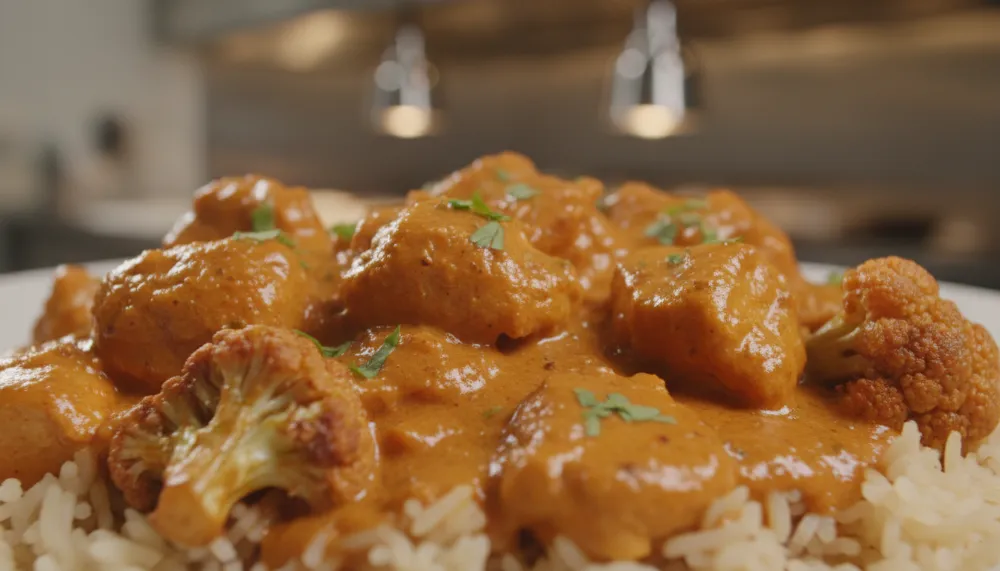
In the world of Butter Chicken with Cauliflower Low-Carb, there are two primary schools of thought regarding the vegetable. The first is using **roasted florets** folded directly into the sauce. This provides a “meaty” texture that complements the chicken, making the dish feel hearty and substantial. The cauliflower absorbs the butter and cream, becoming tender nuggets of flavor.
The second approach is serving the butter chicken over a bed of **cauliflower rice**. This more closely mimics the traditional experience of eating curry with basmati rice. To prevent the rice from becoming soggy, sauté it in a separate pan with a little garlic and ghee until the moisture has evaporated, giving it a slight crunch that stands up well to the heavy sauce.
Meal Prep and Preservation
One of the greatest benefits of this recipe is that the flavors actually improve after a day or two in the refrigerator as the spices continue to meld. For professional meal prepping, storage is key. You want to avoid the sauce separating or the chicken becoming rubbery during reheating.
- Rubbermaid Brilliance Glass Storage Set of 9: https://amzn.to/4oD0YkY (Why Perfect: These are leak-proof and glass-based, meaning they won’t stain from the vibrant turmeric in the sauce).
- FoodSaver Vacuum Sealer Machine: https://amzn.to/4qWgVnS (Why Perfect: If you are making a massive batch to freeze, vacuum sealing prevents freezer burn and keeps the aromatics locked in for months).
Professional Reheating Tips
When reheating your Butter Chicken with Cauliflower Low-Carb, avoid the microwave if possible. Instead, place it in a small saucepan over low heat. If the sauce has thickened too much in the fridge, add a tablespoon of water or broth (never alcohol) to loosen it back to its original velvety state. Stir gently to ensure the cream does not break under high heat.
Frequently Asked Questions
Can I make this dairy-free?
Absolutely. To maintain the low-carb profile, replace the butter with coconut oil or ghee and swap the heavy cream for full-fat canned coconut cream. The result is a slightly more tropical but equally delicious variation.
What if my sauce is too acidic?
Traditional recipes often use a pinch of sugar to balance the tomatoes. For a low-carb version, use a small amount of a keto-friendly sweetener or a splash of apple cider vinegar, which rounds out the flavors without the sugar spike.
Is this dish spicy?
Butter chicken is traditionally a mild to medium curry. The heat comes from the ginger and a small amount of chili powder. If you prefer it hotter, you can add diced green chilies during the sautéing of the ginger-garlic paste.