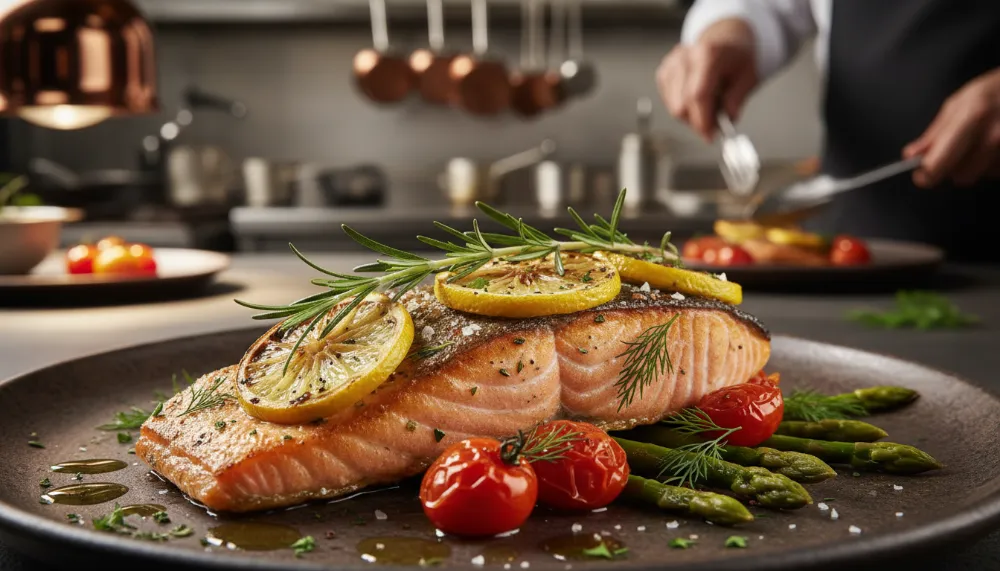

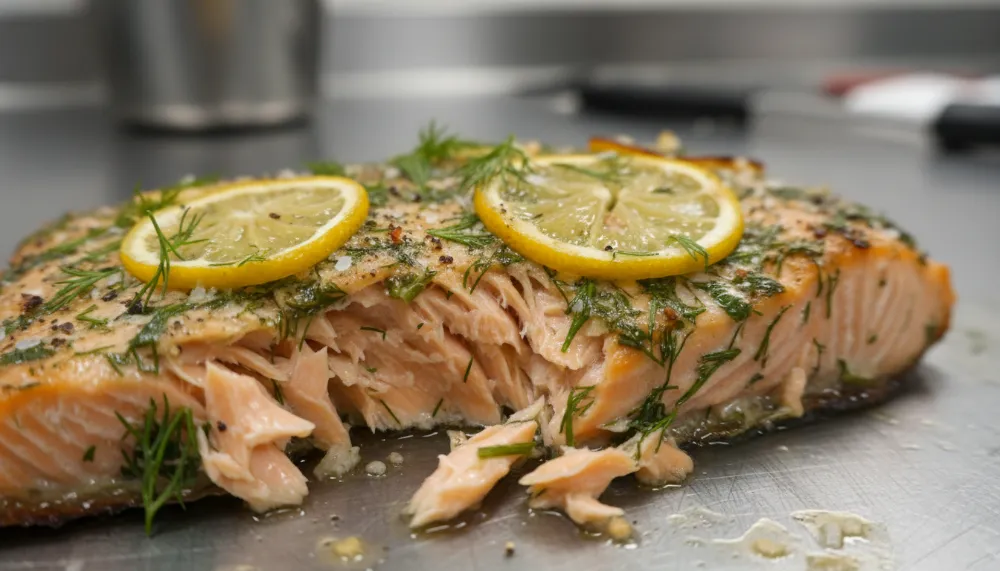
This Baked Lemon Herb Salmon combines zesty citrus with aromatic herbs to create a restaurant-quality meal that is both nutritious and incredibly easy to prepare. Whether you are hosting a dinner party or seeking a quick weeknight protein, this masterclass in oven-roasted fish delivers flaky, flavorful perfection every time.
Master Baked Lemon Herb Salmon
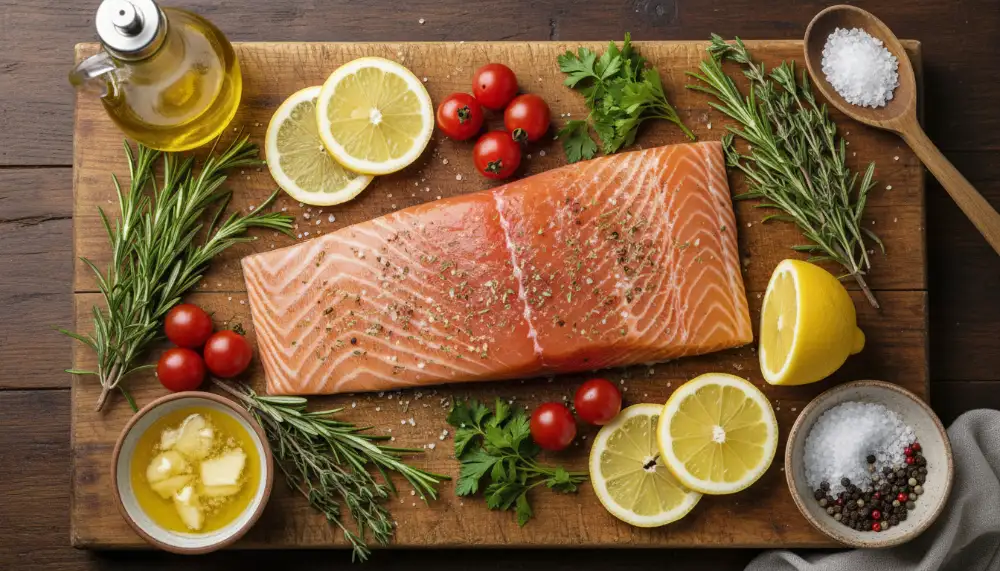
Ingredients
- 1 2 lb Large Salmon Fillet (Skin-on preferred)
- 2 3 tbsp Extra Virgin Olive Oil
- 3 2 Fresh Lemons (1 sliced into rounds, 1 juiced/zested)
- 4 4 Cloves Garlic, Minced
- 5 3 tbsp Fresh Dill, Chopped
- 6 2 tbsp Fresh Parsley, Chopped
- 7 1/4 cup Chicken Broth (for moisture)
- 8 1 tsp Smoked Paprika
- 9 Sea Salt and Cracked Black Pepper to taste
Instructions
- 1 Preheat your oven to 400°F (200°C) and line a large baking sheet with parchment paper or foil.
- 2 In a small bowl, whisk together olive oil, lemon juice, lemon zest, minced garlic, chopped dill, parsley, and smoked paprika.
- 3 Place the salmon fillet on the baking sheet. Pat it dry with paper towels to ensure a better texture. Season generously with salt and pepper.
- 4 Pour the herb mixture over the salmon, spreading it evenly. Pour the chicken broth onto the pan around the fish. Top the salmon with lemon slices.
- 5 Bake for 12, 15 minutes, or until the salmon is opaque and flakes easily with a fork. For a golden finish, broil for the last 2 minutes.
The Fascinating History of Baked Lemon Herb Salmon
The culinary journey of salmon, citrus, and herbs is a story that spans centuries, bridging the gap between ancient survival techniques and modern gastronomic refinement. Salmon has been a foundational food source for coastal European populations and Indigenous North American tribes for thousands of years. Early records, including the 14th-century French cookbook Le Viandier by Guillaume Tirel, showcase the importance of preserving and seasoning this fatty fish. Historically, lemon was not merely a flavor enhancer, it served a vital functional purpose. Before the advent of modern refrigeration, the bright acidity of citrus helped cut through the intense fat content of oily fish and acted as a mild preservative, masking any slight odors that might occur during transport.
As cooking evolved, the specific technique of baking the fish gained scientific backing in the early 20th century. During the 1920s, Evelene Spencer introduced the “Spencer Hot Oven Method.” This revolutionary approach advocated for high-heat baking, essentially oven-frying the fish, which ensured the interior remained moist while the exterior developed a delicate crust. This method shifted the domestic standard away from heavy poaching and into the realm of the crisp, vibrant Baked Lemon Herb Salmon we enjoy today.
By the 1970s, the “La Nouvelle Cuisine” movement in France further refined the dish. Legendary chefs moved away from flour-heavy sauces, choosing instead to highlight the natural quality of the fish with fresh herb infusions and citrus zests. This era established the herb-forward profile that remains the benchmark for professional kitchens globally, emphasizing lightness and ingredient integrity over masking flavors.
The Science of Nutrition: Why Salmon is a Superfood
Baked Lemon Herb Salmon is widely regarded as a nutritional powerhouse, offering a dense concentration of essential nutrients that support heart, brain, and metabolic health. A standard 6-ounce cooked portion provides a remarkable array of benefits. Most notably, it is one of the best sources of long-chain Omega-3 fatty acids, specifically EPA and DHA. These fats are essential because the human body cannot produce them in significant quantities, they must be consumed through diet to help reduce inflammation and lower the risk of cardiovascular disease.
Macronutrient Breakdown
- Calories: Approximately 280, 320 kcal.
- Protein: 34g, 40g of high-quality, complete protein containing all essential amino acids.
- Healthy Fats: 13g, 18g, including over 1.5g of Omega-3s.
- Carbohydrates: Naturally 0g, making it excellent for various modern eating patterns.
Beyond the macros, salmon is exceptionally high in Vitamin D, often providing over 100% of the Daily Value in a single serving. It also boasts high levels of Vitamin B12, essential for nerve function and the production of DNA, and Selenium, a trace mineral that protects bone health and improves thyroid function. When you prepare Baked Lemon Herb Salmon, you aren’t just making a meal, you are fuel for your body’s most critical systems.
Mastering Professional Variations
To truly elevate your Baked Lemon Herb Salmon, you can experiment with different flavor profiles and professional techniques. Using high-quality equipment can also make a significant difference. For example, if you are making a complex herb paste, using a Ninja BN751 Professional Plus DUO Blender allows you to emulsify herbs and oil into a vibrant green sauce that coats the fish perfectly.
1. The Mediterranean Herb Crust
Instead of a simple rub, create a textured crust using dried oregano, lemon zest, and crushed nuts. While traditional recipes might use breadcrumbs, using crushed walnuts or pistachios adds a rich, earthy flavor and a satisfying crunch that is entirely vegetarian-friendly. This method provides a beautiful contrast to the buttery texture of the salmon.
2. Salmon En Papillote (The Parchment Method)
For an incredibly tender and moist result, try the French “en papillote” technique. Place your salmon on a large piece of parchment paper with lemon wheels, fresh thyme, and a splash of chicken broth. Fold the paper into a sealed pouch and bake. The broth creates steam inside the packet, infusing the fish with the aromatics and preventing any moisture loss. This is an excellent technique for those who prefer a more delicate, steamed texture.
3. Smoky Beef-Wrapped Salmon
For a savory, umami-packed variation, you can wrap your lemon-herb seasoned fillets in thinly sliced beef bresaola or beef bacon. This provides a smoky saltiness that mimics traditional pork-based wraps without using any pork products. The beef fat renders slightly into the fish, adding a layer of depth that is truly gourmet. If you are prepping these ahead of time, using a FoodSaver Vacuum Sealer Machine will help keep the wrapped fillets fresh and prevent any freezer burn.
Essential Kitchen Tools for Salmon Perfection
Achieving restaurant-level results at home requires the right tools. Here are our top professional recommendations for making the best Baked Lemon Herb Salmon:
- Ninja BN751 Professional Plus DUO Blender: Check Price – Why Perfect: Its 1000W motor is ideal for creating smooth herb emulsions, tahini glazes, or zesty dressings to drizzle over your salmon.
- Cosori 9-in-1 TurboBlaze Air Fryer 6 Qt: Check Price – Why Perfect: If you want a faster version of this recipe, the TurboBlaze roasts salmon fillets in under 10 minutes with incredible convection heat.
- Cuisinart 8 Cup Food Processor: Check Price – Why Perfect: Essential for fast chopping of large quantities of fresh dill and parsley, making meal prep a breeze.
- Rubbermaid Brilliance Glass Storage Set: Check Price – Why Perfect: These are the gold standard for storing leftover salmon. They are leak-proof, stackable, and glass is best for reheating fish without odors.
The Professional Substitution Guide
Adapting recipes to dietary needs or pantry availability is a hallmark of a great cook. When making Baked Lemon Herb Salmon, you can easily swap ingredients without sacrificing flavor. Since this recipe strictly avoids alcohol and pork, here are the best professional-grade substitutes:
Replacing Alcohol
Many traditional salmon recipes call for white wine to add acidity and depth. To achieve the same effect without alcohol, use an equal amount of chicken broth or vegetable stock mixed with one teaspoon of white wine vinegar. This provides the necessary liquid for steam and the sharp bite that balances the fish’s fat. Alternatively, white grape juice can provide a subtle sweetness that pairs beautifully with lemon.
Replacing Pork
If a recipe suggests wrapping fish in prosciutto or bacon, reach for beef bacon or smoked beef strips. You can also achieve a similar flavor profile by using a touch of liquid smoke in your marinade or using smoked salt. These options provide the savory “umami” and smoky notes required for a complex flavor profile while adhering to dietary restrictions.
Expert Tips for the Best Baked Salmon
To ensure your Baked Lemon Herb Salmon is successful every single time, follow these expert-level tips:
1. Temperature is Key: Do not overcook your fish. The USDA recommends an internal temperature of 145°F (63°C), but many chefs prefer to pull the salmon at 135°F (57°C) and let it carry-over cook for a few minutes. This results in a much moister fillet.
2. Pat the Fish Dry: Before adding any oil or herbs, use a paper towel to pat the salmon completely dry. This allows the oil and seasonings to adhere better and prevents the fish from “stewing” in its own juices, leading to a better surface texture.
3. Use Fresh Herbs: While dried herbs can work in a pinch, Baked Lemon Herb Salmon relies heavily on the vibrant, volatile oils found in fresh dill and parsley. The difference in flavor is monumental.
4. Skin-On or Skin-Off? Baking with the skin on helps protect the delicate flesh from the direct heat of the pan and helps retain moisture. Even if you don’t intend to eat the skin, keep it on during the baking process for the best results.
How to Store and Reheat Leftovers
Salmon is best enjoyed fresh, but if you have leftovers, they can be a great addition to salads or grain bowls. Store your Baked Lemon Herb Salmon in Rubbermaid Brilliance Glass Storage containers to maintain freshness. When reheating, avoid the microwave if possible, as it can make the fish rubbery and emit a strong odor. Instead, place the salmon in a 275°F (135°C) oven with a splash of water or broth and cover it with foil until warmed through. This gentle method preserves the flaky texture.