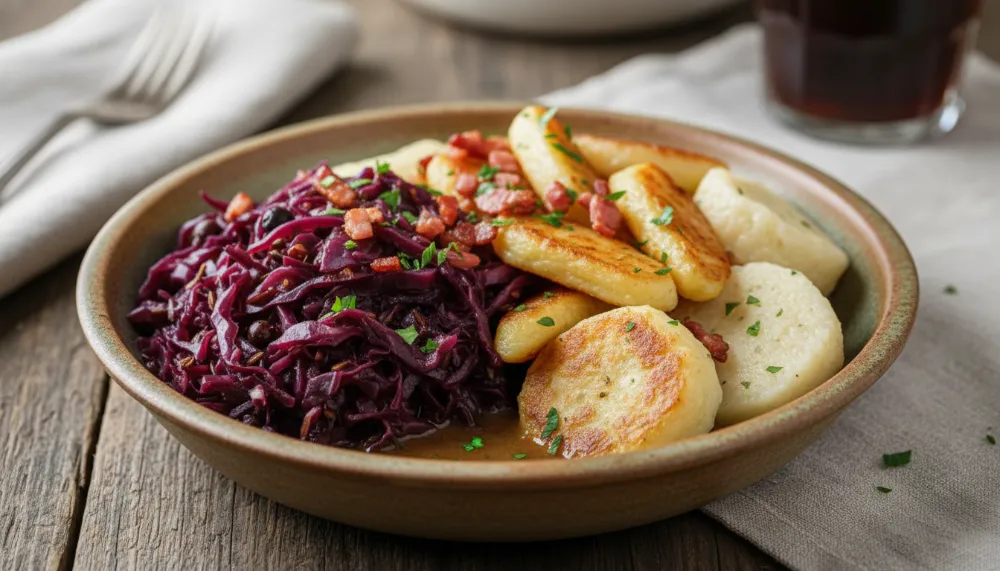

Experience a warm hug in a bowl with this German Cabbage and Dumplings recipe, a hearty masterpiece that brings old-world heritage to your modern dinner table. This dish combines tender, pan-seared dough with caramelized cabbage and savory beef for the ultimate comforting meal.
German Cabbage and Dumplings – Comfort Food Classic
Ingredients
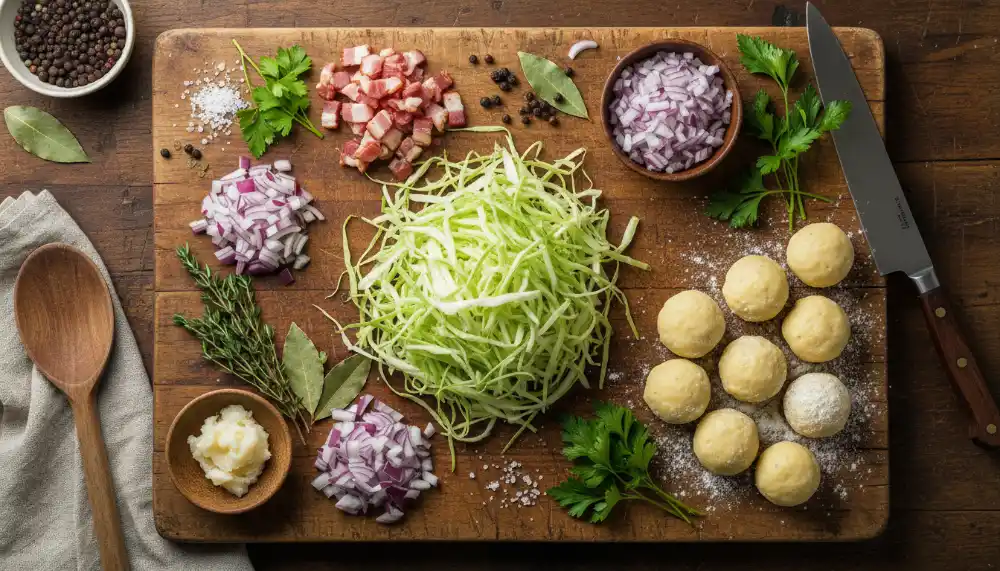
- 1 Large head of green cabbage, shredded
- 1 Pound lean ground beef or sliced beef brisket
- 2 Large yellow onions, thinly sliced
- 3 Cups all-purpose flour
- 3 Large eggs
- 1/2 Cup unsalted butter
- 1 Teaspoon caraway seeds
- 1 Cup beef broth (for deglazing)
- 2 Tablespoons apple cider vinegar
- 1 Teaspoon smoked paprika
Instructions
- 1 In a large skillet, brown the beef until fully cooked. Drain excess fat and set aside.
- 2 Melt butter in the same skillet and add onions. Sauté until translucent, then add shredded cabbage. Cook on medium-low for 25 minutes until caramelized.
- 3 Mix flour, eggs, and a splash of water to form a thick dumpling dough. Season with salt.
- 4 Drop small spoonfuls of dough into boiling salted water. Remove once they float to the surface (about 3-5 minutes).
- 5 Add the cooked dumplings and beef to the cabbage mixture. Stir in beef broth, apple cider vinegar, and caraway seeds. Simmer for 5 minutes and serve hot.
The Deep Heritage of German Cabbage and Dumplings
German cabbage and dumplings, often referred to by the regional names Kraut und Knödel or Schupfnudeln mit Kraut, is a pillar of European home cooking. Historically classified as a peasant dish, this meal relies on hardy, long-lasting staples like winter cabbage and flour to create a filling and nutrient-dense dinner. The dish’s origins are as rich as its flavor, representing the resourcefulness of central European families throughout the centuries.
A primary historical lineage of this dish comes from the Volga German connection. In the 1760s, German settlers moved to the Volga River region of Russia under the invitation of Catherine the Great. In this harsh climate, cabbage became the primary crop for survival. These settlers fused traditional German dumpling techniques with Russian-influenced slow-cooked cabbage stews. When these families later migrated to the American Great Plains, they brought this one-pot comfort food with them, cementing it as a classic in Midwestern and European-American culture alike.
Culinary Evolution: From the Battlefield to the Table
Beyond the agricultural roots, the dish has a fascinating military heritage. During the Thirty Years’ War, soldiers would form finger-shaped dumplings, known as Schupfnudeln, from their basic rations of flour and water. They would pan-fry these dough pieces with preserved cabbage to create a meal that was easy to cook over a campfire yet provided the energy needed for long marches. This tradition evolved into the modern German Cabbage and Dumplings – Comfort Food Classic we enjoy today, where the focus has shifted from survival to the celebration of texture and umami.
The Science of Perfect Cabbage Caramelization
The secret to a truly high-authority version of this dish lies in the Maillard reaction. Cabbage contains natural sugars that, when cooked slowly over medium-low heat in a fat like butter or beef drippings, transform into a complex, sweet, and nutty flavor profile. To achieve this, it is essential to use a high-quality tool like the Cuisinart 8 Cup Food Processor to ensure the cabbage is sliced into perfectly uniform ribbons. Uniformity allows every strand to hit the pan at the same time, preventing some bits from burning while others remain raw.
Professional Flavor Variations Without the Pork or Alcohol
Traditional recipes often call for bacon or wine, but as experts in dietary adaptation, we can create even deeper flavors using smart substitutions. For those seeking the smoky depth typically provided by pork, use high-quality beef brisket or lean ground beef seasoned with smoked paprika. The paprika provides that wood-fired aroma without the need for prohibited products.
Instead of deglazing the pan with wine, professionals turn to the acidity of apple cider vinegar combined with a rich beef broth. This combination mimics the bright acidity of a dry white wine while adding a fruit-forward note that pairs beautifully with the earthy caraway seeds. If you want a sweeter profile, a splash of unsweetened apple juice can be added to the cabbage during the final stages of sautéing.
The Art of the Dumpling: Texture and Technique
The dumplings are the heart of this dish. Whether you prefer the small, irregular shapes of Spätzle or the larger, pillowy Knödel, the key is the hydration of the flour. A dough that is too wet will disintegrate in the boiling water, while a dough that is too dry will result in rubbery pellets. The goal is a tacky, elastic consistency that holds its shape. For a modern twist, some chefs use the Ninja BN751 Professional Plus DUO Blender to pulse together the eggs and flour, ensuring a perfectly smooth batter that yields consistent results every time.
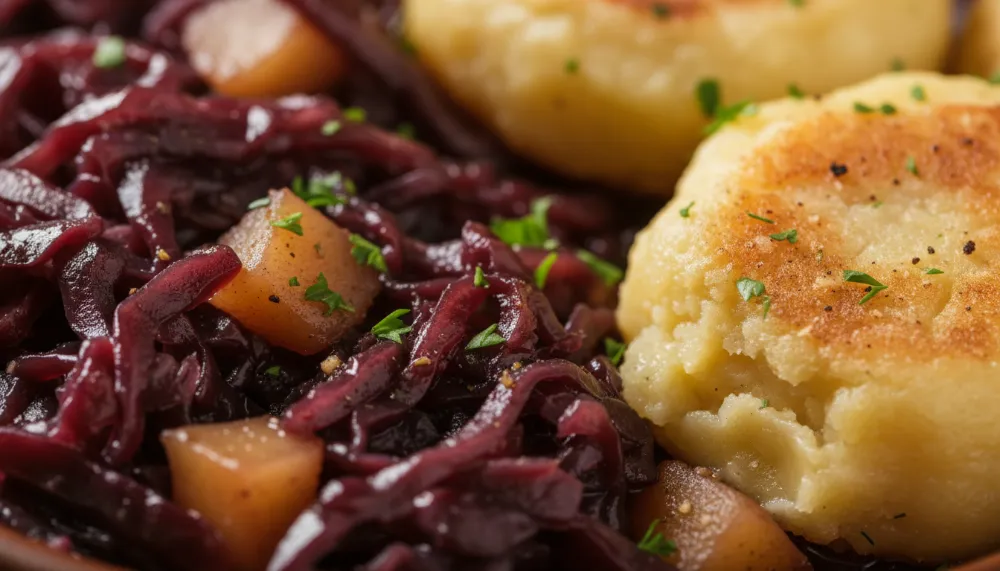
Nutritional Profile of This Comfort Classic
While often viewed purely as a heavy comfort food, German Cabbage and Dumplings – Comfort Food Classic is surprisingly balanced. A standard serving provides approximately 320 to 450 calories, with a robust macronutrient spread. Cabbage is a powerhouse of Vitamin K and Vitamin C, providing up to 50% of your daily requirement in a single meal. By using beef instead of pork, you increase the iron and zinc content, making this an excellent choice for family nutrition.
If you are looking to lower the calorie count while maintaining the crunch, consider roasting a portion of your cabbage in the Cosori 9-in-1 TurboBlaze Air Fryer 6 Qt. The air fryer creates crispy edges on the cabbage that contrast beautifully with the soft, boiled dumplings, adding a modern textural element to this centuries-old recipe.
Meal Prep and Longevity
One of the reasons this dish has remained a staple for hundreds of years is its ability to be stored and reheated. In fact, many believe the flavors actually improve on the second day as the dumplings absorb more of the savory beef broth and cabbage juices. To maintain the integrity of the dish, we recommend using the Rubbermaid Brilliance Glass Storage Set of 9. The leak-proof seals prevent the cabbage aroma from spreading through the fridge, and the glass allows for even reheating in the microwave or oven.
For long-term storage, the FoodSaver Vacuum Sealer Machine is an essential tool. You can vacuum seal individual portions of the cabbage and beef mixture (before adding the dumplings) to keep them fresh for months in the freezer. When you are ready for a quick dinner, simply boil a fresh batch of dumplings and combine them with the thawed cabbage base.
Final Culinary Tips for Success
To truly master German Cabbage and Dumplings – Comfort Food Classic, remember these three professional rules:
1. Do not rush the onions. They should be deeply golden, not just soft.
2. Salt your dumpling water like the sea. Since the dough is simple, the water provides the primary seasoning for the dumplings themselves.
3. Use fresh caraway seeds. These seeds lose their potency quickly, and the characteristic “German” flavor of this dish relies on their bright, anise-like bite.