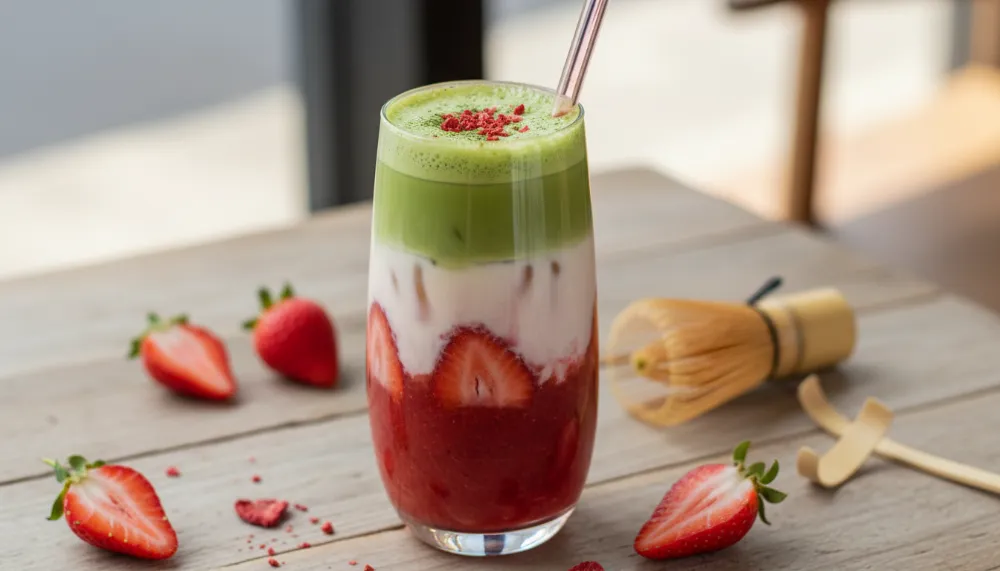

The Strawberry Matcha Latte is a stunning, three-layered masterpiece that blends the earthy depth of Japanese green tea with the bright, sun-ripened sweetness of fresh berries. This vibrant beverage is more than just a social media star, it is a sophisticated fusion of tradition and modern café culture.
Pro-Grade Strawberry Matcha Latte
Ingredients
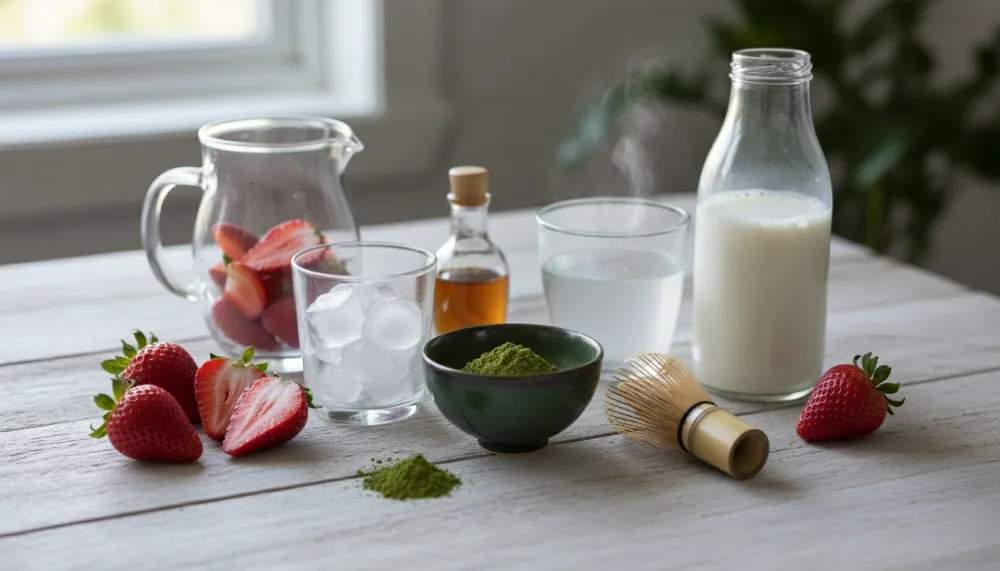
- 1 Cup Fresh Organic Strawberries (hulled and sliced)
- 2 Tablespoons Pure Maple Syrup or Agave
- 1.5 Teaspoons Ceremonial Grade Matcha Powder
- 2 Ounces Hot Water (approx. 175°F / 80°C)
- 1 Cup Cold Oat Milk or Whole Dairy Milk
- 1 Cup Large Ice Cubes
Instructions
- 1 Combine the strawberries and maple syrup in a high-speed blender or food processor. Pulse until you reach a smooth, thick jam-like consistency.
- 2 Sift the matcha powder into a small bowl to remove clumps. Pour in the hot water and whisk vigorously in a zigzag motion with a bamboo whisk (chasen) or electric frother until a fine froth forms on top.
- 3 Pour the strawberry puree into the bottom of a tall glass. Tilt the glass slightly to coat the sides if desired for aesthetic effect.
- 4 Carefully fill the glass with ice cubes, placing them gently so they don’t disturb the strawberry layer too much.
- 5 Slowly pour the milk over the ice. To keep the layers distinct, pour the milk over the back of a spoon held just above the ice.
- 6 Finally, pour the whisked matcha over the top. The green will sit beautifully above the white milk, creating the iconic tri-color appearance. Serve immediately.
The Historical Evolution of the Strawberry Matcha Latte
While the roots of matcha stretch back over eight centuries to the Uji region of Kyoto, Japan, the Strawberry Matcha Latte is a much more recent phenomenon. Historically, matcha was consumed as a hot, whisked tea in formal ceremonies, known for its meditative qualities and intense umami flavor. The transition of matcha from a traditional bowl to a layered iced latte represents a global shift in tea appreciation. In the early 2010s, artisanal tea shops in San Francisco, most notably Boba Guys, began experimenting with fruit purees and milk to broaden the appeal of green tea. They discovered that the natural acidity and sweetness of strawberries perfectly balanced the grassy, sometimes bitter notes of high-quality matcha. This innovation birthed a modern classic that has since swept through the café cultures of Seoul, Tokyo, and New York.
The drink’s explosion in popularity between 2022 and 2024 can be largely attributed to the visual nature of digital food culture. The striking contrast between the deep red of macerated berries, the stark white of the milk, and the electric green of the matcha makes it one of the most photographed beverages in the world. However, beyond the aesthetic, there is a complex flavor chemistry at play. The strawberry provides a tart brightness that lifts the tea’s earthy finish, creating a multi-sensory experience that appeals to both traditional tea lovers and those with a modern sweet tooth.
The Science of the Perfect Layer
Achieving the perfect layers in a Strawberry Matcha Latte is not just about a steady hand, it is about understanding fluid density. In the world of mixology and barista science, density is determined by sugar and fat content. The bottom layer, the strawberry puree, is the densest because it contains the highest concentration of fruit solids and added sweeteners like maple syrup. This ensures it stays firmly at the base of the glass. For the smoothest consistency in your puree, the Ninja BN751 Professional Plus DUO Blender (Perfect for tahini sauce and harissa paste with its 1000W motor.) is an essential tool, as it can pulverize strawberry seeds to create a silk-like texture that doesn’t clog your straw.
The middle layer, the milk, is less dense than the syrup but more dense than the matcha. When you pour the milk over the back of a spoon, you are dissipating the force of the liquid, allowing it to rest gently on top of the strawberry base. The choice of milk matters significantly here. High-fat milks, like whole dairy or barista-blend oat milk, have a higher viscosity which helps maintain the separation.
The top layer, the matcha, is primarily water-based. Since it has the lowest sugar content and the highest temperature (initially), it naturally wants to sit atop the cold, dense milk. By whisking the matcha until it is frothy, you introduce air bubbles that further decrease its density, helping it float. This liquid chromatography in a glass is what creates that stunning gradient effect as you begin to sip.
Nutritional Powerhouse: More Than Just a Pretty Drink
The Strawberry Matcha Latte is a nutritional marvel when prepared with high-quality ingredients. Matcha is famous for its concentration of EGCG (epigallocatechin gallate), a potent catechin that has been linked to improved metabolic function and heart health. Unlike the jittery spike associated with coffee, the caffeine in matcha is released slowly over several hours. This is due to L-theanine, an amino acid that promotes the production of alpha waves in the brain, leading to a state of “calm alertness.”
Fresh strawberries contribute a significant dose of Vitamin C and manganese, which are vital for immune support and skin health. When you combine these with the calcium and Vitamin D found in fortified milks, you have a beverage that supports bone density and cellular repair. To maximize these benefits, it is crucial to use ceremonial grade matcha, which is made from the youngest tea leaves and contains the highest levels of chlorophyll and antioxidants. If you are preparing berries in bulk for a week of healthy lattes, the Cuisinart 8 Cup Food Processor (Essential for fast chopping and slicing during meal prep.) can help you prep dozens of servings in seconds.
The Role of Antixodants in Your Daily Routine
Incorporating a Strawberry Matcha Latte into your morning routine can provide a more sustained energy boost than traditional espresso drinks. The presence of polyphenols in the green tea helps reduce oxidative stress, while the natural sugars in the strawberry provide an immediate glycogen source for the brain. This combination makes it an ideal pre-workout drink or a mid-afternoon pick-me-up that avoids the dreaded sugar crash. For those following a vegetarian lifestyle, this drink is a perfect accompaniment to a protein-rich snack. You can use the Cosori 9-in-1 TurboBlaze Air Fryer 6 Qt (Roasts chickpeas and vegetables perfectly with a large family capacity.) to quickly roast some chickpeas seasoned with sea salt and lime to pair with your latte for a balanced snack.
Professional Barista Tips for Flavor Elevation
If you want to move beyond the basic recipe, there are several professional techniques to elevate your Strawberry Matcha Latte. First, consider the “Balsamic Trick.” Macerating your strawberries with a teaspoon of high-quality balsamic vinegar (which contains no alcohol) deepens the red color of the fruit and intensifies its natural sugars without making the drink cloying. This is a common secret in high-end pastry kitchens that works beautifully in beverages.
Second, the temperature of your water for the matcha whisking is non-negotiable. Never use boiling water, as it will scald the delicate tea leaves and result in a bitter, astringent taste. The sweet spot is between 170°F and 185°F. This allows the umami and sweetness of the tea to shine through.
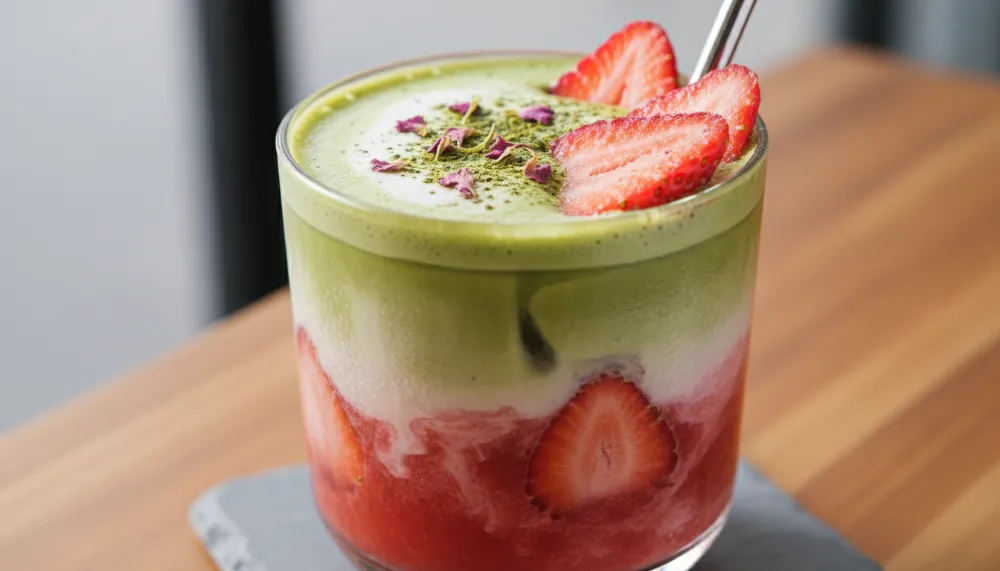
Third, experiment with “Cold Foam.” Many modern baristas are now topping their lattes with a layer of frothed milk mixed with a hint of strawberry powder or vanilla. This adds a velvety mouthfeel that contrasts with the thinness of the matcha. Using a high-powered blender like the Ninja mentioned earlier can help you achieve that thick, cloud-like foam consistency at home.
Customizing Your Milk Base
The milk you choose will drastically change the flavor profile of your Strawberry Matcha Latte. Oat milk is the gold standard in most specialty cafes because its natural grain-like sweetness complements the grassiness of the matcha perfectly. It also froths exceptionally well. Almond milk provides a lighter, nuttier finish but can sometimes be too thin to maintain the layers. Coconut milk adds a tropical flare that pairs beautifully with the strawberries, though it can dominate the delicate flavor of the tea. If you prefer dairy, whole milk provides the creamiest texture and the best structural integrity for the layering. Regardless of your choice, ensure the milk is as cold as possible to create a sharp temperature barrier between the warm matcha and the chilled base.
Frequently Asked Questions
Can I use frozen strawberries?
Yes, frozen strawberries work exceptionally well, especially when they are out of season. Simply thaw them slightly before blending. Frozen berries often produce a thicker puree which can actually help with the layering process. Just be sure to check if they have added sugars, as you may need to adjust your maple syrup levels accordingly.
What is the difference between culinary and ceremonial matcha?
Ceremonial grade is intended to be whisked with water and drunk straight, it is made from the youngest leaves and is vibrant green and sweet. Culinary grade is made from older leaves, is duller in color, and has a much stronger, more bitter flavor intended for baking. For this latte, ceremonial grade is highly recommended to ensure the tea isn’t overpowered by the strawberries.
How do I prevent the matcha from clumping?
The secret is sifting. Always use a fine-mesh strainer to sift your matcha powder into the bowl before adding water. Even the most expensive matcha can clump due to static electricity. Sifting ensures a smooth, lump-free liquid that integrates perfectly with the milk.