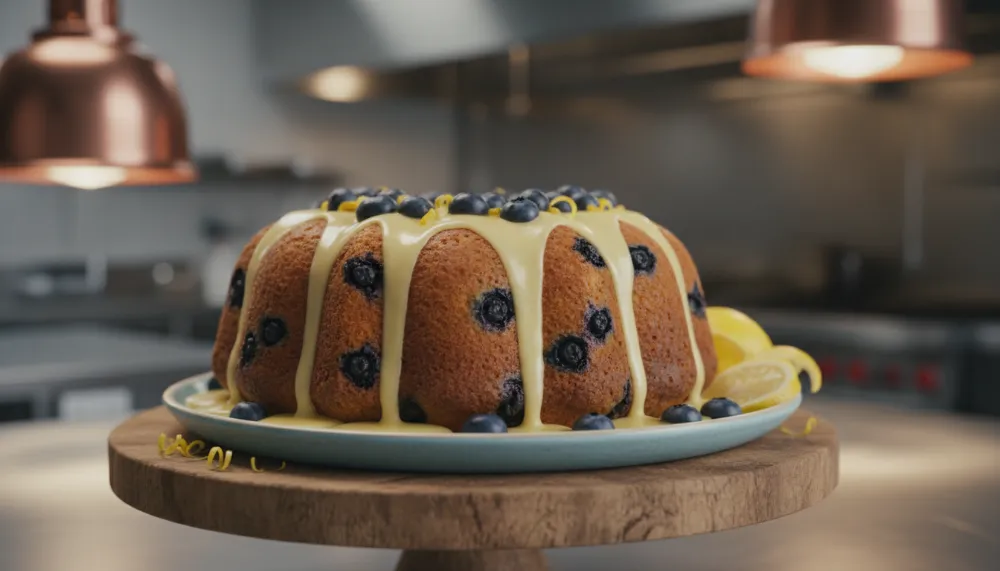

Experience the perfect harmony of tangy citrus and sun-ripened berries with this decadent lemon glaze blueberry cake. This moisture-packed masterpiece defines the art of seasonal baking, offering a refreshing zest that balances the earthy sweetness of fresh fruit.
Lemon Glaze Blueberry Cake
Ingredients
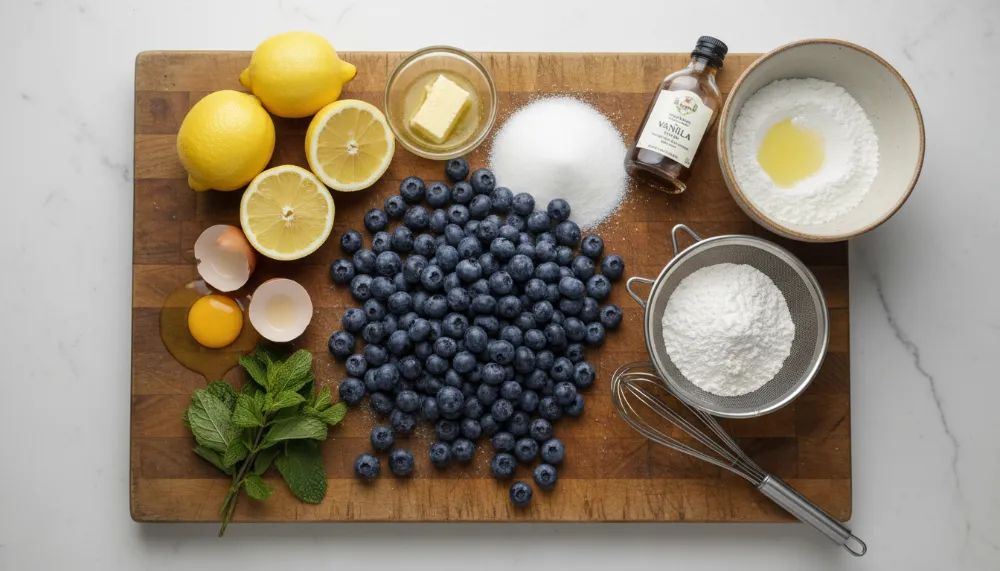
- 1 3 cups All-purpose flour (plus 1 tablespoon for coating berries)
- 2 1 teaspoon Baking powder and 1/2 teaspoon Baking soda
- 3 1/2 teaspoon Sea salt
- 4 1 cup Unsalted butter, softened
- 5 2 cups Granulated sugar
- 6 4 Large eggs, room temperature
- 7 1 cup Plain Greek yogurt (full fat)
- 8 2 tablespoons Fresh lemon zest
- 9 1 tablespoon Pure vanilla extract
- 10 2 cups Fresh blueberries
- 11 2 cups Powdered sugar (for glaze)
- 12 3 tablespoons Fresh lemon juice (for glaze)
Instructions
- 1 Preheat oven to 350°F (175°C). Grease and flour a 10-inch Bundt pan or 9×13 baking dish.
- 2 Whisk flour, baking powder, baking soda, and salt in a medium bowl. Toss blueberries with 1 tablespoon of flour to prevent sinking.
- 3 Cream butter and sugar until light and fluffy. Add eggs one at a time, followed by lemon zest and vanilla.
- 4 Alternate adding dry ingredients and Greek yogurt to the butter mixture, starting and ending with dry.
- 5 Gently fold in the floured blueberries. Pour batter into the prepared pan and smooth the top.
- 6 Bake for 55 to 65 minutes. Cool in the pan for 10 minutes before transferring to a wire rack.
- 7 Whisk powdered sugar and lemon juice until smooth. Drizzle over the warm cake.
The Historical Journey of the Lemon Glaze Blueberry Cake
The lemon glaze blueberry cake is more than just a dessert, it is a sophisticated fusion of North American wild fruit heritage and European baking traditions. This dessert combines the tart brightness of citrus with the earthy sweetness of berries, evolving over centuries from simple frontier puddings to a staple of modern pastry. To understand the lemon glaze blueberry cake, one must look at the two distinct cultural paths that converged in the modern kitchen.
Blueberries are native to North America and have been a staple for Indigenous peoples, such as the Algonquins, for millennia. They harvested wild blueberries and incorporated them into puddings known as sautauthig, which were made with cornmeal and honey. When European settlers arrived in the 17th century, they brought their own traditions of English suet puddings and plum cakes. Lacking the traditional European fruits they were accustomed to, they adapted their recipes to include the abundant, local blueberries. This was the birth of the blueberry cake as we know it today, a marriage of New World ingredients and Old World techniques.
The citrus component, specifically the lemon glaze, traces its lineage back to British lemon drizzle cakes. These cakes evolved from the 17th century pound cake, where lemon was initially used to balance the richness of heavy fats like butter or beef tallow. The acidic bite of the lemon helped lighten the palate, making the dense cake feel more refreshing. By the mid-20th century, specifically after the 1967 popularization of the luscious lemon cake by writer Evelyn Rose, the combination of a light sponge and a sharp citrus glaze became a global favorite. Today, the lemon glaze blueberry cake stands as a testament to this cross-continental culinary evolution.
Scientific Breakdown: Why This Cake Works
The success of a lemon glaze blueberry cake relies heavily on the chemistry of its ingredients. The primary challenge in any berry-laden cake is maintaining structural integrity while ensuring moisture. Blueberries are high in water content, and as they bake, the heat causes their cell walls to break down, releasing juice. If the batter is too thin, the berries will sink to the bottom and create a soggy layer. This is why professional bakers toss their berries in a small amount of flour before folding them in, the flour creates friction, helping the berries stay suspended in the batter.
The role of acid is equally vital. In our recipe, we utilize both lemon juice and Greek yogurt. The acidity in these ingredients reacts with the baking soda to produce carbon dioxide gas, which provides the lift necessary for a plush, airy crumb. Furthermore, the acid denatures the proteins in the flour, preventing excessive gluten development and resulting in a more tender texture. This balance of acidity and leavening is what gives the lemon glaze blueberry cake its signature mouthfeel.
Essential Tools for Bakery-Quality Results
To achieve the perfect lemon glaze blueberry cake, having the right equipment is non-negotiable. Professional results require precision and power. We recommend the following tools for your kitchen:
- Ninja BN751 Professional Plus DUO Blender: https://amzn.to/3LCDyNR (Why Perfect: While this cake uses whole berries, the Ninja is perfect for creating a smooth blueberry reduction if you choose to make a marbled variation of this cake).
- Cosori 9-in-1 TurboBlaze Air Fryer 6 Qt: https://amzn.to/4hRWmVq (Why Perfect: Surprisingly effective for quick-toasting nuts if you want to add a crunchy element to your lemon glaze blueberry cake toppings).
- Cuisinart 8 Cup Food Processor: https://amzn.to/47Nhbg8 (Why Perfect: Essential for quickly zesting large quantities of lemons and ensuring a perfectly aerated batter through efficient mixing).
- Rubbermaid Brilliance Glass Storage Set of 9: https://amzn.to/4oD0YkY (Why Perfect: The best way to store leftovers, keeping the cake moist and preventing the lemon glaze from absorbing refrigerator odors).
- FoodSaver Vacuum Sealer Machine: https://amzn.to/4qWgVnS (Why Perfect: Keeps your fresh blueberries in peak condition until you are ready to bake, or allows you to freeze individual slices for long-term freshness).
Pro-Level Flavor Variations and Innovations
While the classic lemon glaze blueberry cake is perfection on its own, professional pastry chefs often experiment with aromatic infusions to elevate the profile. One popular variation involves adding herbaceous notes. Finely minced fresh thyme or rosemary leaves can be folded into the batter, as the woody, earthy notes of these herbs pair exceptionally well with the wild flavor of forest blueberries.
For those who prefer a more floral profile, lavender and Earl Grey infusions are excellent. By infusing the butter with culinary lavender or the yogurt with Earl Grey tea leaves, you add a sophisticated top note that complements the acidity of the lemon. Another favorite is the addition of ginger and cardamom. Freshly grated ginger added to the batter or a pinch of ground cardamom provides a warm, spicy contrast to the cool berries and the sharp glaze.
Texture can also be manipulated. The yogurt method used in this recipe is a professional secret for providing tangy moisture. Some bakers also employ reverse creaming, where butter is mixed directly into the flour before liquids are added. This coat the flour in fat, limiting gluten production and creating a velvet-like, plush texture that is virtually impossible to over-mix.
Nutritional Insight and Ingredient Selection
A standard serving of this lemon glaze blueberry cake is approximately 300 to 350 calories. It is rich in Vitamin C from the fresh lemon juice and manganese from the blueberries. Blueberries are also a powerhouse of anthocyanins, potent antioxidants that give the berries their deep blue hue. In adherence to strict dietary guidelines, this recipe uses only vegetable oils or butter, ensuring it is entirely free of pork products. For liquid replacements, fresh juices and vinegars are used to maintain the necessary acidity without the use of alcohol.
When selecting ingredients, always opt for fresh lemons over bottled juice. The volatile oils in the zest are where the majority of the citrus flavor resides, and bottled juice lacks the brightness required for a truly exceptional glaze. Similarly, while frozen blueberries can be used, fresh berries are preferred to prevent the batter from turning grey or purple during the mixing process.
The Art of the Perfect Glaze
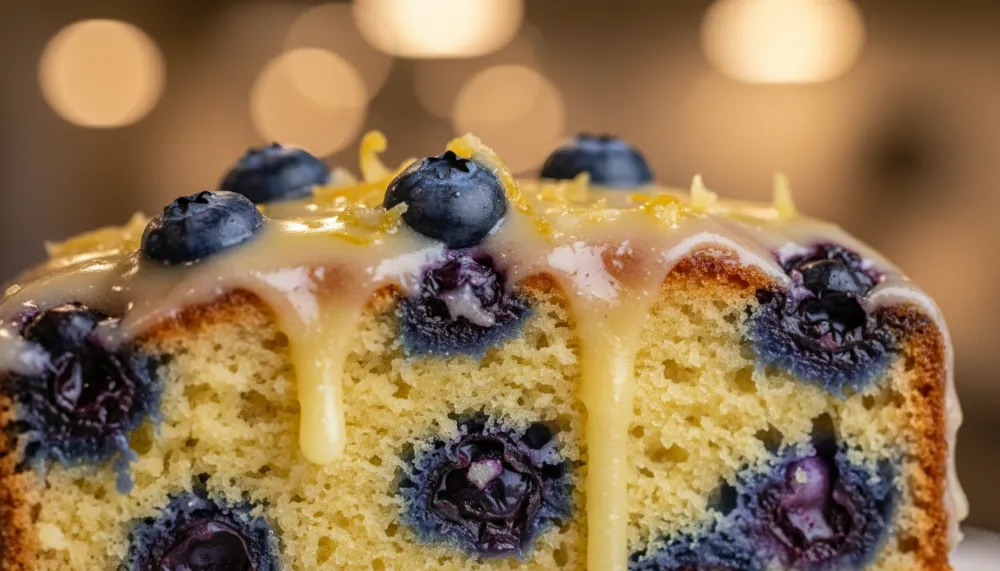
The lemon glaze is the finishing touch that transforms a simple cake into a masterpiece. The key to a perfect glaze is temperature control. You want to apply the glaze while the cake is still slightly warm, about 10 minutes after it has been removed from the pan. This allows some of the glaze to seep into the top layer of the cake, creating a moist barrier, while the rest sets into a beautiful, crackly shell on the surface.
If the glaze is too thin, add more powdered sugar a tablespoon at a time. If it is too thick, a tiny splash of lemon juice will loosen it. For an extra professional touch, you can add a drop of vanilla extract or a pinch of salt to the glaze to balance the extreme sweetness of the powdered sugar. This ensures that the lemon glaze blueberry cake has a flavor profile that is balanced, bright, and deeply satisfying.