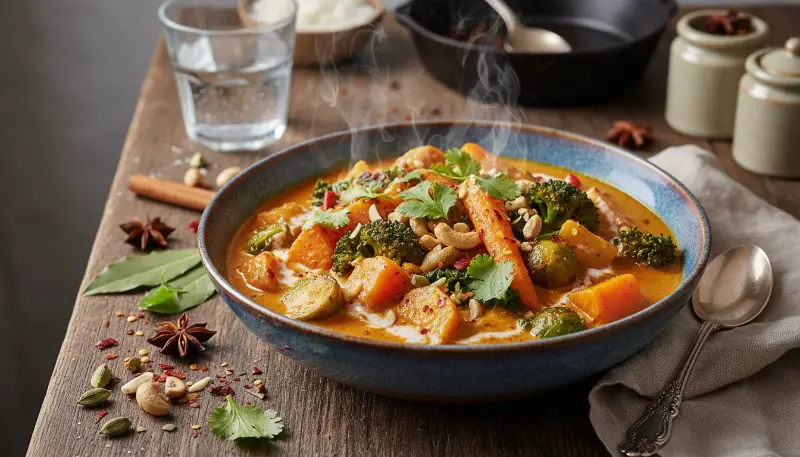

When the temperature drops and the frost settles on the windowpane, nothing provides comfort quite like a steaming bowl of Winter Vegetable Curry. This hearty version features tender beef and seasonal root vegetables, creating a symphony of warming spices and rich textures perfect for cold nights.
Savory Winter Vegetable & Beef Curry
20 MIN
75 MIN
6 PERS
Ingredients
- 1 1.5 lbs beef chuck roast, cubed
- 2 2 cups butternut squash, cubed
- 3 2 large carrots and 1 parsnip, sliced
- 4 1 medium cauliflower, florets
- 5 2 cups beef broth
- 6 1/2 cup apple juice
- 7 1 can coconut milk
- 8 2 tbsp curry powder and 1 tsp turmeric
Instructions
- 1 Brown beef cubes in oil in a large pot, then remove and set aside
- 2 Sauté onion, garlic, and ginger until fragrant
- 3 Stir in spices for 30 seconds to release oils
- 4 Add broth, juice, and beef; simmer covered for 45 minutes
- 5 Add squash, carrots, and parsnips; simmer for 20 more minutes
- 6 Stir in cauliflower and coconut milk; cook until tender and served
Understanding the Appeal of Winter Vegetable Curry
There is a specific culinary alchemy that occurs when you combine the earthy sweetness of root vegetables with the bold, aggressive spices of a traditional curry. During the winter months, our bodies naturally crave denser, more caloric meals that provide sustained energy. A **Winter Vegetable Curry** satisfies this biological urge while delivering a massive dose of vitamins and minerals. Unlike summer curries, which often lean on quick-cooking vegetables like spinach or peas, the winter version relies on produce that can stand up to longer cooking times.
By incorporating beef chuck roast, we elevate the dish from a simple stew to a luxurious, protein-rich meal. Beef chuck is the ideal choice here, as it contains enough intramuscular fat and connective tissue to become incredibly tender during the simmering process. This fat also acts as a carrier for the fat-soluble spices like turmeric and cumin, ensuring that every bite of your Winter Vegetable Curry is infused with deep flavor.
The Essential Components of a Seasonal Curry Profile
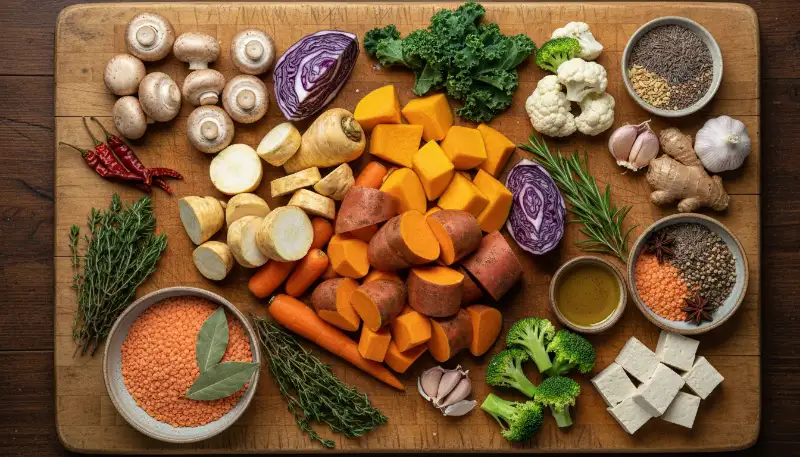
Creating a high-quality Winter Vegetable Curry requires a careful selection of ingredients. You want a balance of textures, including the starchy soft feel of potatoes or squash and the slight crunch of carrots or parsnips.
### The Role of Root Vegetables
Root vegetables are the backbone of this recipe. Carrots and parsnips, when simmered, release natural sugars that balance the heat of the curry powder. If you want perfectly sliced vegetables every time, the Cuisinart 8 Cup Food Processor is a meal prep essential that saves significant time during the busy winter months.
### Butternut Squash and Pumpkin
These orange-fleshed wonders serve a dual purpose in a Winter Vegetable Curry. As they cook, the outer layers soften and begin to melt into the broth, acting as a natural thickener. This creates a velvety sauce without the need for heavy creams or flour-based roux.
### Aromatics: Ginger, Garlic, and Onion
In the depths of winter, these three ingredients provide more than just flavor, they offer warming properties that have been celebrated for centuries. Freshly grated ginger adds a zesty heat that differs from the spicy burn of chilies, while garlic provides the savory backbone. For the best results, use the Ninja BN751 Professional Plus DUO Blender to create a smooth aromatic paste if you prefer a more uniform sauce texture in your Winter Vegetable Curry.
Mastering the Beef and Non-Alcoholic Base
Many traditional stews call for a splash of red wine to deglaze the pan, but this Winter Vegetable Curry proves that you can achieve incredible depth without alcohol. The secret lies in the combination of high-quality beef broth and 100% unsweetened apple juice.
### Why Apple Juice Works
The acidity in apple juice performs the same function as wine, it helps to break down the proteins in the beef and cuts through the richness of the coconut milk. It also complements the natural sweetness of the carrots and squash. When combined with savory beef broth, it creates a complex liquid base that makes the Winter Vegetable Curry taste like it has been simmering for days.
### Searing the Beef
Never skip the searing step. When you brown beef chuck cubes in a hot pan, you are initiating the Maillard reaction, a chemical process that creates hundreds of different flavor compounds. These browned bits, or “fond,” on the bottom of the pot are pure flavor gold. When you add your liquids, make sure to scrape the bottom of the pot to incorporate these bits back into the Winter Vegetable Curry.
Techniques for the Perfect Texture
One of the biggest challenges with a Winter Vegetable Curry is preventing the vegetables from turning into mush. The key is staggered cooking. Harder vegetables like parsnips and carrots go in first, while softer florets like cauliflower are added toward the end.
If you want to add a unique texture to your dish, consider roasting some of your chickpeas or cauliflower in the Cosori 9-in-1 TurboBlaze Air Fryer 6 Qt before adding them to the pot. This adds a roasted, slightly smoky dimension that contrasts beautifully with the creamy sauce of the Winter Vegetable Curry.
Meal Prep and Long-Term Storage
Winter Vegetable Curry is one of those rare dishes that actually tastes better the next day. As it sits, the spices continue to meld, and the beef absorbs more of the aromatic liquid. For those who enjoy meal prepping, this recipe is a dream.
To keep your portions fresh and prevent any leakage, the Rubbermaid Brilliance Glass Storage Set of 9 is highly recommended. These containers are leak-proof and stackable, making your fridge look as good as your food tastes. If you find yourself with a large surplus of ingredients, use a FoodSaver Vacuum Sealer Machine to freeze individual portions of the beef or the prepared vegetable mix, ensuring they stay fresh for months without freezer burn.
For more organizational tips and recipe inspiration, you can explore our full collection at [https://www.revealedrecipe.com/post-sitemap.xml].
Health Benefits of Winter Spices
Beyond its incredible taste, a Winter Vegetable Curry is a nutritional powerhouse. Turmeric, a key ingredient in most curry powders, contains curcumin, which is celebrated for its anti-inflammatory properties. When paired with black pepper and the healthy fats found in coconut milk, the bioavailability of curcumin increases significantly.
Ginger is another superstar in this dish, known for aiding digestion and providing a natural boost to the immune system. When you consume a bowl of Winter Vegetable Curry, you aren’t just eating a meal, you are fueling your body with the tools it needs to navigate the cold season successfully.
Frequently Asked Questions
Can I use a different cut of beef?
While chuck roast is preferred for its tenderness, you can also use brisket or short ribs. Avoid lean cuts like sirloin or round, as they can become tough and dry during the long simmering process required for a Winter Vegetable Curry.
How can I make the curry spicier?
If you prefer more heat, you can add diced jalapeños or a teaspoon of red chili flakes when you sauté the garlic and ginger. You can also use a “hot” version of curry powder instead of the mild or medium variety mentioned in the recipe.
What should I serve with Winter Vegetable Curry?
Steamed basmati rice is the classic choice, as its light texture absorbs the rich sauce beautifully. However, you can also serve it with warm naan bread, quinoa, or even over a bed of mashed potatoes for an extra-hearty winter feast.
Can I make this in a slow cooker?
Yes! Simply brown the beef and sauté the aromatics in a pan first, then transfer everything except the coconut milk and peas to a slow cooker. Cook on low for 6 to 8 hours. Stir in the coconut milk and peas 15 minutes before serving your Winter Vegetable Curry.
Conclusion: A Winter Tradition
Mastering the Winter Vegetable Curry is a rite of passage for any home cook who loves seasonal produce. It is a versatile, forgiving, and deeply rewarding dish that brings warmth to the table and joy to those who eat it. By focusing on high-quality ingredients, proper searing techniques, and the right kitchen tools, you can create a restaurant-quality meal in the comfort of your own home.
Whether you are feeding a large family or prepping meals for a busy week ahead, this Winter Vegetable Curry with beef is sure to become a staple in your winter rotation. Don’t forget to experiment with different root vegetables and spice levels to make the recipe uniquely yours.