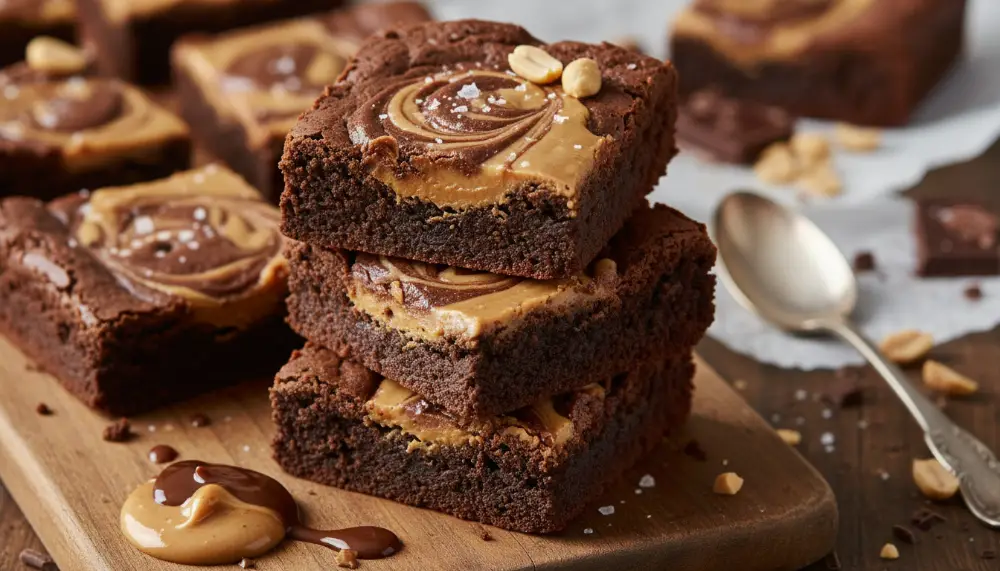

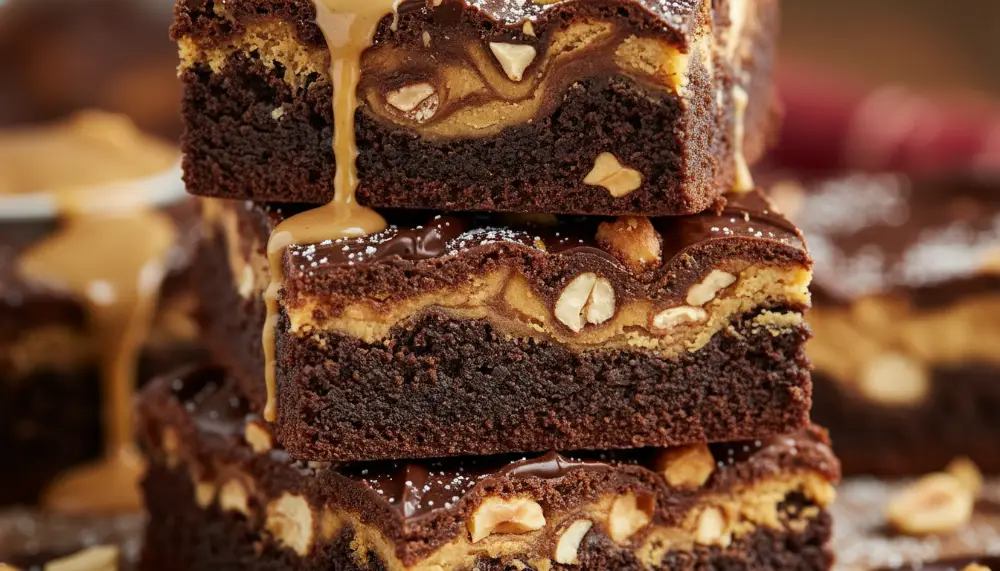
These decadent peanut butter brownies offer the ultimate fusion of rich, fudgy dark chocolate and creamy, salty nut butter swirls. This foolproof recipe ensures a crinkle-top finish and a melt-in-your-mouth texture that will satisfy any sweet tooth.
Gourmet Peanut Butter Swirl Brownies
Ingredients
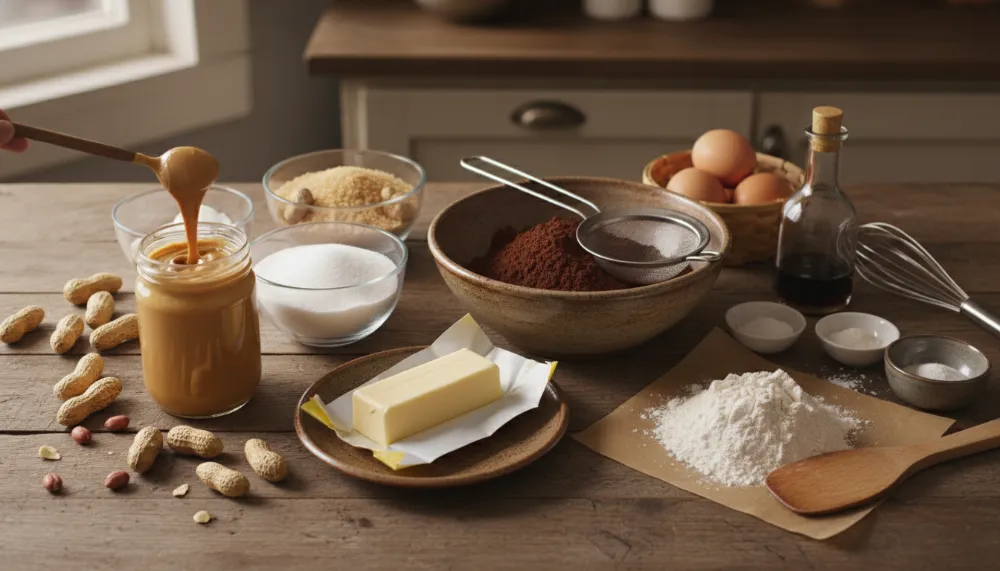
- 1 cup unsalted butter, melted and cooled slightly
- 2 cups granulated white sugar
- 4 large eggs, room temperature
- 1 teaspoon apple juice (for acidity and flavor balance)
- 3/4 cup high-quality unsweetened cocoa powder
- 1 cup all-purpose flour
- 1/2 teaspoon sea salt
- 3/4 cup creamy peanut butter
- 1/2 cup peanut butter chips or chocolate chips
Instructions
- 1 Preheat your oven to 350°F (175°C) and grease a 9×9 inch baking pan or line it with parchment paper for easy removal.
- 2 In a large mixing bowl, whisk together the melted butter and granulated sugar until well combined.
- 3 Add the eggs one at a time, whisking vigorously after each addition to ensure a glossy top, then stir in the apple juice.
- 4 Sift in the cocoa powder, flour, and salt. Gently fold the dry ingredients into the wet until just combined, being careful not to overmix.
- 5 Pour the chocolate batter into the prepared pan and spread it evenly with a spatula.
- 6 In a small bowl, microwave the peanut butter for 20 seconds until slightly runny. Drop spoonfuls of peanut butter onto the brownie batter.
- 7 Use a butter knife or skewer to gently swirl the peanut butter into the batter in a figure-eight motion. Sprinkle with peanut butter chips.
- 8 Bake for 30 to 35 minutes, or until a toothpick inserted into the center comes out with a few moist crumbs. Let cool completely before slicing.
The Fascinating History of the Peanut Butter Brownie
Peanut butter brownies are a popular modern evolution of the classic chocolate brownie, combining the richness of cocoa with the savory, nutty profile of peanuts. To understand this dessert, we must first look at the broader history of the brownie, which began in the late 19th-century United States. The most widely accepted origin story credits the chefs at the Palmer House Hotel in Chicago in 1893, who created a dense, fudgy chocolate square for the World’s Columbian Exposition. These early versions were often glazed with apricot and loaded with walnuts, quite different from the peanut butter variations we adore today.
The specific peanut butter variation emerged later as American home baking evolved. During the mid-20th century, peanut butter became a pantry staple in the early 1900s, but it wasn’t until the 1950s and 60s, the era of the “convenience kitchen”, that variations like peanut butter swirls became common in household cookbooks and through commercial brownie mixes. The introduction of shelf-stable, creamy peanut butter allowed home cooks to experiment with marbleizing batters, leading to the classic aesthetic we see in modern kitchens.
In the 1990s and early 2000s, professional pastry chefs elevated the dish from a simple home snack to a gourmet dessert. They introduced techniques like frozen peanut butter layers and sea salt finishes, moving away from the overly sweet commercial versions toward a more balanced, sophisticated profile. Today, the peanut butter brownie stands as a testament to the enduring American love affair with the sweet and salty flavor combination.
Essential Tools for Brownie Perfection
Creating the perfect peanut butter brownie requires more than just high-quality ingredients, it requires the right tools to ensure consistency and texture. For example, using the Cuisinart 8 Cup Food Processor is essential for fast chopping and slicing during meal prep, especially if you prefer to incorporate freshly chopped roasted peanuts or large chunks of chocolate into your batter. A food processor ensures that your mix-ins are uniform, which prevents some brownies from being “too chunky” while others are plain.
Furthermore, if you are looking to make your own nut butters or specialty sauces to drizzle over your brownies, the Ninja BN751 Professional Plus DUO Blender is perfect for creating smooth textures with its 1000W motor. This is particularly useful if you decide to experiment with tahini or almond butter alternatives to the traditional peanut butter. For those who like a bit of a crunch, using the Cosori 9-in-1 TurboBlaze Air Fryer 6 Qt to roast raw peanuts before adding them to your recipe can significantly enhance the depth of flavor. This air fryer roasts nuts and even vegetables perfectly with a large family capacity, making it a versatile addition to any baker’s kitchen.
The Science of Fudgy vs. Cakey Brownies
One of the most debated topics in the baking world is the texture of the brownie. What makes a brownie fudgy as opposed to cakey? It all comes down to the fat-to-flour ratio. Fudgy peanut butter brownies have a higher fat content, usually from butter and the natural oils in the peanut butter, and a lower amount of flour. Cakey brownies, on the other hand, contain more flour and often utilize a leavening agent like baking powder to create air pockets.
In our recipe, we lean heavily into the fudgy category. By using four eggs and a full cup of butter, we create a dense, humid environment within the batter. When the peanut butter is swirled in, it adds even more healthy fats, which prevents the gluten in the flour from developing a tough, bread-like structure. This results in a brownie that is heavy, moist, and almost truffle-like in consistency.
Professional Flavor Variations
Bakers use various techniques to balance the sweetness of chocolate with the saltiness of peanut butter. If you want to take your brownies to the next level, consider these professional variations:
- The Frozen Core Technique: Instead of swirling, professionals often freeze a sheet of sweetened peanut butter and “sandwich” it between two layers of chocolate batter. This prevents the flavors from muddying and creates a distinct, creamy center that remains separate from the brownie itself.
- Salted Caramel Swirl: High-end variations incorporate a ribbon of salted caramel alongside the peanut butter to enhance the “sweet-and-salty” dynamic. The caramel adds a chewy texture that complements the fudgy chocolate.
- The Triple Threat: For the ultimate peanut lover, incorporate three forms of the nut: creamy peanut butter in the batter, chopped roasted peanuts for texture, and peanut butter chips on top.
- The “Buckeye” Topping: A thick layer of peanut butter fudge, similar to a buckeye candy, is spread over the cooled brownie and then topped with a chocolate ganache. This creates a multi-layered masterpiece that is as visually stunning as it is delicious.
Nutritional Deep Dive
The nutritional content of a peanut butter brownie varies significantly based on the recipe’s density and serving size. A standard homemade square (approx. 60–70g) typically contains between 250 and 350 calories. While brownies are undoubtedly a treat, the addition of peanut butter introduces beneficial nutrients that you won’t find in a standard chocolate brownie.
Peanut butter is a source of healthy monounsaturated fats and provides a surprising amount of protein for a dessert, roughly 4 to 6 grams per serving. Additionally, these treats provide small amounts of iron (roughly 10% of daily value) and calcium. When selecting your ingredients, opting for a peanut butter that contains only peanuts and salt can reduce the intake of unnecessary hydrogenated oils and added sugars.
Dietary Adaptations and Ingredient Substitutions
To adhere to professional and strict dietary standards, it is important to ensure all ingredients are high quality. For instance, in our recipe, we use apple juice as a substitute for vanilla extract. Most vanilla extracts are alcohol-based, so using apple juice or a small amount of white vinegar maintains the chemical balance of the batter and provides the necessary acidity to activate the cocoa’s flavor profile without any alcohol content.
If you find yourself needing to substitute the butter, coconut oil is a fantastic alternative that pairs exceptionally well with the flavor of chocolate and peanuts. For those avoiding gluten, a high-quality 1-to-1 gluten-free flour blend can be used, though you may need to add an extra egg to help provide the structure that gluten would otherwise provide. Always ensure your peanut butter is free of animal-derived stabilizers to maintain the purity of the dish.
Mastering the Perfect Swirl
The visual appeal of peanut butter brownies often comes from the beautiful marbleized top. To achieve this, do not over-swirl. If you mix the peanut butter too much into the chocolate batter, the colors will blend into a murky brown rather than staying distinct. The key is to drop large dollops of peanut butter across the surface and use a thin knife to make only three or four large “S” shapes across the pan. This leaves large pockets of pure peanut butter that provide a burst of flavor in every bite.
Another tip is to ensure your peanut butter is at the right consistency. If it is too cold, it will be difficult to move through the thick brownie batter. Warming it in the microwave for just a few seconds makes it fluid enough to glide through the chocolate, creating those professional-looking ribbons.
Storage and Longevity
Because of their high moisture content, peanut butter brownies stay fresh longer than many other baked goods. They can be stored in an airtight container at room temperature for up to 4 days. However, for the best texture, many professionals recommend storing them in the refrigerator. The cold temperature firms up the peanut butter and makes the brownie even fudgier.
If you want to keep them for longer, brownies freeze beautifully. Wrap individual squares in plastic wrap and then place them in a freezer bag. They can be frozen for up to 3 months. To eat, simply let them thaw at room temperature for an hour, or heat them in the microwave for 15 seconds for a warm, gooey experience.