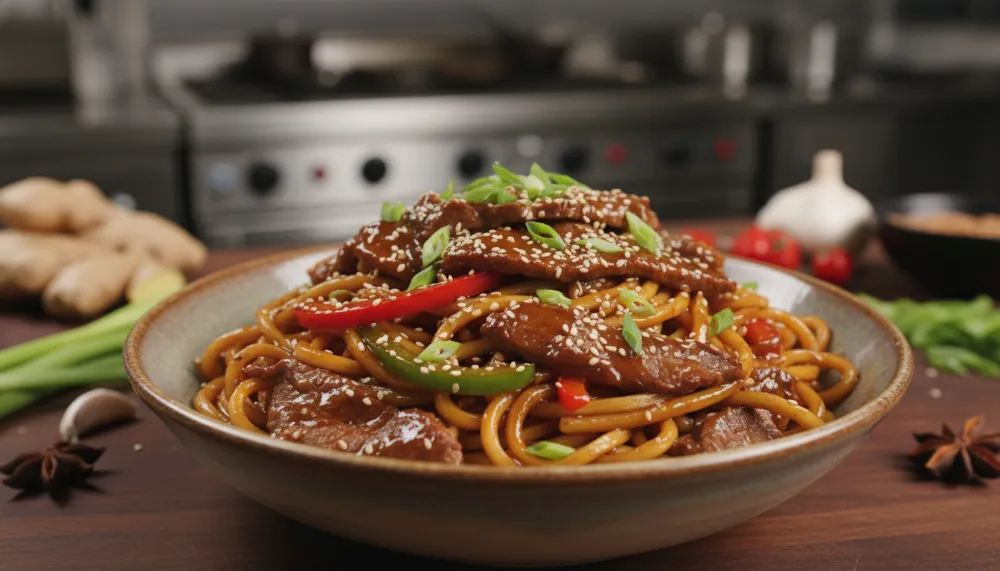

Experience a restaurant-quality fakeaway in less than half an hour with these incredibly glossy, umami-packed Sticky Beef Noodles. This 25-minute masterpiece combines tender velveted beef with a luxurious sweet and savory glaze that clings to every single strand of noodle.
Sticky Beef Noodles with Sweet Savory Sauce
Ingredients
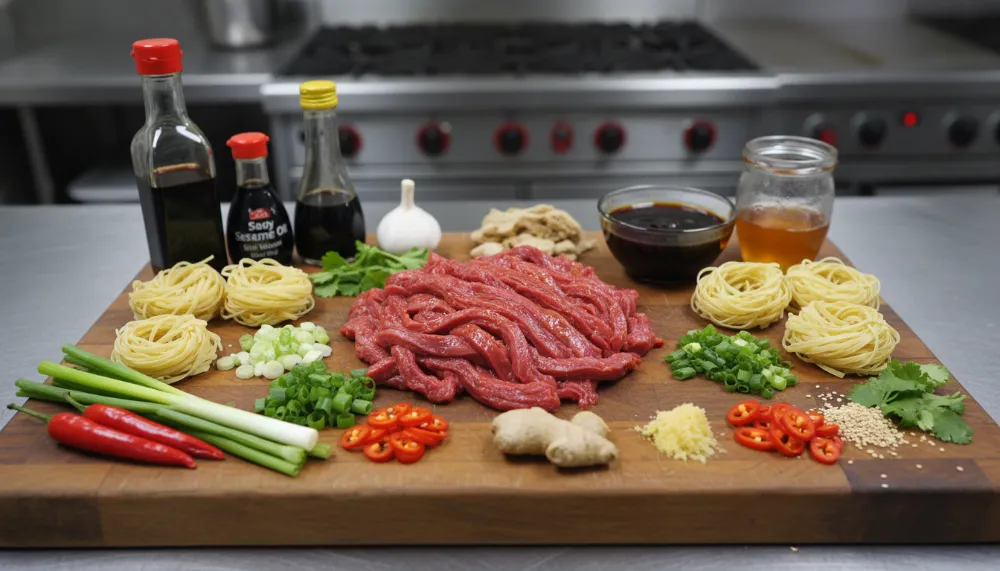
- 1 400g Lean Beef (Flank or Sirloin), thinly sliced
- 2 250g Medium Egg Noodles
- 3 1/4 cup Dark Soy Sauce (low sodium)
- 4 3 tbsp Honey or Brown Sugar
- 5 1 tbsp Apple Cider Vinegar
- 6 3 cloves Garlic, minced
- 7 1 tbsp Fresh Ginger, grated
- 8 1/4 cup Beef Broth
- 9 1 tsp Cornstarch
- 10 1 Red Bell Pepper, julienned
- 11 1 tbsp Vegetable Oil
Instructions
- 1 Cook the egg noodles according to package directions, rinse with cold water, and set aside.
- 2 In a small bowl, whisk together the soy sauce, honey, apple cider vinegar, beef broth, and cornstarch.
- 3 Heat oil in a large wok or skillet over high heat. Add beef strips and sear until browned, about 3-4 minutes.
- 4 Add the garlic, ginger, and bell peppers to the pan. Sauté for another 2 minutes.
- 5 Pour the sauce over the beef and vegetables. Let it bubble and thicken for 60 seconds.
- 6 Toss in the cooked noodles and stir until every strand is coated in the sticky glaze. Garnish with sesame seeds.
The Secret to Restaurant-Quality Sticky Beef Noodles
Creating the perfect Sticky Beef Noodles with Sweet Savory Sauce – 25 Min requires more than just high heat, it requires a fundamental understanding of the Maillard reaction and the balance of umami components. When you are operating in a fast-paced kitchen environment, efficiency is your greatest ally. This recipe is designed to deliver a high-impact flavor profile that mimics the complexity of traditional Asian stir-fry while remaining accessible for the home cook.
The core of this dish lies in the “sticky” factor. This isn’t just about adding sugar, it’s about the emulsion of fats, sugars, and starches that creates a cohesive glaze. Unlike a watery sauce that pools at the bottom of the bowl, a professional-grade sticky sauce grips the noodles, ensuring that every bite delivers a consistent punch of garlic, ginger, and soy. By using the right tools, such as the Cosori 9-in-1 TurboBlaze Air Fryer for preparing side components or even crispy beef toppings, you can elevate the texture of this dish significantly.
Mastering the “Velveting” Technique for Tender Beef
One of the most common complaints with home-cooked beef stir-fry is that the meat becomes tough or rubbery. Professional chefs avoid this by using a technique known as “velveting.” In this 25-minute version, we use a simplified velveting process. By coating the beef in a small amount of cornstarch and soy sauce before it hits the pan, you create a protective barrier. This barrier traps the moisture inside the meat fibers while allowing the outside to develop a beautiful, dark sear.
For those who prefer a more hands-off approach to meat preparation, using the Instant Pot Duo 7-in-1 to pre-tenderize tougher cuts of beef can be a game-changer. However, for this 25-minute recipe, quick-searing thin strips of flank steak or sirloin in a high-heat wok is the gold standard. Remember to always slice your beef against the grain, this breaks up the tough muscle fibers and ensures a melt-in-your-mouth texture that complements the soft, springy egg noodles.
Choosing the Best Cut of Beef
While we avoid pork entirely in this recipe, beef offers a variety of textures depending on the cut you choose. Flank steak is the traditional choice for its lean profile and ability to absorb marinades. Sirloin tips are also excellent for a more buttery flavor. If you are on a budget, high-quality ground beef can be substituted to create “sticky beef crumbles,” which cook even faster and provide a fantastic textural contrast when paired with crunchy vegetables prepared in the Instant Vortex 6-Quart XL Air Fryer.
The Anatomy of the Sweet Savory Sauce
The sauce is the soul of Sticky Beef Noodles. To achieve that deep mahogany color and complex flavor without the use of alcohol, we rely on a specific ratio of acids and sugars. Many traditional recipes call for Shaoxing wine, but in this version, we substitute it with a combination of high-quality beef broth and apple cider vinegar. This provides the necessary acidity to cut through the richness of the beef without the need for wine.
The sweetness comes from honey or brown sugar, which caramelizes rapidly over high heat. This caramelization is what gives the sauce its “sticky” characteristic. When the sugars interact with the dark soy sauce, they form a thick syrup. The addition of a cornstarch slurry (cornstarch mixed with cold broth) acts as the final thickening agent. For a perfectly smooth sauce base, you can even use a Ninja NutriPlus Personal Blender to emulsify your ginger, garlic, and liquids before adding them to the wok.
Noodle Variations: Finding Your Perfect Texture
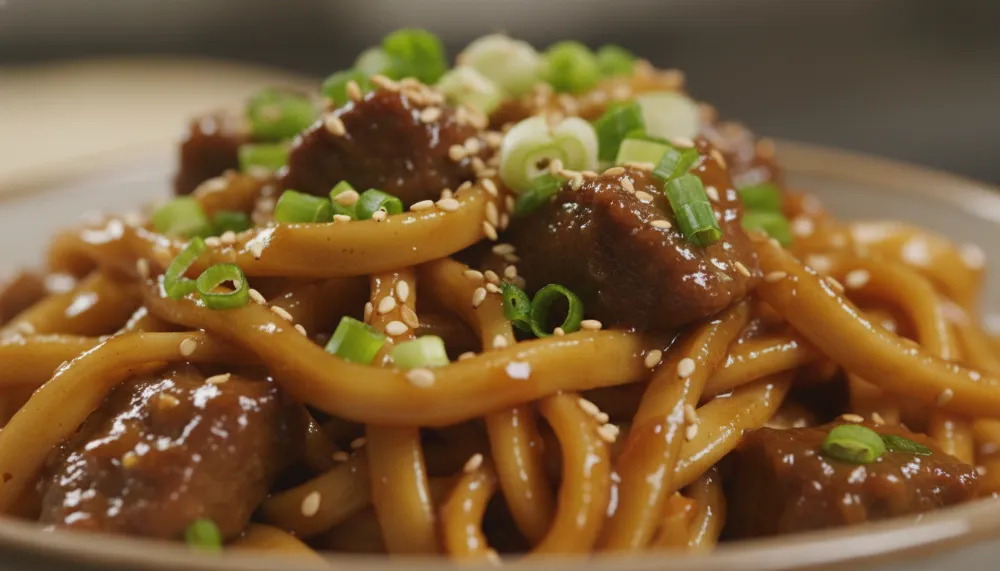
While the recipe calls for medium egg noodles, the beauty of this dish is its versatility. Egg noodles provide a rich, slightly alkaline flavor that pairs perfectly with beef. However, if you are looking for something different, consider these alternatives:
- Udon Noodles: Thick and chewy, these are fantastic for soaking up large amounts of sauce.
- Rice Stick Noodles: A lighter option that offers a delicate contrast to the heavy beef.
- Ramen Noodles: Perfect for a “street food” style vibe, offering a springy bite.
Regardless of the noodle you choose, the key is to slightly undercook them by about 60 seconds. They will finish cooking in the wok as they absorb the savory sauce, preventing them from becoming mushy or over-processed.
Vegetable Additions for Crunch and Color
To make this a balanced one-pan meal, vegetables are essential. Red bell peppers add a sweetness that mirrors the sauce, while broccoli florets act as “flavor sponges,” trapping the glaze in their many crevices. For the fastest prep, use a Hamilton Beach Electric Vegetable Chopper to get perfectly uniform slices of peppers and onions in seconds. This ensures that all components cook at the same rate, maintaining that vital 25-minute timeline.
Expert Troubleshooting for Common Stir-Fry Issues
Even the most experienced home cooks can run into issues with stir-fry. If your noodles are sticking together in a clump, it is likely due to excess starch. Always rinse your noodles under cold water immediately after boiling to stop the cooking process and wash away that surface starch. If your sauce is too thin, let it boil for an extra 30 seconds to activate the cornstarch, or add an extra teaspoon of honey to increase the viscosity.
If you find yourself cooking for a large family, crowding the pan is a major risk. When too much beef is added to a skillet at once, the temperature drops, and the meat begins to steam rather than sear. This leads to a grey, unappealing color. To avoid this, sear the beef in two batches. This allows for maximum surface area contact and ensures those crispy, caramelized edges that define a great sticky beef dish. For those who enjoy slow-cooked flavors but want a similar profile, the Crock-Pot 7-Qt Oval Slow Cooker can be used to braise the beef in the same sauce components for 8 hours, though you’ll miss out on the 25-minute speed!
Storing and Reheating Your Leftovers
Sticky Beef Noodles make for an incredible lunch the next day. The flavors actually have time to meld and deepen in the refrigerator. Store your leftovers in an airtight glass container for up to three days. When reheating, avoid the microwave if possible, as it can make the noodles rubbery. Instead, toss the noodles back into a hot skillet with a splash of beef broth or water. This will “loosen” the sticky sauce and bring it back to its original glossy glory.
For those who meal prep, keeping the sauce and the cooked noodles separate until the day of consumption can help maintain the best texture. However, most fans of this recipe find that the fully assembled dish holds up remarkably well. If you are looking for a quick pick-me-up while you meal prep, the Keurig K-Express Coffee Maker is a great companion in the kitchen to keep your energy high.
Frequently Asked Questions
Can I use frozen vegetables? Yes! Frozen stir-fry mixes work perfectly and require zero prep time. Just ensure you thaw and drain them well to avoid adding excess water to your sauce.
Is there a substitute for honey? Brown sugar or agave nectar work equally well. The goal is to provide a sugar source that will caramelize at high temperatures.
What if I don’t have a wok? A large, heavy-bottomed stainless steel or cast-iron skillet is a perfectly suitable substitute. The main requirement is high heat retention.