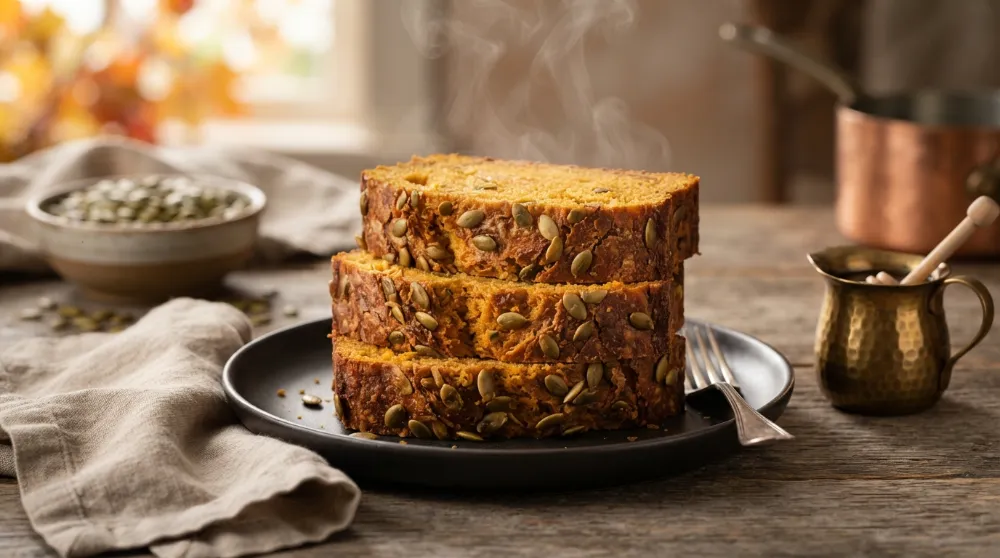

Transform your leftover sourdough starter into the ultimate autumn indulgence with this incredibly moist, spiced sourdough discard pumpkin bread. It is the ultimate zero-waste fall bake that balances sweet, earthy pumpkin with a subtle, sophisticated tang.
Sourdough Discard Pumpkin Bread
15 mins
60 mins
75 mins
10 slices
American
Breakfast & Dessert
Easy
Ingredients
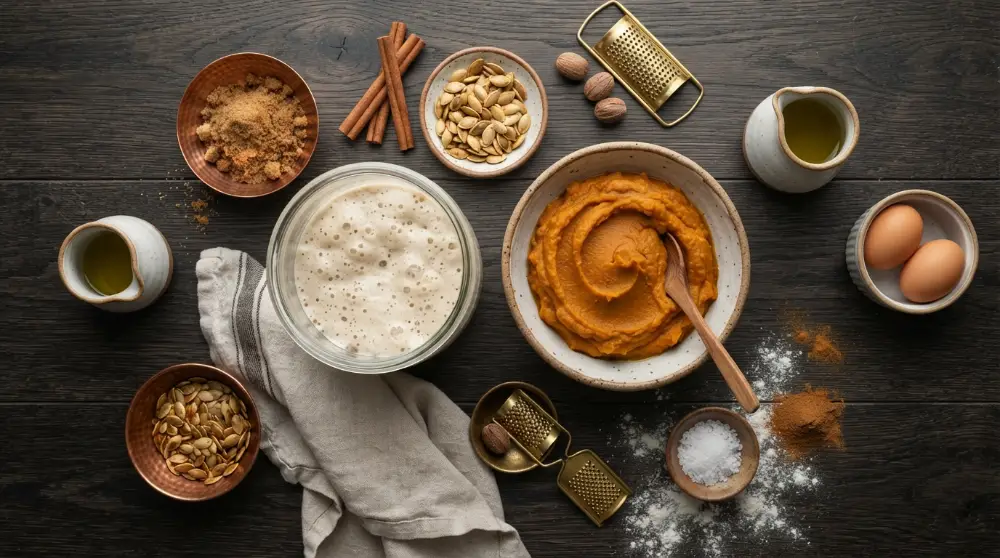
- 1 220g (1 ¾ cups) All-Purpose Flour
- 2 1 tsp Baking Soda
- 3 ½ tsp Baking Powder
- 4 1 ½ tsp Ground Cinnamon
- 5 1 tsp Pumpkin Pie Spice
- 6 ½ tsp Fine Sea Salt
- 7 240g (1 cup) Canned Pumpkin Puree
- 8 120g (½ cup) Sourdough Discard (room temperature)
- 9 100g (½ cup) Neutral Vegetable Oil or Melted Unsalted Butter
- 10 150g (¾ cup) Granulated Sugar
- 11 110g (½ cup) Packed Brown Sugar
- 12 2 Large Eggs (room temperature)
- 13 1 tsp Alcohol-Free Vanilla Extract
Instructions
- 1 Preheat oven to 350°F (175°C). Grease an 8.5 x 4.5-inch loaf pan and line with parchment paper for easy removal.
- 2 In a medium bowl, whisk together flour, baking soda, baking powder, cinnamon, pumpkin pie spice, and sea salt.
- 3 In a separate large bowl, vigorously whisk the eggs, granulated sugar, and brown sugar together until light and fluffy.
- 4 Whisk the pumpkin puree, sourdough discard, oil (or butter), and alcohol-free vanilla extract into the wet mixture until completely emulsified.
- 5 Gently fold the dry ingredients into the wet mixture using a large spatula. Stir just until no dry flour spots remain; do not overmix.
- 6 Scrape the thick batter into your prepared loaf pan and smooth the surface.
- 7 Bake for 55 to 65 minutes, or until a wooden skewer inserted into the center of the loaf comes out clean. Cool in the pan for 10 minutes before cooling fully on a wire rack.
Nutrition Facts
285 kcal
48g
5g
10g
3g
The Rich History of Zero-Waste Baking and Holiday Squash
Before the convenience of modern grocery stores, wild fermentation was not merely a baking preference, it was a practical necessity. Ancient Egypt is widely credited as the birthplace of sourdough baking, dating back to 1500 BCE, where wild ambient yeasts were harnessed to create leavened bread. Throughout the centuries, maintaining a active sourdough starter was a constant cycle of feeding and discarding. Thrifty housewives and rural bakers, operating long before commercial active dry yeast was engineered, could never afford to throw away the “discard” portion. They quickly realized that this un-fed, highly acidic flour paste was a powerful culinary asset, ideal for expanding quick-bake recipes while adding unique flavor depth.
Simultaneously, winter squashes like the native pumpkin were crucial cold-weather survival crops for early American settlers. Cultivated by Native Americans as one of the “Three Sisters” agricultural staples, pumpkins stored easily in root cellars throughout harsh winters. Early versions of pumpkin bread, referenced as early as 1741 in colonial manuscripts, involved boiling down sliced pumpkin flesh to knead with coarse cornmeal or rye flour. This not only stretched precious flour supplies but also utilized the natural moisture of the squash to keep loaves fresher for longer periods.
Merging these two storied traditions, sourdough discard pumpkin bread represents the perfect union of historical zero-waste kitchen wisdom and modern cozy comfort food. Rather than tossing down the drain your active cultures, mixing them into a spiced pumpkin batter produces a quick bread with unparalleled moisture, complex tang, and a beautifully soft crumb.
The Scientific Magic: How Sourdough Discard Transforms Pumpkin Quick Bread
To understand why this quick bread is so extraordinarily soft and tender, we must examine the chemistry of sourdough discard. Even though discard is no longer active enough to raise a loaf of artisanal sourdough bread on its own, it contains two critical chemical components: lactic acid and partially broken-down gluten structures.
When lactic acid from the sourdough discard is mixed with baking soda, a powerful acid-base reaction occurs. This reaction produces carbon dioxide gas immediately upon contact, creating an instant lift that works in tandem with the baking powder. This results in a much lighter, fluffier crumb structure than standard quick breads, which often suffer from a dense, heavy texture due to the weight of the dense pumpkin puree.
Additionally, the lactic acid acts as a natural crumb-softener. It weakens the gluten bonds in the newly added all-purpose flour, ensuring that your bread remains ultra-tender and melt-in-the-mouth, even if you accidentally overmix the batter slightly. The pre-fermented flour in the discard also adds a complex flavor profile, cutting through the heavy sweetness of refined sugars with a highly sought-after lactic acidity that mimics the depth of premium cultured butter.
A Deeper Look at the Nutritional Benefits of Sourdough Discard
While this recipe satisfies the sweet cravings of autumn, it also brings excellent nutritional enhancements to your plate when compared to traditional, white-flour quick breads:
- Enhanced Mineral Bioavailability: Sourdough discard undergoes partial fermentation which helps neutralize phytic acid. Phytic acid is an anti-nutrient naturally occurring in grains that binds to essential minerals like iron, zinc, and magnesium, blocking their absorption. The reduced phytic acid content in this bake means your body can absorb more of these essential nutrients.
- Digestibility: The slow fermentation of the flour in your starter helps break down complex starches and gluten proteins before the baking process even begins. Many individuals who experience mild sensitivity to standard quick breads find that sourdough-infused bakes are significantly gentler on the digestive system.
- Rich in Beta-Carotene: Real pumpkin puree is loaded with beta-carotene, a strong antioxidant that our bodies readily convert into Vitamin A to support skin health, immunity, and visual acuity.
Professional Kitchen Equipment for the Ultimate Autumn Bake
Baking the perfect quick bread requires the right culinary tools to achieve consistent results. Investing in reliable appliances makes the baking process effortless and enhances the final outcome:
- For Uniform Slices and Texture: Using the right loaf pan is crucial. Ensure you use a high-quality non-stick pan to prevent sticking. If you prefer to bake mini loaves or quickly reheat a single thick slice to crispy-edge perfection, the Cosori 9-in-1 TurboBlaze Air Fryer 6 Qt is absolute perfection. Its ceramic coating and precise heating distribution ensure even warming without drying out the bread’s moist interior.
- For Perfect Ingredient Prep: If you love incorporating roasted nuts or chopped crystallized ginger into your batter, a reliable tool makes all the difference. The Hamilton Beach Electric Vegetable Chopper is excellent for turning whole pecans or walnuts into perfectly uniform pieces with a simple press.
- The Ultimate Morning Pairing: Nothing elevates a warm slice of spiced pumpkin bread like a freshly brewed beverage. Pair your slice with a rich, bold coffee or espresso created with the sleek Keurig K-Express Coffee Maker to construct a true barista-style autumn morning routine at home.
Five Gourmet Flavor Variations to Elevate Your Pumpkin Loaf
Once you have mastered the foundational master recipe, try experimenting with these chef-inspired flavor profiles to put a unique twist on this autumn staple:
1. Brown Butter and Toasted Pecan Swirl
Instead of using standard neutral vegetable oil, melt unsalted butter in a light-colored saucepan over medium heat until foam subsides and amber-colored flecks begin to form on the bottom. Brown butter infuses the pumpkin batter with a rich, toasty, butterscotch-like flavor. Fold in ½ cup of toasted, chopped pecans prepared in your vegetable chopper for a satisfying, nutty crunch.
2. Cardamom-Ginger with Maple Espresso Drizzle
Step away from the predictable pumpkin pie spice blends by crafting your own custom spice blend. Combine ground cardamom, fresh grated ginger, a pinch of finely ground black pepper, and cinnamon. Once the baked loaf has completely cooled, whisk together pure maple syrup, a splash of hot espresso, and powdered sugar to create a glossy, warm glaze to pour over the top of your bread.
3. Salted Dark Chocolate and Rustic Spelt
For a highly sophisticated and slightly savory twist, substitute 20% of the all-purpose flour with whole-grain spelt flour. The natural nuttiness of spelt complements the earthy sourdough discard beautifully. Fold in ¾ cup of high-quality 70% dark chocolate chunks, and sprinkle the top of the batter with coarse, flaky sea salt just before baking.
4. Sweet Cinnamon Sugar Ribbon
Create a stunning visual pattern inside your sliced loaf. Pour half of your pumpkin batter into the prepared loaf pan. Generously sprinkle a mixture of granulated sugar and ground cinnamon over the surface, then gently layer the remaining batter over the top. Use a butter knife to create a elegant figure-eight swirl pattern through the batter, resulting in caramelized cinnamon pockets throughout the baked bread.
5. Bright Orange Blossom and Crystallized Ginger
Brighten the dense flavor of pumpkin by grating fresh orange zest directly into the sugar before whisking. Fold in ¼ cup of finely chopped crystallized ginger into the dry ingredients. The combination of sweet citrus oils and spicy, candied ginger slices cuts through the rich batter beautifully, delivering a sparkling finish.
Troubleshooting Common Sourdough Quick Bread Mistakes
Though this recipe is designed to be highly approachable, baking with sourdough discard introduces unique variables that can sometimes yield unexpected results. Use this professional guide to ensure success every single time:
Why did my pumpkin bread sink in the center?
A sunken center is typically caused by one of three issues. First, your baking soda or baking powder may be expired; always test their potency if you do not bake frequently. Second, opening the oven door too early in the baking process can cause a sudden temperature drop, collapsing the delicate rise. Finally, too much moisture from using a watery, homemade pumpkin puree can weigh down the batter. For the most consistent results, stick to premium canned pumpkin puree, which has a controlled, low-moisture content.
How do I prevent a gummy line at the bottom of the loaf?
A dark, gummy line at the bottom of quick breads is a sign of underbaking or improper emulsification. Ensure your eggs, pumpkin, and discard are at room temperature before mixing. When wet ingredients are cold, they cannot properly emulsify with the fat, causing them to separate and sink to the bottom during the baking process. Additionally, bake the bread on the middle rack of your oven and use a wooden toothpick inserted deep into the center to confirm it is fully cooked through.
My loaf is too sour. How can I adjust the flavor?
The sourness of your discard is directly related to how long it has sat in the refrigerator without being fed. If you prefer a highly subtle, barely detectable tang, use sourdough discard that is only 1 to 3 days old. If you enjoy a robust, complex sourdough flavor that stands up boldly to the pumpkin spices, use discard that has rested in the fridge for up to two weeks.