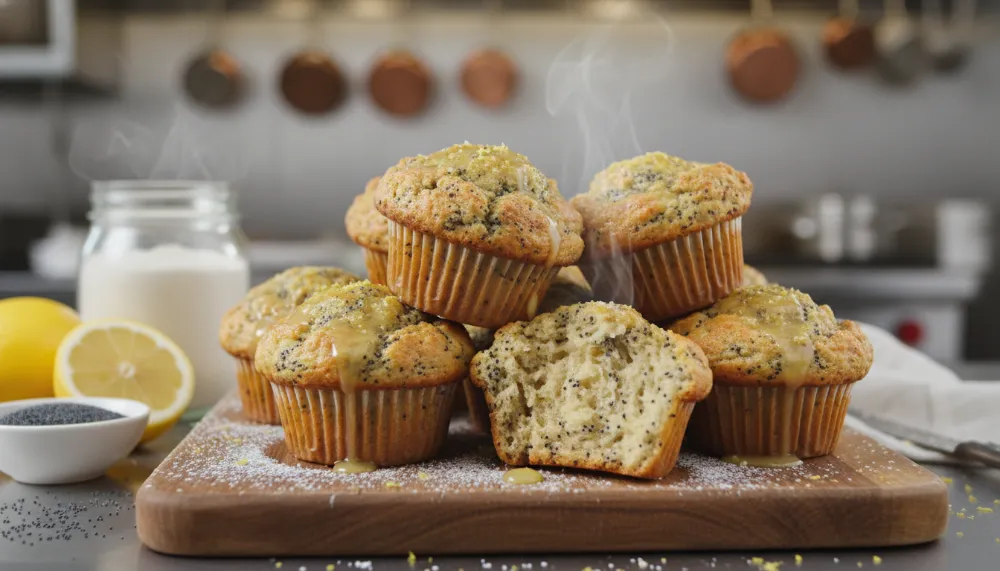

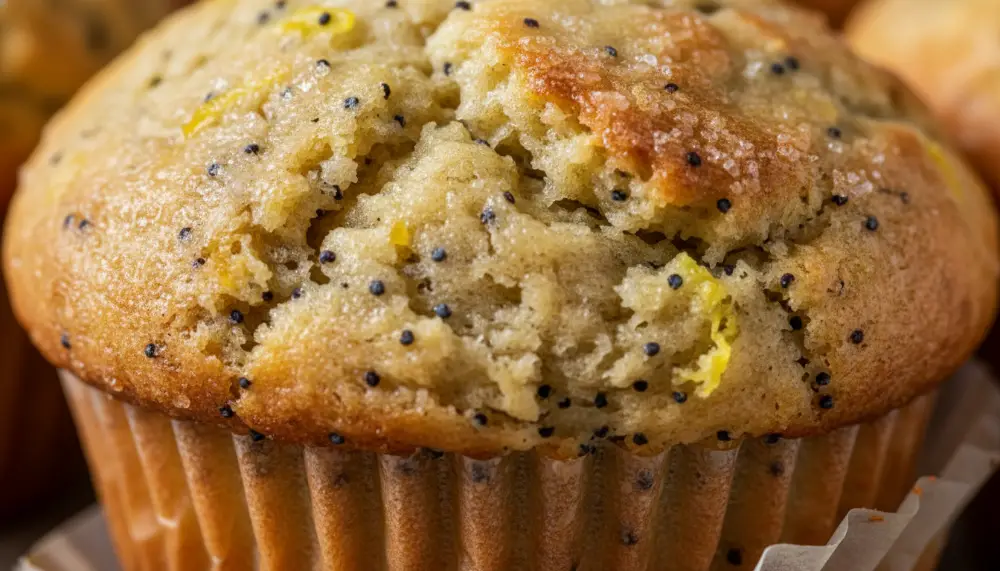
Transform your bubbly sourdough discard into these vibrantly citrusy, tender muffins packed with nutty poppy seeds and finished with a zesty glaze. They are the perfect morning treat to reduce kitchen waste while satisfying your craving for a bakery-style delight.
Sourdough Discard Lemon Poppy Seed Muffins
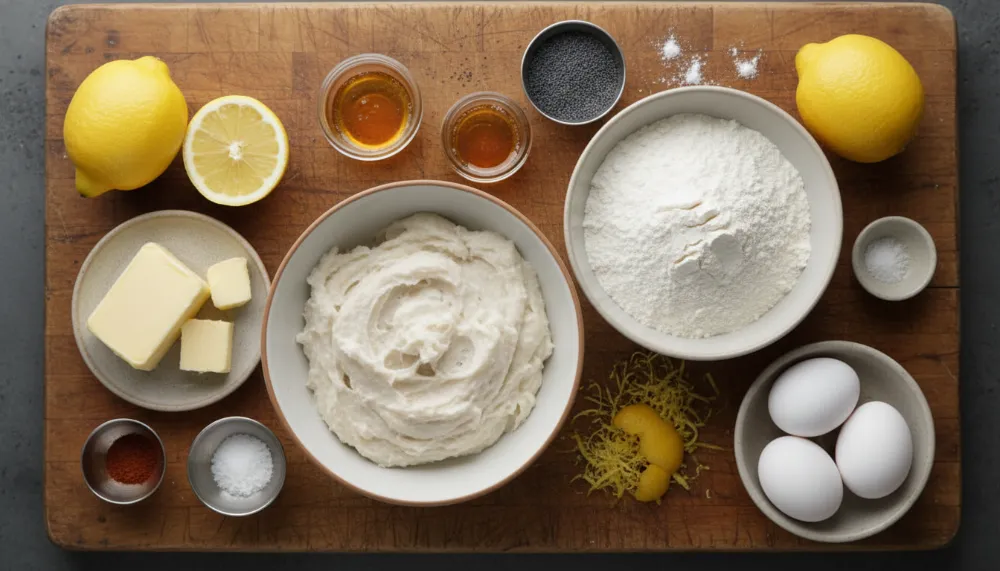
Ingredients
- 1 2 cups All-Purpose Flour
- 2 1 cup Granulated Sugar
- 3 2 tbsp Poppy Seeds
- 4 1 tsp Baking Powder & 1/2 tsp Baking Soda
- 5 1/2 cup Sourdough Discard (unfed)
- 6 2 Large Eggs
- 7 1/2 cup Vegetable Oil
- 8 1/4 cup Fresh Lemon Juice & 2 tbsp Zest
- 9 1 tsp Vanilla Bean Paste (Alcohol-Free)
Instructions
- 1 Preheat oven to 375°F (190°C) and line a muffin tin with paper liners.
- 2 Rub lemon zest into the sugar until fragrant, then whisk in eggs, oil, discard, juice, and vanilla bean paste.
- 3 In a separate bowl, sift flour, baking powder, baking soda, salt, and poppy seeds together.
- 4 Gently fold the dry ingredients into the wet until just combined; do not overmix.
- 5 Scoop batter into tins and bake for 18-22 minutes until a toothpick comes out clean.
The Fascinating History of Sourdough Discard and Lemon Poppy Seed Muffins
The culinary journey of the Sourdough Discard Lemon Poppy Seed Muffin is a tale of three traditions colliding to create a modern masterpiece. To understand why this muffin is a staple in the modern kitchen, we must look back thousands of years. Sourdough fermentation is among the oldest forms of leavening, dating back to at least 3700 BCE in Ancient Egypt and Mesopotamia. Historically, “mother dough” was maintained by keeping a portion of fermented flour and water from the previous day’s bake. The concept of “discard”, the portion of starter removed before feeding, was often viewed as waste until the modern home-baking resurgence. Bakers began treating this acidic, flavor-rich byproduct as “liquid gold,” using it to add tang and moisture to quick breads without waiting for a long proofing time.
Poppy seeds have their own storied past, used in bread-making since at least the 1st century AD in the Mediterranean. They were spread through Europe by the Roman Empire, prized for their subtle nutty flavor and distinctive crunch. When you pair this ancient seed with lemons, which likely originated in Southeast Asia and were introduced to the Mediterranean around the 1st century, you get a timeless flavor profile. The specific pairing of lemon and poppy seeds became a staple of American and British “tea cake” culture, exploding in popularity as a muffin variety during the 1990s. Today, using sourdough discard in this classic recipe bridges the gap between ancient preservation techniques and modern gourmet baking.
Why Sourdough Discard is the Secret to the Best Muffins
Many people wonder why they should use discard instead of just making a standard lemon poppy seed muffin. The answer lies in the chemistry of the starter. Sourdough discard acts as a prebiotic, and the fermentation process helps break down phytic acid in the wheat, making minerals like zinc and magnesium more bioavailable for your body. Beyond the health benefits, the acidity of the discard reacts beautifully with baking soda, creating a massive rise and a light, airy crumb that standard recipes often lack.
The lactic acid produced by the wild yeast in the discard provides a subtle tang that complements the sharp citrus of the lemon. This depth of flavor is something a standard chemical leavener alone cannot replicate. When you use discard that has been sitting in your fridge for a few days, that tang becomes more pronounced, providing a professional-grade flavor profile that mimics the complex notes of a high-end patisserie.
Essential Kitchen Tools for Muffin Perfection
To achieve the perfect dome and consistent texture, having the right equipment is vital. If you are looking to streamline your prep, the Hamilton Beach Electric Vegetable Chopper is surprisingly effective for quickly zesting large quantities of lemon peel or even pulsing poppy seeds if you prefer a more integrated flavor. For those who want to experiment with different baking methods, the Cosori 9-in-1 TurboBlaze Air Fryer 6 Qt offers a PFAS-free ceramic coating and precise heating that can actually bake a small batch of muffins in record time with an incredible crust.
If you prefer a more traditional approach but want to ensure your batter is perfectly smooth before folding in the poppy seeds, the Ninja NutriPlus Personal Blender can be used to emulsify your wet ingredients, ensuring the oil and lemon juice are perfectly integrated. For the ultimate morning pairing, nothing beats a fresh muffin with a cup of coffee from the Keurig K-Express Coffee Maker, which provides fast, fresh coffee at the touch of a button.
Professional Flavor Variations to Elevate Your Bake
If you want to move beyond the basic recipe, professional bakers often employ specific techniques to enhance the sensory experience of a sourdough muffin. One such method is the “Citrus Triple-Threat.” Instead of using alcohol-based lemon extracts, which can often taste artificial, rub fresh lemon zest directly into the granulated sugar before mixing. This releases the essential oils for a deeper, more resonant flavor. Supplement this with fresh lemon juice and a finish of tart lemon-sugar glaze for a punchy result.
For a truly gourmet experience, consider the “Gourmet Creamy Center.” Fill the center of the muffin with a spoonful of vegetarian lemon curd, made with eggs, sugar, and lemon juice, before baking. This creates a “molten” citrus experience that surprises the diner. Another variation is the “Meyer Lemon & Cardamom” twist. Use Meyer lemons, which are a cross between a lemon and a mandarin, for a sweeter, floral note. Pair this with a pinch of ground cardamom, a spice that complements the tang of sourdough and the earthiness of poppy seeds perfectly.
Nutritional Profile: What Is In Your Muffin?
Understanding the nutritional breakdown of your bake helps in planning a balanced diet. Here is what a standard-sized sourdough discard lemon poppy seed muffin typically offers:
| Nutrient | Average Amount | Notes |
|---|---|---|
| Calories | 245 – 310 kcal | Varies based on the use of butter vs. oil. |
| Carbohydrates | 33g – 45g | Includes sugars and complex carbs. |
| Protein | 4g – 5g | Boosted by sourdough culture and eggs. |
| Fat | 10g – 14g | Derived from vegetable oils or butter. |
| Micronutrients | High in B-vitamins | Poppy seeds are rich in Calcium and Iron. |
Strict Dietary Substitutions for Everyone
Adhering to specific dietary requirements does not mean sacrificing flavor. In this recipe, we ensure there is absolutely no pork and no alcohol. Traditional vanilla extract often contains an alcohol base; for this recipe, we recommend using vanilla bean paste, whole scraped vanilla beans, or pure maple syrup to achieve that aromatic depth without the alcohol content. For the fats, we stick to vegetable oil, unsalted butter, or ghee. This ensures the recipe remains vegetarian and strictly pork-free, avoiding any lards or animal-based fats that are not dairy or egg-based.
If you find your batter needs a little more moisture, professionals often replace part of the liquid with whole-milk Greek yogurt or ricotta cheese. This works in tandem with the sourdough acidity to create a “bakery-style” domed top and an exceptionally tender crumb. For those looking to meal prep, you can even use an Instant Pot Duo 7-in-1 on the “yogurt” setting to make your own Greek yogurt to include in these muffins!
Pro Tips for the Perfect Rise
The biggest challenge with sourdough discard muffins is ensuring they don’t turn out dense. The secret is the temperature and the mixing technique. Always use room temperature eggs and sourdough discard. Cold ingredients can cause the fat in your batter to seize, leading to an uneven bake. Furthermore, the “Well Method” is your best friend: create a hole in the center of your dry ingredients and pour the wet ingredients in. Use a spatula to fold the mixture together until the flour just disappears. If you see a few small lumps, leave them! Overmixing develops gluten, which is great for bread but terrible for the tender, cake-like texture of a muffin.
To get that high, peaked top seen in professional bakeries, start your oven at a slightly higher temperature, such as 400°F, for the first five minutes of baking, then drop it down to 350°F or 375°F for the remainder. This initial burst of heat causes the leavening agents to react quickly, pushing the batter upward before the crust sets. This technique, combined with the power of an Instant Vortex 6-Quart XL Air Fryer or a standard oven, will give you those impressive results every time.