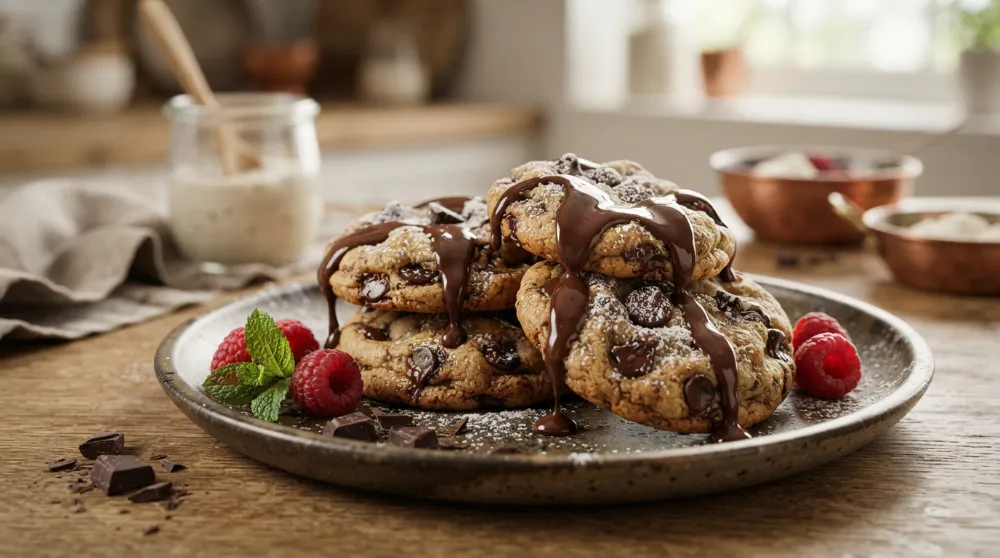

Transforming your leftover starter into a gourmet treat has never been easier or more delicious. These Sourdough Discard Chocolate Chip Cookies offer a perfect balance of tangy depth and sweet, gooey chocolate, making them the ultimate zero waste kitchen solution.
Sourdough Discard Chocolate Chip Cookies
Ingredients
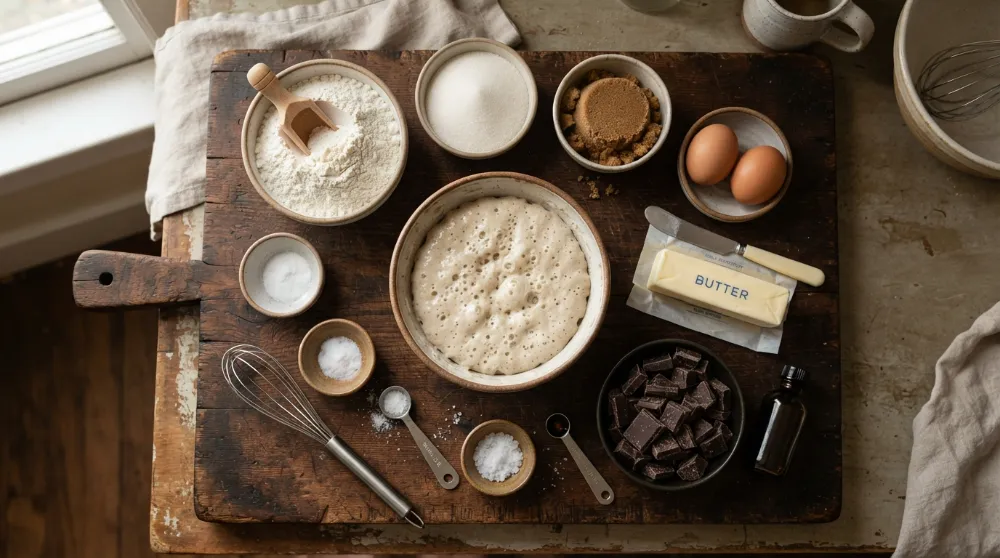
- 1 cup Unsalted Butter (browned and cooled)
- 1 cup Brown Sugar (packed)
- 1/2 cup Granulated White Sugar
- 1/2 cup Sourdough Discard (unfed, room temp)
- 1 tbsp Vanilla Bean Paste (alcohol-free)
- 1 large Egg (room temp)
- 2 1/4 cups All-Purpose Flour
- 1 tsp Baking Soda
- 1/2 tsp Sea Salt
- 2 cups Dark Chocolate Chips
Instructions
- 1 Melt butter in a saucepan over medium heat until it foams and turns golden brown. Cool completely.
- 2 Cream the cooled brown butter with brown and white sugars until fluffy.
- 3 Whisk in the egg, sourdough discard, and vanilla bean paste until fully incorporated.
- 4 Sift together flour, baking soda, and salt, then gradually fold into the wet mixture.
- 5 Fold in chocolate chips. Chill the dough in the refrigerator for at least 2 hours.
- 6 Preheat oven to 350°F (175°C). Scoop balls of dough onto a lined tray.
- 7 Bake for 10 to 12 minutes until edges are golden but center is soft.
Nutrition Facts
Approximate Nutrition Estimates Per Serving:
The Philosophy of Zero Waste Baking
In the modern culinary landscape, the concept of “zero waste” has moved from a fringe movement to a fundamental practice for the conscientious home cook. Sourdough Discard Chocolate Chip Cookies (Zero Waste Baking) represent the pinnacle of this philosophy. Every week, millions of bakers across the globe perform the ritual of feeding their sourdough starters. Traditionally, a significant portion of the starter is discarded to maintain the balance of yeast and bacteria. However, this “discard” is far from useless. It is a fermented, flavor-packed medium that can transform standard baked goods into complex masterpieces.
By integrating sourdough discard into your cookie recipes, you are not just saving flour and water from the bin, you are utilizing an ingredient that has undergone hours, if not days, of fermentation. This process adds a layer of sophisticated acidity that cuts through the intense sweetness of traditional chocolate chip cookies, providing a more balanced and adult flavor profile. This is sustainable baking at its most delicious, proving that being eco-friendly in the kitchen doesn’t require sacrificing the treats we love.
Historical Origins: From Ancient Grain to Modern Treat
The journey of Sourdough Discard Chocolate Chip Cookies is a fascinating intersection of two very different timelines. Sourdough itself is arguably the world’s oldest form of leavened bread. Historical records suggest that ancient Egyptians were using wild yeast cultures as early as 3000 BC. For millennia, this was the only way to make bread rise, until commercial yeast was isolated and mass-produced in the late 1800s. Sourdough was a necessity, a living heritage passed down through generations.
On the other hand, the chocolate chip cookie is a relatively young American icon. Invented by Ruth Wakefield in the 1930s at the Toll House Inn, it was a breakthrough in textural contrast, combining a buttery crumb with solid chunks of chocolate. The marriage of these two concepts, using ancient sourdough techniques to enhance a 20th-century classic, gained massive momentum during the global events of 2020. As families turned to home baking and yeast became a scarce commodity, the sourdough starter became a household staple once again. The “zero waste” aspect emerged as bakers looked for creative ways to use every gram of their precious flour.
The Science of Sourdough Discard in Cookies
Why does sourdough discard work so well in a cookie? It comes down to chemistry. Unlike bread, where we rely on the starter for leavening (rise), in cookies, we are primarily using it for flavor and texture. Sourdough discard is inherently acidic, with a pH usually ranging between 3.5 and 4.5. When this acidic discard meets baking soda (a base), it creates a chemical reaction that produces carbon dioxide. This provides a subtle lift, resulting in a cookie that is soft and slightly puffy rather than flat and crunchy.
Furthermore, the fermentation process breaks down the starches in the flour into simpler sugars. When these sugars are exposed to the heat of the oven, they undergo the Maillard reaction and caramelization more readily. This leads to a deeper, more golden-brown crust and a richer aroma. The lactic acid produced by the bacteria in the starter also acts as a natural flavor enhancer, much like salt, making the chocolate taste more “chocolaty” and the butter taste more “buttery.”
Managing Moisture and Gluten
One challenge with sourdough discard is its water content. Most starters are kept at 100% hydration, meaning they are equal parts flour and water by weight. To ensure your cookies don’t become cakey, it is essential to balance the moisture. This is why many professional sourdough cookie recipes, including ours, utilize browned butter. By browning the butter, you cook off its water content, making room for the moisture in the sourdough discard. This ensures the dough remains fatty and rich, providing that sought-after chewy texture.
Essential Kitchen Tools for Perfect Cookies
To achieve professional results with your zero waste baking, having the right equipment is paramount. Precision in temperature and mixing can make the difference between a good cookie and a legendary one.
- For Chopping Chocolate: The Hamilton Beach Electric Vegetable Chopper is surprisingly effective at turning chocolate bars into perfectly irregular chunks, which melt better than standard chips.
- For the Ultimate Dough Chill: To ensure your dough is perfectly chilled (which prevents spreading), a reliable refrigerator is key, but for those who want to bake small batches quickly, the Cosori 9-in-1 TurboBlaze Air Fryer 6 Qt offers a “bake” setting that handles small cookie batches with incredible precision and even heat distribution.
- For Prep and Mixing: A high-quality personal blender like the Ninja NutriPlus Personal Blender can be used to pulverize sugars or create flavored inclusions like nut dust to enhance your cookie base.
- For Large Batch Storage: If you are making massive amounts of dough to freeze, the Crock-Pot 7-Qt Oval Slow Cooker isn’t for baking, but it reminds us that large-scale kitchen prep is easier with high-capacity tools.
Nutritional Profile: A Better Way to Indulge
While cookies are undeniably a treat, the use of sourdough discard offers several nutritional advantages over traditional recipes. The primary benefit lies in the fermentation. During the time the starter sits, the wild yeast and lactic acid bacteria predigest some of the gluten and phytic acid in the flour. Phytic acid is often called an “anti-nutrient” because it can interfere with the absorption of minerals. By reducing phytic acid, the nutrients in the flour become more bioavailable.
Additionally, the slow fermentation can lead to a lower glycemic index. This means the sugars in the cookie are absorbed more slowly into the bloodstream, potentially preventing the sharp “sugar crash” often associated with high-sugar snacks. It is also worth noting that many people with minor gluten sensitivities find that they can tolerate sourdough-based products much better than those made with unfermented flour. Combined with high-quality dark chocolate, which is rich in antioxidants, these cookies are a slightly more mindful way to satisfy a sweet tooth.
Substitution Guide and Flavor Variations
The beauty of the Sourdough Discard Chocolate Chip Cookie is its versatility. Once you master the base recipe, you can experiment with various inclusions and flavorings to suit your preferences. Remember to avoid any alcohol-based extracts to maintain dietary adherence.
Alcohol-Free Flavoring
Standard vanilla extract is typically 35% alcohol. For a truly zero-alcohol experience, use vanilla bean paste or vanilla powder. Vanilla bean paste not only provides a cleaner flavor but also adds those beautiful black specks of vanilla seed to your dough. Alternatively, you can use a small amount of concentrated fruit juice (like apple or pear) to add a subtle sweetness and moisture without the need for alcohol-based liquids.
Professional Variations
- The Miso Twist: Add 1 tablespoon of white miso paste to the butter. This provides a deep, savory umami that pairs perfectly with the sourdough tang.
- Spiced Aromatic: Omit vanilla and add 1 teaspoon of ground cardamom and 1/2 teaspoon of ground ginger. This creates a warm, sophisticated profile that is perfect for cooler months.
- The “Cowboy” Discard Cookie: Add 1/2 cup of rolled oats and 1/2 cup of chopped pecans. The sourdough discard acts as an excellent binder for these heavy, textured ingredients.
Expert Tips for Success
To ensure your Sourdough Discard Chocolate Chip Cookies (Zero Waste Baking) turn out perfectly every time, follow these expert tips:
- Age Your Dough: While you can bake these immediately, the flavor improves exponentially if the dough rests in the fridge for 24 to 48 hours. This allows the flour to fully hydrate and the sourdough flavors to meld.
- Use Room Temperature Discard: Cold discard can seize your browned butter. Take your starter out of the fridge at least an hour before mixing.
- The Pan Bang: Halfway through baking, lift the cookie sheet and gently drop it against the oven rack. This collapses any air bubbles and creates those beautiful, crinkly edges and a dense, chewy center.
- Quality Chocolate: Since we are focusing on zero waste and high quality, avoid cheap, waxy chips. Use a high-percentage dark chocolate bar and chop it by hand. The varying sizes of chocolate ensure a “chocolate-in-every-bite” experience.
Storing and Freezing
These cookies store exceptionally well due to the acidity of the sourdough, which acts as a natural preservative. Keep them in an airtight container at room temperature for up to 5 days. For longer storage, these cookies freeze beautifully. You can freeze the baked cookies for up to 3 months, or better yet, freeze the raw dough balls. When a craving hits, you can bake a single cookie directly from the freezer, just add 2 minutes to the total baking time. This is the ultimate way to reduce waste, ensuring you only bake exactly what you need.