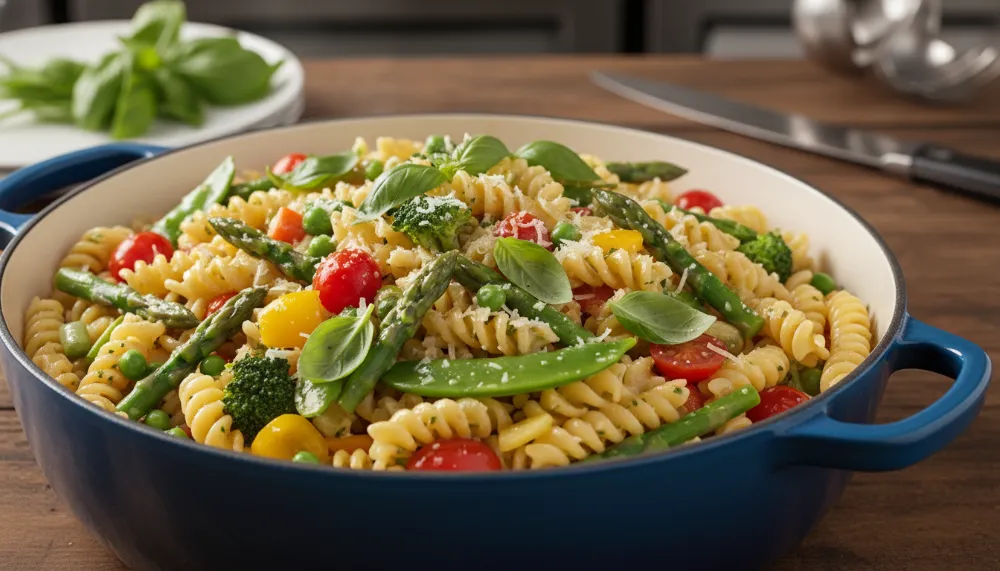

Experience the vibrant flavors of spring with this effortless One-Pot Pasta Primavera, a dish that combines creamy textures with crisp, fresh vegetables in a single pan. This modern take on a New York classic delivers gourmet results with minimal cleanup, making it the perfect weeknight luxury for busy families.
One-Pot Pasta Primavera
Ingredients
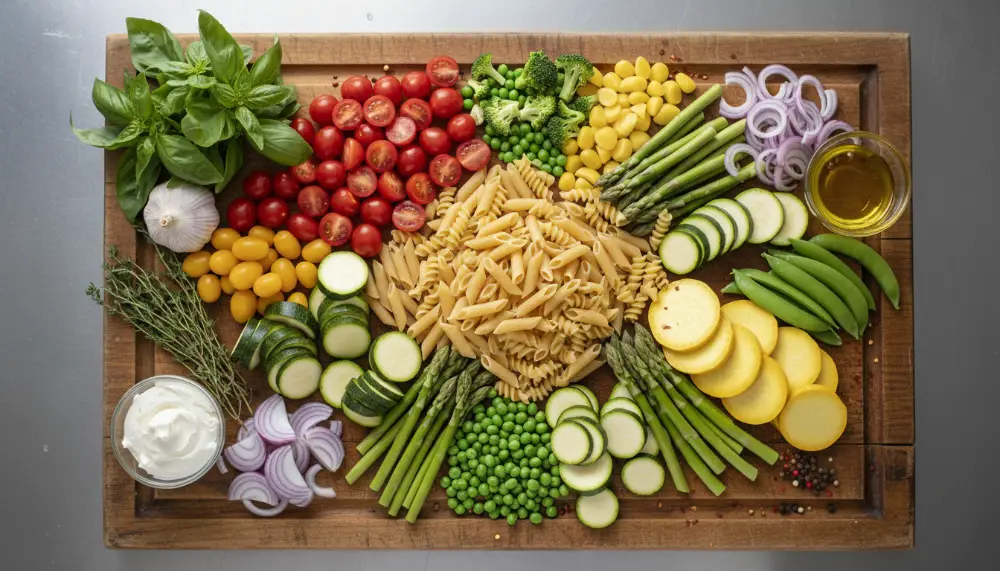
- 1 lb Penne Rigate or Fusilli pasta
- 4 cups Low-sodium vegetable or chicken broth
- 1 cup Heavy cream
- 3 cloves Garlic, minced
- 2 large Carrots, julienned
- 1 head Broccoli, cut into small florets
- 1 Yellow bell pepper, thinly sliced
- 1 cup Frozen peas
- 1 medium Zucchini, quartered and sliced
- 1/2 cup Grated Parmesan cheese
- 2 tbsp Fresh lemon juice
- 1/4 cup Fresh basil leaves, chiffonade
Instructions
- 1 In a large Dutch oven or pot, combine the dry pasta, minced garlic, vegetable broth, and a pinch of salt. Bring to a rolling boil over high heat.
- 2 Once boiling, reduce heat to medium-low and simmer, uncovered, for about 7-8 minutes. Stir frequently to prevent the pasta from sticking to the bottom.
- 3 Add the carrots, broccoli, and bell peppers to the pot. Continue to simmer for another 3-4 minutes until the pasta is al dente and the liquid has reduced to a thick, starchy glaze.
- 4 Stir in the zucchini, frozen peas, and heavy cream. Cook for 2 more minutes until the zucchini is tender-crisp and the cream has thickened into a sauce.
- 5 Remove from heat. Stir in the Parmesan cheese, lemon juice, and fresh basil. Season with black pepper to taste and serve immediately.
The Fascinating History of One-Pot Pasta Primavera
To understand the appeal of the One-Pot Pasta Primavera, one must look back to the high-stakes culinary scene of 1970s New York. While the name sounds authentically Italian, the dish is actually a quintessential piece of North American culinary history. It was famously championed by Sirio Maccioni at his legendary restaurant, Le Cirque. Originally, the dish was a logistical nightmare for chefs, requiring every vegetable to be blanched in separate pots to ensure perfect color and texture.
In the decades since, home cooks have reclaimed this masterpiece by streamlining it into the one-pot method. This transition from a labor-intensive restaurant staple to a simplified home-cooked meal is a testament to the dish’s versatility. By cooking the pasta directly in the broth alongside the vegetables, you capitalize on the pasta’s natural starches, creating a velvety sauce that binds the ingredients together in a way that the original multi-pot version never could. This evolution represents the best of modern cooking, efficiency without the sacrifice of flavor.
The Science Behind the One-Pot Method
Why does the One-Pot Pasta Primavera work so well? The secret lies in starch management. In traditional cooking, you boil pasta in a large volume of water and then discard that liquid. That water contains precious amylose and amylopectin starches released from the wheat. In a one-pot preparation, we use just enough liquid (broth and cream) to cook the noodles. As the liquid evaporates and is absorbed, the concentrated starch emulsifies with the fat from the cream and cheese.
The result, a naturally thick, glossy sauce that clings to every crevice of the penne or fusilli. This method also ensures that the vegetables are not just “mix-ins” but are integral to the flavor profile, as they release their own juices into the cooking liquid. When you use the Cuisinart 8 Cup Food Processor to prep your vegetables, you ensure uniform sizes, which is critical for the even cooking required in a one-pot environment.
Essential Ingredients for Success
Creating a high-quality One-Pot Pasta Primavera requires a balance of textures and bright, acidic notes. Here is a breakdown of the key components:
1. The Pasta Selection
Not all pasta shapes are created equal for one-pot meals. You want a shape with ridges, like Penne Rigate or Fusilli, to trap the sauce. Avoid very thin pastas like angel hair, as they can become mushy before the vegetables are tender. If you prefer a longer noodle, linguine is the traditional choice for Primavera and holds up well to the simmering process.
2. The Vegetable Medley
The hallmark of a great Primavera is the “spring” (primavera) feel. While you can use any vegetables, the classic combination includes carrots, broccoli, and peas. For a modern twist, consider adding asparagus spears or snap peas.
3. Replacing Alcohol and Pork
Traditional Italian-American recipes often call for deglazing with white wine or adding pancetta for saltiness. In this version, we replace wine with a combination of high-quality vegetable broth and fresh lemon juice. This provides the necessary acidity to brighten the heavy cream without the use of alcohol. To replace the salty depth of pork, we use a generous amount of Parmesan cheese and toasted pine nuts or garlic-sautéed breadcrumbs for texture.
Professional Variations and Protein Additions
While the vegetarian version is a classic, you can easily adapt this One-Pot Pasta Primavera to include proteins for a more satiating meal.
- Lemon-Herb Chicken: Sauté bite-sized pieces of chicken breast in the pot with olive oil before adding the pasta. Remove the chicken once browned and set aside, then add it back during the final 2 minutes of simmering.
- Searing Beef: For a heartier version, use thinly sliced beef tenderloin. Use the Cosori 9-in-1 TurboBlaze Air Fryer 6 Qt to quickly roast marinated beef tips until caramelized, then toss them into the pasta right before serving.
- Creamy Tahini Twist: For those looking for a different flavor profile, you can blend a small amount of tahini into your broth using the Ninja BN751 Professional Plus DUO Blender. This adds a nutty, earthy depth that pairs beautifully with the lemon and basil.
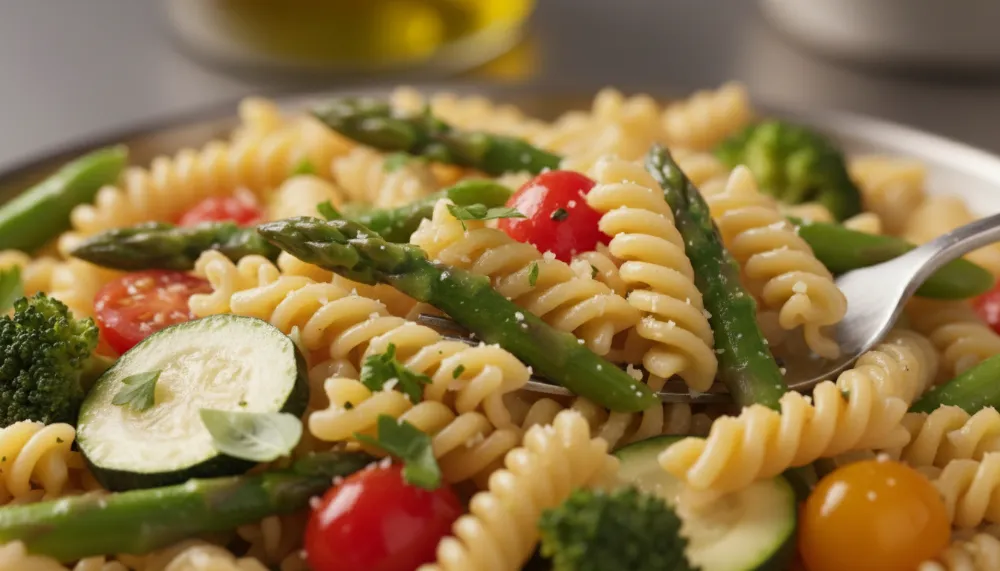
Nutritional Breakdown of One-Pot Pasta Primavera
Understanding the nutritional value of your meal is essential for maintaining a balanced lifestyle. A standard serving of this One-Pot Pasta Primavera offers a diverse range of nutrients:
– **Calories:** Approximately 420 kcal per serving.
– **Fiber:** 6g, largely from the broccoli, carrots, and whole-grain pasta if selected.
– **Vitamin C:** Over 100% of the daily recommended intake, thanks to the bell peppers and broccoli.
– **Calcium:** Provided by the Parmesan cheese and heavy cream.
By focusing on fresh vegetables, you increase the volume of the meal without significantly increasing the caloric density, making it a satisfying yet relatively light option compared to other heavy pasta dishes.
Kitchen Equipment for the Perfect Pasta
To achieve professional-grade results at home, having the right tools is non-negotiable. Here are our top recommendations for making your One-Pot Pasta Primavera journey seamless:
– **Cuisinart 8 Cup Food Processor:** https://amzn.to/47Nhbg8 (Why Perfect: Fast chopping and slicing of all those Primavera vegetables, it is a meal prep essential that saves at least 15 minutes of prep time).
– **Ninja BN751 Professional Plus DUO Blender:** https://amzn.to/3LCDyNR (Why Perfect: With its 1000W motor, it is perfect for creating smooth tahini-based sauces or emulsifying herb oils to drizzle over your finished pasta).
– **Cosori 9-in-1 TurboBlaze Air Fryer 6 Qt:** https://amzn.to/4hRWmVq (Why Perfect: If you want to add a roasted element, it roasts chickpeas or beef tips perfectly with a large family capacity).
– **Rubbermaid Brilliance Glass Storage Set of 9:** https://amzn.to/4oD0YkY (Why Perfect: Perfect for meal prep storage, leak-proof, and stackable for those leftovers that taste even better the next day).
– **FoodSaver Vacuum Sealer Machine:** https://amzn.to/4qWgVnS (Why Perfect: Keeps your fresh spring vegetables fresh longer and prevents freezer burn for bulk-bought pasta ingredients).
Meal Prep and Storage Tips
One of the biggest advantages of the One-Pot Pasta Primavera is its storage capability. If you are a fan of meal prepping, you can chop all your vegetables in advance using your food processor and store them in the fridge.
When storing leftovers, use the Rubbermaid Brilliance Glass Storage Set. Since the pasta will continue to absorb liquid as it sits, the sauce may thicken significantly in the refrigerator. When reheating, add a splash of broth or water to the container before microwaving or heating on the stovetop. This will loosen the starches and return the sauce to its original creamy consistency.
Common Frequently Asked Questions (FAQs)
Can I use frozen vegetables?
Yes, frozen peas and corn are excellent additions. However, for hardy vegetables like carrots and broccoli, fresh is preferred to maintain that signature “crunch” that defines a Primavera.
What if my pasta isn’t cooked but the liquid is gone?
Simply add more broth, half a cup at a time, and continue simmering. The amount of liquid needed can vary slightly based on the brand of pasta and the width of your pot.
Is there a way to make this dairy-free?
You can substitute the heavy cream with full-fat coconut milk or a cashew-based cream. Replace the Parmesan with nutritional yeast or a dairy-free cheese alternative to maintain that savory umami flavor.