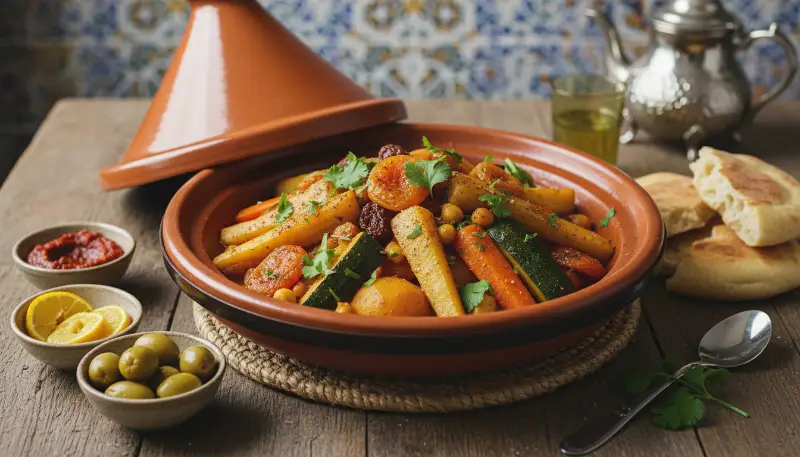

Experience the soul-warming flavors of North Africa with this hearty Moroccan Vegetable Stew featuring melt-in-your-mouth beef and vibrant root vegetables. This dish brings together earthy spices and sweet dried fruits to create a culinary masterpiece in your own kitchen.
Moroccan Vegetable Stew with Beef
20 MIN
105 MIN
6 PERS
Ingredients
- 1 2 lbs Beef Chuck Roast cubed
- 2 2 tbsp Olive Oil
- 3 1 Yellow Onion diced
- 4 3 cloves Garlic minced
- 5 3 cups Beef Broth
- 6 2 tbsp Tomato Paste
- 7 1 tsp each Cumin Turmeric Cinnamon Ginger
- 8 2 Sweet Potatoes cubed
- 9 1 can Chickpeas drained
- 10 1/2 cup Dried Apricots
Instructions
- 1 Sear beef in olive oil until browned.
- 2 Sauté onion and garlic with all dry spices.
- 3 Deglaze with beef broth and add tomato paste.
- 4 Simmer beef for 60 minutes on low heat.
- 5 Add vegetables and chickpeas then simmer 45 more minutes.
The Cultural Richness of Moroccan Vegetable Stew
To understand the depth of a true Moroccan Vegetable Stew, one must look toward the Maghreb region of North Africa. This dish, often prepared in a conical clay pot known as a tagine, is more than just a meal, it is a reflection of history and trade. For centuries, Morocco was a hub for the spice trade, which allowed its cuisine to blossom into a complex array of sweet, savory, and pungent flavors. When we make Moroccan Vegetable Stew today, we are participating in a tradition that spans generations.
While many variations exist, the inclusion of beef provides a robust protein backbone that elevates the Moroccan Vegetable Stew from a side dish to a luxurious main course. The beef works in harmony with the natural sugars found in sweet potatoes and dried apricots, creating a profile that is distinctly Mediterranean and African. This Moroccan Vegetable Stew avoids the use of alcohol or pork, staying true to a clean and traditional palate that focuses on the purity of the beef broth and the freshness of the vegetables.
Selecting the Best Beef for Your Moroccan Vegetable Stew
The success of your Moroccan Vegetable Stew depends largely on the cut of meat you choose. Because this is a slow-simmered dish, you want a cut that contains enough connective tissue to break down into gelatin, which thickens the sauce and keeps the meat moist. Beef chuck roast is the gold standard for this application. Unlike leaner cuts, chuck roast becomes tender and succulent after an hour or two of simmering in the Moroccan Vegetable Stew base.
When preparing your beef, use a Cuisinart 8 Cup Food Processor to quickly prep your aromatics, but keep your beef cubes roughly 1.5 inches in size. This ensures they don’t dissolve completely during the long cook time. Searing the beef first is a non-negotiable step in achieving the best Moroccan Vegetable Stew. The Maillard reaction creates complex flavor compounds that simply cannot be replicated by boiling or steaming meat. This depth of flavor is what distinguishes a world-class Moroccan Vegetable Stew from a generic soup.
The Essential Spices of North Africa
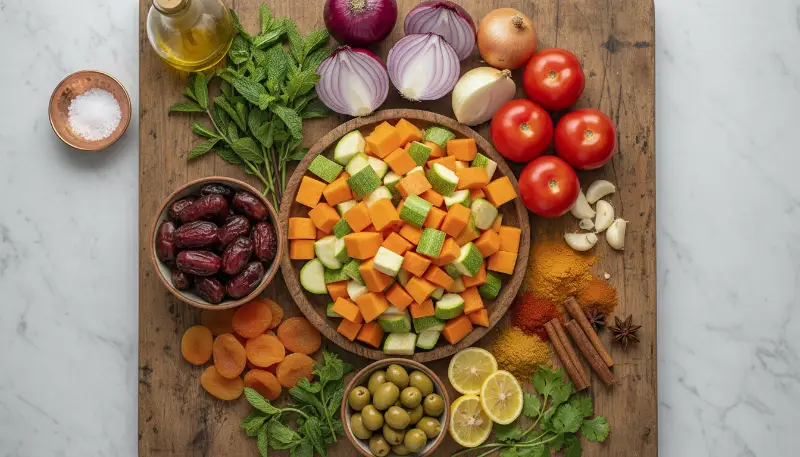
A Moroccan Vegetable Stew is defined by its spice profile. Unlike European stews that rely on herbs like rosemary or thyme, this Moroccan Vegetable Stew utilizes “warm” spices. Cumin provides an earthy base, while turmeric adds a brilliant golden hue and anti-inflammatory benefits. Ginger adds a subtle zing, and cinnamon provides that signature sweet aroma that pairs beautifully with the beef and apricots in the Moroccan Vegetable Stew.
If you want to create your own authentic spice blend or a homemade harissa paste to stir into your Moroccan Vegetable Stew, the Ninja BN751 Professional Plus DUO Blender is your best friend. Its 1000W motor can pulverize dried chilies and whole spices into a smooth paste in seconds. Using fresh-ground spices in your Moroccan Vegetable Stew will provide a much more vibrant flavor than pre-ground bottles that may have been sitting on a shelf for months.
Vegetable Selection and Texture
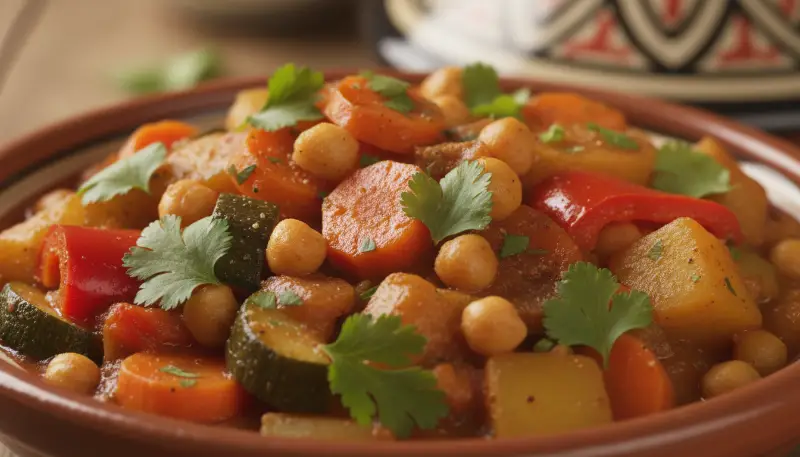
In a Moroccan Vegetable Stew, the vegetables are not just fillers, they are the stars. Sweet potatoes are essential as they partially break down, naturally thickening the stew and providing a creamy texture. Carrots add a firm bite and sweetness, while chickpeas introduce a nutty flavor and high fiber content. Every bite of the Moroccan Vegetable Stew should offer a different texture and taste sensation.
For those who love a bit of crunch, you can use the Cosori 9-in-1 TurboBlaze Air Fryer 6 Qt to roast a few extra chickpeas as a crispy topping for your Moroccan Vegetable Stew. This modern twist adds a contemporary culinary layer to the traditional Moroccan Vegetable Stew experience. Remember to add your softer vegetables, like zucchini or bell peppers, if using them, during the last 20 minutes of cooking to prevent them from becoming mushy in the Moroccan Vegetable Stew broth.
The Importance of Alcohol-Free Deglazing
Many Western stews use wine to deglaze the pan, but an authentic Moroccan Vegetable Stew relies on the richness of high-quality beef broth and tomato paste. By avoiding alcohol, you allow the delicate floral notes of the cinnamon and coriander to shine through without being masked by the acidity of fermented grapes. To get the best results for your Moroccan Vegetable Stew, use a low-sodium beef broth so you can control the salt levels as the liquid reduces.
When you pour that first cup of broth into the hot pot after searing your beef and aromatics, use a wooden spoon to scrape the bottom. Those browned bits are pure flavor, and they are the secret to the dark, rich gravy that makes Moroccan Vegetable Stew so addictive. For more insights on traditional cooking techniques, you can explore our full library at Revealed Recipe Sitemap.
Meal Prep and Storing Your Moroccan Vegetable Stew
Like most slow-cooked dishes, Moroccan Vegetable Stew actually tastes better the next day. The flavors continue to meld and develop as the stew sits. This makes Moroccan Vegetable Stew the perfect candidate for weekend meal prep. When storing your stew, it is vital to use high-quality containers to maintain freshness and prevent leaking.
We recommend the Rubbermaid Brilliance Glass Storage Set of 9 for your Moroccan Vegetable Stew leftovers. These containers are leak-proof and can go from the fridge to the microwave without any issues. If you have made a double batch of Moroccan Vegetable Stew, you can use a FoodSaver Vacuum Sealer Machine to freeze individual portions. Vacuum sealing prevents freezer burn and keeps your Moroccan Vegetable Stew tasting as fresh as the day it was made for up to six months.
Can I make Moroccan Vegetable Stew in a slow cooker?
Yes, you can certainly adapt Moroccan Vegetable Stew for a slow cooker. Simply sear the beef and sauté the aromatics in a pan first, then transfer everything to the slow cooker with the broth and vegetables. Cook on low for 7-8 hours or on high for 4-5 hours until the beef is tender.
What should I serve with Moroccan Vegetable Stew?
The traditional accompaniment for Moroccan Vegetable Stew is couscous. The small grains are perfect for soaking up the aromatic broth. Alternatively, you can serve it with crusty bread, basmati rice, or even over a bed of mashed potatoes for a fusion twist.
Is Moroccan Vegetable Stew spicy?
The standard Moroccan Vegetable Stew is fragrant and “warm” rather than “hot.” While it uses spices like ginger and cumin, it doesn’t typically have a high heat level unless you specifically add cayenne pepper or harissa. This makes it a family-friendly dish that everyone can enjoy.
Final Thoughts on This Fragrant Journey
Mastering the Moroccan Vegetable Stew is a rite of passage for any home cook looking to expand their repertoire into international cuisines. By focusing on the quality of your beef, the balance of your spices, and the slow-cooking process, you create a meal that is nourishing for both the body and the soul. This Moroccan Vegetable Stew represents a harmony of ingredients that has stood the test of time, and now it is ready to become a staple in your household.