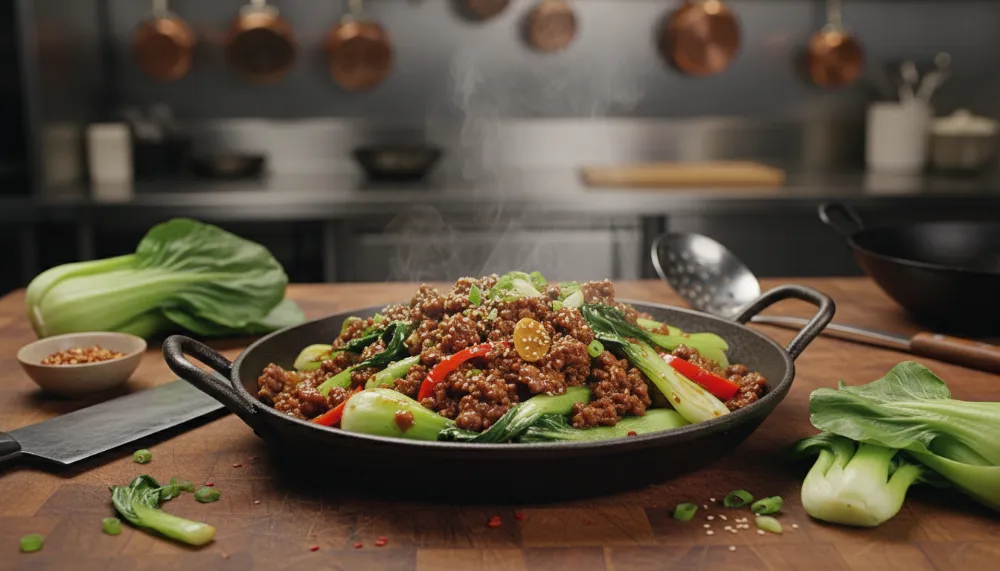

Savor the deep umami and vibrant crunch of this Mongolian Ground Beef Stir Fry with Bok Choy, a perfect weeknight dinner that skips the noodles for a lighter, flavor-packed experience. This dish transforms simple ground beef into a gourmet stir fry using fresh ginger, garlic, and a savory glaze that mimics high-end restaurant quality.
Mongolian Ground Beef Stir Fry with Bok Choy
Ingredients
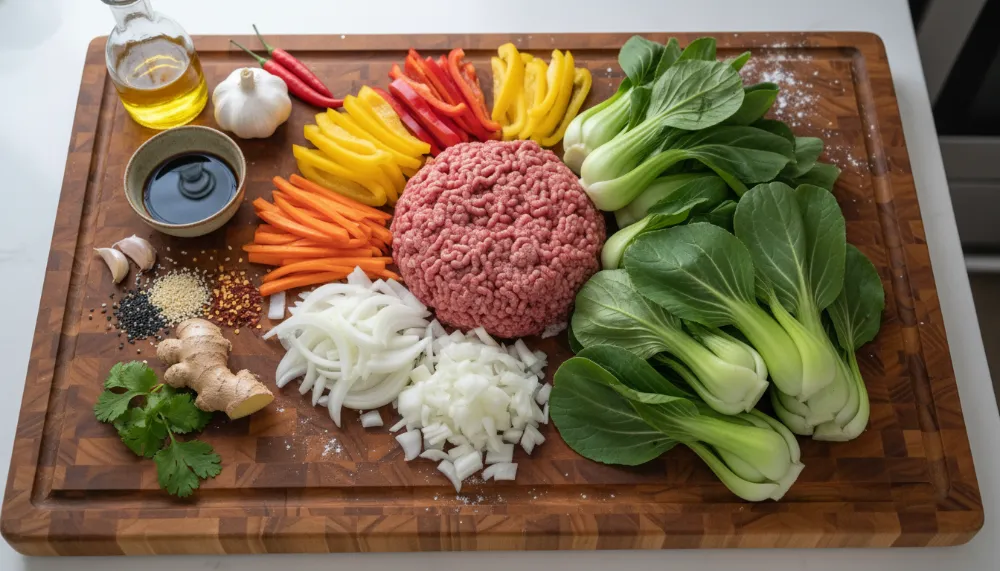
- 1 1 lb Ground Beef (85/15 lean)
- 2 4 heads Baby Bok Choy (quartered)
- 3 3 tbsp Fresh Ginger (minced)
- 4 2 tbsp Fresh Garlic (minced)
- 5 1/2 cup Beef Broth
- 6 1/3 cup Soy Sauce (or Liquid Aminos)
- 7 1/4 cup Dark Brown Sugar
- 8 1 tbsp Rice Vinegar
- 9 1 tbsp Cornstarch
- 10 1 tsp Toasted Sesame Oil
- 11 1/2 tsp Red Pepper Flakes
- 12 3 Green Onions (sliced)
Instructions
- 1 In a small bowl, whisk together the beef broth, soy sauce, brown sugar, rice vinegar, and cornstarch until smooth. Set aside.
- 2 Heat a large wok or skillet over high heat with the sesame oil. Add the ground beef and cook until deeply browned and caramelized, breaking it into small pieces with a spatula.
- 3 Add the minced ginger, garlic, and red pepper flakes to the beef. Sauté for 1-2 minutes until highly fragrant.
- 4 Toss in the baby bok choy. Stir-fry for 2 minutes until the leaves begin to wilt but the stalks remain crisp.
- 5 Pour the sauce over the mixture. Stir constantly for 1-2 minutes as the sauce thickens and coats the beef and vegetables in a glossy glaze.
- 6 Remove from heat, garnish with sliced green onions, and serve immediately over cauliflower rice or as a standalone bowl.
The Surprising Origin of Mongolian Ground Beef Stir Fry with Bok Choy (Not Noodles)
When most people think of Mongolian Ground Beef Stir Fry with Bok Choy (Not Noodles), they imagine the rugged steppes of Central Asia. However, the true history of this dish is a fascinating journey through Taiwanese culinary innovation. Invented in the 1950s in Taipei by Wu Zhaonan, the “Mongolian” label was actually a brilliant marketing strategy to make the quick, high-heat stir-fry method feel exotic and robust. Unlike traditional Mongolian food, which relies heavily on boiled mutton and dairy, this dish is a celebration of Chinese stir-fry techniques, adapted for modern palates that crave that signature sweet-and-savory profile.
The transition to using ground beef is a Western adaptation that has gained massive traction for several reasons. Ground beef provides a larger surface area, allowing every single morsel to become coated in the sticky, umami-rich glaze. Furthermore, by intentionally omitting noodles, this version caters to those looking for a nutrient-dense, high-protein meal without the heavy carbohydrate load of wheat-based pastas. The inclusion of bok choy, a vegetable with over 6,000 years of history in the Yangtze River Delta, adds a historical depth and a necessary structural contrast to the dish.
Why This Recipe Works: The Science of Umami
The success of a Mongolian Ground Beef Stir Fry with Bok Choy (Not Noodles) lies in the balance of the five basic tastes, specifically umami and sweetness. By using a combination of soy sauce (or liquid aminos) and dark brown sugar, we create a chemical reaction that triggers the pleasure centers of the brain. The dark brown sugar, which contains molasses, adds a complex, earthy sweetness that white sugar simply cannot match. When this hits the hot pan with the ginger and garlic, it creates a caramelization that binds to the beef proteins.
For the best results in chopping your aromatics, the Cuisinart 8 Cup Food Processor is a meal prep essential. It allows you to process large amounts of garlic and ginger in seconds, ensuring that you have a fine enough mince to distribute flavor evenly throughout the beef without any overpowering chunks. Consistent mincing is the secret to professional-grade stir fry.
Mastering the Heat: The Importance of the Maillard Reaction
The primary goal when cooking the beef is the Maillard reaction, the chemical reaction between amino acids and reducing sugars that gives browned food its distinctive flavor. Many home cooks make the mistake of overcrowding the pan, which leads to the beef steaming in its own juices rather than searing. To avoid this, ensure your skillet or wok is screaming hot before the meat ever touches the surface. Use 85/15 ground beef for the perfect balance, the fat acts as the heat transfer medium that facilitates that deep browning.
Once the beef is browned, the addition of baby bok choy provides a refreshing textural counterpoint. The stalks offer a satisfying “crunch,” while the leaves act as sponges for the Mongolian sauce. Because we are skipping the noodles, the bok choy becomes the primary vessel for the flavor, making its quality paramount. Look for heads that are firm with vibrant green leaves and no signs of yellowing.
The Secret to the Sauce (Alcohol-Free Depth)
Traditional stir fries often use Shaoxing wine or Mirin for acidity and depth. In this strictly alcohol-free version, we achieve the same complexity by using a high-quality beef broth combined with rice vinegar and a touch of apple juice. The acidity of the vinegar cuts through the richness of the beef, while the broth provides the savory backbone that the sauce needs to feel “complete.” If you want an even deeper flavor, consider adding a teaspoon of mushroom powder to the sauce mixture, it provides a massive umami boost without any forbidden ingredients.
Nutritional Benefits: A Powerhouse in a Bowl
A single serving of Mongolian Ground Beef Stir Fry with Bok Choy (Not Noodles) is a nutritional goldmine. Ground beef is a primary source of bioavailable iron and Vitamin B12, which are essential for energy levels and cognitive function. Meanwhile, bok choy is a cruciferous powerhouse, loaded with Vitamin K, which is vital for bone health, and Vitamin C for immune support. By removing the noodles, you are significantly lowering the glycemic index of the meal, preventing the “sugar crash” often associated with heavy pasta dishes.
To keep your ingredients as fresh as possible for this recipe, the FoodSaver Vacuum Sealer Machine is a game-changer. It prevents freezer burn on your ground beef and keeps your bok choy crisp by removing the oxygen that leads to spoilage. For those who meal prep on Sundays, vacuum sealing is the difference between a soggy Wednesday lunch and a meal that tastes freshly made.
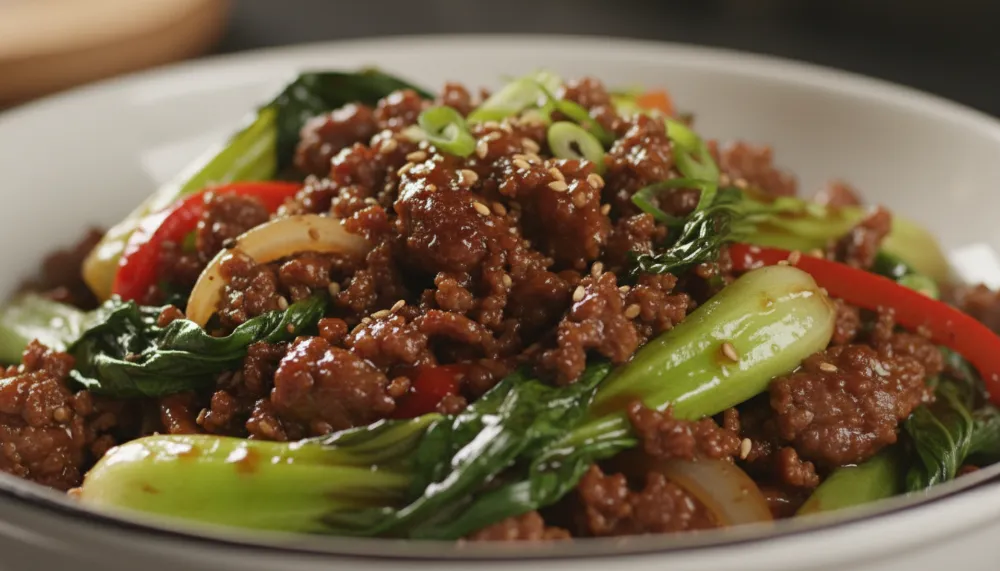
Chef’s Variations: Elevating Your Stir Fry
While the base recipe is spectacular, there are several professional ways to pivot the flavor profile depending on your mood:
- The Five-Spice Infusion: Add 1/2 teaspoon of Chinese Five-Spice powder to the beef as it browns. This introduces notes of star anise and cinnamon that give the dish a more “authentic” Cantonese aroma.
- The Zesty Ginger Glaze: Double the ginger and add a splash of fresh orange juice to the sauce. This creates a brighter, more citrus-forward profile that pairs exceptionally well with the bok choy.
- The Spicy Kick: Increase the red pepper flakes or add a spoonful of chili garlic sauce (ensure it is alcohol-free) for a heat that lingers.
Professional Meal Prep and Storage
One of the best features of Mongolian Ground Beef Stir Fry with Bok Choy (Not Noodles) is how well it stores. The sauce continues to permeate the beef as it sits, often making the leftovers taste even better the next day. When storing this dish, it is crucial to use high-quality containers to prevent moisture buildup, which can make the bok choy stalks mushy.
We recommend the Rubbermaid Brilliance Glass Storage Set of 9. These containers are leak-proof and crystal clear, making them perfect for organizing your fridge. The glass doesn’t stain or retain odors from the garlic and ginger, ensuring your next meal doesn’t taste like Mongolian beef. If you find yourself with extra beef, you can also use the Cosori 9-in-1 TurboBlaze Air Fryer 6 Qt to quickly roast some chickpeas or additional vegetables as a side dish to stretch the meal even further.
Frequently Asked Questions
Can I use ground chicken instead? Absolutely. If you prefer a leaner profile, ground chicken or turkey works beautifully. Just be sure to add an extra teaspoon of sesame oil to compensate for the lower fat content, ensuring the aromatics don’t burn.
How do I keep the bok choy from getting soggy? The secret is the timing. Only add the bok choy at the very end of the cooking process. It only needs about 2-3 minutes of total heat to reach that perfect “tender-crisp” state. If you are reheating the dish, consider adding fresh bok choy rather than reheating the old greens.
What can I serve this with? Since this is a “not noodles” recipe, it shines over cauliflower rice, quinoa, or even shredded cabbage. If you aren’t strictly avoiding carbs, a simple bowl of jasmine rice is the classic accompaniment.