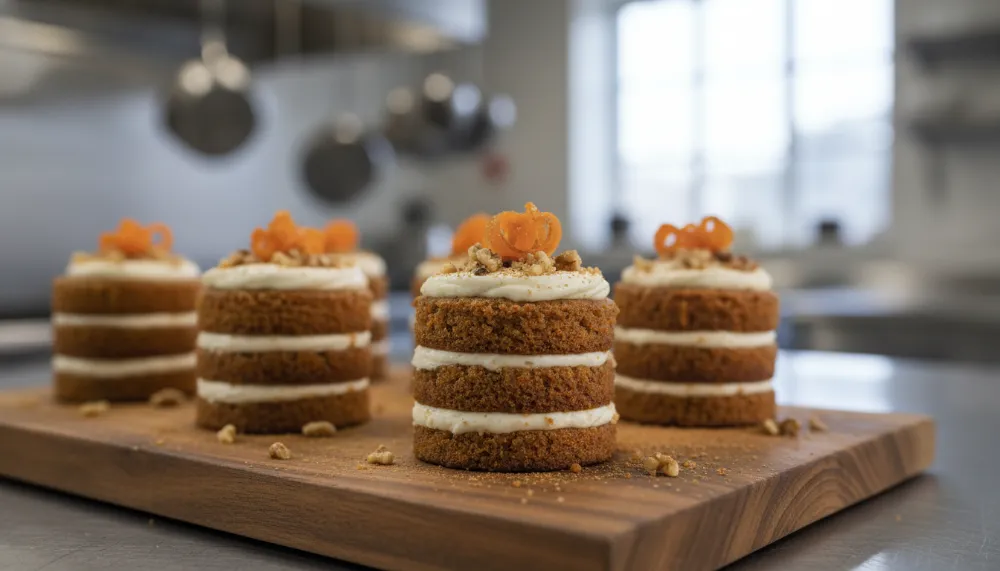

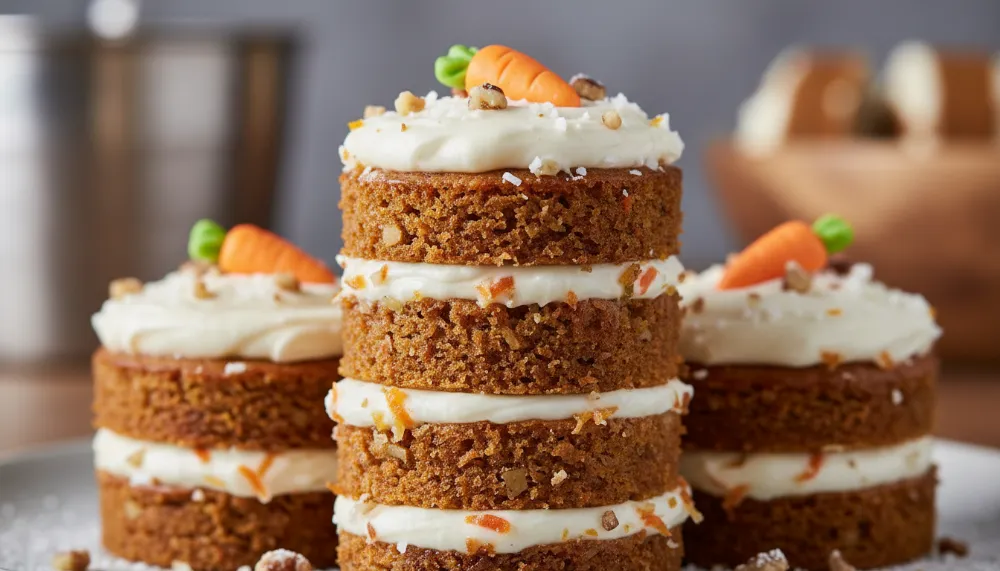
Mini Layer Carrot Cakes represent the pinnacle of individual dessert sophistication, blending the rustic heritage of spiced carrot sponge with the refined elegance of a multi-tiered boutique presentation. These miniature masterpieces offer a personalized gourmet experience that transforms a classic comfort food into a high-end culinary statement.
Signature Mini Layer Carrot Cakes
Ingredients
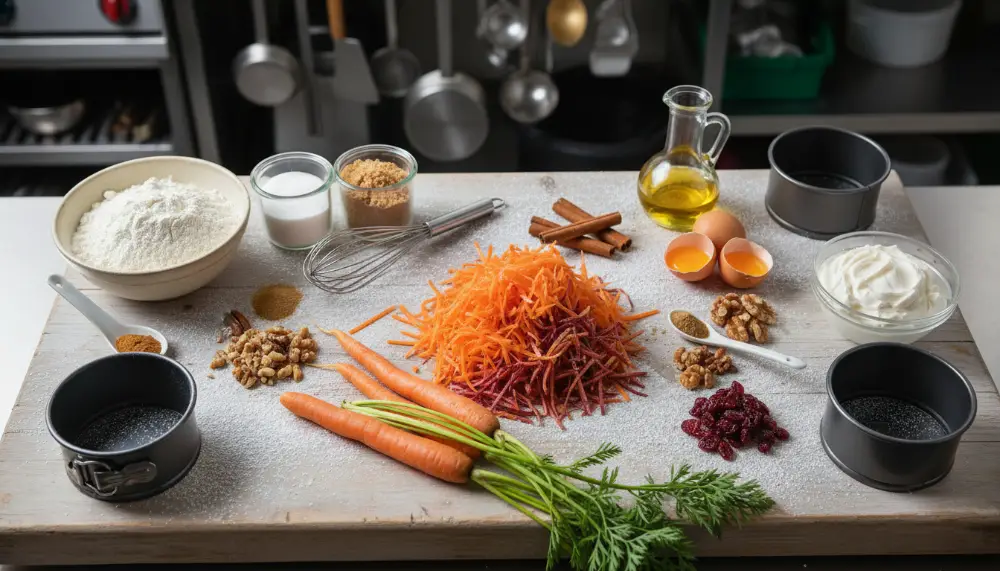
- 1 2 cups finely grated carrots (about 4-5 medium carrots)
- 2 1.5 cups all-purpose flour
- 3 1 cup granulated sugar and 0.5 cup brown sugar
- 4 3 large eggs, room temperature
- 5 0.75 cup vegetable oil
- 6 1.5 tsp baking powder and 1 tsp baking soda
- 7 2 tsp ground cinnamon, 0.5 tsp ginger, and 0.25 tsp nutmeg
- 8 0.5 cup crushed walnuts or pecans
- 9 16 oz cream cheese and 0.5 cup butter for frosting
- 10 3 cups powdered sugar and 1 tbsp pure maple syrup
Instructions
- 1 Preheat oven to 350F (175C) and grease a large sheet pan or 4-inch mini cake tins.
- 2 Use a food processor to finely grate carrots and set aside.
- 3 Whisk flour, baking powder, baking soda, and spices in a medium bowl.
- 4 In a large bowl, beat eggs and sugars until light, then slowly stream in vegetable oil.
- 5 Fold dry ingredients into the wet mixture until just combined, then fold in carrots and nuts.
- 6 Spread batter onto the sheet pan or divide into tins and bake for 20-25 minutes until a toothpick comes out clean.
- 7 Cool completely, then use a circular cutter to create mini cake rounds.
- 8 Beat cream cheese, butter, and powdered sugar with maple syrup until silky.
- 9 Pipe frosting between layers and stack 2-3 levels high for each mini cake.
The Historical Lineage of the Carrot Cake
The journey of the carrot cake from a humble medieval necessity to the sophisticated Mini Layer Carrot Cakes we enjoy today is a fascinating tale of culinary evolution. In the Middle Ages, sugar was a rare and expensive commodity, often reserved for the elite or special religious ceremonies. European bakers, ever resourceful, turned to carrots because they possess one of the highest sugar contents of any vegetable, second only to the sugar beet. This led to the creation of carrot puddings, which were steamed or boiled, serving as the direct ancestor to our modern baked versions. The shift from pudding to cake occurred in the late 18th century, with the earliest known formal recipe for a Gâteau de Carottes appearing in 1814 by Antoine Beauvilliers, the former chef to the French royal court. During World War II, carrot cake experienced a massive cultural resurgence in the United Kingdom. The Ministry of Food actively promoted carrot-based desserts to help the population cope with strict sugar rationing, cementing the cake’s place in the global culinary canon.
The Rise of the Boutique Mini Trend
The modern preference for “mini layer” versions is a relatively recent phenomenon, born out of the 21st-century boutique bakery movement. High-end catering and fine-dining establishments began scaling down traditional cakes to offer a more personalized, elegant aesthetic. These mini versions provide a better frosting-to-cake ratio and allow for intricate, individual decorations that are often lost on a larger scale. By utilizing individual portions, chefs can guarantee consistency in texture and presentation, ensuring every guest receives a perfect, self-contained masterpiece.
Essential Tools for Professional Results
Creating the perfect Mini Layer Carrot Cakes requires precision and the right equipment. To achieve that signature moist crumb and perfectly shredded carrot texture, we recommend the following professional-grade tools:
- Cuisinart 8 Cup Food Processor: This is a meal prep essential, perfect for fast chopping and slicing. The consistency of your grated carrots is vital, and this machine ensures they are fine enough to melt into the batter during baking. Check price here.
- Ninja BN751 Professional Plus DUO Blender: With its 1000W motor, this is perfect for creating smooth fruit reductions or tahini sauces to drizzle over your variations. Check price here.
- Cosori 9-in-1 TurboBlaze Air Fryer 6 Qt: Use this to roast your pecans or walnuts to perfection before folding them into the batter, adding a deep, nutty complexity. Check price here.
- Rubbermaid Brilliance Glass Storage Set: Perfect for storing your cake layers if you are preparing them a day in advance, keeping them airtight and leak-proof. Check price here.
- FoodSaver Vacuum Sealer Machine: If you are making a large batch of mini layers for a future event, this machine keeps ingredients and finished cakes fresh longer, preventing freezer burn. Check price here.
Professional Flavor Variations
While the classic spice and cream cheese combination is legendary, contemporary pastry chefs often experiment with non-alcoholic and pork-free ingredients to elevate the Mini Layer Carrot Cake profile. Below are several high-authority variations used in professional kitchens:
Tropical Pineapple and Coconut
In this variation, crushed pineapple and toasted coconut are folded into the batter for extra moisture and a bright, acidic counterpoint to the heavy spices. In professional settings, any traditional rum-soaked raisins are replaced with raisins soaked in warm pineapple juice, providing a rich, complex sweetness without the need for alcohol.
Spiced Ginger and Orange
This version incorporates freshly grated ginger and orange zest into both the sponge and the frosting. To maintain the intensity without using orange liqueur, chefs use a concentrated orange juice reduction or orange zest oil, which provides a robust, citrusy punch that cuts through the richness of the cream cheese.
Maple and Toasted Pecan
A deep, earthy variation that uses pure maple syrup as the primary flavoring agent. By substituting maple syrup for traditional extracts in the frosting, you ensure a robust, alcohol-free aroma that complements the toasted pecans and warm cinnamon notes of the cake.
The Science of the Perfect Sponge
The success of Mini Layer Carrot Cakes lies in the chemistry of the ingredients. Unlike traditional butter-based cakes, carrot cakes usually rely on vegetable oil. This is a deliberate choice, as oil remains liquid at room temperature, resulting in a significantly moister crumb that doesn’t become dense or hard when refrigerated. The inclusion of carrots adds both moisture and structural integrity. As the carrots bake, they release their natural sugars and water, which helps to tenderize the gluten in the flour. To ensure your mini layers aren’t too heavy, it is essential to use both baking powder and baking soda, the soda reacts with the acidic brown sugar to provide immediate lift, while the powder provides a secondary rise during the baking process.
Mastering the Assembly Process
Assembling Mini Layer Carrot Cakes requires a delicate touch. To achieve professional results, it is best to bake the cake in a large, flat sheet pan. Once cooled, use a circular stainless steel cutter to punch out uniform rounds. This technique ensures that every layer has the same circumference and clean, sharp edges. When stacking, use a piping bag with a large round tip to apply the frosting. Start from the outer edge and spiral inward, ensuring an even thickness across the entire surface. This not only looks beautiful but also provides structural stability for the multi-tiered stack.
Nutritional Overview
Mini Layer Carrot Cakes are nutritionally dense, offering a significant amount of Vitamin A due to the high carrot content. On average, a 100g serving contains approximately 310 to 420 calories, depending on the richness of the frosting. These cakes are excellent sources of healthy fats when walnuts or pecans are included, providing essential fatty acids and a satisfying texture. By utilizing grass-fed butter and neutral vegetable oils instead of pork-derived fats, we maintain a clean dietary profile that focuses on high-quality, plant-based and dairy ingredients.