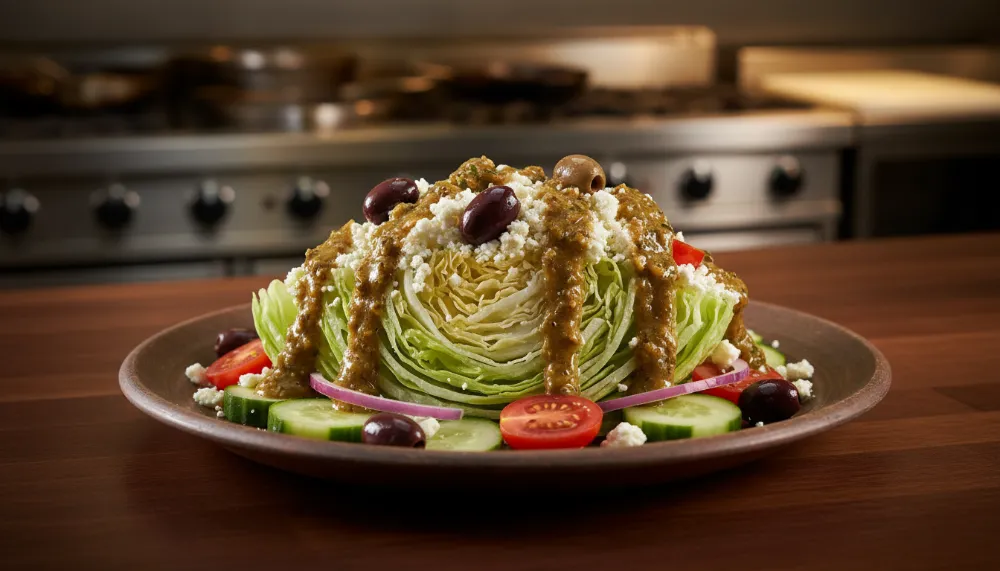

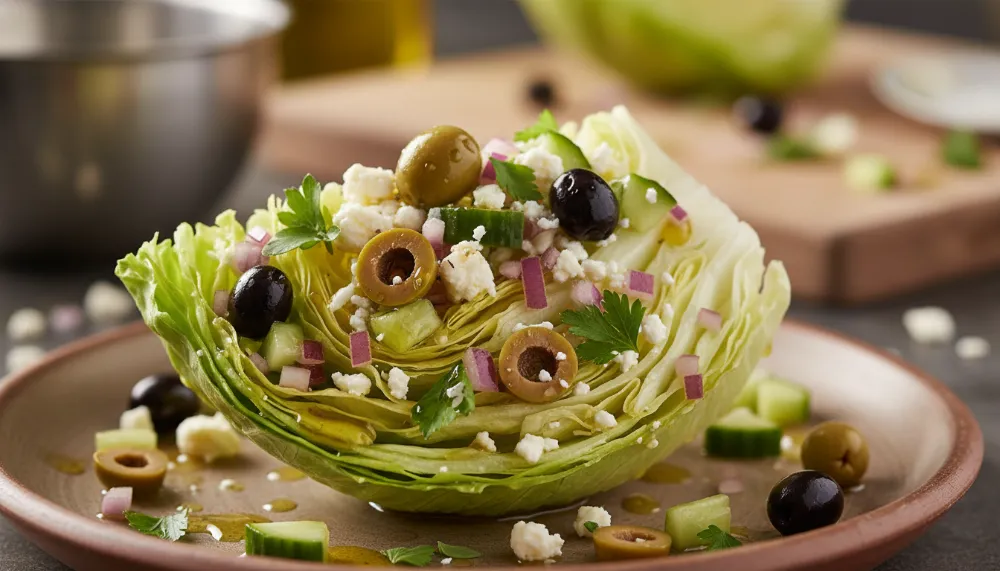
Experience a vibrant twist on a steakhouse classic with this Mediterranean Wedge Salad with Olive Vinaigrette, featuring crisp iceberg lettuce drizzled with a zesty, brine-forward dressing. This recipe swaps heavy, dairy-laden toppings for nutrient-dense Mediterranean staples that explode with flavor in every bite.
Mediterranean Wedge Salad with Olive Vinaigrette
Ingredients
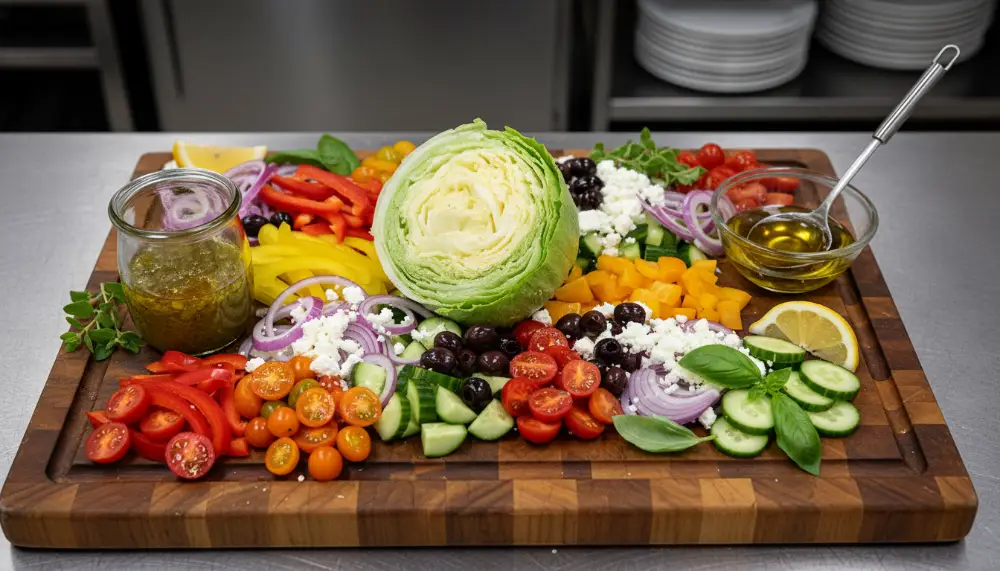
- 1 Large head of Iceberg Lettuce, cut into four equal wedges
- 1/2 Cup Kalamata olives, pitted and finely minced
- 1/2 Cup Extra-virgin olive oil
- 3 Tablespoons Apple cider vinegar or fresh lemon juice
- 1 Teaspoon Dijon mustard
- 1/2 Cup Feta cheese, crumbled
- 1 Cup Cherry tomatoes, halved
- 1 Persian cucumber, diced
- 1/4 Cup Roasted chickpeas (for crunch)
- 2 Tablespoons Fresh parsley, chopped
Instructions
- 1 Wash the iceberg lettuce head, remove outer wilted leaves, and slice into four thick wedges. Pat dry thoroughly.
- 2 In a blender or food processor, combine minced olives, olive oil, vinegar, and mustard. Pulse until emulsified but still slightly chunky.
- 3 Place each wedge on a chilled plate. Drizzle the olive vinaigrette generously over the top so it seeps between the layers.
- 4 Top with halved tomatoes, diced cucumbers, and crumbled feta cheese.
- 5 Garnish with roasted chickpeas and fresh parsley. Serve immediately.
The Historical Journey of the Wedge Salad
The Mediterranean Wedge Salad with Olive Vinaigrette is a contemporary reimagining of a classic American steakhouse staple. While many associate the wedge with the smoky, heavy flavors of the mid-20th century, its roots go back even further. The “Wedge Salad” itself is an iconic American creation that first appeared in printed recipes around 1916 in Marion Harris Neil’s Salads, Sandwiches and Chafing Dish Recipes. It gained massive popularity in the 1920s and reached its cultural peak in the 1950s and 1970s at high-end steakhouses across the country.
During the early 1900s, iceberg lettuce, then known as “Crisphead,” became a culinary sensation. It was prized for its durability and shelf life, specifically because it could be shipped across the United States under mounds of ice without wilting. This durability made it the perfect canvas for heavy dressings like blue cheese or Thousand Island. However, the modern palate has shifted toward lighter, more complex profiles. The Mediterranean adaptation is a modern evolution, influenced by the global shift toward regional ingredients. While the classic version relied on the durability of iceberg lettuce, the Mediterranean variation replaces blue cheese and bacon with regional staples like feta cheese, cucumbers, and Kalamata olives, drawing from Greek and Levantine culinary traditions.
Why This Mediterranean Variation Works
The brilliance of the Mediterranean Wedge Salad with Olive Vinaigrette lies in the balance of textures and the profile of acidity. Traditional wedges can often feel heavy, leaving the diner feeling weighed down by mayonnaise-based dressings. By utilizing a vinaigrette based on heart-healthy fats, we transform this dish into a refreshing starter or a light main course. The saltiness of the olives and feta provides the “umami” hit that bacon usually offers, while the apple cider vinegar provides a sharp brightness that cuts through the buttery richness of the extra-virgin olive oil.
Nutritional Profile and Health Benefits
Beyond its incredible taste, this salad is a nutritional powerhouse. Per standard serving of approximately 2 cups, the Mediterranean Wedge Salad with Olive Vinaigrette offers a balanced macro profile. You can expect roughly 260 to 310 kcal, with the majority of fats being monounsaturated fats from the olive oil and olives, which are known to support heart health. It provides 4g to 6g of fiber and 10g to 12g of protein, especially if you include the roasted chickpea garnish.
Key micronutrients include exceptionally high levels of Vitamin K, which supports bone health, and Vitamin A from the lettuce and tomatoes, which is essential for eye health. The salad is also rich in antioxidants, specifically oleuropein from the olives and lycopene from the tomatoes, which help combat oxidative stress in the body. Calcium is also provided in significant amounts by the feta cheese, making this a well-rounded meal.
Essential Tools for a Professional Salad
To achieve the perfect emulsion for your dressing and the right crunch for your garnishes, professional-grade tools are a necessity. Here are my top recommendations for this specific recipe:
- Ninja BN751 Professional Plus DUO Blender: https://amzn.to/3LCDyNR (Why Perfect: The 1000W motor is ideal for emulsifying the olive vinaigrette into a creamy, consistent texture that won’t separate on the plate).
- Cosori 9-in-1 TurboBlaze Air Fryer 6 Qt: https://amzn.to/4hRWmVq (Why Perfect: Roasts chickpeas to the ultimate level of crunchiness in minutes, providing that essential textural contrast without the need for frying).
- Cuisinart 8 Cup Food Processor: https://amzn.to/47Nhbg8 (Why Perfect: Makes short work of mincing olives and shallots, ensuring the vinaigrette has a refined texture).
- Rubbermaid Brilliance Glass Storage Set of 9: https://amzn.to/4oD0YkY (Why Perfect: If you are meal prepping, these leak-proof containers keep your chopped vegetables and vinaigrette separate and fresh).
- FoodSaver Vacuum Sealer Machine: https://amzn.to/4qWgVnS (Why Perfect: Keeps your bulk-bought feta and olives fresh for much longer, preventing any spoilage).
Professional Flavor Variations
Professional chefs elevate this salad by focusing on textural contrasts and umami-rich substitutes for traditional pork toppings. Since we are adhering to strict dietary guidelines, we focus on high-quality proteins that maintain the integrity of the Mediterranean theme.
1. The Protein Component (Non-Pork Options)
If you want to turn this Mediterranean Wedge Salad with Olive Vinaigrette into a full meal, consider these high-authority protein additions:
- Beef Option: Top the wedge with finely sliced chilled roast beef or beef bresaola. Bresaola is an air-dried, salted beef that has been aged two or three months until it becomes hard and a dark red, almost purple color. It is lean and offers a sophisticated, savory finish.
- Chicken Option: Use lemon-herb grilled chicken thighs. Slice them thin and serve them warm against the cold lettuce to create a delightful temperature contrast that wakes up the palate.
- Vegetarian Option: Replace bacon bits with crispy spiced chickpeas. Use your Cosori Air Fryer to roast them with cumin, smoked paprika, and sea salt. Alternatively, use smoky toasted breadcrumbs (panko toasted in olive oil with smoked paprika) for a crunch that mimics the experience of traditional toppings.
2. The Olive Vinaigrette (Alcohol-Free)
A professional olive vinaigrette often utilizes a “tapenade” base to ensure the olive flavor is emulsified throughout. Instead of using wine-based vinegars, we utilize apple cider vinegar or fresh lemon juice. This not only keeps the recipe alcohol-free but actually provides a more vibrant, fruit-forward acidity that complements the olives better than a heavy red wine vinegar would.
For a “Double Olive” technique, use a blend of buttery green Castelvetrano olives for sweetness and dark Kalamata olives for brine-driven depth. Pulse these in your Ninja Blender with the oil until you achieve a thick, luxurious coating that clings to every layer of the iceberg wedge.
Mastering the Art of the Iceberg Wedge
Many home cooks make the mistake of serving a wedge that is either too watery or too difficult to eat. The secret lies in the preparation of the lettuce. First, ensure your iceberg is incredibly cold, it should be kept in the crisper drawer until the moment of assembly. When you cut the wedges, remove the very bottom of the core but leave enough of the structural stem so the wedge stays together on the plate.
After washing, it is imperative to pat the lettuce dry or use a salad spinner for the individual wedges if possible. If water remains on the leaves, the olive vinaigrette will slide right off instead of adhering to the surface. For the best presentation, place the wedge on a chilled plate. This prevents the lettuce from wilting and keeps the entire dish crisp from the first bite to the last.
Gourmet Garnishes to Level Up
To truly reach the level of a high-end Mediterranean bistro, consider adding pickled elements. Pickled red onions, cured in apple cider vinegar and a touch of sugar, provide a sharp, bright acidity. For an herbal infusion, skip the dried spices and use a “Chiffonade” of fresh mint and flat-leaf parsley. This provides a cooling aromatic finish that is synonymous with authentic Mediterranean cooking.