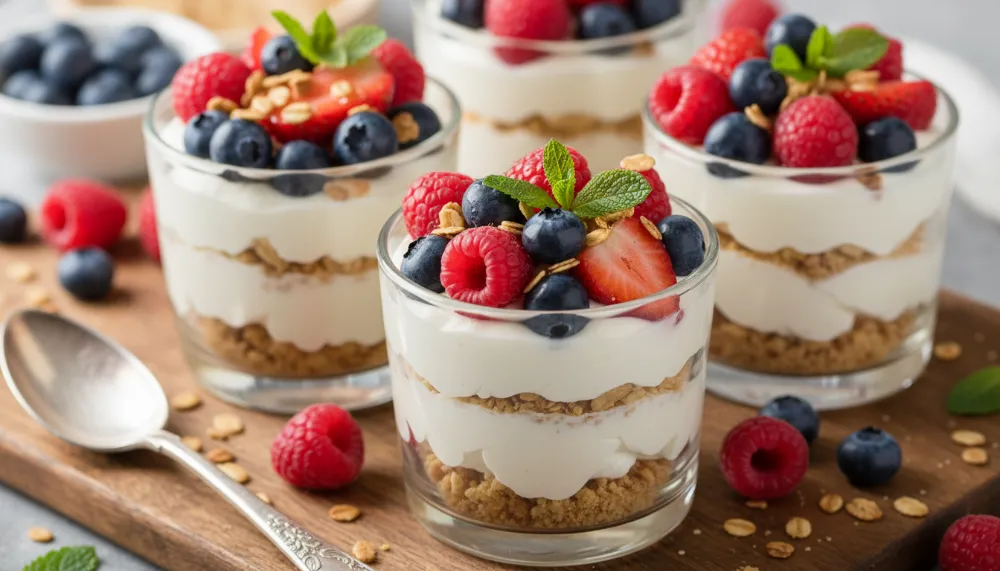

Experience the perfect harmony of tangy protein and sweet summer fruit with these effortless Greek Yogurt Berry Cheesecake Cups. This no-bake treat provides a sophisticated, health-conscious alternative to traditional heavy desserts without sacrificing an ounce of flavor.
Greek Yogurt Berry Cheesecake Cups
Ingredients
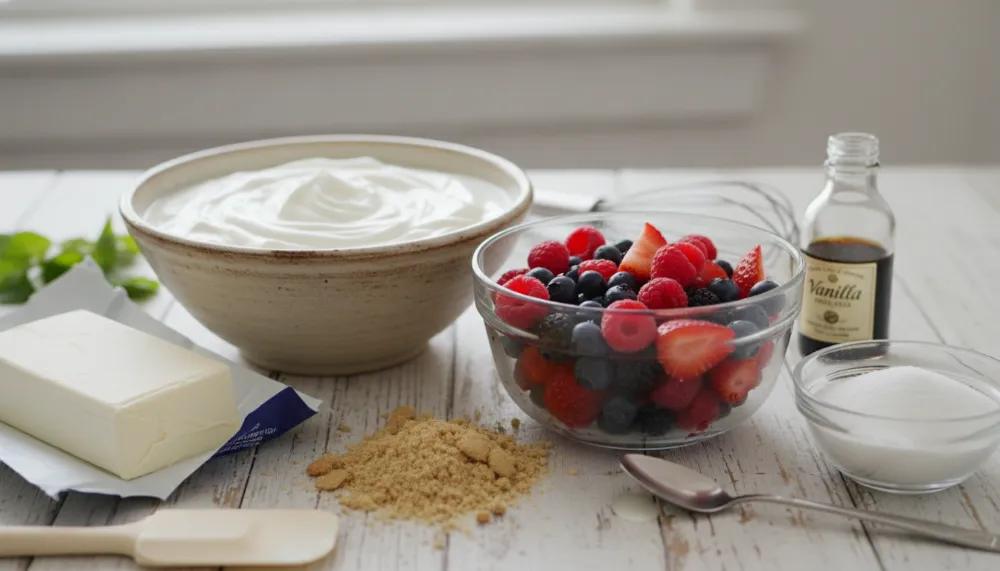
- 1 1.5 cups Graham cracker crumbs (finely pulsed)
- 2 4 tbsp Butter, melted
- 3 2 cups Full-fat Greek yogurt (plain or honey)
- 4 1/4 cup Honey or Maple Syrup
- 5 1 tsp Vanilla bean paste or extract
- 6 1 tbsp Lemon zest (finely grated)
- 7 2 cups Mixed berries (strawberries, blueberries, raspberries)
- 8 1 tbsp Chia seeds (optional, for thickening)
Instructions
- 1 Combine cracker crumbs and melted butter, then press firmly into the bottom of 6-8 small glass jars or silicone muffin liners.
- 2 Use the Ninja BN751 Professional Plus DUO Blender to whip the Greek yogurt, honey, vanilla, and lemon zest until ultra-smooth and aerated.
- 3 Spoon the creamy yogurt mixture over the prepared crusts, smoothing the tops with a spatula.
- 4 Chill in the refrigerator for at least 4 hours, or ideally overnight, to allow the yogurt to set into a cheesecake-like consistency.
- 5 Just before serving, top with fresh berries and an extra drizzle of honey if desired.
The Fascinating History of Greek Yogurt Berry Cheesecake Cups
While the modern iteration of Greek Yogurt Berry Cheesecake Cups feels like a product of contemporary health trends, its roots delve deep into the annals of culinary history. The concept of using fermented dairy as a base for sweet treats traces back over 4,000 years to Ancient Greece, specifically the island of Samos. In these ancient times, a rudimentary form of cheesecake was crafted using fresh cheese, wheat flour, and honey. This energy-rich dish was so highly regarded that it was served to athletes during the very first Olympic Games in 776 B.C. to provide them with sustained vitality.
Fast forward to the modern era, and the “Greek Yogurt” variation represents a brilliant evolution of this ancient tradition. Strained yogurt, or straggisto, has been a Mediterranean staple for centuries, but its transformation into a no-bake cheesecake alternative gained massive global traction in the early 21st century. By the mid-2020s, specifically around 2025, the “Japanese-Style” yogurt cheesecake trend went viral, emphasizing a minimalist, high-protein approach where the yogurt naturally thickens against a crust overnight. This fusion of ancient ingredients and modern convenience resulted in the Greek Yogurt Berry Cheesecake Cups we adore today.
Why Greek Yogurt is the Superior Cheesecake Base
The primary reason for the surge in popularity of Greek Yogurt Berry Cheesecake Cups is the unique nutritional profile of strained yogurt. Unlike traditional cream cheese, which is high in saturated fats and low in protein, Greek yogurt is a power-house of nutrition. It offers a tangy, bright flavor profile that balances the sweetness of honey and fruit much more effectively than standard dairy products.
Professionals often recommend using a high-quality food processor for the base. The Cuisinart 8 Cup Food Processor is essential for fast chopping and slicing during meal prep, making it easy to create the perfect graham cracker or almond flour crust for your cups. By utilizing these tools, you ensure a consistent texture that supports the creamy weight of the yogurt filling.
Nutritional Deep Dive: Protein, Probiotics, and Beyond
One of the most compelling reasons to integrate Greek Yogurt Berry Cheesecake Cups into your lifestyle is the nutritional density. A typical 150g serving of these cups is far from an empty-calorie indulgence. Instead, it provides a balanced profile that supports muscle recovery and gut health. Generally, a single cup contains between 80 and 200 calories, depending on the choice of crust and sweeteners. More importantly, you are looking at 10 to 15 grams of high-quality protein per serving.
Beyond the macronutrients, these cups are rich in calcium for bone health and loaded with live probiotics from the yogurt. The inclusion of berries adds a significant dose of Vitamin C and various antioxidants, which help combat oxidative stress in the body. For those seeking a low-density, high-protein dessert, Greek Yogurt Berry Cheesecake Cups are truly unrivaled.
Elevated Flavor Variations from Professional Kitchens
To take your Greek Yogurt Berry Cheesecake Cups to a gourmet level, consider these professional variations that play with texture, acidity, and herbal notes:
1. Balsamic Strawberry & Black Pepper
This sophisticated twist moves away from traditional syrups. Strawberries are macerated in high-quality balsamic vinegar and a pinch of cracked black pepper. The acidity of the vinegar enhances the natural sugars in the berries, while the pepper adds a subtle, warming finish that cuts through the creamy yogurt.
2. Zesty Lime & Blueberry Ginger
Create a blueberry compote by simmering fresh berries with ginger juice and lime zest. The ginger provides a sharp, spicy contrast that elevates the Greek Yogurt Berry Cheesecake Cups from a simple snack to a restaurant-quality dessert. For the smoothest compote, the Ninja BN751 Professional Plus DUO Blender is perfect for emulsifying the ginger and lime into the berry base.
3. Herbal Blackberry Basil
Pair fresh blackberries with finely sliced basil and a touch of honey. The herbaceous notes of the basil provide a refreshing aromatic quality that pairs beautifully with the tang of the Greek yogurt. This variation is particularly popular in the height of summer when fresh herbs are most potent.
4. Spiced Almond & Raspberry
For a gluten-free option, use a crust of toasted almond flour, cinnamon, and a hint of coconut oil. To achieve the perfect toast on your almonds, the Cosori 9-in-1 TurboBlaze Air Fryer 6 Qt is an incredible tool, roasting nuts and small batches of crust perfectly with its large family capacity. Top with a tart raspberry coulis thickened with chia seeds for a fiber-rich finish.
Mastering the Technique: Tips for Success
Creating the perfect Greek Yogurt Berry Cheesecake Cups requires attention to moisture levels. Because Greek yogurt contains more water than cream cheese, it is vital to use a “strained” variety. If your yogurt seems too thin, you can strain it through cheesecloth for an hour to achieve a thicker, more stable consistency. This ensures your cups hold their shape when spooned into glass jars.
Another tip involves the crust. While many people simply dump crumbs into a cup, pressing them firmly with the back of a spoon or a small glass creates a structural foundation that mimics a real cheesecake. If you want a crunchier base, you can briefly bake or air-fry the crust for 5 minutes before adding the filling. This provides a satisfying snap that contrasts against the velvety yogurt.
Choosing Your Fruit: Fresh vs. Compote
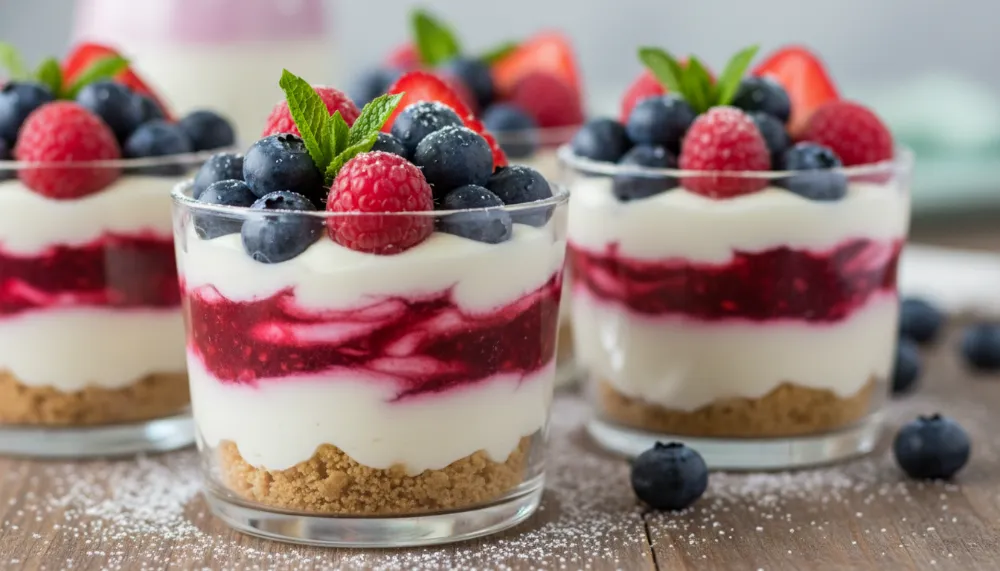
When making Greek Yogurt Berry Cheesecake Cups, you have the choice between fresh fruit and a cooked compote. Fresh fruit offers a crisp, clean taste and maximum vitamin retention. However, a compote (berries cooked down with a little lemon juice and sweetener) provides a concentrated flavor that seeps into the yogurt layer, creating beautiful swirls of color. Many chefs recommend a hybrid approach: a layer of compote at the bottom with fresh berries on top for garnish.
Frequently Asked Questions
Can I make these dairy-free?
Yes, you can substitute Greek yogurt with a thick coconut-based or almond-based yogurt. Ensure it is a “strained” or “Greek-style” plant yogurt to maintain the thickness needed for the cheesecake texture.
How long do these stay fresh?
Greek Yogurt Berry Cheesecake Cups can be stored in the refrigerator for up to 3 to 4 days. Note that the crust may soften slightly over time as it absorbs moisture from the yogurt.
Can I freeze these?
While you can freeze them for a “frozen yogurt” treat, the texture of the yogurt may change slightly upon thawing, becoming more grainy. It is best enjoyed fresh or chilled.