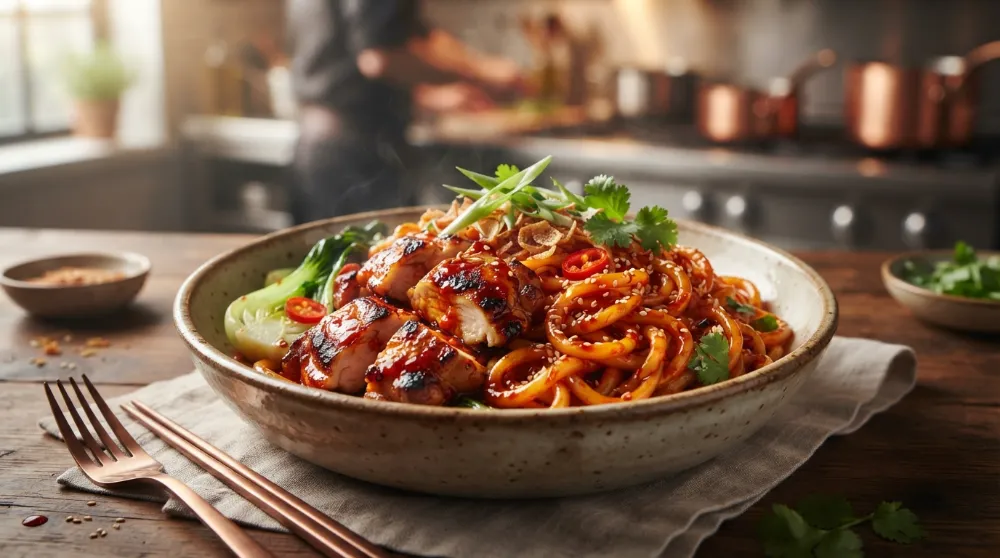

Experience the ultimate fusion of heat and comfort with these Gochujang Noodles with Chicken, a dish that transforms simple pantry staples into a gourmet meal in exactly twelve minutes. This recipe is the perfect answer for busy weeknights when you need a high-protein, high-flavor dinner without the long cleanup or complex techniques.
Gochujang Noodles with Chicken
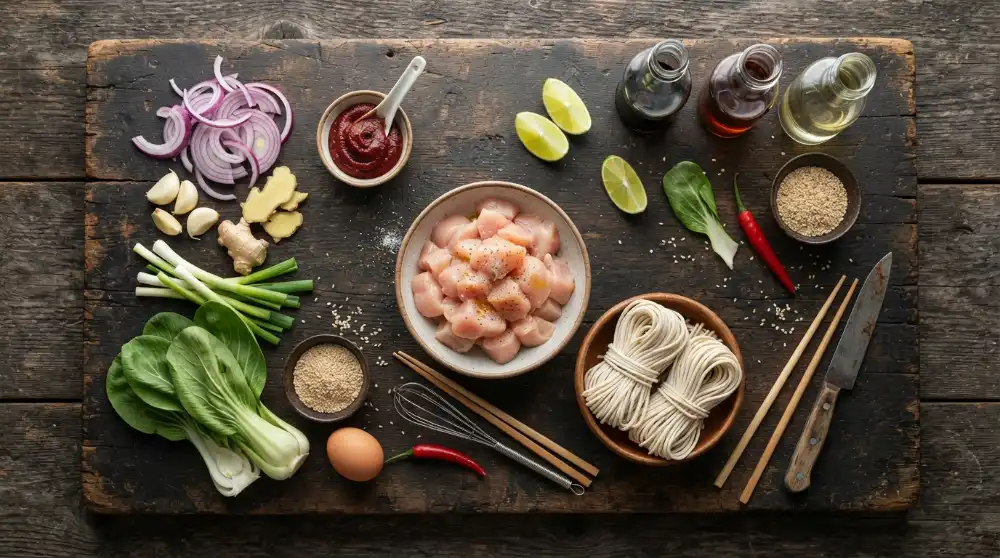
Ingredients
- 200g Dried Ramen or Udon Noodles
- 300g Chicken Breast, thinly sliced
- 2 tbsp Gochujang (Korean Chili Paste)
- 2 tbsp Soy Sauce (Low Sodium)
- 1 tbsp Honey or Brown Sugar
- 1 tbsp Garlic, minced
- 1 tsp Ginger, freshly grated
- 1/4 cup Chicken Broth (to replace alcohol)
- 1 tbsp Sesame Oil
Instructions
- 1 Boil noodles according to package directions, drain and set aside.
- 2 Whisk Gochujang, soy sauce, honey, and chicken broth in a small bowl until smooth.
- 3 Heat sesame oil in a wok or large pan over high heat, sauté chicken until browned and cooked through (about 4 mins).
- 4 Add garlic and ginger, cook for 30 seconds until fragrant.
- 5 Pour in the sauce and toss with the cooked noodles until the sauce thickens and coats everything perfectly.
Nutrition Facts
Approximate Nutrition Estimates Per Serving:
The Historical Essence of Gochujang
To truly appreciate Gochujang Noodles with Chicken (12-Minute Dinner), one must understand the soul of the dish: Gochujang itself. This savory, sweet, and spicy fermented condiment is not merely an ingredient; it is a vital pillar of Korean culinary identity. While fermented soybean pastes, known as jang, have been recorded in Korea for over two millennia, the specific evolution into the red chili paste we love today occurred in the late 16th or early 17th century. This shift was catalyzed by the introduction of chili peppers to East Asia via Portuguese traders, which transformed the local palate and introduced a new method of preservation.
During the Joseon Dynasty, Gochujang was a labor of love, traditionally fermented for years in massive earthenware pots called jangdok. These pots were designed to breathe, allowing the paste to mature under the sun and develop its characteristic depth of flavor. It was historically viewed as a survival food, and military records from the 1592 Imjin War even highlight its role as a concentrated nutrient source that sustained soldiers and improved physical endurance. Today, while we can buy it in convenient tubs, that same complex fermentation process is what gives our 12-minute dinner its “slow-cooked” taste in a fraction of the time.
Why This 12-Minute Dinner is a Game Changer
In the modern kitchen, time is the ultimate luxury. The Gochujang Noodles with Chicken (12-Minute Dinner) is engineered for efficiency without sacrificing nutritional integrity. By using high-heat stir-frying techniques, we capitalize on the Maillard reaction, a chemical process that browns the chicken and aromatics to create hundreds of different flavor compounds quickly. When the Gochujang sauce hits the hot pan, it slightly carmelizes, which further intensifies the umami profile.
This recipe also emphasizes the importance of the “mise en place” philosophy. Because the cooking process happens so rapidly, having your sauce whisked and your chicken sliced before the heat is turned on ensures that no ingredient is overcooked. The result is succulent chicken and perfectly chewy noodles every single time. For those looking to streamline their kitchen, the Hamilton Beach Electric Vegetable Chopper (https://amzn.to/4eHJUs1) can reduce your prep time for the garlic and ginger to mere seconds.
Professional Flavor Variations (Alcohol and Pork Free)
1. Creamy Umami (The Fusion Variation)
If you find the heat of Gochujang a bit too sharp, the Creamy Umami variation is your solution. This version softens the spice with a silky, luxurious finish. To achieve this, simply stir in two tablespoons of coconut milk or a dollop of thick Greek yogurt at the final stage of simmering. Since we strictly avoid alcohol, we replace traditional mirin with a mixture of one teaspoon of sugar dissolved in two tablespoons of chicken broth. This provides the necessary sweetness and acidity without any alcohol-based ingredients.
2. Zesty Ginger & Sesame (The Aromatic Variation)
For a profile that is bright, sharp, and deeply nutty, focus on the aromatics. Sauté an extra tablespoon of freshly grated ginger and three cloves of minced garlic with the chicken. Instead of rice wine vinegar, use a squeeze of fresh lime juice to provide that essential acidic lift. Finish the dish with a generous amount of toasted sesame seeds and thinly sliced scallions for a crunch that contrasts beautifully with the soft noodles. To get the perfect texture on your chicken for this version, the Cosori 9-in-1 TurboBlaze Air Fryer 6 Qt (https://amzn.to/4u10Uhp) can pre-sear your protein with incredible precision.
3. Spicy Peanut (The Satay-Style Variation)
This version is earthy and rich, perfect for those who want a thicker sauce that clings tenaciously to the noodles. Whisk one tablespoon of smooth peanut butter or tahini into your Gochujang and broth mixture. Pro-tip: use warm chicken broth to thin the peanut butter before adding it to the pan; this prevents clumping and ensures a homogenous, velvety sauce. If you are making a large batch of this sauce for meal prep, the NutriBullet 600W Personal Blender (https://amzn.to/4wq1qaG) is excellent for emulsifying these ingredients quickly.
Selecting the Right Noodles
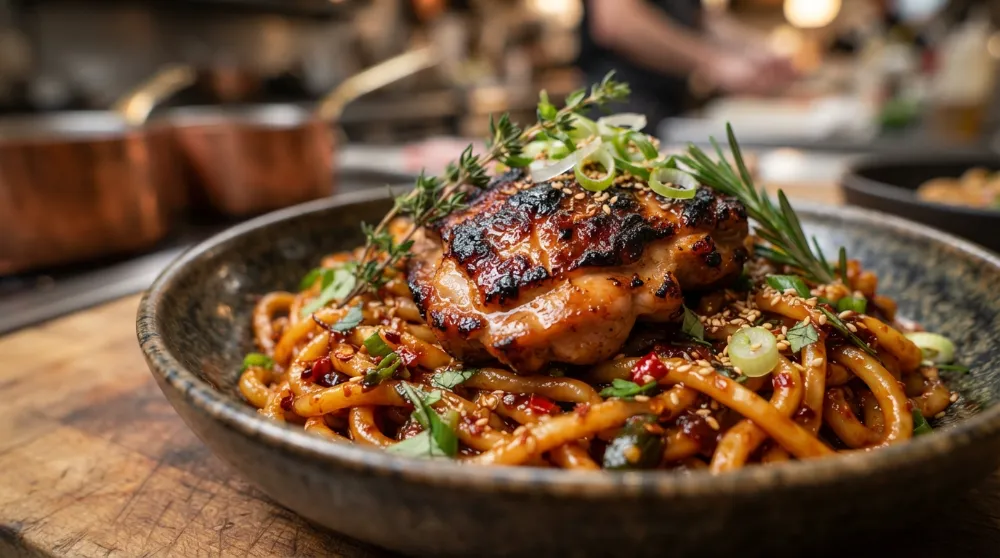
While the sauce is the star, the noodles are the supporting cast that can make or break the dish. For the Gochujang Noodles with Chicken (12-Minute Dinner), you have several excellent options:
- Fresh Udon: These are thick, chewy, and provide the most satisfying mouthfeel. They absorb the sauce without becoming mushy.
- Ramen Noodles: Whether you use dried or fresh, ramen noodles have a springy texture that pairs perfectly with the spicy glaze.
- Rice Noodles: A great option for those who prefer a lighter, silkier noodle. They cook in minutes just by soaking in hot water, making them a top choice for a true 12-minute meal.
Mastering the High-Heat Technique
To get that restaurant-style finish, you need heat. If you are using an electric stove, let your pan heat up for a full two minutes before adding the sesame oil. The oil should shimmer, but not smoke. When you add the chicken, leave it undisturbed for about 90 seconds. This allows a crust to form, locking in juices and adding a deeper flavor. If you prefer a more “set it and forget it” approach for the protein, the Instant Vortex 6-Quart XL Air Fryer (https://amzn.to/48Sgy6q) can cook chicken bites to perfection while you boil the noodles.
Kitchen Equipment Recommendations
Having the right tools is essential for maintaining the 12-minute timeline. Here are some professional-grade recommendations:
- Instant Pot Duo 7-in-1 Electric Pressure Cooker (6-Qt): (https://amzn.to/4dkcMnT) While this recipe is a stir-fry, the Instant Pot is fantastic for batch-cooking chicken or making your own stocks to use as the base for the sauce.
- Ninja Crispi 4-in-1 Glass Air Fryer: (https://amzn.to/3PtuOMo) This is a versatile option for those who want to watch their food cook through the glass, ensuring the chicken reaches that perfect golden-brown state.
- Crock-Pot 7-Qt Oval Slow Cooker: (https://amzn.to/4tVCfuI) If you want to adapt this flavor profile for a slow-cooked meal, you can toss chicken thighs in the Gochujang sauce and let them simmer all day, shredding them over noodles at dinner time.
Nutritional Importance of the Ingredients
The Gochujang Noodles with Chicken (12-Minute Dinner) is a powerhouse of nutrients. The chicken breast provides lean protein essential for muscle repair, while the Gochujang contains capsaicin, which has been shown to boost metabolism. Because we use ginger and garlic, you are also getting a healthy dose of anti-inflammatory compounds and antioxidants. To keep the sodium in check, always opt for low-sodium chicken broth and soy sauce. If you are tracking your health closely, using the Ninja NutriPlus Personal Blender (https://amzn.to/4dwIwau) to create a vegetable-heavy side smoothie can round out the meal perfectly.
Final Pro-Tips for Success
Before you start, remember to slice your chicken against the grain. This breaks up the muscle fibers and ensures every bite is tender rather than chewy. Also, don’t be afraid to customize your vegetables. Adding thinly sliced bell peppers, shredded carrots, or baby spinach in the last 60 seconds of cooking adds color, fiber, and volume without adding significant calories or time. If you need a quick pick-me-up while you cook, the Keurig K-Express Coffee Maker (https://amzn.to/3RvuSf5) can provide a fresh brew in under a minute, keeping you energized for the evening ahead.