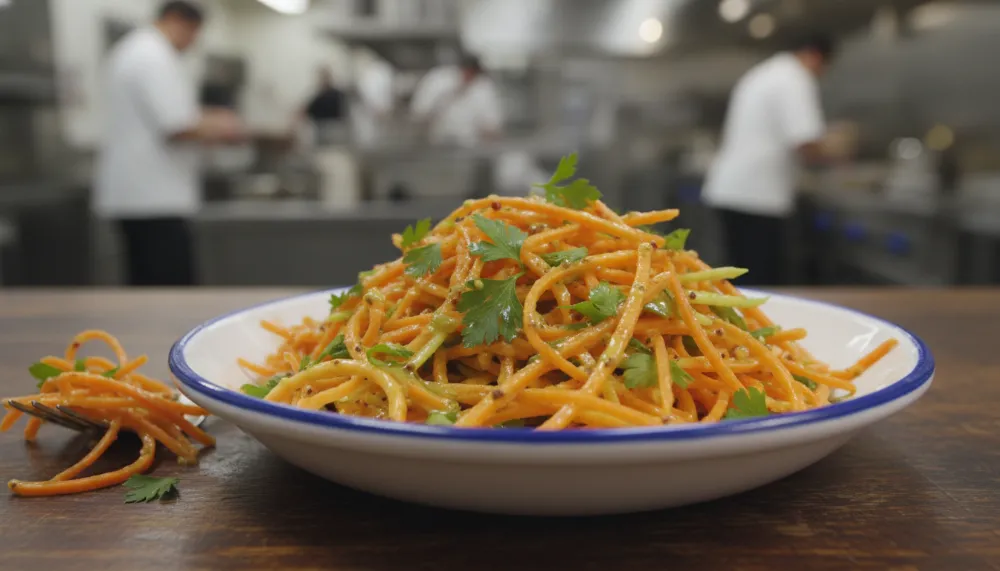

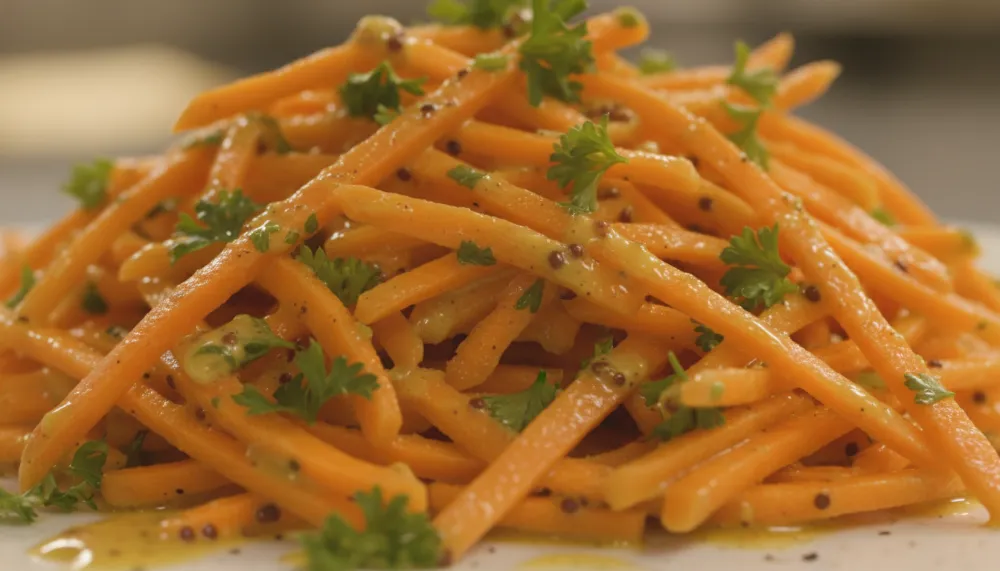
Crisp, vibrant, and effortlessly elegant, this French Carrot Salad with Dijon Mustard and Parsley transforms the humble root vegetable into a sophisticated bistro classic. It is the ultimate refreshing side dish that balances zesty acidity with the natural sweetness of farm-fresh carrots.
French Carrot Salad with Dijon Mustard and Parsley
Ingredients
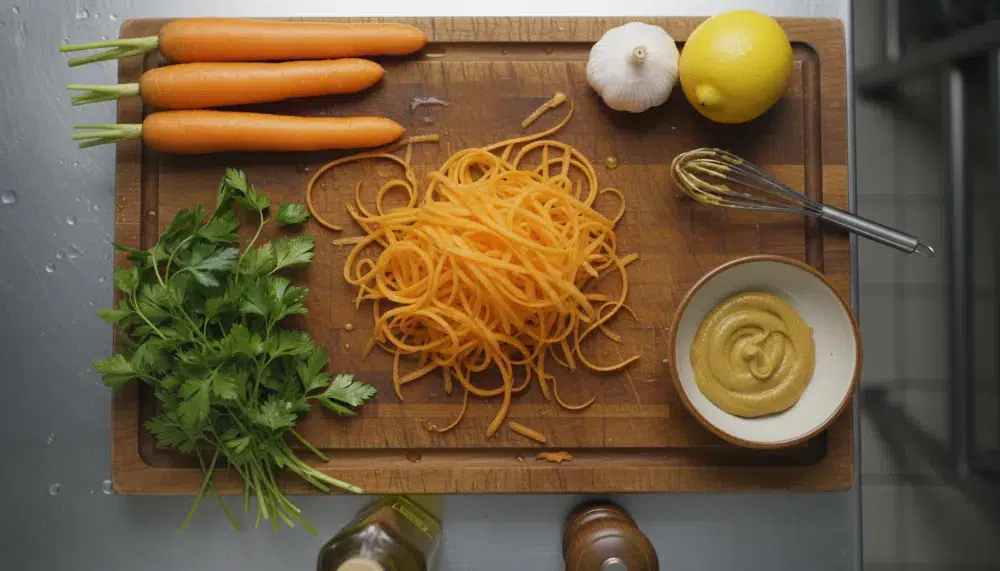
- 1 1 lb Fresh carrots (approximately 4-6 medium carrots), peeled and finely grated
- 2 2 tbsp Extra virgin olive oil
- 3 1.5 tbsp Freshly squeezed lemon juice or apple cider vinegar
- 4 1 tsp Dijon mustard (smooth or grainy)
- 5 1 tsp Liquid honey or maple syrup
- 6 1/4 cup Fresh Italian flat-leaf parsley, finely chopped
- 7 1/2 tsp Sea salt and freshly ground black pepper to taste
Instructions
- 1 Prepare the carrots by peeling them and then grating them finely. For the most traditional texture, use the small holes on a box grater or the fine shredding disc of a food processor.
- 2 In a large glass mixing bowl, whisk together the Dijon mustard, lemon juice (or apple cider vinegar), honey, salt, and black pepper until fully combined.
- 3 Slowly drizzle in the extra virgin olive oil while whisking constantly to create a smooth, creamy emulsion.
- 4 Add the grated carrots and the chopped fresh parsley to the bowl with the dressing. Toss thoroughly until every strand of carrot is evenly coated.
- 5 Let the salad rest for at least 15 to 20 minutes at room temperature, or up to an hour in the refrigerator. This allows the fibers to soften and the flavors to meld perfectly before serving.
The Soul of the French Bistro: Carottes Râpées
Known in its homeland as Carottes Râpées, the French Carrot Salad with Dijon Mustard and Parsley is far more than just a side dish, it is a culinary institution. If you walk into any neighborhood bistro in Paris or a local traiteur (delicatessen) in Lyon, you will find this vibrant orange salad front and center. Its brilliance lies in its simplicity, proving that when you treat a basic ingredient like the carrot with respect and precision, the results are nothing short of extraordinary.
Historically, this salad emerged from the French larder tradition. Carrots are one of the most resilient root vegetables, inexpensive and available throughout the year. During the winter months, when fresh leafy greens were a luxury, French home cooks relied on their root cellars to provide crispness and vitamins. By finely grating the carrots and dressing them in a sharp, mustard-forward vinaigrette, they created a dish that could brighten any meal, no matter the season. Today, it remains a staple in everything from school lunchboxes to high-end dinner parties, celebrated for its refreshing crunch and digestive benefits.
Why This Salad Works: The Science of Flavor and Texture
The success of the French Carrot Salad with Dijon Mustard and Parsley hinges on the interplay between three elements: the sweetness of the carrot, the heat of the mustard, and the acidity of the citrus. Carrots are naturally high in sugar, especially when they are harvested at the peak of their season. When you grate them finely, you break down the tough cellulose walls, releasing those natural sugars and creating a massive surface area for the dressing to cling to.
The dressing itself is a masterclass in balance. By using a high-quality Dijon mustard, you introduce a complex, spicy depth that cuts through the carrot’s sweetness. Because we are avoiding alcohol-based vinegars, using fresh lemon juice or organic apple cider vinegar provides a clean, sharp brightness that wakes up the palate. The addition of a small amount of honey or maple syrup isn’t meant to make the salad sweet, but rather to round out the harsh edges of the acid, creating a perfectly balanced emulsion that coats the palate without being greasy.
The Importance of Freshness
To truly master this recipe, you must start with the best possible carrots. Avoid the pre-shredded bags found in supermarkets, as these are often treated with preservatives to prevent whitening and have lost most of their moisture and flavor. Instead, look for carrots with their green tops still attached. These “carrot tops” are a visual indicator of freshness; if the greens are bright and perky, the roots will be sweet and juicy. For those looking to streamline their prep, the Cuisinart 8 Cup Food Processor (https://amzn.to/47Nhbg8) is a lifesaver, allowing you to shred a pound of carrots in under 30 seconds with a professional, uniform consistency.
The Nutritional Powerhouse: Beta-Carotene and Bioavailability
One of the most fascinating aspects of the French Carrot Salad with Dijon Mustard and Parsley is its nutritional profile. Carrots are famous for being the primary source of beta-carotene, a powerful antioxidant that the body converts into Vitamin A. This vitamin is essential for maintaining healthy vision, a strong immune system, and glowing skin.
However, beta-carotene is fat-soluble. If you were to eat a plain raw carrot, your body would only absorb a small fraction of its nutrients. By pairing the carrots with extra virgin olive oil in this recipe, you are significantly increasing the bioavailability of those vitamins. The fats in the oil act as a delivery vehicle, ensuring your body can fully utilize the carrot’s nutritional bounty. Furthermore, the inclusion of fresh parsley provides a massive hit of Vitamin K and Vitamin C, making this salad a literal “beauty food” in the eyes of many nutritionists.
Professional Variations: Elevating the Classic
While the traditional version is hard to beat, professional chefs often add subtle nuances to elevate the dish. If you are looking to impress at a dinner party, consider these chef-inspired modifications:
- The Passard Glaze: Three-Michelin-starred chef Alain Passard often uses a combination of fresh lime juice and a touch of ginger to create a more tropical, high-acid profile that pairs beautifully with seafood.
- The Nutty Contrast: Adding a handful of toasted pine nuts or slivered almonds provides a protein boost and a delightful crunch that contrasts with the soft, shredded carrots.
- The Spice Route: In the south of France, it is common to see a pinch of ground cumin or toasted nigella seeds added to the vinaigrette. This reflects the North African influence on French cuisine and adds a smoky, earthy undertone.
For those who prefer a heartier meal, you can serve this salad alongside a perfectly roasted chicken or a pan-seared beef steak. To achieve that perfect sear on your protein, the Cosori 9-in-1 TurboBlaze Air Fryer 6 Qt (https://amzn.to/4hRWmVq) is an excellent tool for roasting vegetables or chickpeas to serve as a warm topper for your carrot salad.
Meal Prep and Storage: Staying Fresh Longer
This is one of the few salads that actually improves with age. Because carrots are so sturdy, they do not wilt like lettuce or spinach. In fact, a night in the refrigerator allows the mustard vinaigrette to penetrate deeper into the carrot fibers, resulting in a more flavorful and tender bite the following day.
For efficient meal prepping, I recommend the Rubbermaid Brilliance Glass Storage Set of 9 (https://amzn.to/4oD0YkY). These leak-proof, crystal-clear containers keep the salad fresh for up to four days and are perfect for taking to work. If you find yourself with an abundance of carrots from the farmer’s market, using a FoodSaver Vacuum Sealer Machine (https://amzn.to/4qWgVnS) can help you store peeled, whole carrots for weeks, ensuring you always have the base for this French Carrot Salad with Dijon Mustard and Parsley ready to go.
The Art of the Emulsion
The secret to a professional-grade carrot salad is the emulsion. If you simply pour oil and lemon juice over the carrots, the oil will sit on top and the juice will pool at the bottom. A true emulsion binds the oil and acid together into a creamy, cohesive sauce. The Dijon mustard acts as the emulsifier, bridging the gap between the fat and the liquid. If you want an incredibly smooth dressing for large batches, the Ninja BN751 Professional Plus DUO Blender (https://amzn.to/3LCDyNR) can whip up a stable vinaigrette in seconds that won’t separate, even after several days in the fridge.
Common Pitfalls to Avoid
Even a dish as simple as the French Carrot Salad with Dijon Mustard and Parsley has its traps. First, do not over-salt the carrots too early. Salt draws out moisture; if you salt the carrots and let them sit for hours, you will end up with a puddle of orange liquid at the bottom of the bowl. Add the salt to the dressing first, then toss just before the resting period.
Second, be mindful of the mustard. While Dijon is the classic choice, it can vary wildly in heat. Always taste your dressing before adding it to the carrots. If the mustard is particularly aggressive, add an extra teaspoon of honey or a splash more oil to mellow it out. The goal is a pleasant zing, not an overwhelming burn.