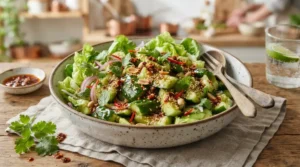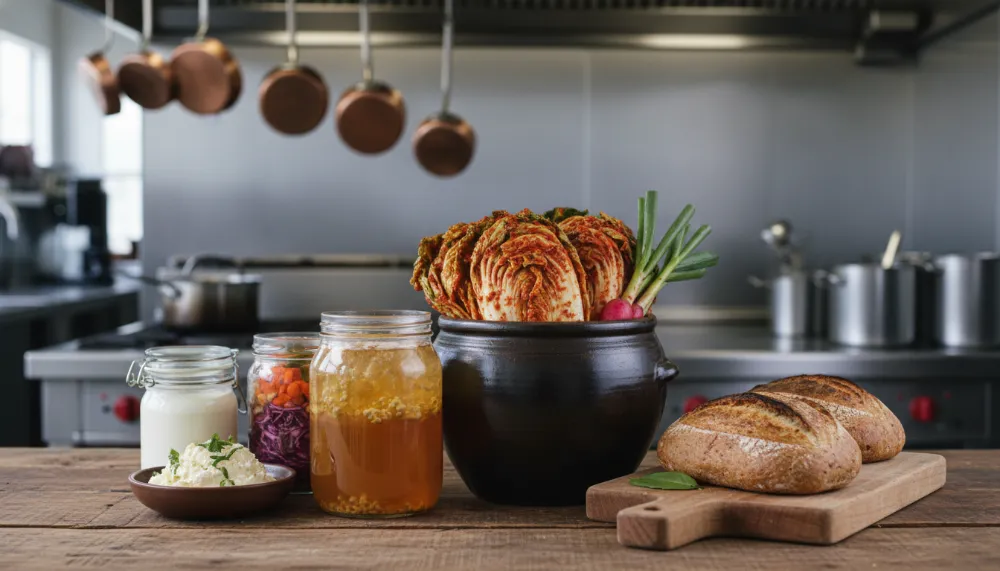

Spring is the season of renewal, making it the perfect time to revitalize your gut health with vibrant, probiotic-rich ferments. This guide explores the art of crafting Fermented Foods for Spring: Easy Homemade Kimchi and More to celebrate the first harvest.
Easy Spring Green Kimchi
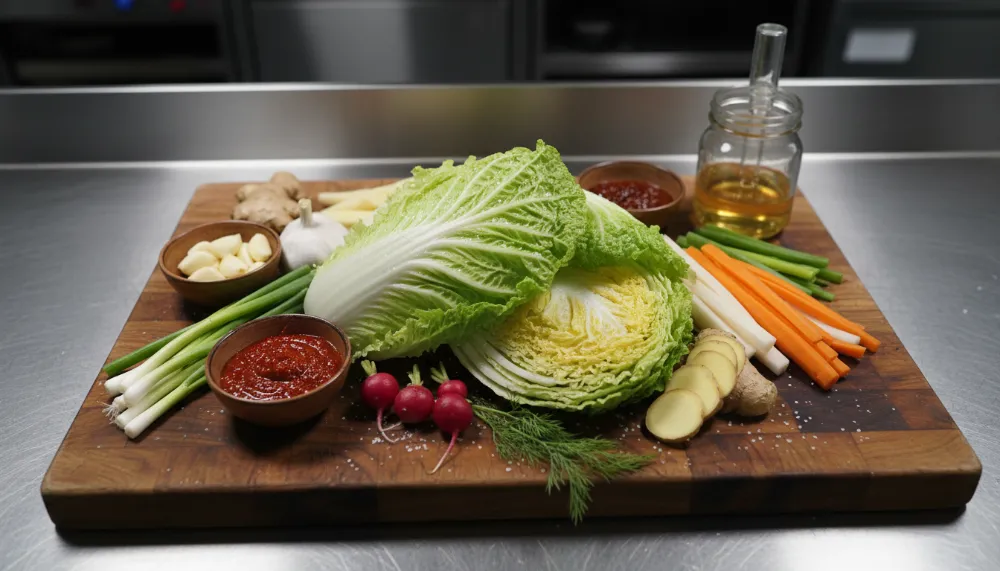
Ingredients
- 1 lb Seasonal Greens (Napa Cabbage, Bok Choy, or Watercress)
- 1 bunch Scallions, cut into 2-inch pieces
- 3 Red Radishes, thinly sliced
- 1 Carrot, julienned
- 3 tbsp Gochugaru (Korean Chili Flakes)
- 2 tbsp Rice Vinegar mixed with 1/2 tsp Sugar
- 1 tbsp Miso Paste or Soy Sauce
- 4 cloves Garlic, minced
- 1 tbsp Fresh Ginger, minced
- 1/2 Asian Pear, grated
Instructions
- Salt the Greens: Toss your chopped greens with 2 tablespoons of sea salt in a large bowl. Let stand for 45 minutes until the leaves soften.
- Rinse: Thoroughly rinse the greens three times under cold water to remove excess salt, then drain well.
- Make Paste: In a separate bowl, combine gochugaru, rice vinegar mixture, miso, garlic, ginger, and grated pear. Stir into a thick paste.
- Mix: Combine the salted greens, scallions, radishes, and carrots with the paste. Use gloved hands to massage the seasoning into every leaf.
- Pack: Press the mixture into a clean glass jar, ensuring there are no air pockets. Leave at room temperature for 24 hours, then refrigerate.
The Historical Journey of Spring Fermentation
Fermentation is an ancient culinary art born from the necessity of preservation, and its roots in Korea date back over 2,000 years to the Three Kingdoms period. Originally, kimchi was known as chimchae, which translates to salted vegetables. These early iterations consisted primarily of radishes preserved in simple salt brines, designed to sustain populations through the harsh, dormant winter months. As spring arrived, the community transitioned from heavy, aged ferments to Geotjeori, a fresh or unfermented kimchi made with the first tender greens of the season.
During the Joseon Dynasty, between 1392 and 1910, the culinary landscape of Korea transformed significantly. The introduction of Napa cabbage and the 17th-century arrival of red chili peppers through Portuguese traders allowed for the development of the fiery, complex profile we recognize today. Spring fermentation was a celebration of survival, utilizing young shoots and radishes that offered a lighter, more refreshing flavor profile than the deeply pungent winter batches. This seasonal shift remains a cornerstone of Fermented Foods for Spring: Easy Homemade Kimchi and More, as it bridges the gap between winter preservation and summer abundance.
The Science and Nutritional Power of Spring Ferments
Fermented spring vegetables are not just delicious, they are biological powerhouses. When we talk about Fermented Foods for Spring: Easy Homemade Kimchi and More, we are discussing the process of lacto-fermentation. This occurs when natural bacteria, specifically Lactobacillus, consume the sugars and starches in the vegetables to create lactic acid. This acid preserves the food and gives it that signature tang, but it also provides a wealth of health benefits.
Probiotic Density and Gut Health
Live cultures developed during fermentation act as probiotics, which support a diverse gut microbiome. A healthy microbiome is linked to improved digestion, enhanced immune function, and even better mental clarity. Spring ferments, because they often use younger, more tender vegetables, tend to undergo a faster fermentation process, resulting in a crisp texture and a high concentration of live enzymes that aid in nutrient absorption.
Bioavailable Vitamins
Interestingly, the fermentation process increases the levels of B-vitamins, including B1, B2, and B12, while preserving the high Vitamin C content found in spring greens. For those looking for seasonal wellness, early spring crops like ramps and radishes are rich in sulfur compounds. These compounds, when fermented, become more bioavailable, supporting the liver’s natural detoxification pathways and providing potent anti-inflammatory benefits.
Professional Recommendations for Spring Fermenting
To achieve professional results at home, having the right tools is essential. Preparing Fermented Foods for Spring: Easy Homemade Kimchi and More requires precision in chopping and blending to ensure the flavors meld perfectly.
- Ninja BN751 Professional Plus DUO Blender: https://amzn.to/3LCDyNR (Why Perfect: The 1000W motor is ideal for creating smooth kimchi pastes from ginger, garlic, and pear, ensuring every leaf is perfectly coated.)
- Cuisinart 8 Cup Food Processor: https://amzn.to/47Nhbg8 (Why Perfect: This is a meal prep essential for fast chopping and slicing of radishes and carrots, providing the uniform texture needed for even fermentation.)
- Cosori 9-in-1 TurboBlaze Air Fryer 6 Qt: https://amzn.to/4hRWmVq (Why Perfect: While not for the ferment itself, it roasts chickpeas and beef strips perfectly to pair with your finished kimchi in a grain bowl.)
- Rubbermaid Brilliance Glass Storage Set of 9: https://amzn.to/4oD0YkY (Why Perfect: These are leak-proof and stackable, making them the ultimate vessel for storing your ferments in the fridge without odors escaping.)
- FoodSaver Vacuum Sealer Machine: https://amzn.to/4qWgVnS (Why Perfect: This machine keeps your raw ingredients fresh longer before you start the fermentation process, preventing any spoilage.)
Elevated Variations: Beyond Basic Kimchi
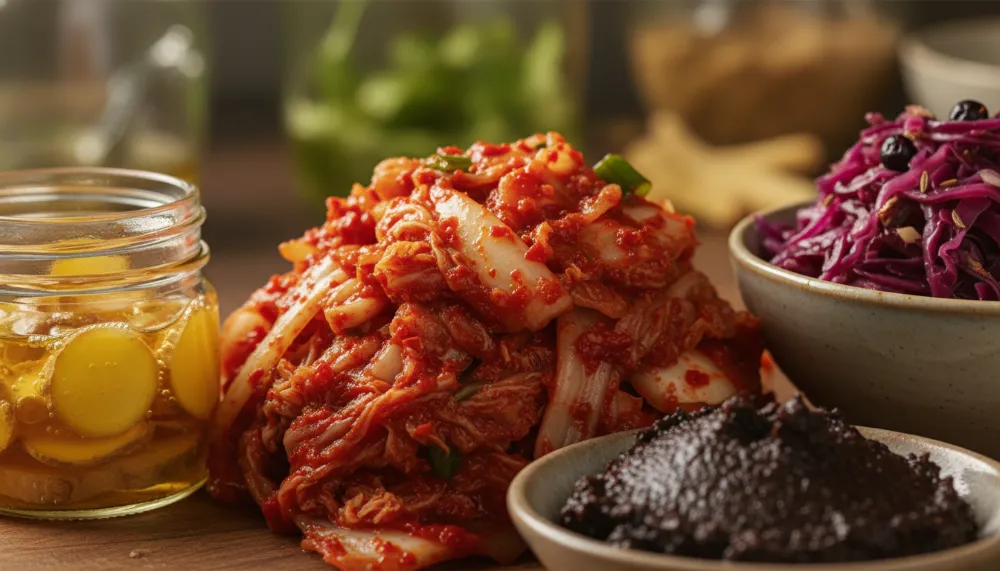
While cabbage is the gold standard, Fermented Foods for Spring: Easy Homemade Kimchi and More can include a wide variety of seasonal produce. Professionals often look for ways to add depth without using alcohol or restricted proteins.
The Umami Secret (Alcohol-Free)
Many traditional recipes suggest using rice wine or mirin. To keep your ferments clean and accessible, replace these with a mixture of rice vinegar and a pinch of organic sugar. This provides the necessary acidity and brightness. For a deep, savory note, incorporate mushroom powder or a highly concentrated beef bone broth reduction. These ingredients mimic the complexity of fermented seafood without violating dietary restrictions.
Wild Ramp and Spring Garlic Ferments
If you can find wild ramps, they make an incredible fermented side dish. Their flavor is a cross between garlic and leeks. Simply brine them in a 2% salt solution with a few peppercorns for a week. The result is a pungent, slightly sweet pickle that pairs beautifully with grilled chicken or roasted root vegetables.
Storage, Safety, and Culinary Pairings
Proper storage is the difference between a successful ferment and spoilage. Always ensure your vegetables are completely submerged under the brine or paste to prevent mold growth. If using glass jars, burp them daily to release the carbon dioxide buildup, or use a fermentation lid with a one-way valve.
Once your Fermented Foods for Spring: Easy Homemade Kimchi and More are ready, the culinary possibilities are endless. Try a Beef and Kimchi Stir-Fry by sautéing thinly sliced flank steak with a generous portion of your homemade batch. Alternatively, create a Spring Grain Bowl with brown rice, air-fried vegetables, and a dollop of kimchi mixed with yogurt for a creamy, probiotic dressing. These ferments add a layer of acidity and crunch that elevates simple proteins like roasted chicken or seared beef to restaurant-quality status.