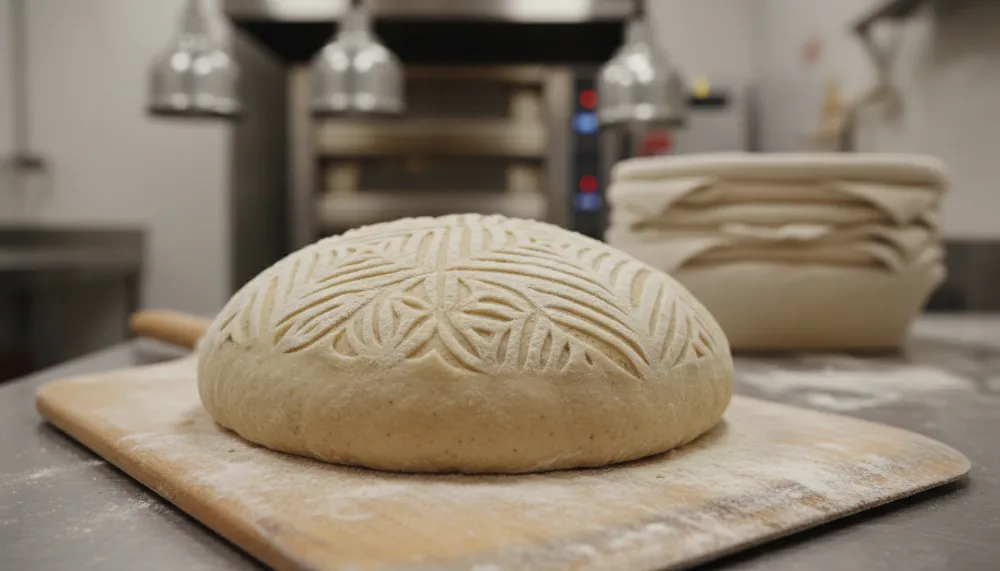

Cold proof sourdough scoring is the transformative secret that turns a simple loaf of fermented dough into a stunning piece of edible art with a perfect, crispy ear. By chilling your dough, you create a firm, workable surface that allows for intricate designs and controlled expansion in the oven.
Master Cold Proof Sourdough Loaf
Ingredients
- 1 100g Active Sourdough Starter (Fed within 4-6 hours)
- 2 350g Filtered Warm Water
- 3 500g High-Protein Bread Flour
- 4 10g Fine Sea Salt
- 5 Rice Flour (for dusting and scoring contrast)
Instructions
- 1 Mix starter and water until milky, then stir in flour and salt until a shaggy dough forms. Rest for 30 minutes.
- 2 Perform 4 rounds of stretch and folds every 30 minutes, then bulk ferment at room temperature until dough increases by 50 percent.
- 3 Shape the dough into a tight boule or batard and place in a banneton dusted with rice flour.
- 4 COLD PROOF: Place the shaped dough in the refrigerator (38°F–42°F) for 12 to 24 hours to stabilize.
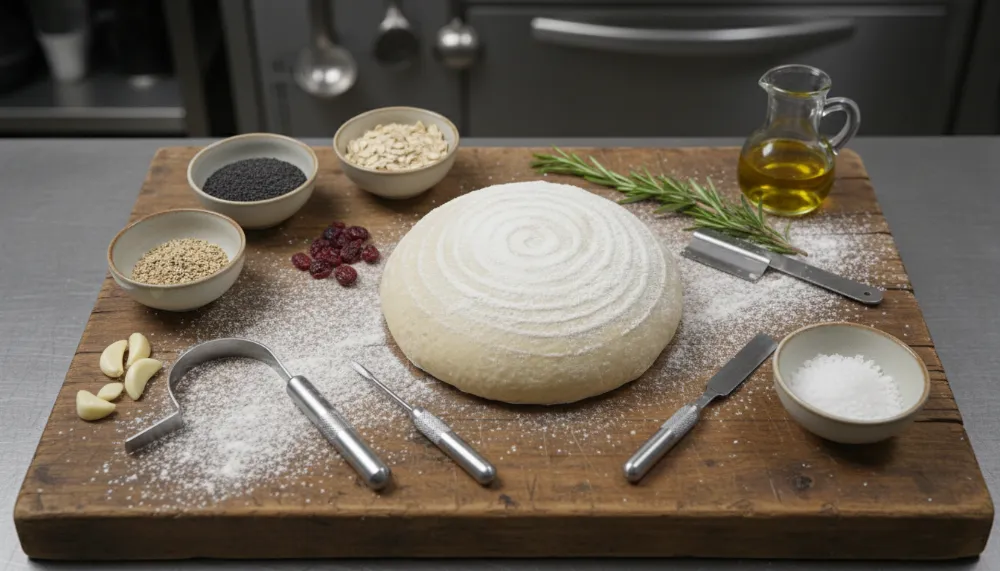
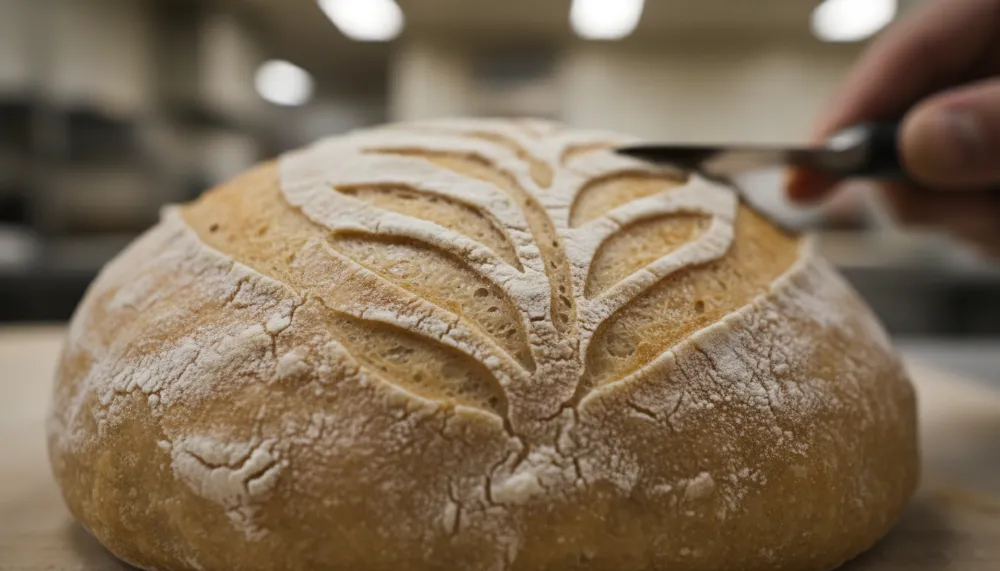
- 5 SCORE: Remove cold dough from the fridge, dust with rice flour, and use a sharp lame to score immediately while cold.
- 6 BAKE: Transfer to a preheated Dutch oven at 450°F. Bake covered for 20 mins, then uncovered for 20-25 mins.
The Scientific Foundation of Cold Proof Sourdough Scoring
Cold proofing, also known as “retardation,” is the practice of fermenting shaped sourdough in a cold environment (typically 38°F–42°F) for 12 to 48 hours. This technique has revolutionized bread scoring, transforming it from a functional necessity into a sophisticated culinary art. When dough is chilled, the lipid structure in the flour stabilizes, and the carbon dioxide gases within the gluten matrix contract. This results in a dough that is firm to the touch, almost like a block of cold butter, rather than the sticky, fragile mass of room-temperature dough. This firmness is the primary reason why Cold Proof Sourdough Scoring is the gold standard for artisan bakers.
During the cold retard, the surface of the dough undergoes a slight dehydration, creating a taut “skin.” This skin is essential for clean cuts. When you use a razor or lame on room-temperature dough, the blade often drags, causing the dough to snag and tear. Conversely, on a cold-proofed loaf, the blade glides effortlessly, allowing for precision that is simply impossible otherwise. This physical transformation is accompanied by deep biochemical changes that improve both the structural integrity and the final aesthetic of the bread.
Historical Origins: From Communal Ovens to Culinary Art
The history of scoring bread dates back centuries, but the specific emphasis on Cold Proof Sourdough Scoring is a more modern refinement. In Medieval France, villages relied on communal ovens. Families would bring their prepared dough to be baked by an “oven master.” To ensure everyone received their own loaf back, families developed unique “signatures” or slashes, known as docking. This was a purely functional marking system to identify ownership in a crowded oven.
By the 19th century, scoring began to evolve. A French scientist named Vaudry documented “breads with cuts on their surface” as a mark of high-quality Parisian baking. It was during this time that bakers realized scoring wasn’t just for identification; it controlled where the bread would expand. Without a score, the internal pressure of the steam would cause the loaf to burst at its weakest point, often resulting in misshapen bread. The modern shift toward cold proofing emerged in the late 20th century as artisan bakers sought to push the boundaries of decorative scoring, discovering that lower temperatures provided the necessary canvas for the intricate patterns we see today.
Nutritional Advantages of Long, Cold Fermentation
Beyond the aesthetics of Cold Proof Sourdough Scoring, the extended cold proof offers significant nutritional benefits. One of the most critical is the reduction of phytic acid. Phytic acid is an “anti-nutrient” found in grains that binds to minerals like iron, zinc, magnesium, and calcium, preventing their absorption in the human body. The prolonged fermentation during a cold retard allows enzymes called phytases to break down phytic acid by up to 90 percent, dramatically increasing the bioavailability of these essential minerals.
Additionally, the slow fermentation process is a boon for digestive health. Wild yeast and lactic acid bacteria have more time to pre-digest wheat fructans (FODMAPs) and complex gluten proteins. Many people who experience mild sensitivity to commercial breads find that they can tolerate sourdough that has undergone a long cold proof. Furthermore, the organic acids produced (lactic and acetic acids) lower the glycemic index of the bread, leading to a slower, more stable blood glucose response after eating. This makes cold-proofed sourdough a superior choice for those managing energy levels and overall metabolic health.
Professional Tools for Mastering the Score
To achieve professional results with Cold Proof Sourdough Scoring, you need the right equipment. High-quality tools ensure that your technique translates into a beautiful bake. Here are our top recommendations for the serious sourdough baker:
- Ninja BN751 Professional Plus DUO Blender: https://amzn.to/3LCDyNR (Why Perfect: This 1000W motor is essential for creating smooth tahini sauces or harissa pastes to serve with your savory scored loaves).
- Cosori 9-in-1 TurboBlaze Air Fryer 6 Qt: https://amzn.to/4hRWmVq (Why Perfect: The ideal way to roast garlic or vegetables that you can fold into your dough during lamination for incredible flavor).
- Cuisinart 8 Cup Food Processor: https://amzn.to/47Nhbg8 (Why Perfect: Fast chopping of savory inclusions like onions or dried beef, making meal prep for your bread incredibly efficient).
- Rubbermaid Brilliance Glass Storage Set of 9: https://amzn.to/4oD0YkY (Why Perfect: These leak-proof, stackable containers are the gold standard for storing your levain or prepared inclusions in the fridge).
- FoodSaver Vacuum Sealer Machine: https://amzn.to/4qWgVnS (Why Perfect: Once you’ve mastered Cold Proof Sourdough Scoring, you’ll want to preserve your loaves; this prevents freezer burn and keeps them fresh for months).
Professional Flavor Variations (No Pork or Alcohol)
When you are planning a loaf for intricate Cold Proof Sourdough Scoring, your inclusions should be folded in during lamination to keep the surface clear. Here are some sophisticated, restricted-diet friendly profiles:
Savory Profiles:
1. Sun-dried Tomato & Smoked Beef: Use finely diced smoked beef brisket instead of traditional bacon. The smoky richness pairs beautifully with the acidity of the tomatoes.
2. Roasted Garlic & Aged Gouda: Use the Cosori Air Fryer to roast whole garlic cloves until sweet and spreadable. Fold these into the dough with cubes of sharp, nutty Gouda.
3. Caramelized Onion & Beef Broth: For a deep umami hit, replace 20 percent of your hydration water with a concentrated beef broth. Fold in onions that have been slowly caramelized until jammy.
Sweet Profiles:
1. Dark Chocolate & Cherry: Soak dried tart cherries in apple juice or pomegranate juice instead of alcohol to plump them up. Fold them in with chunks of 70 percent dark chocolate.
2. Turmeric & Honey: Add 2 teaspoons of ground turmeric to your flour for a vibrant golden crumb, and use high-quality local honey to provide a subtle floral sweetness that complements the sourdough tang.
Advanced Scoring Techniques: The Ear and Beyond
The most sought-after feature in Cold Proof Sourdough Scoring is the “ear,” the raised, crispy flap of crust that peels back during the bake. To achieve this, you must master the Angle of Attack. Hold your lame at a shallow 30-degree angle relative to the dough. Instead of cutting straight down, you are essentially cutting a flap. As the dough expands in the heat of the oven (the “oven spring”), that flap is pushed upward and outward, creating the iconic ear.
For decorative scoring, such as wheat stalks or floral patterns, the technique changes. These scores should be shallow, no more than 1/8th of an inch deep, to prevent them from distorting the loaf’s overall shape. Use a vertical 90-degree angle for these fine lines. A pro-tip is to dust the cold loaf with a heavy layer of rice flour before scoring. Rice flour does not brown or burn as easily as wheat flour, which creates a stunning, high-contrast white design against the dark, mahogany crust of the baked bread.
Troubleshooting Your Cold Proof Scoring
Even with a cold-proofed loaf, things can go wrong. If your scores are “healing” or closing up during the bake, it usually means the dough was over-proofed. Over-proofed dough has lost its structural tension and cannot support the expansion. If the score doesn’t open up at all, the dough might be under-proofed, or your oven temperature isn’t high enough. Always ensure you are using a preheated Dutch oven or a baking stone with plenty of steam to keep the surface of the bread supple during those first crucial minutes of expansion.