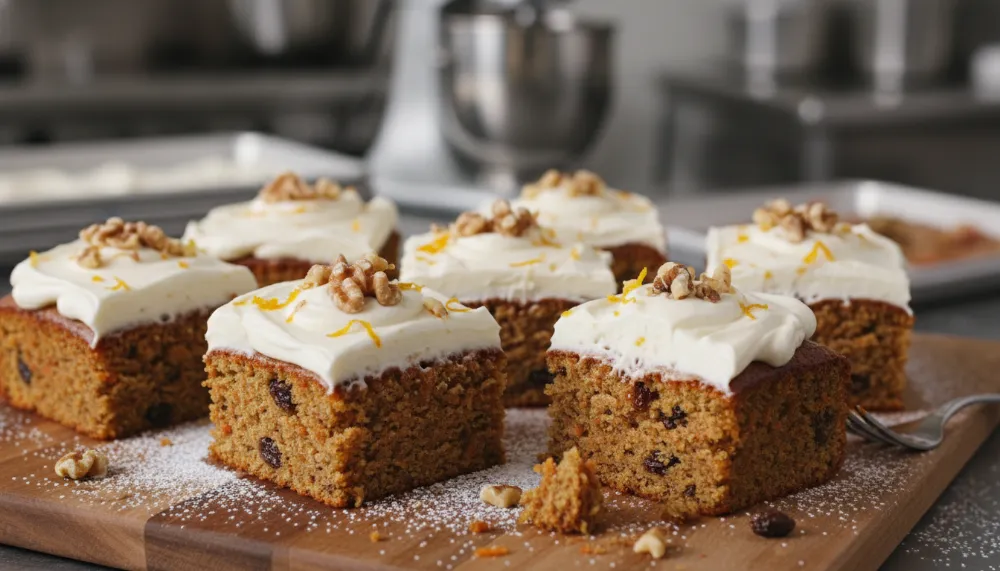

These Carrot Cake Bars represent the perfect marriage of a dense, chewy blondie and the spiced warmth of a classic carrot cake, topped with a velvety layer of cream cheese frosting. This recipe transforms a timeless dessert into a portable, crowd-pleasing format that is as easy to bake as it is to enjoy.
Decadent Spiced Carrot Cake Bars
Ingredients
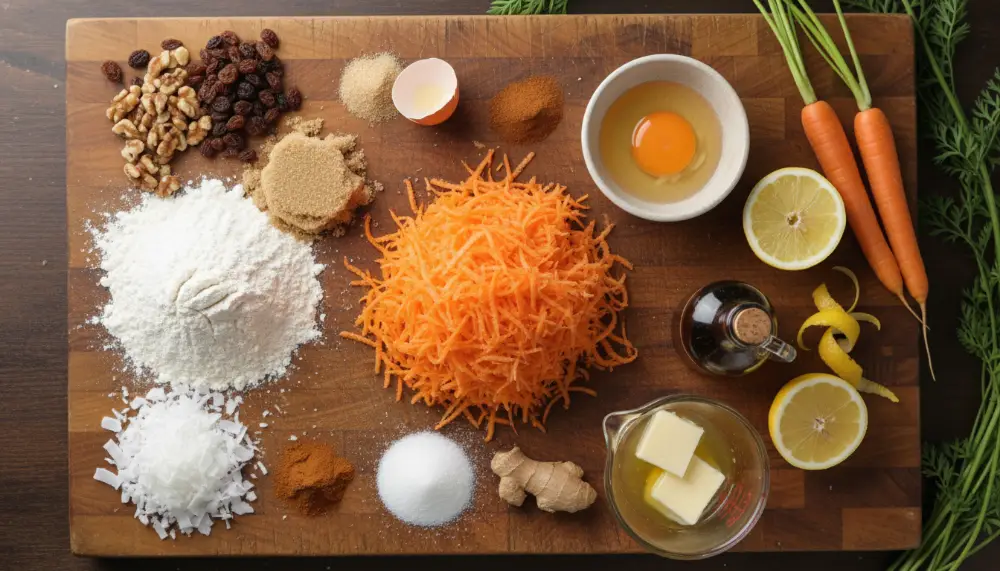
- 1 2 cups all-purpose flour, leveled
- 2 1.5 cups tightly packed light brown sugar
- 3 1 cup vegetable oil or melted unsalted butter
- 4 3 large eggs, room temperature
- 5 2 cups finely grated fresh carrots
- 6 2 tsp ground cinnamon, 1 tsp ginger, 1/2 tsp nutmeg
- 7 1 tsp baking soda and 1/2 tsp salt
- 8 8 oz softened cream cheese and 1/2 cup softened butter (for frosting)
- 9 3 cups powdered sugar and 1 tsp vanilla extract
Instructions
- 1 Preheat your oven to 350°F (175°C) and grease a 9×13 inch baking pan.
- 2 Whisk the vegetable oil, brown sugar, and eggs in a large bowl until smooth and combined.
- 3 Sift in the flour, cinnamon, ginger, nutmeg, baking soda, and salt, then fold gently until just incorporated.
- 4 Stir in the grated carrots until evenly distributed throughout the batter.
- 5 Pour into the prepared pan and bake for 30, 35 minutes or until a toothpick comes out clean.
- 6 While the bars cool completely, beat the cream cheese, butter, vanilla, and powdered sugar into a fluffy frosting.
- 7 Spread the frosting over the cooled bars and slice into squares.
The Medieval Roots of Carrot-Based Desserts
The history of Carrot Cake Bars is a fascinating journey through culinary resourcefulness. Long before the modern convenience of refined sugar, medieval European cooks relied on the natural sweetness of root vegetables to create decadent treats. Carrots, which contain more sugar than almost any other vegetable except the sugar beet, were the primary choice for sweetening puddings and cakes. These early ancestors, often referred to as “carrot puddings,” were frequently steamed or boiled in a manner similar to a savory sausage or a dense plum pudding.
By 1591, English recipe collections were already documenting “pudding in a Carret root,” a dish that combined scraped carrots with breadcrumbs, eggs, and warm spices. It wasn’t until the early 19th century that these puddings began to resemble the baked goods we recognize today. In 1814, the renowned French chef Antoine Beauvilliers published a recipe for “Gâteau de Carottes” in his seminal work, *L’Art du Cuisinier*. This marked a significant transition from the heavy, moist puddings of the past toward a structured, baked cake.
The Wartime Influence and the Rise of the Bar
Carrot cake saw a massive resurgence during the mid-20th century, particularly during World War II. In Great Britain, the Ministry of Food faced severe sugar rationing and actively promoted carrot-based desserts as a healthy and patriotic alternative. This era solidified the carrot cake’s reputation as a staple of home baking. However, the transition to Carrot Cake Bars is a more recent evolution. While the layered carrot cake became a darling of American restaurants in the 1960s, the “bar” format emerged as a practical solution for large gatherings, picnics, and school lunches.
Unlike a towering layer cake, Carrot Cake Bars offer a denser, blondie-like texture that is easier to portion and transport. They provide the same iconic flavor profile but in a more accessible, hand-held form. This “sheet-style” variation allows for a higher frosting-to-cake ratio in every bite, making it a favorite among those who believe the cream cheese frosting is the star of the show.
Essential Ingredients and Professional Equipment
To achieve the perfect texture in your Carrot Cake Bars, the quality of your ingredients and tools matters. Professional bakers often rely on specific equipment to ensure consistent results. For instance, perfectly shredding your carrots is vital, they should be fine enough to melt into the batter but substantial enough to provide moisture.
– **Cuisinart 8 Cup Food Processor:** https://amzn.to/47Nhbg8 (Why Perfect: This is an essential for Carrot Cake Bars. It allows for fast, uniform chopping and slicing of carrots, ensuring they are the perfect size for a moist crumb.)
– **Ninja BN751 Professional Plus DUO Blender:** https://amzn.to/3LCDyNR (Why Perfect: With a powerful 1000W motor, this is ideal for those who like to incorporate smooth components like homemade tahini or fruit purees into their cake variations.)
– **Cosori 9-in-1 TurboBlaze Air Fryer 6 Qt:** https://amzn.to/4hRWmVq (Why Perfect: While not for the cake itself, this is incredible for roasting pecans or walnuts to top your bars, providing a perfect crunch in minutes.)
The Science of a Moist Crumb
The nutritional and textural profile of a carrot cake bar is heavily influenced by the choice of fats. Most professional recipes swap traditional solid shortening for high-quality vegetable oils like canola or avocado oil. Oil remains liquid at room temperature, which ensures the bars feel incredibly moist even after being refrigerated. For those who prefer a richer, more traditional flavor, pure butter is the industry standard.
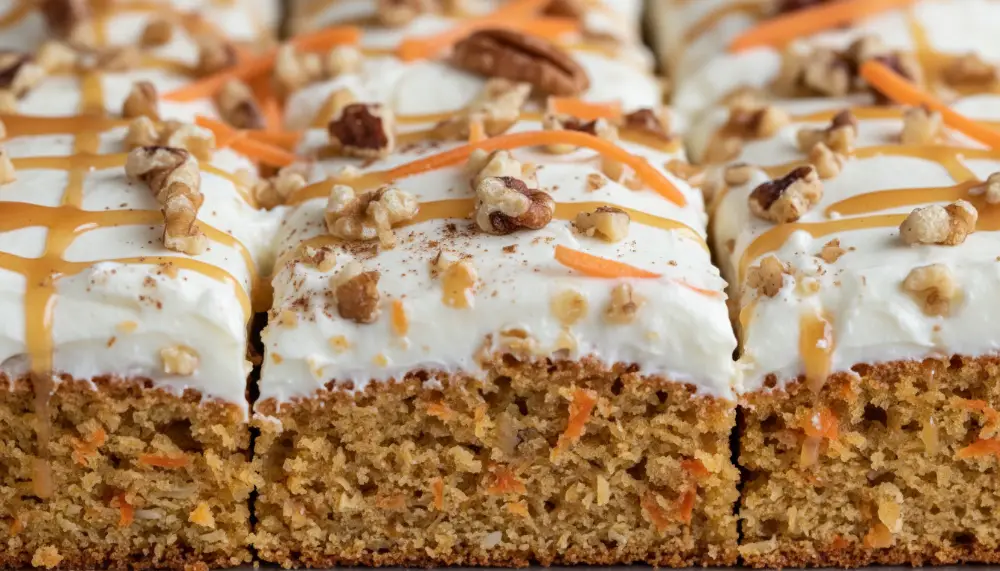
Nutritionally, a standard serving of Carrot Cake Bars (approximately 80-100g) contains between 250 and 380 calories. While the sugar and frosting contribute to the carbohydrate count, the carrots provide a significant boost of Vitamin A via beta-carotene. The inclusion of walnuts or pecans adds healthy fats and a small amount of protein, usually totaling 3-5g per serving.
Professional Flavor Variations
If you want to take your Carrot Cake Bars from home-baked to gourmet-level, consider these professional elevations used by high-end pastry chefs:
1. **Spiced Complexity:** Instead of just cinnamon, create a “warm spice” blend. Incorporate ground cardamom, ginger, cloves, and a pinch of turmeric. The turmeric doesn’t just add a subtle earthy note, it also brightens the natural orange hue of the carrots.
2. **Citrus Infusions:** To balance the heavy sweetness of the cream cheese, add fresh orange zest to the batter. For depth of flavor, replace traditional rum with reduced apple juice or a tablespoon of molasses. This replicates the deep, caramelized notes without the need for alcohol.
3. **Brown Butter (Beurre Noisette):** Replacing standard melted butter with browned butter introduces a toasted, nutty aroma that complements the cinnamon and carrots perfectly.
4. **The Cream Cheese Swirl:** For a more integrated flavor, try marbling the cream cheese frosting directly into the carrot batter before baking, rather than spreading it on top.
Storage and Preservation Tips
Because of the moisture content in the carrots and the dairy in the frosting, proper storage is crucial. To keep your bars fresh for up to a week, we recommend high-quality storage solutions.
– **Rubbermaid Brilliance Glass Storage Set of 9:** https://amzn.to/4oD0YkY (Why Perfect: These are leak-proof and stackable, making them the ultimate choice for keeping your frosted bars fresh in the refrigerator without absorbing other food odors.)
– **FoodSaver Vacuum Sealer Machine:** https://amzn.to/4qWgVnS (Why Perfect: If you plan on freezing your Carrot Cake Bars, vacuum sealing prevents freezer burn and keeps the texture intact for months.)
Troubleshooting Your Bake
If your Carrot Cake Bars are coming out too oily, ensure you are measuring your vegetable oil precisely and not over-mixing the batter. Over-mixing can develop too much gluten, leading to a tough, rubbery bar rather than a tender one. If the center is sinking, it usually indicates the oven temperature was too low or the leavening agents (baking soda/powder) are expired. Always test for doneness with a toothpick, it should come out with just a few moist crumbs attached, not wet batter.