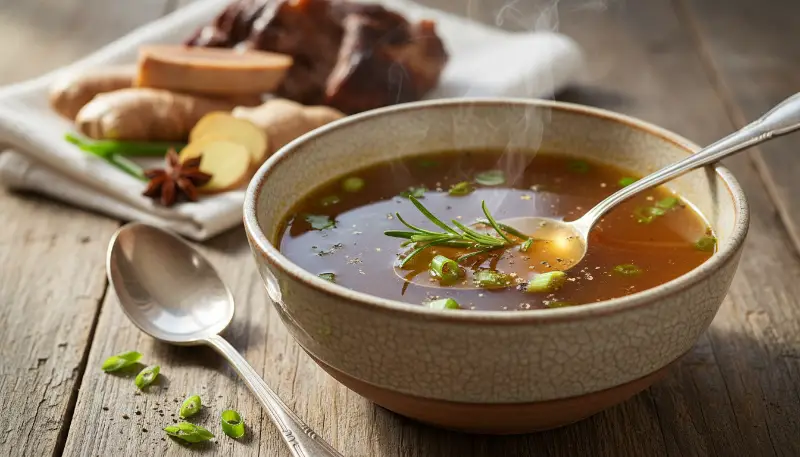

Embarking on a journey toward better wellness often starts with a single, nutrient-dense habit, and nothing quite compares to the restorative power of a homemade Healing Bone Broth Soup. This liquid gold is more than just a culinary staple, it is a foundation for gut health, joint recovery, and a robust immune system.
Healing Bone Broth Soup
45 MIN
1440 MIN
12 PERS
Ingredients
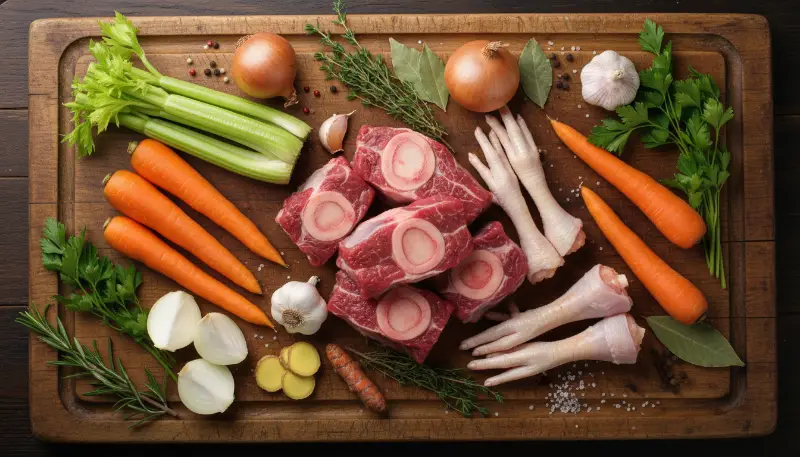
- 1 5 lbs Mixed Beef Bones (Marrow and Knuckle)
- 2 2 Large Onions (Skin on)
- 3 3 Large Carrots
- 4 1 Whole Head of Garlic
- 5 2-inch Fresh Ginger Sliced
- 6 1-inch Fresh Turmeric Sliced
- 7 2 tbsp Apple Cider Vinegar
- 8 1 tbsp Fresh Lemon Juice
- 9 1 Gallon Filtered Water
Instructions
- 1 Roast beef bones at 400°F for 45 minutes until browned.
- 2 Transfer bones and vegetables to a large stockpot.
- 3 Add water, vinegar, and lemon juice; let sit for 30 minutes.
- 4 Simmer on low for 12 to 24 hours skimming off any foam.
- 5 Strain through a fine-mesh sieve and cool immediately.
The Science Behind Healing Bone Broth Soup
Why has Healing Bone Broth Soup become the darling of the wellness world? It is not just a trend, it is a return to traditional wisdom. When we simmer beef bones for extended periods, we are engaging in a process of extraction. This process pulls out collagen, glycine, and essential minerals like calcium and magnesium that are often missing from the modern diet. For those looking to support their gut lining, the gelatin found in a well-made Healing Bone Broth Soup acts as a soothing balm, potentially aiding in the repair of the intestinal wall.
The beauty of this Healing Bone Broth Soup lies in its amino acid profile. Glycine, in particular, is a powerhouse amino acid that supports liver detoxification and helps regulate the nervous system. Many people find that sipping a warm cup of Healing Bone Broth Soup in the evening helps them wind down, thanks to the calming properties of these nutrients. By using high-quality beef bones, you ensure that you are getting the cleanest source of these vital building blocks.
Selecting the Best Beef Bones
The secret to a gel-like, collagen-rich Healing Bone Broth Soup is in the selection of your bones. You want a variety. Marrow bones provide that deep, rich flavor and healthy fats, while knuckle, neck, and oxtail bones are packed with connective tissue. It is this connective tissue that breaks down into gelatin, giving your broth that signature wobble once chilled. When you prepare Healing Bone Broth Soup, always look for grass-fed beef bones when possible, as they contain a superior omega-3 to omega-6 ratio, which further helps in reducing inflammation.
Essential Tools for Your Kitchen
To make the best Healing Bone Broth Soup, you need the right equipment. For prepping your aromatics, the Cuisinart 8 Cup Food Processor is a meal prep essential that makes fast work of chopping carrots, celery, and onions. If you decide to turn your broth into a creamy base for sauces, the Ninja BN751 Professional Plus DUO Blender with its 1000W motor is perfect for emulsifying fats into your Healing Bone Broth Soup for a silky finish.
For those who like to roast their vegetables or even the bones in a more compact way, the Cosori 9-in-1 TurboBlaze Air Fryer 6 Qt is a fantastic alternative to a traditional oven, especially for smaller batches. Once your Healing Bone Broth Soup is finished, storage is key. The Rubbermaid Brilliance Glass Storage Set of 9 is leak-proof and stackable, making it the perfect vessel for refrigerating your liquid gold. For long-term preservation, the FoodSaver Vacuum Sealer Machine helps you portion out concentrated broth and keep it fresh in the freezer for months.
Step-by-Step Mastery: Roasting and Simmering
Never skip the roasting step when making Healing Bone Broth Soup. Roasting the beef bones at high heat caramelizes the proteins and fats, which translates into a much deeper, more complex flavor profile. Without roasting, your broth may end up looking pale and tasting one-dimensional. Once the bones are deep brown, deglaze your roasting pan with a bit of water or extra beef broth to ensure no flavorful bits are left behind.
During the simmering process, patience is your best friend. A Healing Bone Broth Soup cannot be rushed. Whether you use a heavy-bottomed stockpot, a slow cooker, or a pressure cooker, the goal is to maintain a very low, gentle bubble. If the broth boils too vigorously, the fats will emulsify into the water, resulting in a cloudy, greasy soup rather than a clear, clean liquid. Skimming the “scum” or foam that rises to the top in the first hour is also vital for a high-quality Healing Bone Broth Soup.
Healing Add-Ons: Turmeric, Ginger, and Beyond
While the beef bones provide the structure, the aromatics provide the “healing” boost. In this version of Healing Bone Broth Soup, we use fresh ginger and turmeric. Ginger is renowned for its ability to stimulate digestion and reduce nausea, while turmeric contains curcumin, a powerful anti-inflammatory compound. Adding a splash of apple cider vinegar is not for flavor, but for science, the acidity helps to demineralize the bones, ensuring that the calcium and phosphorus end up in your soup, not in the trash.

Common Mistakes to Avoid
One common mistake when making Healing Bone Broth Soup is adding too much water. You want just enough water to cover the bones by about two inches. Too much water will result in a diluted broth that won’t gel. Another mistake is adding salt too early. As the Healing Bone Broth Soup reduces over 24 hours, the flavors concentrate. If you salt at the beginning, you may find the end result is far too salty. Always season your Healing Bone Broth Soup at the very end of the cooking process.
How to Use Your Healing Bone Broth Soup Daily
There are endless ways to incorporate Healing Bone Broth Soup into your routine. You can use it as a base for a hearty vegetable beef stew, or use it to cook rice or quinoa for an extra protein boost. Some people even use Healing Bone Broth Soup as a replacement for their morning coffee, finding that the steady energy from the amino acids is more sustainable than a caffeine spike. If you find the flavor too intense, try diluting it with a little hot water and a squeeze of fresh lemon.
Storage and Preservation
Your Healing Bone Broth Soup will stay fresh in the refrigerator for about 5 to 7 days. You will notice a layer of yellow fat on top, do not discard this! This fat layer acts as a natural seal that keeps the broth fresh. When you are ready to eat, simply scrape it off or melt it back into the soup. For longer storage, freeze your Healing Bone Broth Soup in silicone molds or freezer-safe jars, leaving plenty of headspace for expansion. For more kitchen inspiration, check out our [https://www.revealedrecipe.com/post-sitemap.xml] for a full list of recipes.
Why didn’t my bone broth gel?
A lack of gel usually means you either used too much water or didn’t use enough bones with connective tissue, like knuckles or feet. It still contains nutrients, but next time, increase the bone-to-water ratio for a thicker Healing Bone Broth Soup.
Can I reuse the bones?
Yes, you can often get a second, though slightly weaker, batch of Healing Bone Broth Soup from the same set of beef bones. This is often called a ‘remouillage’ in French cooking.
Is it safe to leave the slow cooker on for 24 hours?
Modern slow cookers are designed for long-term use, but always ensure there is enough liquid in the pot and keep it on a stable, heat-resistant surface while making your Healing Bone Broth Soup.
Do I have to roast the bones?
While not strictly necessary for the nutrients, roasting is essential for the flavor of a beef-based Healing Bone Broth Soup. Raw beef bones can produce a funkier, less pleasant taste.