
Avocado deviled eggs are the perfect fusion of creamy guacamole and classic picnic snacks, offering a nutrient-dense twist on a timeless favorite. This gourmet version replaces traditional mayonnaise with heart-healthy monounsaturated fats for a vibrant, savory experience that elevates any gathering.
Gourmet Avocado Deviled Eggs
Ingredients
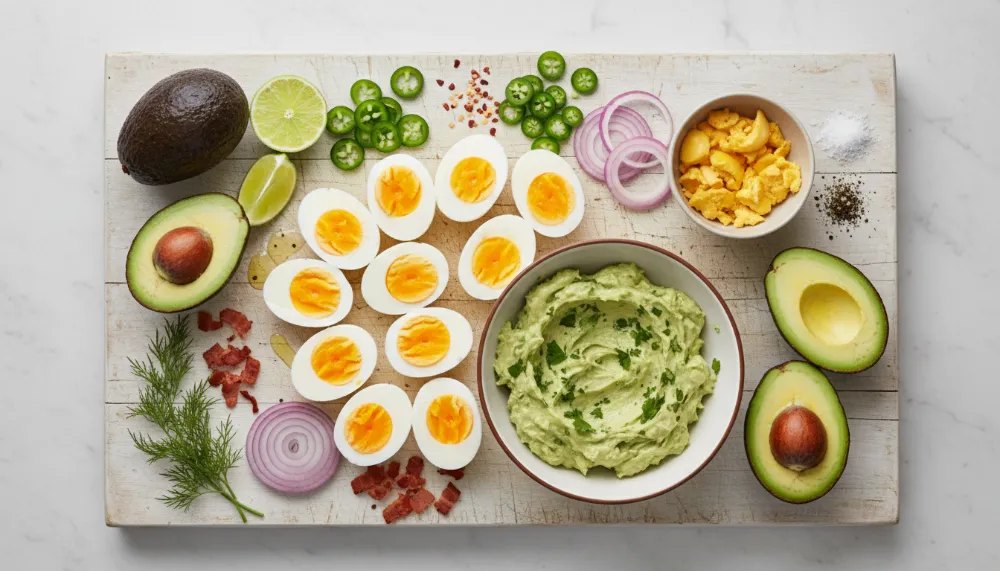
- 12 Large Eggs
- 2 Ripe Avocados (Pitted and Peeled)
- 1 Tablespoon Fresh Lime Juice
- 1 Tablespoon Fresh Cilantro (Finely Minced)
- 1/2 Teaspoon Smoked Paprika
- 1/4 Cup Crispy Beef Bacon (Crumbled)
- 1 Pinch Sea Salt and Black Pepper to taste
Instructions
- 1 Place eggs in a pot and cover with water. Bring to a boil, then cover and remove from heat for 12 minutes.
- 2 Transfer eggs to an ice bath for 5 minutes. Peel and slice in half lengthwise.
- 3 Scoop out the yolks and place them in a food processor with avocados, lime juice, and spices.
- 4 Process until silky smooth. Fold in the fresh cilantro.
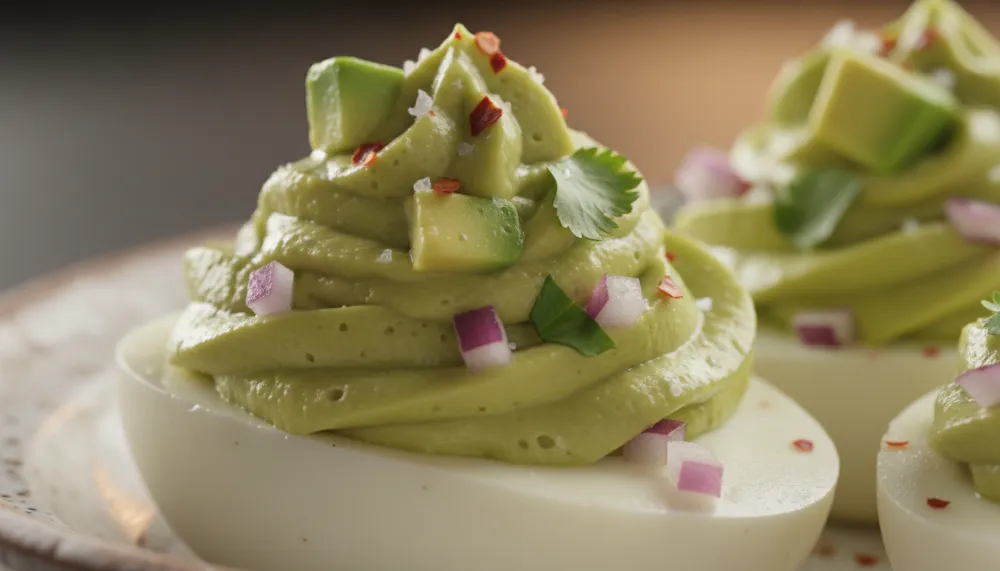
- 5 Pipe the mixture back into the egg whites and top with crispy beef bacon crumbles.
The Fascinating Culinary History of Avocado Deviled Eggs
To understand the appeal of Avocado Deviled Eggs, one must first look back at the millennia of culinary tradition that brought us here. While many view the stuffed egg as a mid-century American picnic staple, its roots extend deep into the history of Western civilization. The concept of the deviled egg dates back to Ancient Rome, where boiled eggs were seasoned with spicy sauces and served as the premier course, known as gustatio. These ancient Romans, known for their lavish banquets, understood that the egg was the perfect vessel for bold, punchy flavors.
By the 13th century, the technique had migrated to the Andalusian region of Spain. Early recipes from this era describe a paste made of cilantro, onion juice, pepper, and murri, a fermented sauce, which was used to stuff hard-boiled egg whites. It is here that we see the first inklings of what we now call Avocado Deviled Eggs, as the Mediterranean and North African influence introduced vibrant herbs and complex spices to the simple egg. The term “deviled” itself did not emerge until 18th-century Great Britain, used to describe any food prepared with high heat or pungent seasonings like mustard and cayenne. This linguistic evolution mirrored a growing public appetite for ingredients that packed a punch, eventually leading to the inclusion of spicy peppers and bold acids.
The modern avocado variation gained immense prominence in the late 20th century, particularly in California. This “California Style” variation was a direct result of the fusion of traditional American picnic fare and the bountiful avocado harvests of the region. As the culinary world began to shift toward plant-based fats and nutrient-dense alternatives to industrial mayonnaise, the avocado became the natural successor to the traditional creamy base. Today, Avocado Deviled Eggs represent a bridge between the ancient world and modern health consciousness, merging the protein of the egg with the superfood benefits of the avocado.
The Nutritional Science of the Avocado-Egg Partnership
When we analyze Avocado Deviled Eggs from a nutritional perspective, the results are staggering. Professional nutritionists often cite this dish as a masterclass in bioavailable nutrition. A standard deviled egg relies on mayonnaise, which is often high in processed seed oils and added sugars. By substituting ripe avocado, you are introducing monounsaturated fats, specifically oleic acid, which is linked to reduced inflammation and heart health.
On average, a serving of Avocado Deviled Eggs (two filled halves) provides between 110 and 130 calories. Within that profile, you receive 5 to 7 grams of high-quality protein and 8 to 10 grams of fat, with very little saturated fat. More importantly, avocados provide a significant boost in fiber, approximately 2 to 3 grams per serving, a nutrient entirely absent from traditional deviled eggs. This combination of protein, healthy fats, and fiber creates a satiating snack that stabilizes blood sugar levels and provides sustained energy. Furthermore, the presence of healthy fats in the avocado actually helps the body absorb the fat-soluble vitamins found in the egg yolk, such as Vitamin A, D, and E, making this a synergistic food pairing.
Professional Flavor Variations: Elevating the Classic
In professional kitchens, the goal is always to balance texture and flavor. While the base of Avocado Deviled Eggs is inherently creamy, it requires a “counter-point” to truly shine. This is where professional chefs get creative with garnishes and mix-ins, specifically focusing on savory alternatives to traditional ingredients.
The Savory Crunch: Beef and Chicken Alternatives
Since our guidelines strictly prohibit pork, we turn to the rich world of beef and poultry to provide that essential salty crunch. Crispy beef bacon is a fantastic substitute, offering a deep, smoky profile that cuts through the buttery richness of the avocado. When prepared in the **Cosori 9-in-1 TurboBlaze Air Fryer 6 Qt** (https://amzn.to/4hRWmVq), beef bacon reaches a level of crispness that is nearly impossible to achieve in a pan. The air fryer circulates heat evenly, rendering the fat and leaving behind a brittle, savory topping that perfectly complements the soft egg.
Another high-end technique involves using crispy chicken skins. Professional caterers often roast seasoned chicken skins between two parchment sheets and a baking tray until they become glass-like shards of salt and fat. These are then crumbled over the Avocado Deviled Eggs just before serving. This provides a “chicken crackling” effect that is sophisticated and deeply satisfying without violating dietary restrictions.
Umami and Seafood Profiles
For a truly gourmet presentation, consider the Smoked Salmon and Dill variation. A small ribbon of cold-smoked salmon placed atop the green avocado filling creates a stunning visual contrast. To elevate this further, add a few fried capers. Capers, when patted dry and flash-fried, open up like small flowers and provide a salty, acidic pop. This variation mimics the flavors of a high-end brunch bagel but in a low-carb, elegant format.
Technical Mastery: Achieving the Perfect Texture
One of the biggest challenges with Avocado Deviled Eggs is the texture of the filling. If you simply mash the avocado with a fork, you will end up with a chunky, rustic consistency. While this is fine for a home lunch, a professional presentation requires a silky, aerated mousse.
This is where the **Ninja BN751 Professional Plus DUO Blender** (https://amzn.to/3LCDyNR) becomes an essential tool. The 1000W motor and specialized blades can emulsify the egg yolks and avocado into a perfectly smooth paste in seconds. For smaller batches, the **Cuisinart 8 Cup Food Processor** (https://amzn.to/47Nhbg8) is equally effective, especially when you need to finely mince red onions or cilantro to incorporate into the mix without creating large lumps that might clog a piping tip.
To ensure the best visual appeal, always use a piping bag fitted with a large star tip. This allows you to create elegant swirls that hold their shape. If you are preparing these in advance, the acidity of the lime juice is your best friend. Avocado oxidizes, or turns brown, when exposed to oxygen. The citric acid in lime juice slows this enzymatic browning, keeping your eggs a vibrant, appetizing green for several hours.
Advanced Storage and Freshness Tips
Avocado Deviled Eggs are notorious for their short shelf life due to the avocado’s sensitivity to air. To combat this, professional meal preppers rely on high-quality storage solutions. The **Rubbermaid Brilliance Glass Storage Set of 9** (https://amzn.to/4oD0YkY) is ideal for this purpose because the lids are 100% leak-proof and create an airtight seal that significantly slows oxidation.
For even longer storage, the **FoodSaver Vacuum Sealer Machine** (https://amzn.to/4qWgVnS) is a game-changer. While you wouldn’t vacuum seal the finished deviled eggs themselves (as they would be crushed), you can vacuum seal the avocado and egg yolk filling in a bag. By removing all the air, you can store the filling in the refrigerator for up to 48 hours without any loss of color or flavor. When you are ready to serve, simply snip the corner of the bag and pipe the fresh, green filling into the egg whites.
Professional Substitutions for Depth and Acidity
In many gourmet recipes, white wine or vinegar-based reductions are used to add complexity. To maintain the integrity of flavor without using alcohol, chefs utilize a variety of clever substitutions. If a recipe calls for a white wine reduction, substitute a concentrated vegetable or chicken broth mixed with a splash of white distilled vinegar. This mimics the savory depth and acidity required to balance the fat of the egg yolk.
For heat, instead of traditional hot sauce which can sometimes be watery, try using a homemade chili oil or a thick harissa paste made in your Ninja blender. These provide a concentrated spice that doesn’t thin out your filling, ensuring your Avocado Deviled Eggs remain sturdy and beautiful on the serving platter.
Frequently Asked Questions
**How do I prevent my Avocado Deviled Eggs from turning brown?**
The key is acidity and air exclusion. Use ample fresh lime juice in the mixture and press plastic wrap directly onto the surface of the filling if you are not piping it immediately. The plastic wrap acts as a physical barrier against oxygen.
**Can I make these eggs 24 hours in advance?**
You can boil the eggs and prepare the filling in advance, but it is best to store them separately. Keep the egg whites in a sealed container and the filling in a vacuum-sealed bag or an airtight Rubbermaid container. Pipe them just before your guests arrive for the best texture and color.
**What are the best avocados to use?**
Hass avocados are the gold standard for this recipe due to their high oil content and creamy texture. Ensure they are ripe but not overripe, look for fruit that yields slightly to gentle pressure but isn’t mushy.