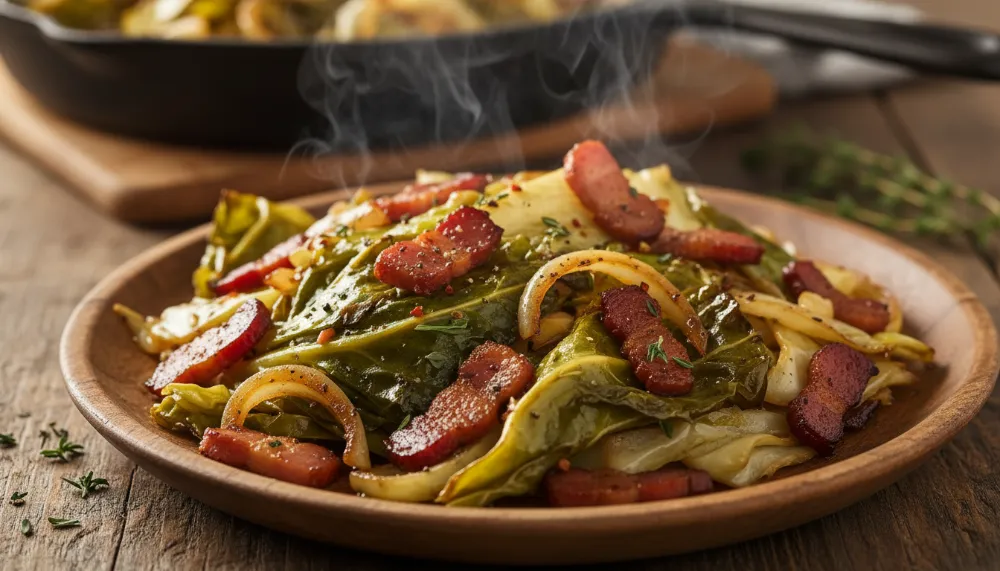

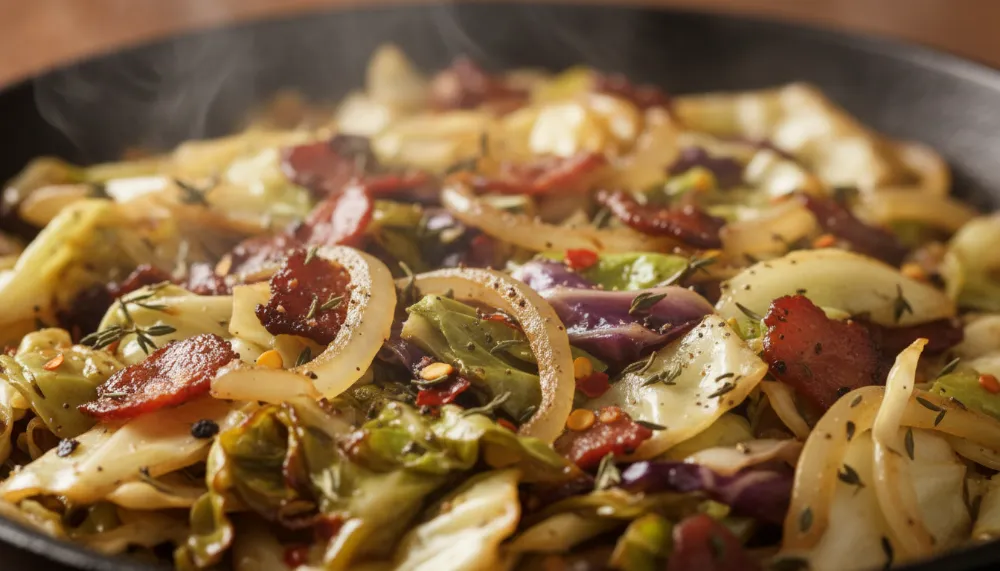
Southern Fried Cabbage is the ultimate comfort food, blending tender leaves with a deep, smoky richness that defines soulful cooking. This version uses savory beef bacon and aromatic onions to create a side dish that outshines the main course.
Southern Fried Cabbage with Beef Bacon
Ingredients
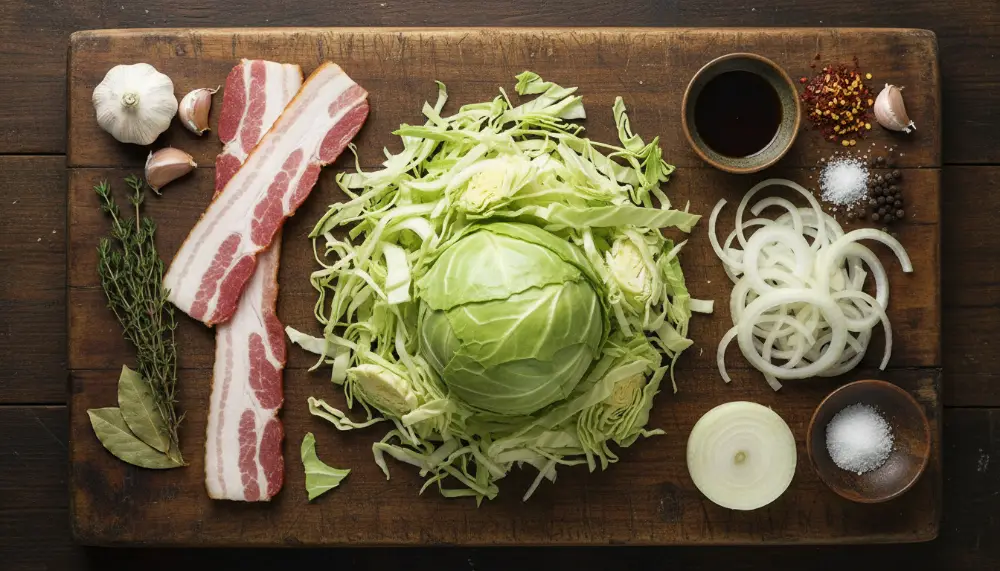
- 1 Large Head of Green Cabbage (approx. 3 lbs)
- 8 Strips of Thick-Cut Beef Bacon, diced
- 1 Large Yellow Onion, diced
- 1 Red Bell Pepper, diced
- 4 Cloves Garlic, minced
- 1/4 Cup Beef Broth
- 2 Tablespoons Apple Cider Vinegar
- 1 Tablespoon Smoked Paprika
- 1/2 Teaspoon Red Pepper Flakes
- 2 Tablespoons Butter
Instructions
- 1 In a large skillet or Dutch oven, cook the diced beef bacon over medium heat until crispy. Remove the bacon with a slotted spoon and set aside, leaving the rendered fat in the pan.
- 2 Add the butter to the beef bacon fat. Once melted, stir in the onions and red bell peppers. Sauté for 5-7 minutes until softened and slightly caramelized.
- 3 Stir in the minced garlic, smoked paprika, and red pepper flakes. Cook for 60 seconds until fragrant.
- 4 Add the shredded cabbage in batches, tossing to coat in the seasoned oil. Pour in the beef broth and apple cider vinegar.
- 5 Cook uncovered over medium-high heat for 15-20 minutes, stirring occasionally, until the cabbage is tender but still has a slight bite and the edges begin to brown. Fold the crispy bacon back in before serving.
The Historical Journey of Southern Fried Cabbage
The origins of Southern Fried Cabbage are deeply rooted in the culinary history of the American South and African American soul food traditions. This dish is much more than a simple vegetable side, it represents a history of resilience, cultural fusion, and culinary ingenuity. To understand its place on the table, one must look toward the West African influence on American cooking. The technique of sautéing or stewing leafy greens with small amounts of smoked meat and fat mirrors West African cooking traditions. Enslaved Africans adapted these methods to the crops available in the Americas, such as cabbage, which was readily accessible and hardy.
During the era of the American slave trade, cabbage was a primary, inexpensive food source because it was easy to grow in various climates and soils. Enslaved cooks transformed this humble vegetable into a flavorful staple by frying it in rendered fats and seasoning it with available smoked meats. This process not only added flavor but also provided much-needed calories and nutrients for those performing back-breaking labor. Over time, the dish also gained prominence in Appalachian country cooking, where it was a budget-friendly winter staple often paired with cornbread. In the mountainous regions, cabbage was often stored in root cellars, making it one of the few fresh vegetables available throughout the coldest months.
Today, Southern Fried Cabbage has evolved from a simple survival food into a celebrated side dish found at Sunday dinners, holiday gatherings, and family reunions across the United States. It remains a testament to the ability of Southern cooks to take the most modest ingredients and elevate them into something extraordinary through the layering of smoke, salt, and heat.
Why This Recipe Works: Mastering the Smoky Profile Without Pork
The hallmark of a great Southern Fried Cabbage is its smoky depth. While many traditional recipes rely on pork products like salt pork or ham hocks, this recipe proves that you can achieve a superior flavor profile using beef bacon and carefully selected aromatics. The use of beef bacon provides a rich, savory base of rendered fat that carries the smokiness throughout the entire dish. Unlike pork bacon, beef bacon has a slightly more intense, earthy flavor that pairs exceptionally well with the natural sweetness of sautéed cabbage.
Another key to this recipe’s success is the exclusion of alcohol. Many modern variations use white wine for deglazing, but we have substituted this with a combination of high-quality beef broth and apple cider vinegar. The beef broth adds umami and moisture, while the apple cider vinegar provides a necessary acidic brightness that cuts through the richness of the rendered fats. This balance of flavors ensures that the dish feels hearty without being overly heavy. To maximize the efficiency of your meal prep, we recommend using the Cuisinart 8 Cup Food Processor for fast chopping and slicing of the cabbage and onions, ensuring uniform pieces that cook evenly.
The Essential Equipment for Perfect Cabbage
To achieve that signature tender-yet-crisp texture, the tools you use matter. A heavy-bottomed skillet, such as a cast iron pan or a high-quality stainless steel Dutch oven, is essential for even heat distribution. If you are preparing a large batch for meal prep, the Rubbermaid Brilliance Glass Storage Set is perfect for keeping the leftovers fresh and leak-proof. Additionally, if you find yourself with too much cabbage, the FoodSaver Vacuum Sealer Machine is an excellent way to preserve the vegetable’s integrity in the freezer for future use.
Nutritional Profile: A Powerhouse of Vitamins
While often categorized as a heavy comfort food, cabbage is actually a nutritional powerhouse. A one-cup serving of Southern Fried Cabbage prepared with beef bacon remains relatively low in calories while providing a wealth of essential nutrients. Cabbage is remarkably high in Vitamin C, providing roughly 60–70% of the daily value, which acts as a powerful antioxidant to support the immune system. Furthermore, it is a significant source of Vitamin K, which is essential for bone health and proper blood clotting.
The dietary fiber content in this dish (3g to 5g per serving) is excellent for digestive health. By using beef bacon or smoked poultry instead of higher-fat pork products, you can maintain a leaner profile while still enjoying the traditional flavors. For those looking to add a different texture to their meal, consider using the Cosori 9-in-1 TurboBlaze Air Fryer to roast complementary vegetables or even crispy chickpeas to serve alongside your cabbage for a complete, nutrient-dense meal.
Professional Flavor Variations
Every Southern cook has their own secret to the perfect cabbage. Here are three professional variations to help you customize the dish to your preference while maintaining the strictly no-pork, no-alcohol guidelines.
1. The Smoky Beef Variation
For the ultimate meat-lover’s version, use both beef bacon and smoked beef sausage. The sausage should be sliced into rounds and browned alongside the bacon. To enhance the umami depth, add a teaspoon of Worcestershire sauce during the sautéing process. This variation creates a dish that is hearty enough to serve as a main course when paired with rice or potatoes.
2. The Smoked Poultry Variation
If you prefer a lighter profile, utilize smoked turkey tails or necks. These parts are highly flavorful and provide the traditional soul food smokiness. You can simmer the turkey pieces in chicken broth first to create a concentrated pot liquor before adding the cabbage. For an extra kick, incorporate fresh thyme and crushed red pepper flakes to create a bright, herbal heat that perfectly balances the smoked turkey.
3. The Vegetarian Smoked Variation
You can achieve a professional-grade smoky cabbage without any meat at all. Use a combination of refined butter and extra virgin olive oil as your base fat. The smoky element is introduced through high-quality smoked paprika and a few drops of liquid smoke. To add texture and an earthy umami flavor, sauté sliced portobello mushrooms until they are deeply browned and slightly crispy before adding the cabbage. If you need to whip up a quick sauce to drizzle over this vegetarian version, the Ninja BN751 Professional Plus DUO Blender is perfect for emulsifying tahini or harissa-based dressings.
The Uncovered Technique: Science of Sautéing
One of the most common mistakes when making Southern Fried Cabbage is covering the pan with a lid. While covering the pan speeds up the softening process, it traps steam, effectively boiling or steaming the cabbage rather than frying it. To achieve the best results, cook the cabbage uncovered over medium-high heat. This allows moisture to evaporate rapidly, which is the key to the Maillard reaction, the chemical process that creates caramelization and those delicious browned edges. This technique ensures your cabbage stays vibrant and has a slight crunch, preventing it from becoming mushy or gray.