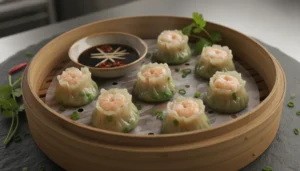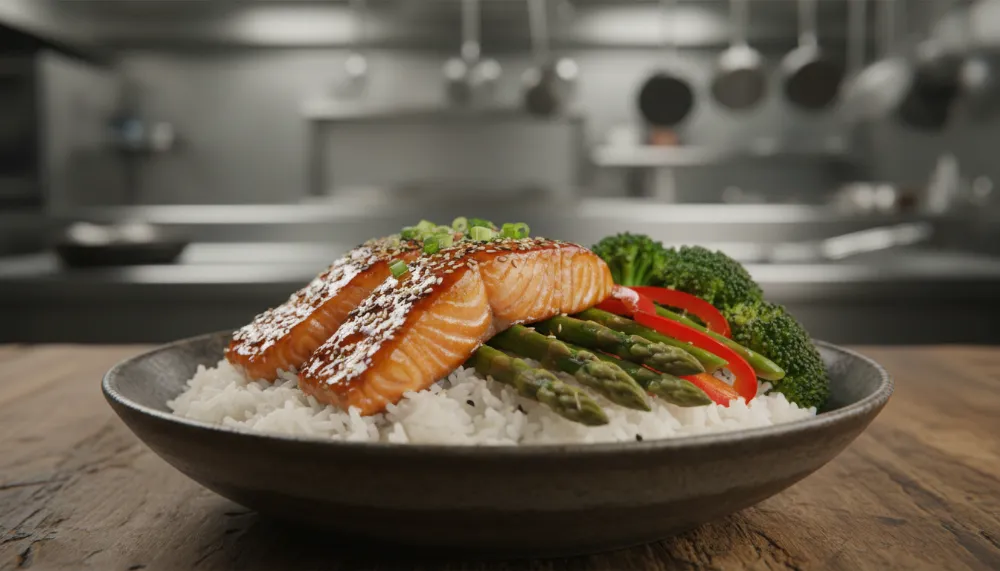

Experience the perfect harmony of sweet, savory, and umami with this definitive Teriyaki Salmon Bowl, a nutrient-dense masterpiece that brings high-end restaurant quality to your home kitchen. This vibrant dish pairs succulent, glazed salmon with a crisp array of vegetables and fluffy rice for a truly balanced meal.
Chef’s Signature Teriyaki Salmon Bowl
Ingredients
- 1 1 lb Fresh Atlantic Salmon Fillet, cubed
- 2 1/2 cup Soy Sauce (low sodium)
- 3 1/3 cup Pineapple Juice (natural sweetener)
- 4 2 tbsp Brown Sugar or Honey
- 5 1 tbsp Fresh Ginger, grated
- 6 2 cloves Garlic, minced
- 7 1 tbsp Rice Vinegar
- 8 2 cups Cooked Jasmine Rice
- 9 1 cup Steamed Edamame & Sliced Cucumber
Instructions
- 1 In a small saucepan, whisk soy sauce, pineapple juice, brown sugar, ginger, garlic, and vinegar. Simmer until thickened to a glaze.
- 2 Pat salmon dry and toss with 1/3 of the glaze. Air fry at 400°F (200°C) for 8-10 minutes or until caramelized.
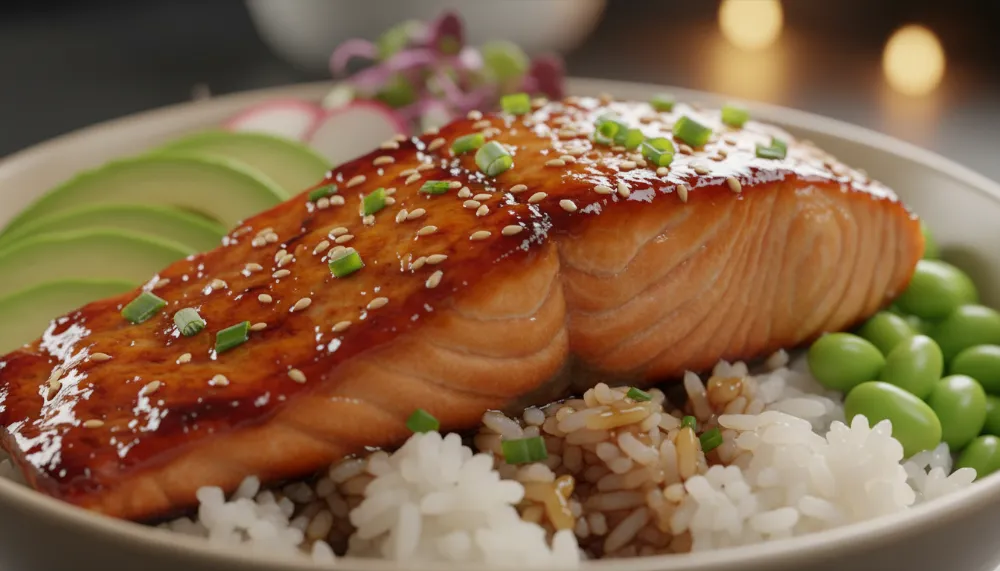
- 3 Arrange rice in bowls, top with cooked salmon, edamame, cucumber, and avocado.
- 4 Drizzle with remaining glaze and garnish with sesame seeds and green onions.
The Cultural and Historical Significance of Teriyaki
To truly appreciate the Teriyaki Salmon Bowl, one must understand the centuries of tradition that inform its flavor profile. The term “Teriyaki” is fundamentally a description of a cooking technique rather than just a sauce. Originating in 17th-century Japan during the Edo period, the method involves two distinct elements: teri, which refers to the brilliant luster or shine created by the sugar content in the glaze, and yaki, which simply means to grill or broil. Historically, this method was reserved for fish like yellowtail or eel, which were abundant in the waters surrounding Japan. The glaze was a simple yet effective mixture of soy sauce and sugar, reduced over hot coals to create a protective, flavorful coating that preserved the moisture of the fish.
The transition from traditional Japanese grilling to the contemporary Teriyaki Salmon Bowl we see today was heavily influenced by the Japanese diaspora, particularly in Hawaii during the 1960s. Japanese immigrants adapted their ancestral recipes to the local bounty, introducing pineapple juice as a natural tenderizer and sweetener. This tropical modification provided a higher sugar content and a broader acidity profile, which eventually became the standard for the “Western-style” teriyaki sauce that dominates the global market. Furthermore, the 1970s saw the rise of the “teriyaki shop” in cities like Seattle, where the concept of the “bowl” was born, serving glazed proteins over generous portions of rice to cater to busy urban workers. Today, the Teriyaki Salmon Bowl stands as a testament to this cross-cultural evolution, blending ancient Japanese techniques with American convenience and tropical ingredients.
The Anatomy of a Perfect Teriyaki Salmon Bowl
Creating a high-authority Teriyaki Salmon Bowl requires more than just mixing ingredients, it requires a structural understanding of culinary balance. A professional-grade bowl is built on four pillars: the grain base, the high-quality protein, the refined glaze, and the textural accompaniments.
1. The Foundation: Selecting Your Grains
While jasmine rice is the traditional choice due to its floral aroma and soft texture, many professional chefs are moving toward more complex grains to add nutritional value and visual interest. Forbidden Black Rice, for instance, offers a nutty flavor and a striking deep purple hue that contrasts beautifully with the pink of the salmon. Alternatively, a Brown Rice and Quinoa blend provides a significant boost in fiber and protein, making the Teriyaki Salmon Bowl a sustained energy source throughout the day. For those seeking a textural masterpiece, the “Socarrat” method, involving pan-frying day-old rice until a golden, crispy crust forms on the bottom, adds an incredible crunch that elevates the entire dining experience.
2. The Star: Salmon Sourcing and Preparation
The quality of your Teriyaki Salmon Bowl is inextricably linked to the quality of the fish. Atlantic salmon is prized for its high fat content, which allows it to remain succulent even under the high heat required for caramelization. When prepping, it is crucial to pat the fish completely dry with paper towels. Any moisture on the surface will create steam rather than a sear, preventing the glaze from adhering properly. Using a high-performance tool like the Cosori 9-in-1 TurboBlaze Air Fryer 6 Qt (available here: https://amzn.to/4hRWmVq) is a game-changer for this dish. Its rapid air circulation mimics the intensity of a professional broiler, roasting the salmon and vegetables perfectly while ensuring a large family-sized capacity for meal prep enthusiasts.

Mastering the Glaze: Professional Alcohol-Free Techniques
In traditional Japanese cooking, sake and mirin are used to provide acidity and depth. However, a modern, professional Teriyaki Salmon Bowl can achieve even greater complexity without the use of alcohol. By substituting these ingredients with pineapple juice and distilled rice vinegar, you introduce a vibrant fruitiness that cuts through the richness of the salmon’s healthy fats.
The science of a perfect glaze lies in the reduction process. As the soy sauce and pineapple juice simmer, the water evaporates, concentrating the sugars and amino acids. This leads to the Maillard reaction, a chemical reaction between amino acids and reducing sugars that gives browned food its distinctive, savory flavor. For a smooth, restaurant-quality consistency, I recommend using the Ninja BN751 Professional Plus DUO Blender (https://amzn.to/3LCDyNR). Its 1000W motor is perfect for emulsifying the ginger and garlic into the liquid components, ensuring a silk-like texture that coats every inch of the salmon without leaving chunky residue.
Elevated Toppings and Textural Contrast
A common mistake in home cooking is a lack of texture. A gourmet Teriyaki Salmon Bowl should offer a “symphony of crunches.” Incorporating pickled cucumber and shaved carrots provides an acidic brightness that cleanses the palate between bites of the rich fish. To achieve these paper-thin slices quickly, the Cuisinart 8 Cup Food Processor (https://amzn.to/47Nhbg8) is a meal prep essential, allowing for fast chopping and slicing of all your bowl accompaniments in seconds.
Other professional additions include:
- Charred Baby Bok Choy: Searing the greens provides a smoky element.
- Watermelon Radish: Adds a peppery bite and a vibrant pop of color.
- Wasabi-Infused Mayo: For a creamy heat that doesn’t overwhelm the delicate fish.
Meal Prep and Long-Term Storage
The Teriyaki Salmon Bowl is a prime candidate for meal prepping. Because the ingredients are distinct, you can prepare the rice, glaze, and vegetables in bulk at the start of the week. To maintain the integrity of the ingredients, proper storage is non-negotiable. The Rubbermaid Brilliance Glass Storage Set of 9 (https://amzn.to/4oD0YkY) is perfect for this task. These leak-proof, stackable containers prevent the sauce from seeping into the rice prematurely, keeping everything fresh and crisp.
If you find yourself purchasing salmon in bulk, the FoodSaver Vacuum Sealer Machine (https://amzn.to/4qWgVnS) is an invaluable investment. It keeps raw salmon fresh significantly longer and prevents the dreaded freezer burn, ensuring that every Teriyaki Salmon Bowl you make tastes like it was sourced from the market that morning.
Nutritional Breakdown: The Power of Omega-3s
From a nutritional standpoint, the Teriyaki Salmon Bowl is a powerhouse. A standard serving offers approximately 35g of high-quality protein, essential for muscle repair and metabolic health. More importantly, salmon is one of the best sources of Omega-3 fatty acids (EPA and DHA), which are critical for cardiovascular health and cognitive function. By pairing this with fiber-rich edamame and complex carbohydrates from the rice base, you create a meal that has a low glycemic index, providing sustained energy without the mid-afternoon crash associated with processed fast food.
Frequently Asked Questions
Can I use frozen salmon?
Yes, but ensure it is completely thawed and dried. Frozen salmon often retains more surface moisture, so a thorough pat-down with a kitchen towel is even more critical to achieving a good sear.
What is the best way to reheat a Teriyaki Salmon Bowl?
To prevent the salmon from becoming rubbery, reheat it separately from the rice. Use a low power setting on the microwave or, better yet, place the salmon in your air fryer for 2-3 minutes at 350°F to refresh the glaze and the texture.
Is there a replacement for soy sauce?
If you are monitoring sodium intake, coconut aminos are an excellent alternative. They are naturally sweeter and have a lower salt content, though you may need to reduce the amount of added brown sugar in the glaze recipe to compensate.