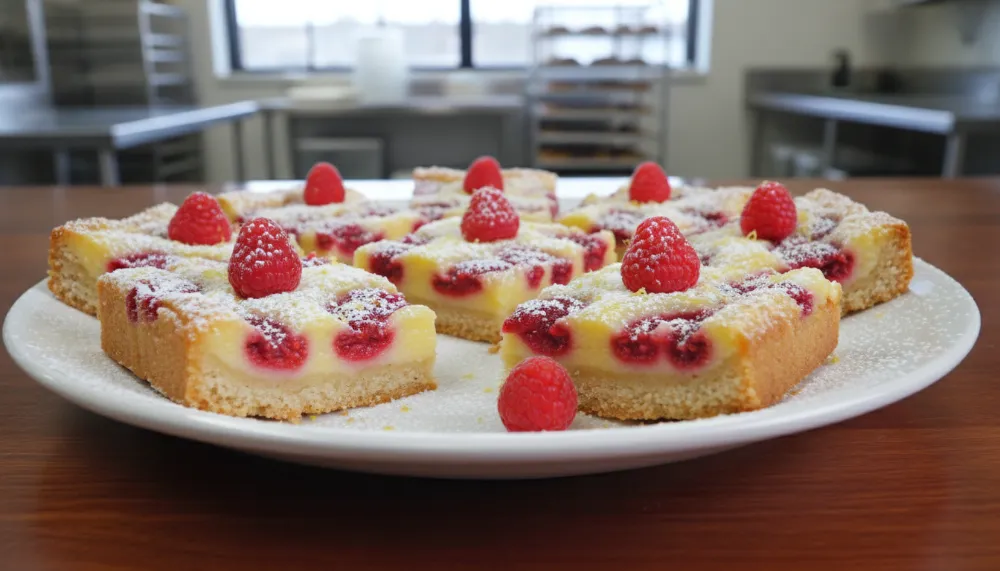

Experience the perfect harmony of sun-ripened berries and zesty citrus with these Raspberry Lemon Bars, a sophisticated treat that balances a buttery shortbread crunch with a vibrant, tangy filling. These bakery-quality bars are designed to impress, offering a visually stunning marble effect and a flavor profile that is both refreshing and deeply satisfying.
Raspberry Lemon Bars
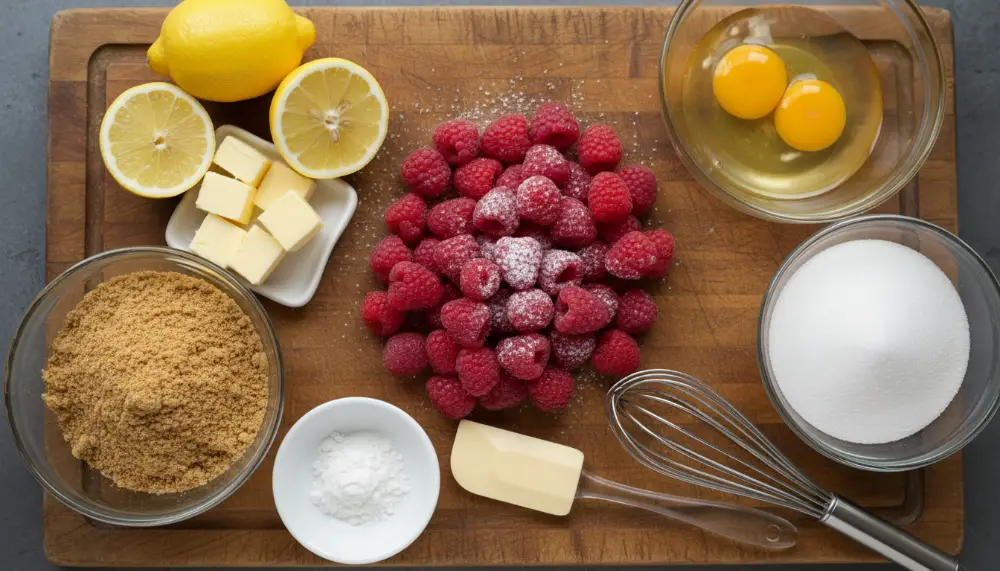
Ingredients
- CRUST:
- • 2 cups All-Purpose Flour
- • 1/2 cup Powdered Sugar
- • 1 cup Unsalted Butter (Cold, Cubed)
- • 1/4 tsp Sea Salt
- FILLING:
- • 6 Large Eggs
- • 2 1/2 cups Granulated Sugar
- • 1 cup Fresh Lemon Juice
- • 2 tbsp Lemon Zest
- • 1/2 cup All-Purpose Flour
- • 1/4 cup Raspberry Puree (Seeds removed)
- • 1 tsp Vanilla Bean Powder (Alcohol-Free)
Instructions
- Preheat oven to 350°F (175°C). Line a 9×13 inch pan with parchment paper.
- Pulse flour, powdered sugar, salt, and butter in a food processor until it looks like coarse crumbs. Press into the pan.
- Bake crust for 20 minutes or until lightly golden.
- Whisk eggs, granulated sugar, lemon juice, zest, vanilla bean powder, and flour until smooth.
- Pour lemon mixture over warm crust. Drop small spoonfuls of raspberry puree on top and swirl with a knife.
- Bake for 30-35 minutes until the center is set. Cool completely before chilling for 4 hours.
A Journey Through the History of the Citrus Square
To understand the sheer brilliance of Raspberry Lemon Bars, one must look at the lineage of the classic American dessert square. The first iteration of a lemon bar appeared in the Chicago Daily Tribune in 1962, credited to home baker Eleanore Mickelson. While the lemon square is a relatively young American invention, its components are centuries old. The buttery shortbread base is a direct descendant of 12th-century Scottish shortbread, a biscuit traditionally baked for holidays. The lemon curd filling, however, finds its roots in 19th-century England, where it was originally served as a spread for afternoon tea. The modern Raspberry Lemon Bar takes these historical pillars and elevates them by introducing the floral acidity of red raspberries, creating a multi-dimensional flavor profile that transcends the simple sweetness of the original 1960s recipe.
Adding raspberries to the mix wasn’t just a visual choice, it was a culinary revolution in professional pastry kitchens. During the late 1990s, pastry chefs began experimenting with “marbleized” fruit bars to catch the eye of consumers in boutique bakeries. By combining the high acidity of the lemon with the anthocyanin-rich sweetness of the raspberry, they created a treat that felt more premium and biologically complex. Today, these bars are a staple in high-end cafés, prized for their ability to look like a work of art while maintaining the comforting texture of a home-cooked dessert.
The Essential Equipment for Perfection
Creating the perfect Raspberry Lemon Bars requires more than just a whisk and a bowl. Professional results depend on the quality of your emulsion and the precision of your crust. To achieve a perfectly smooth raspberry puree without the grit of seeds, high-performance blending is essential.
- Ninja BN751 Professional Plus DUO Blender: https://amzn.to/3LCDyNR (Why Perfect: The 1000W motor ensures your raspberry puree is silky smooth, which is critical for that perfect swirl without bulky seeds).
- Cuisinart 8 Cup Food Processor: https://amzn.to/47Nhbg8 (Why Perfect: This is the gold standard for creating a flaky, shortbread crust. It cuts the cold butter into the flour perfectly, preventing the fats from melting before they hit the oven).
- Cosori 9-in-1 TurboBlaze Air Fryer 6 Qt: https://amzn.to/4hRWmVq (Why Perfect: While not for baking the bars, this is an essential kitchen companion for roasting nuts if you choose the almond variation mentioned below).
The Chemistry of a Flawless Shortbread Crust
The crust of Raspberry Lemon Bars is the structural foundation of the entire dessert. Unlike a pie crust, which relies on long gluten strands for flakiness, a shortbread crust is intentionally “short,” meaning it has a high fat-to-flour ratio that inhibits gluten development. When you pulse cold butter into flour using your Cuisinart Food Processor, you are coating individual flour particles in fat. This creates a melt-in-your-mouth texture that can withstand the weight of the heavy custard filling without becoming soggy.
Temperature control is paramount. If your butter is too warm, it will blend too thoroughly with the sugar and flour, resulting in a tough, greasy base rather than a crisp, sandy one. Professional bakers often chill their prepared pan for ten minutes before sliding it into the oven to ensure the butter stays solid until the very moment of baking. This thermal shock is what creates the tiny air pockets that give the bars their delicate crunch. Furthermore, pre-baking the crust is a non-negotiable step. Without this “blind bake,” the liquid lemon and raspberry filling would permeate the raw dough, leading to the dreaded “soggy bottom” that ruins the textural contrast of the dish.
Mastering the Tangy Custard Filling
The filling of Raspberry Lemon Bars is a delicate emulsion of eggs, sugar, and acid. The chemistry here is fascinating, as the lemon juice (citric acid) actually helps to denature the egg proteins, working in tandem with the heat of the oven to set the custard. However, the ratio of eggs to flour in the filling determines whether your bars will be fudgy or more like a stiff jelly. Our recipe uses a slightly higher egg count to ensure a rich, creamy mouthfeel that contrasts beautifully with the tartness of the citrus.
When selecting your lemons, look for fruit that feels heavy for its size, which indicates a high juice content. The zest contains the essential oils that provide the “bright” top notes of the flavor, while the juice provides the “deep” acidity. Always zest your lemons before juicing them. If you attempt to zest a juiced lemon, you will find it nearly impossible to get a clean grate. To take the flavor to a professional level, we substitute standard vanilla extract with Vanilla Bean Powder or alcohol-free paste. This maintains the integrity of the flavor without introducing the chemical aftertaste that can sometimes occur with alcohol-based products in delicate fruit bakes.
The Art of the Raspberry Swirl
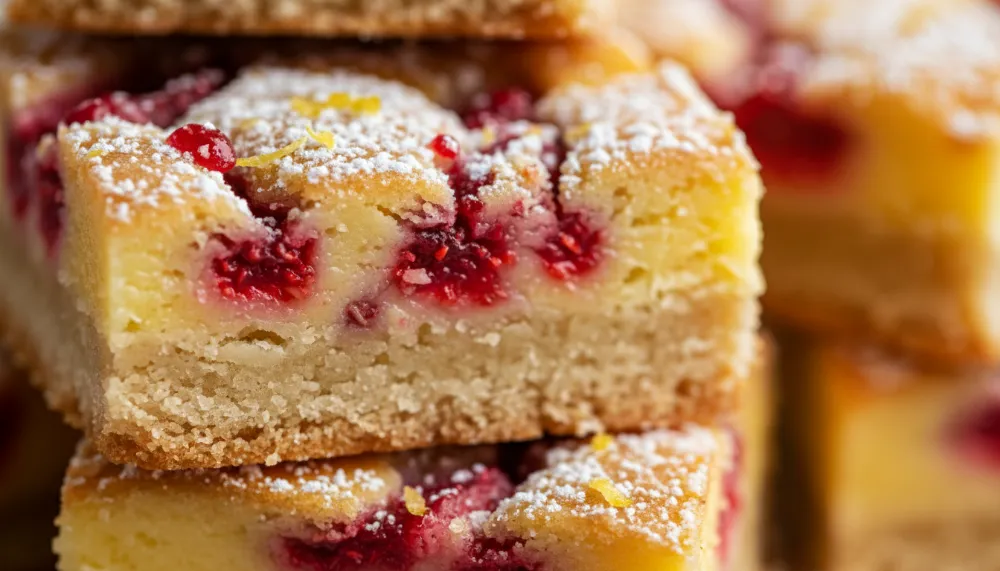
The visual hallmark of premium Raspberry Lemon Bars is the vivid red swirl. To achieve this, you must treat the raspberry component as its own separate entity. Taking fresh or frozen raspberries and processing them in your Ninja Blender creates a vibrant liquid. However, you must pass this liquid through a fine-mesh sieve. Raspberry seeds are remarkably hard and can ruin the silky experience of the custard filling.
Once you have your seedless puree, the swirling technique is key. Do not simply pour the raspberry over the lemon. Instead, use a teaspoon to drop dots of the puree across the surface of the unbaked lemon filling. Then, using a thin knife or a wooden skewer, drag the tip through the dots in a figure-eight motion. Less is more here, over-swirling will cause the colors to muddy together, turning your beautiful bars a dull pink rather than a sharp yellow and red marble.
Professional Variations and Flavor Pairings
While the classic Raspberry Lemon Bar is exceptional, professional chefs often look for ways to add complexity. One popular variation involves the base. By replacing half a cup of the all-purpose flour in the crust with finely ground toasted almonds, you introduce a nutty, earthy depth that pairs perfectly with the floral notes of the raspberry. This is often referred to as a “Linzer style” bar, paying homage to the famous Austrian torte.
The Creamy Condensed Milk Variation
For those who prefer a denser, almost fudge-like filling, you can substitute the sugar and some of the eggs with sweetened condensed milk. This version is less tart and more decadent, reminiscent of a key lime pie texture. When using this method, the raspberry swirl becomes even more important as the acidity of the berries is needed to cut through the richness of the milk.
Floral Infusions
If you want to create a truly “signature” dessert, consider infusing your granulated sugar with culinary lavender or thyme. Simply rub the herbs into the sugar and let it sit for an hour before straining and using the sugar in the recipe. The subtle herbal notes elevate the Raspberry Lemon Bars from a simple snack to a high-end restaurant-style dessert.
Nutritional Insight and Ingredient Sourcing
Raspberry Lemon Bars are a treat that offers more than just calories. The fresh lemon juice provides a significant dose of Vitamin C, while the raspberries are packed with antioxidants known as anthocyanins, which have been linked to heart health. On average, a standard professional-sized bar contains approximately 250 to 275 calories. While they are a dessert, the use of fresh fruit and high-quality fats like grass-fed butter ensures you are consuming real, whole ingredients. Our recipe strictly avoids any pork-derived stabilizers or alcohol-based flavorings, making it a clean choice for diverse households.
Storage, Freezing, and Meal Prep
Because of the high moisture content in the lemon curd, Raspberry Lemon Bars must be handled carefully to maintain their texture. They should always be stored in the refrigerator, as the egg-based custard can become unstable at room temperature. For the best results, use a high-quality storage solution.
- Rubbermaid Brilliance Glass Storage Set: https://amzn.to/4oD0YkY (Why Perfect: These are leak-proof and airtight, preventing the bars from absorbing other smells in the fridge, like onions or garlic).
- FoodSaver Vacuum Sealer Machine: https://amzn.to/4qWgVnS (Why Perfect: If you plan on freezing a large batch, vacuum sealing prevents freezer burn and keeps the shortbread crust crisp for up to three months).
To freeze, first chill the bars completely and cut them into squares. Place them on a baking sheet and freeze individually for one hour. Once firm, you can stack them with parchment paper in between. This prevents them from sticking together and allows you to pull out a single bar whenever a craving strikes.
Troubleshooting Common Baking Issues
Even seasoned bakers can run into issues with citrus bars. If your filling has a layer of white bubbles on top, don’t worry, this is usually just air that was whipped into the eggs. To prevent this, whisk your filling gently rather than vigorously, or simply dust the final product with a generous coating of powdered sugar to hide the bubbles. If your crust is too hard to cut, you likely overworked the dough or didn’t use enough butter. If the filling is runny, it likely needed another five minutes in the oven. The bars will also firm up significantly as they chill, so never judge the consistency while they are still warm.