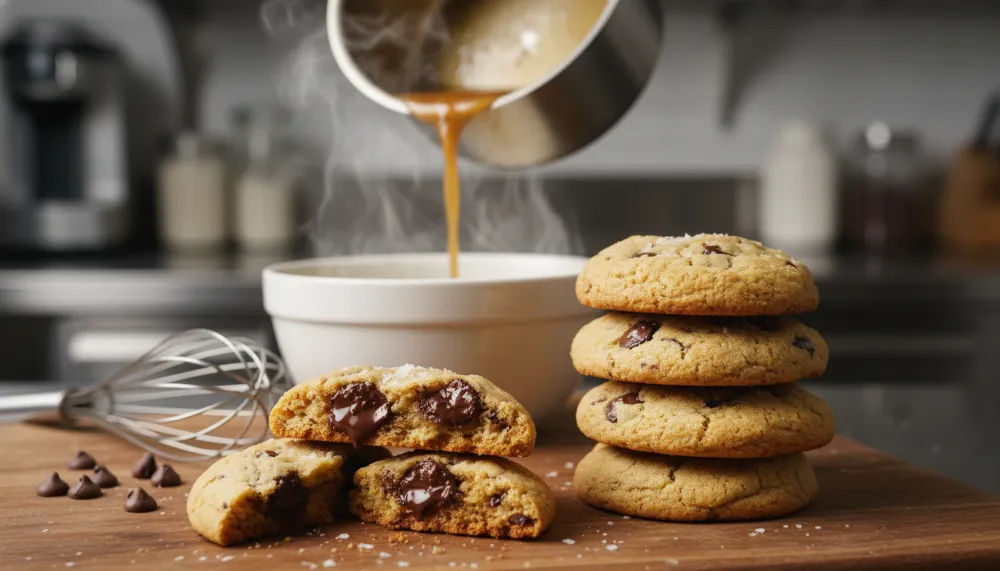

These Brown Butter Chocolate Chip Cookies are the ultimate gourmet upgrade to a classic favorite, offering a deep, toffee-like flavor that will change the way you bake forever. One bite of these perfectly chewy, salty, and sweet masterpieces is all it takes to understand why browning your butter is a total culinary game-changer.
Brown Butter Chocolate Chip Cookies
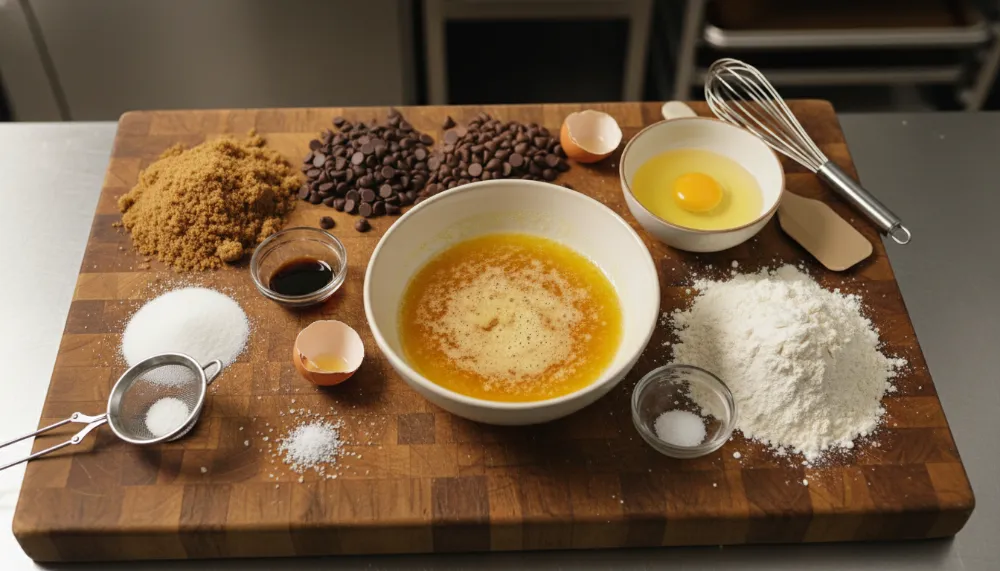
Ingredients
- 1 cup unsalted dairy butter (beef-derived or standard veg)
- 3/4 cup packed dark brown sugar
- 3/4 cup granulated white sugar
- 2 large room-temperature eggs
- 2 tsp non-alcoholic vanilla bean paste or vanilla powder
- 2 1/4 cups all-purpose flour
- 1 tsp baking soda
- 1 tsp sea salt
- 2 cups semi-sweet chocolate chunks or chips
Instructions
- 1 Melt butter in a saucepan over medium heat, stirring constantly until it foams, turns golden brown, and smells nutty. Transfer to a bowl to cool.
- 2 Whisk the cooled brown butter with brown and white sugars until fully combined.
- 3 Add eggs one at a time, followed by the vanilla bean paste, whisking vigorously until the mixture lightens in color.
- 4 Fold in the flour, baking soda, and salt until just combined, then stir in the chocolate chunks.
- 5 Chill the dough in the refrigerator for at least 2 to 24 hours for maximum flavor development.
- 6 Preheat oven to 350°F (175°C). Scoop dough onto lined baking sheets and bake for 10-12 minutes until edges are golden.
The Culinary Magic of Beurre Noisette
Brown butter, known in French culinary circles as beurre noisette, is the secret weapon that elevates these cookies from ordinary to extraordinary. This process involves melting butter until the water content evaporates, allowing the milk solids to toast and caramelize. The result is a liquid gold that smells like toasted hazelnuts and tastes like a complex, savory toffee. When you use brown butter in chocolate chip cookies, you aren’t just adding fat, you are adding layers of depth that harmonize with the molasses in brown sugar and the richness of the cocoa.
To achieve the perfect brown butter, you must be attentive. The transition from golden to burnt happens in a matter of seconds. As the butter foams, listen for the sound to subside, which indicates the water has cooked off. When you see little brown specks at the bottom of the pan, remove it from the heat immediately. These specks are the concentrated flavor bombs that must be scraped into your mixing bowl to ensure every bite of the cookie carries that signature nutty profile.
Historical Evolution: From Toll House to Today
The journey of the chocolate chip cookie began in the 1930s with Ruth Graves Wakefield at the Toll House Inn. Her original recipe was a happy accident, or perhaps a stroke of genius, where she added chopped chocolate to a brown sugar dough expecting it to melt into the cookie. Instead, it stayed in chunks, creating the icon we know today. However, the modern brown butter variant is a gourmet evolution that gained traction in the late 2000s. Professional pastry chefs and food writers began experimenting with the fat structure of the cookie, realizing that melting and browning the butter provided a different texture and flavor profile than the traditional creaming method.
This evolution mirrors the broader culinary trend of taking nostalgic comfort foods and applying high-level French techniques. By incorporating beurre noisette, bakers transformed a childhood staple into a sophisticated dessert capable of standing alongside the finest pastries in a Parisian bakery. Today, the Brown Butter Chocolate Chip Cookie is considered the benchmark of a truly skilled home baker, representing a mastery of both chemistry and flavor balance.
Essential Kitchen Gear for the Perfect Bake
To produce bakery-quality cookies consistently, having the right tools is non-negotiable. Here are our top recommendations for a seamless baking experience:
- Ninja BN751 Professional Plus DUO Blender: https://amzn.to/3LCDyNR (Why Perfect: While usually for liquids, its 1000W motor is perfect for pulverizing granulated sugar into extra-fine textures or making homemade nut flours for gluten-free variations).
- Cosori 9-in-1 TurboBlaze Air Fryer 6 Qt: https://amzn.to/4hRWmVq (Why Perfect: If you only want two or three fresh cookies, the air fryer is incredible for roasting small batches of dough perfectly with rapid heat circulation).
- Cuisinart 8 Cup Food Processor: https://amzn.to/47Nhbg8 (Why Perfect: Use this to quickly chop high-quality chocolate bars into irregular chunks, ensuring you get those beautiful pools of chocolate in every cookie).
- Rubbermaid Brilliance Glass Storage Set of 9: https://amzn.to/4oD0YkY (Why Perfect: Essential for the mandatory 24-hour dough chill, these leak-proof glass containers prevent the dough from absorbing any fridge odors).
- FoodSaver Vacuum Sealer Machine: https://amzn.to/4qWgVnS (Why Perfect: If you make a massive batch of dough, vacuum seal individual portions to prevent freezer burn and keep the ingredients fresh for months).
Understanding the Nutritional Profile
A gourmet brown butter chocolate chip cookie is a rich indulgence. Each 60g cookie typically contains between 250 and 310 calories. The fat content is higher than standard cookies because the browning process removes roughly 15% to 18% of the butter’s water weight, concentrating the lipids. Carbohydrates come from a blend of all-purpose flour and sugars, providing about 30g per serving. While these are a treat, the use of high-quality fats and real vanilla bean paste ensures that every calorie is packed with premium flavor. By avoiding artificial extracts and hydrogenated oils, you are consuming a product built on whole-food foundations, albeit in a decadent dessert form.
The Science of Texture: Why We Chill the Dough
One of the most critical steps in this recipe is the refrigeration period. When you brown butter, you are working with a liquid fat. If you bake the cookies immediately, they will spread excessively and become thin and greasy. By chilling the dough for at least 2 hours, and preferably 24 to 48 hours, you allow two things to happen. First, the fats solidify, ensuring a slower melt in the oven and a thicker, chewier cookie. Second, the flour has time to fully hydrate, and the sugars break down into their component parts, which leads to better browning via the Maillard reaction.
Professional bakers often refer to this as “ripening” the dough. During this phase, the enzymes in the flour begin to break down the starches into simple sugars, which results in a significantly more complex flavor profile. If you skip the chill, you are missing out on the deep caramel notes that define a truly elite Brown Butter Chocolate Chip Cookie.
Professional Flavor Variations
Once you have mastered the base recipe, you can experiment with professional-grade additions that balance the sweetness. One popular variation involves adding a tablespoon of white miso paste. The fermented, salty depth of the miso acts as a foil to the rich chocolate and toasted butter. Similarly, adding tahini (sesame paste) provides an earthy, slightly bitter undertone that makes the cookie feel more adult and sophisticated. For those who enjoy aromatic profiles, steeping a sprig of fresh rosemary in the butter while it browns, then straining it out, adds a subtle herbal finish that pairs beautifully with dark chocolate.
Troubleshooting Your Cookies
If your cookies are spreading too much, it is likely because the butter was still too warm when mixed or the dough wasn’t chilled long enough. Make sure your butter is at least room temperature (solidified but soft) or cool enough that it doesn’t melt the sugars instantly. If your cookies are too cakey, you may have over-measured your flour or over-beaten the eggs, which incorporates too much air. For the perfect “ripple” effect on the edges, try the pan-banging method, where you gently lift and drop the baking sheet against the oven rack every few minutes during the last half of the bake. This collapses the center and creates those iconic crispy, wavy edges.