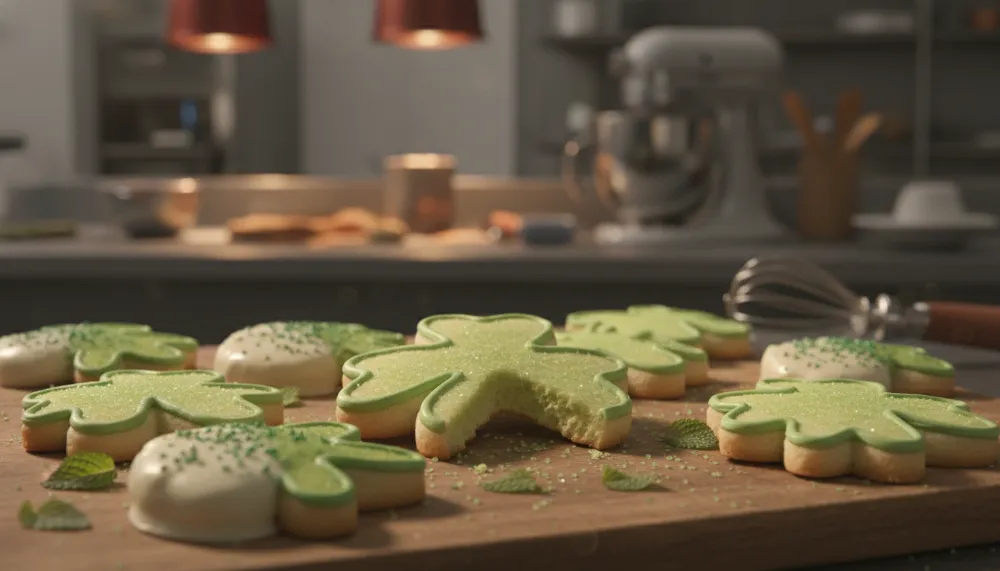

These vibrant green Shamrock Sugar Cookies are the ultimate festive treat, blending a buttery, tender crumb with a crisp, sweet glaze. Perfect for seasonal celebrations, they offer a delicious nod to tradition in every bite.
Signature Shamrock Sugar Cookies
Ingredients
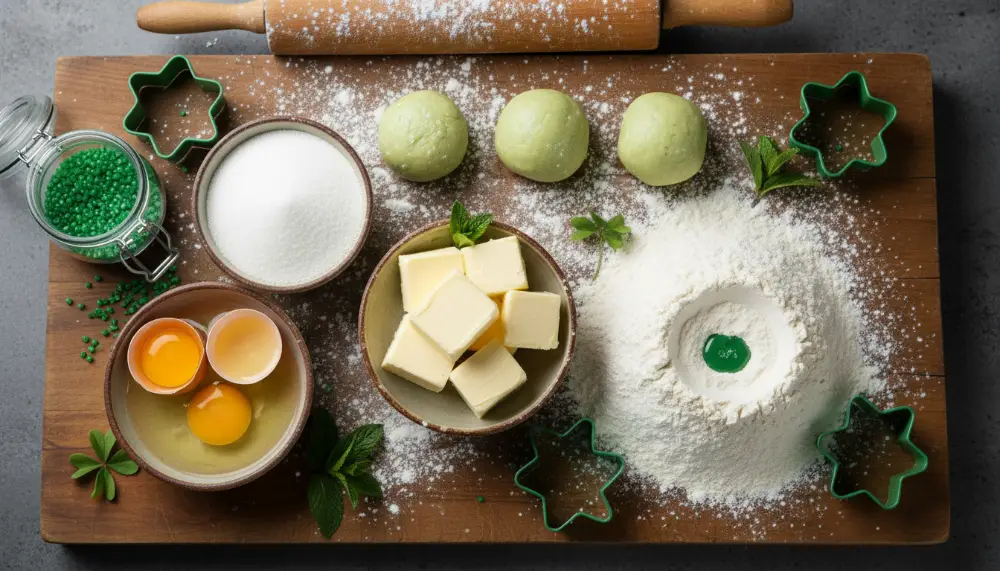
- 1 1 cup unsalted butter, softened to room temperature
- 2 1.5 cups granulated white sugar
- 3 1 large egg, room temperature
- 4 2 tsp non-alcoholic vanilla bean paste or extract
- 5 1/2 tsp non-alcoholic almond extract
- 6 3 cups all-purpose flour, leveled
- 7 1 tsp baking powder
- 8 1/2 tsp fine sea salt
- 9 Green gel food coloring or matcha powder
- 10 2 cups powdered sugar and 3 tbsp milk for glaze
Instructions
- 1 In a large bowl, cream together the softened butter and granulated sugar until light and fluffy, about 3 minutes.
- 2 Beat in the egg, non-alcoholic vanilla, and non-alcoholic almond extract until well combined.
- 3 In a separate bowl, whisk the flour, baking powder, and salt. Gradually add to the wet ingredients until a dough forms.
- 4 Add green food coloring or matcha powder to the dough and mix until the color is even. Wrap and chill for 1 hour.
- 5 Preheat oven to 350°F (175°C). Roll dough to 1/4 inch thickness and cut with a shamrock cutter.
- 6 Bake for 8 to 10 minutes. Cool completely on a wire rack before glazing with the sugar and milk mixture.
The Cultural and Historical Significance of Shamrock Sugar Cookies
Shamrock Sugar Cookies are more than just a sweet treat, they are a festive staple of modern celebrations, blending deep-rooted Irish cultural symbolism with contemporary baking traditions. To understand the popularity of these cookies, one must first look at the history of the shamrock itself. The origin of these cookies is tied to the shamrock, a three-leaved clover that became the national emblem of Ireland. According to tradition dating back to the 5th century, Saint Patrick used the three leaves of the shamrock to explain the concept of the Holy Trinity to the Irish people. By the 17th and 18th centuries, the shamrock evolved into a symbol of Irish pride and nationalism, with citizens pinning clovers to their clothing to celebrate their heritage.
The transition from a botanical symbol to a baked good occurred primarily in the 20th century as holiday-themed “cut-out” cookies became popular in home kitchens and commercial bakeries. While traditional Irish tea cakes and shortbreads have existed for centuries, the specific Shamrock Sugar Cookie, defined by its vibrant green icing and distinct three-lobed shape, is largely a product of the modern seasonal baking movement, particularly within Irish-diaspora communities. Today, these cookies represent a moment of connection to ancestry, even as they have evolved into a fun, family-friendly kitchen activity.
The Science of the Perfect Sugar Cookie
Achieving the perfect texture for Shamrock Sugar Cookies requires a basic understanding of baking chemistry. The foundation of any great cut-out cookie is the balance between structure and tenderness. We use all-purpose flour because it contains the ideal protein content to provide structure so the shamrock shape holds, while the high fat content from the butter ensures the cookie remains soft to the bite.
Creaming the butter and sugar is a critical step. When you beat these two ingredients together, the sugar crystals cut into the solid fat, creating tiny air pockets. These pockets expand in the heat of the oven, providing a light leavening. For those who want to ensure their sugar is perfectly incorporated, using the Ninja BN751 Professional Plus DUO Blender (https://amzn.to/3LCDyNR) to pulse granulated sugar into a finer consistency can result in an even smoother dough. This blender’s 1000W motor makes it versatile for many kitchen tasks beyond just smoothies, including making homemade nut flours for gluten-free variations.
Professional Flavor Variations (Alcohol-Free)
Professional bakers often elevate the standard sugar cookie base with sophisticated, alcohol-free flavor profiles. To maintain strict dietary standards, all extracts mentioned should be non-alcoholic versions or replaced with natural oils and zests.
- Zested Citrus & Cardamom: A bright, aromatic variation incorporating fresh lemon or orange zest directly into the dough, balanced with a pinch of ground cardamom. The citrus provides a refreshing acidity that cuts through the buttery richness.
- Matcha Green Tea: For a naturally vibrant green hue and an earthy, professional flavor, fine culinary matcha powder is sifted into the dry ingredients. This removes the need for artificial dyes while providing a complex, slightly bitter finish that pairs well with a sweet glaze.
- Peppermint & Spirulina: A cooling variation using non-alcoholic peppermint oil. The dough can be tinted green using spirulina powder, which provides a deep forest-green color without altering the minty flavor.
- Pistachio Cream: Ground roasted pistachios are folded into the dough to add texture and a nutty, savory depth. You can use the Cuisinart 8 Cup Food Processor (https://amzn.to/47Nhbg8) to grind the pistachios into a fine meal, which is also an essential tool for fast chopping and general meal prep.
- Vanilla Bean & Almond: Instead of standard extracts, professional recipes often use vanilla bean paste or powder combined with almond oil. This creates a high-end flavor profile with visible vanilla bean specks.
Nutritional Profile and Dietary Considerations
Understanding what goes into your Shamrock Sugar Cookies is essential for modern health-conscious baking. A standard homemade or bakery-style cookie (approximately 25 to 30g) typically contains 120 to 150 kcal. The total fat ranges from 5g to 7g, primarily from butter, while carbohydrates sit between 18g and 26g. Sugar content varies from 7g to 12g, increasing significantly if you use heavy royal icing or decorative sanding sugar.
For those monitoring their intake, it is important to note that these cookies are high in energy but low in protein (about 1g per serving). To keep them fresh and maintain their nutritional integrity, storing them in Rubbermaid Brilliance Glass Storage (https://amzn.to/4oD0YkY) is highly recommended. These leak-proof, stackable containers are perfect for meal prep and keeping baked goods crisp for days.
Essential Tools for Baking Success
Beyond the ingredients, the equipment you use can make or break your Shamrock Sugar Cookies. A heavy-duty baking sheet is non-negotiable for even heat distribution. If you are making a smaller batch or want to experiment with air-frying your cookies for a unique texture, the Cosori 9-in-1 TurboBlaze Air Fryer 6 Qt (https://amzn.to/4hRWmVq) is an excellent choice. It roasts and bakes with precision, making it a versatile addition to any kitchen.
Furthermore, if you plan on making large batches of dough in advance, the FoodSaver Vacuum Sealer Machine (https://amzn.to/4qWgVnS) is a game-changer. It keeps the dough fresh longer in the freezer, preventing the dreaded freezer burn that can ruin the delicate butter flavors of your cookies.
Step-by-Step Decorating Mastery
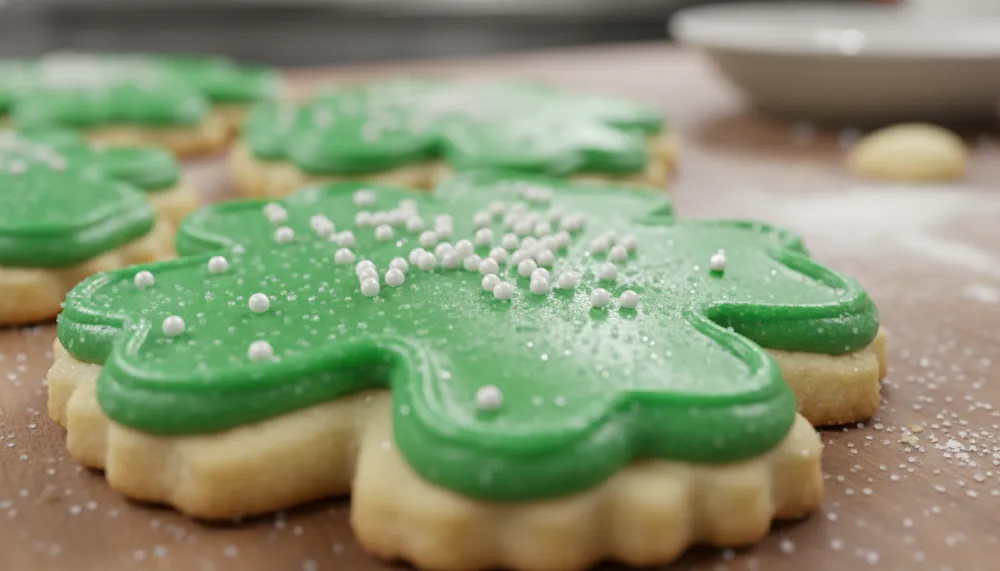
The hallmark of a great Shamrock Sugar Cookie is its decoration. While a simple green glaze is classic, professional results come from techniques like “flooding.” This involves outlining the shamrock with a thick icing and then filling the center with a slightly thinner version of the same color. This creates a smooth, glass-like finish that is sure to impress.
To achieve the perfect green, we recommend using gel colors rather than liquid drops. Gel colors provide a more concentrated pigment without altering the consistency of your icing. If you prefer a more rustic look, dipping the top of the cookie directly into a bowl of warm glaze and then shaking off the excess is a quick and effective method that yields a beautiful, shimmering coat.
Troubleshooting Common Baking Issues
Even seasoned bakers encounter hurdles. If your Shamrock Sugar Cookies are spreading too much in the oven, it usually means the butter was too warm or the dough wasn’t chilled long enough. Always ensure your dough is cold when it enters the oven. If the cookies are tough, you may have over-mixed the dough, which develops too much gluten. Mix just until the flour disappears for the most tender results.
Another common issue is browning. Because these cookies are often green, browning on the edges can make them look muddy. To prevent this, bake them on the middle rack and pull them out just before they look “done.” They will continue to set on the hot baking sheet for a few minutes after being removed from the oven.