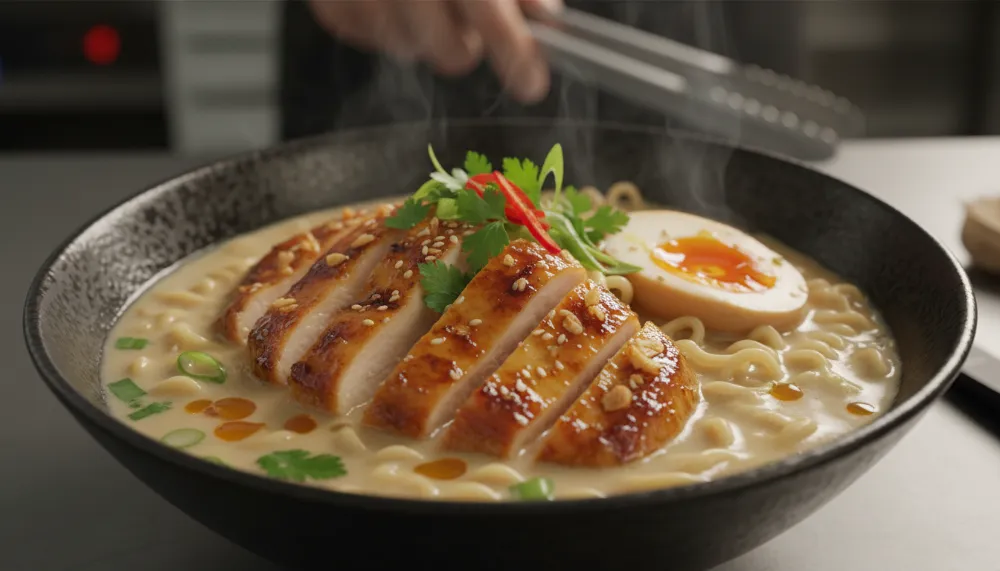

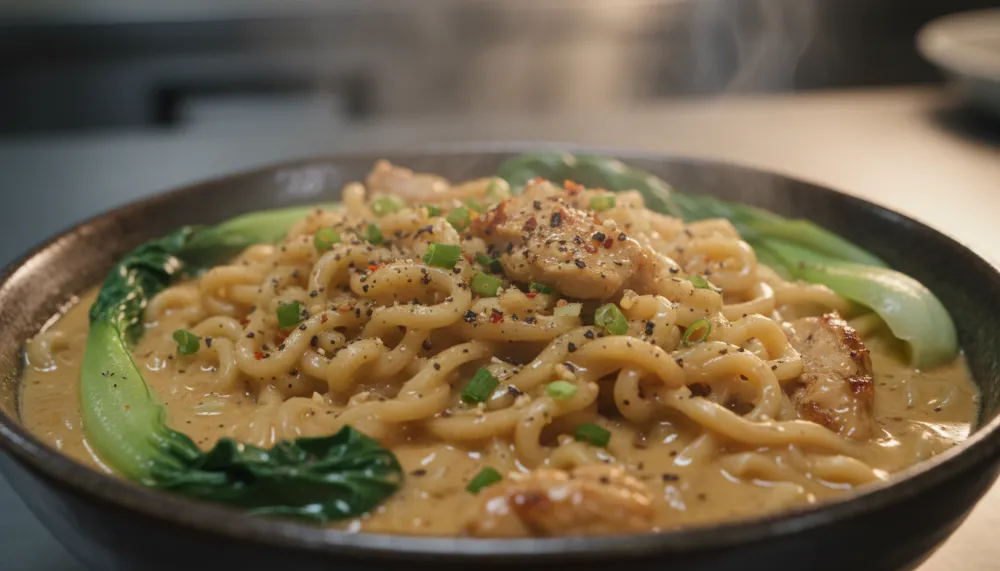
Forget everything you know about instant noodles, because this Creamy Garlic Chicken Ramen delivers a soul-warming, velvety broth that rivals the best Tokyo ramen shops without using a single drop of pork or alcohol. This is the definitive guide to mastering the Tori Paitan technique in your own kitchen for a bowl that is as rich as it is aromatic.
Professional Creamy Garlic Chicken Ramen
Ingredients
- 1 3 lbs Chicken Backs and Wings (for broth)
- 2 15 Cloves of Garlic (divided)
- 3 1 Large Onion, peeled and halved
- 4 2-inch Knob of Ginger, sliced
- 5 1/4 Cup Soy Sauce
- 6 2 tbsp Rice Vinegar mixed with 2 tbsp Water
- 7 1/4 Cup Apple Juice (for sweetness)
- 8 4 portions Fresh Ramen Noodles
- 9 2 lbs Chicken Thighs (for topping)
- 10 4 Soft-Boiled Eggs
Instructions
- 1 Roast the chicken backs and wings at 400°F (200°C) until golden brown. Place in a large pot with onion, ginger, and 5 cloves of garlic.
- 2 Cover with water and bring to a rolling boil. Maintain a high boil for 8 hours, topping off water as needed, to emulsify fats.
- 3 Strain the broth and use a blender to emulsify any remaining fats until the liquid is creamy and white.
- 4 Create the seasoning (Tare) by simmering soy sauce, apple juice, and the vinegar-water mixture with 5 crushed garlic cloves for 10 minutes.
- 5 Prepare the topping chicken by searing seasoned thighs until crispy and cooked through.
- 6 Fry remaining garlic slices in oil until golden to make garlic chips and garlic oil.
- 7 Assemble: Place tare in bowl, pour in hot broth, add cooked noodles, and top with chicken, egg, garlic chips, and oil.
The Historical Evolution of Creamy Garlic Chicken Ramen
The story of Creamy Garlic Chicken Ramen begins not in ancient history, but in the vibrant culinary laboratories of Tokyo during the late 2000s. While traditional ramen styles like Shoyu (soy sauce) and Shio (salt) have existed for decades, the “creamy chicken” style, known formally as Tori Paitan, emerged as a sophisticated alternative to the ubiquitous pork-heavy Tonkotsu. Shops like Kagari in Ginza revolutionized the scene by treating chicken with the same intensity usually reserved for pork bones, creating a broth that is opaque, milky, and incredibly dense in flavor.
What sets Creamy Garlic Chicken Ramen apart is the aggressive use of aromatics. In the Hakata tradition, garlic is often a secondary addition, but in this modern evolution, it is the star. By utilizing the “Triple-Garlic Method,” chefs layers roasted, fried, and infused garlic flavors to create a complex profile that cuts through the richness of the emulsified chicken fat. This dish represents the pinnacle of poultry-based ramen, proving that you don’t need pork to achieve a world-class mouthfeel.
The Science of the Creamy Broth: Why Emulsification Matters
Many home cooks mistakenly believe that “creamy” ramen requires dairy. However, the secret to a true Creamy Garlic Chicken Ramen lies in the science of emulsification. When chicken backs and wings are subjected to a violent, rolling boil for several hours, the collagen in the connective tissues breaks down into gelatin. This gelatin, along with the rendered fats, acts as an emulsifier. Under the constant agitation of the boiling water, the fat is broken into microscopic droplets and suspended within the liquid, creating a stable, opaque, and velvety broth.
To achieve this at home, you cannot simply simmer the broth. You must maintain a high heat that keeps the bones dancing in the pot. For those looking for a professional edge, using a Ninja BN751 Professional Plus DUO Blender to pulse a portion of the finished broth ensures that every bit of flavor and fat is perfectly integrated, resulting in that signature lip-smacking texture.
Mastering the Triple-Garlic Infusion Method
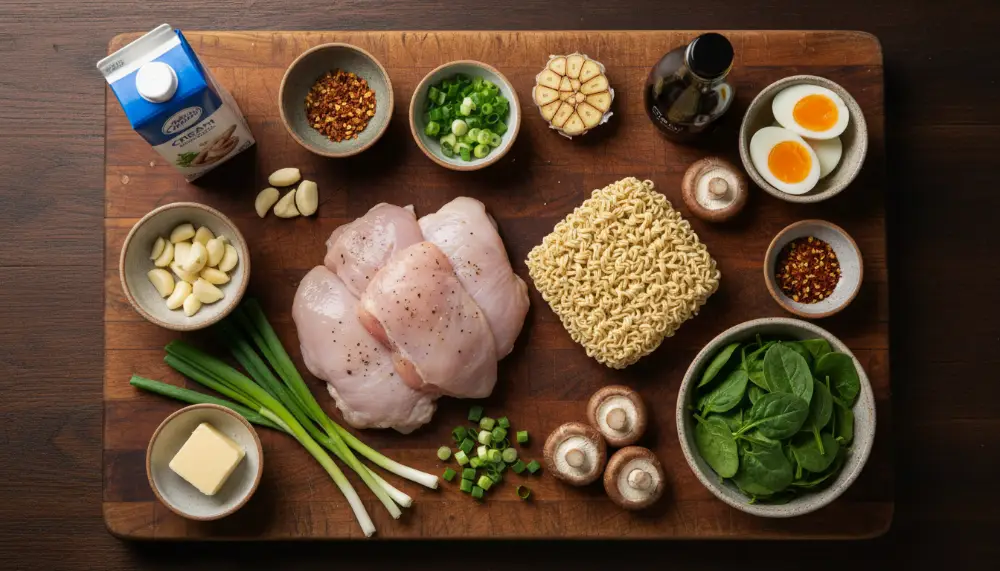
To make a truly stand-out Creamy Garlic Chicken Ramen, you must treat garlic as a three-dimensional ingredient. The depth of flavor comes from using different cooking techniques to highlight the various chemical properties of the bulb:
- Roasted Garlic: By roasting whole bulbs until the cloves are soft and caramelized, you introduce a sweet, nutty foundation to the broth. This removes the sharp bite of raw garlic and replaces it with a mellow earthiness.
- Fried Garlic Chips: Thinly slicing garlic and frying it in a neutral oil provides a much-needed textural contrast. These chips offer a bitter-savory crunch that punctuates the soft noodles.
- Garlic Aroma Oil: The oil used to fry those chips becomes a concentrated flavor bomb. A drizzle over the final bowl provides an immediate olfactory hit before the first bite is even taken.
Alcohol-Free Flavor Building for Maximum Umami
Traditional ramen recipes often rely on sake or mirin to provide acidity and sweetness. However, professional chefs have developed brilliant workarounds to achieve the same complexity without alcohol. In our Creamy Garlic Chicken Ramen, we replace the fermented tang of sake with a mixture of rice vinegar and water. This provides the necessary brightness to balance the heavy fats of the Tori Paitan broth.
For the sweetness and glaze usually provided by mirin, we use a combination of white grape or apple juice mixed with a dash of lemon. This provides the sugar content needed for the chicken chashu to caramelize beautifully, while adding a subtle fruitiness that elevates the overall flavor profile. Additionally, incorporating dried shiitake mushroom powder or kombu extract can provide the deep umami base that is sometimes missing when omitting traditional fermented ingredients.
Essential Tools for Professional Ramen at Home
Creating restaurant-quality Creamy Garlic Chicken Ramen requires more than just ingredients, it requires the right tools for the job. Here are the professional recommendations for your kitchen:
- Ninja BN751 Professional Plus DUO Blender: Check Price on Amazon. Why Perfect: The 1000W motor is essential for emulsifying your broth to that perfect creamy consistency.
- Cosori 9-in-1 TurboBlaze Air Fryer 6 Qt: Check Price on Amazon. Why Perfect: Roasts your garlic bulbs and chicken wings perfectly before they go into the pot, adding incredible depth of flavor.
- Cuisinart 8 Cup Food Processor: Check Price on Amazon. Why Perfect: Ideal for rapid meal prep, especially when slicing large quantities of garlic and ginger.
- Rubbermaid Brilliance Glass Storage Set: Check Price on Amazon. Why Perfect: Essential for storing your marinated eggs and leftover broth safely and without leaks.
- FoodSaver Vacuum Sealer Machine: Check Price on Amazon. Why Perfect: Keeps your fresh ramen noodles and specialty ingredients fresh for much longer.
The Art of Pork-Free Toppings: Chicken Chashu and Jammy Eggs
Since we are avoiding pork, the toppings must be equally impressive to carry the dish. Chicken Chashu is the gold standard for this style. We recommend using skin-on chicken thighs, seasoned and rolled tightly, then slow-cooked in our alcohol-free glaze. Before serving, a quick sear in a hot pan or with a kitchen torch provides the smoky, charred finish that makes ramen so addictive.
The Ajitama, or seasoned soft-boiled egg, is another crucial component. To achieve a perfectly jammy yolk, boil large eggs for exactly six minutes and thirty seconds, then immediately plunge them into an ice bath. Peel and marinate them in a mixture of soy sauce, ginger, and our apple juice/vinegar blend for at least four hours. The result is a savory, custard-like egg that melts into the Creamy Garlic Chicken Ramen broth.
Nutritional Deep Dive: A Nutrient-Dense Powerhouse
A bowl of Creamy Garlic Chicken Ramen is a significant meal, packed with protein and collagen. While it is calorie-dense, usually ranging between 750 and 950 kcal per serving, it offers substantial nutritional benefits. The long-simmered chicken bones release essential minerals and collagen, which are beneficial for joint health and skin elasticity. By using chicken instead of pork, you are also consuming a leaner profile of fats, while still achieving that indulgent texture.
Step-by-Step Culinary Troubleshooting
If your broth isn’t turning white after several hours, it is likely because the heat is too low. The broth must be at a vigorous boil to emulsify. If you find the broth too salty, remember that the tare (seasoning base) is added to the bowl first, and the broth is poured over it. Always start with less tare and adjust to your preference. If your noodles are sticking together, ensure you are using a large volume of water for boiling and tossing them immediately with a little bit of the garlic oil once drained.