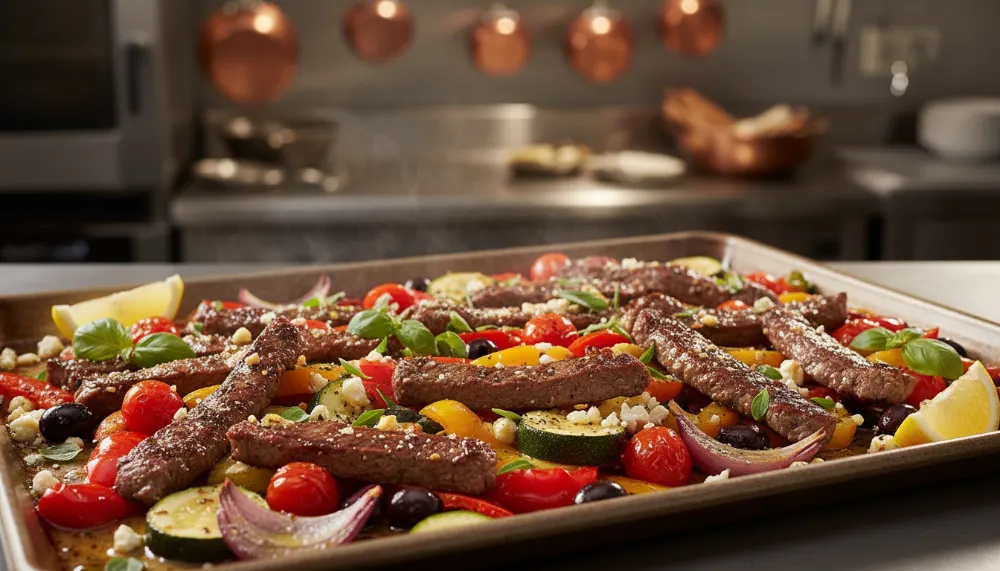

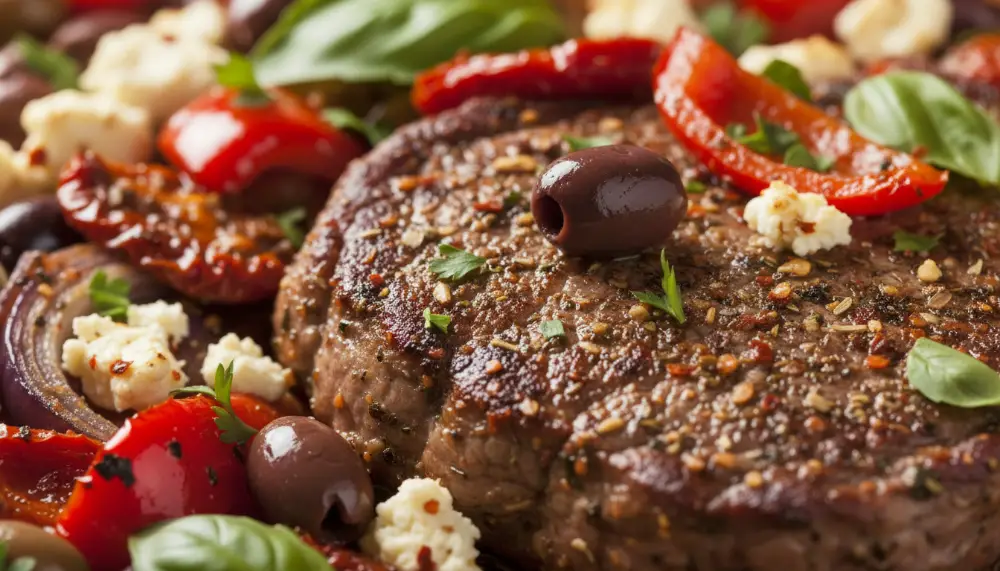
Master the art of the weeknight dinner with this Mediterranean Sheet Pan Steak, a vibrant fusion of tender beef and sun-drenched vegetables that brings the flavors of the coast to your kitchen. This high-protein masterpiece is designed for those who demand gourmet quality without the complexity of traditional multi-pan cooking methods.
Mediterranean Sheet Pan Steak
Ingredients
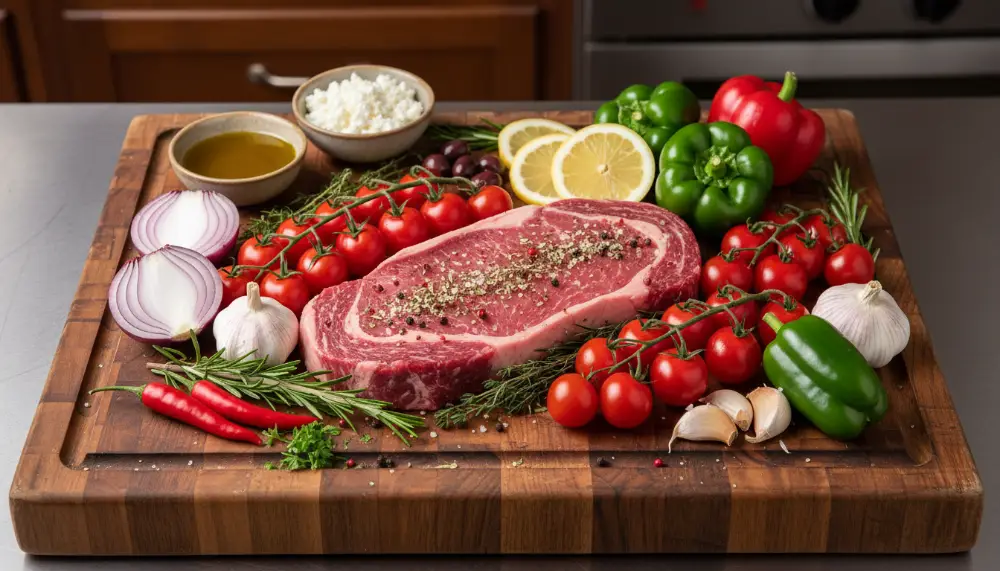
- 1.5 lbs Flank Steak or Top Sirloin, sliced into thin strips
- 2 Large Bell Peppers (Red and Yellow), sliced
- 1 Large Zucchini, halved and sliced into half-moons
- 1 Red Onion, cut into wedges
- 1/4 cup Extra Virgin Olive Oil
- 4 Cloves Garlic, minced
- 2 tsp Dried Oregano
- 1 tsp Smoked Paprika
- 1 tbsp Beef Broth mixed with 1 tsp Lemon Juice
- 1/2 cup Feta Cheese crumbles
- 1/4 cup Fresh Parsley, chopped
Instructions
- 1 Preheat your oven to 425 degrees F (220 degrees C). Lightly grease a large rimmed baking sheet with olive oil.
- 2 In a small bowl, whisk together the olive oil, minced garlic, oregano, smoked paprika, and the beef broth and lemon juice mixture.
- 3 Place the sliced peppers, zucchini, and red onion on the sheet pan. Drizzle with half of the dressing and toss to coat thoroughly. Spread in a single layer.
- 4 Roast the vegetables for 10-12 minutes until they begin to soften.
- 5 Remove the pan, push the vegetables to the edges, and place the steak strips in the center. Drizzle the remaining dressing over the steak.
- 6 Switch the oven to broil and cook for 5-7 minutes, or until the steak is cooked to your preference and has a nice sear.
- 7 Remove from the oven, rest for 5 minutes, then garnish with feta cheese and fresh parsley before serving.
The Historical Journey of Mediterranean Tray Cooking
The concept of the Mediterranean Sheet Pan Steak is not merely a modern convenience but a culinary evolution with deep historical roots. In the ancient civilizations of Greece and Rome, the art of grilling and roasting was central to both daily life and grand festivities. These early cultures understood that high-heat cooking over charcoal or wood fires was the most effective way to lock in the juices of beef while infusing it with the aromatic oils of wild herbs like oregano and rosemary. The transition from open-flame pits to communal ovens allowed for the development of tray-style cooking, where various ingredients were cooked together to share flavors. This method, often referred to in the Levant as tray cooking, allowed for a harmonious blending of meat juices with the surrounding vegetables, creating a rich and integrated flavor profile that single-ingredient cooking simply cannot achieve.
As trade routes expanded throughout the Mediterranean basin, the introduction of new ingredients like bell peppers and tomatoes from the New World further transformed these traditional dishes. The modern sheet pan method we use today is a direct descendant of these communal cooking practices, adapted for the efficiency of the 21st-century residential kitchen. By utilizing a single high-surface-area pan, we replicate the concentrated heat and caramelization once reserved for professional masonry ovens, ensuring that every bite of Mediterranean Sheet Pan Steak carries the weight of centuries of culinary refinement.
From Ancient Fires to Modern Sheet Pans
The shift from vertical roasting to horizontal sheet pan cooking represents a milestone in home gastronomy. Historically, large cuts of beef were often spit-roasted, but the innovation of slicing the meat into strips and roasting them alongside seasonal produce allowed for quicker cooking times and more even heat distribution. This technique is particularly effective for Mediterranean-style preparations, where the goal is to achieve a balance between the savory depth of the beef and the bright, acidic notes of the vegetables. The sheet pan acts as a heat conductor, facilitating the Maillard reaction, the chemical process that gives roasted meat its distinct, browned crust and complex aroma.
Nutritional Science: A High-Performance Meal
When you consume a serving of Mediterranean Sheet Pan Steak, you are fueling your body with a carefully balanced profile of macronutrients and essential vitamins. This dish is a powerhouse of high-quality protein, which is vital for muscle repair, enzymatic function, and long-term satiety. A typical portion provides between 30 and 40 grams of protein, depending on the cut of beef used. Beyond the protein, the fat profile of this meal is exemplary. By using extra-virgin olive oil as the primary fat source, we prioritize monounsaturated fatty acids, which are renowned for their heart-healthy properties and ability to reduce inflammation throughout the body.
The vegetable components provide a dense array of micronutrients. Red and yellow bell peppers are among the richest sources of Vitamin C, an antioxidant that supports immune health and collagen production. Zucchini adds a light, fiber-rich element that aids in digestion, while red onions provide quercetin, a flavonoid with potent anti-inflammatory effects. This combination of lean beef and colorful produce ensures that you are receiving a spectrum of B-vitamins, zinc, iron, and potassium in every serving, making the Mediterranean Sheet Pan Steak a superior choice for both athletes and those seeking a nutrient-dense lifestyle.
Professional Ingredient Deep Dive
To achieve the best results with your Mediterranean Sheet Pan Steak, choosing the right ingredients is paramount. For the beef, look for cuts that are lean yet flavorful. Flank steak is a professional favorite due to its distinct grain and ability to absorb marinades. Alternatively, top sirloin offers a more tender texture while maintaining a robust beefy flavor. Regardless of the cut, slicing the meat against the grain is the most important technical step, as it breaks up the muscle fibers and ensures a tender, melt-in-your-mouth experience.
The choice of olive oil also matters significantly. A high-quality extra-virgin olive oil will have a peppery finish that complements the garlic and herbs. Because we are roasting at 425 degrees F, the oil needs to be fresh and unrefined to withstand the heat while contributing its signature flavor. For the vegetables, always prioritize seasonality. While peppers and zucchini are classic, you can easily incorporate asparagus or cherry tomatoes to vary the texture and sweetness of the dish. The addition of feta cheese at the end provides a creamy, salty contrast that cuts through the richness of the beef, creating a perfectly balanced palate.
Maximizing Flavor with the Ninja BN751
For those looking to elevate the Mediterranean Sheet Pan Steak further, a professional-grade sauce can make all the difference. Using the Ninja BN751 Professional Plus DUO Blender (https://amzn.to/3LCDyNR) is the perfect way to emulsify your dressing or create a side of creamy tahini. Its 1000W motor can turn fresh herbs, garlic, and oil into a vibrant, smooth gremolata or harissa paste in seconds. This level of consistency ensures that every inch of your steak is perfectly coated, leading to a more intense flavor experience that mimics high-end restaurant quality.
Technical Tips for the Perfect Sheet Pan Roast
One of the most common mistakes in sheet pan cooking is overcrowding the pan. When vegetables and meat are packed too tightly, they begin to steam rather than roast. This prevents the Maillard reaction from occurring, resulting in soggy produce and grey meat. To avoid this, use the largest rimmed baking sheet you have, or divide the ingredients between two pans if necessary. The air needs to circulate around each piece of food to create that desirable charred exterior. Another professional tip is to ensure your beef is at room temperature before it hits the pan. Taking the steak out of the refrigerator 20 minutes prior to cooking allows the proteins to relax, resulting in more even cooking and better juice retention.
Temperature control is equally vital. Starting the vegetables at a high heat allows them to caramelize their natural sugars before the meat is added. Since the beef strips cook much faster than thick-cut onions or peppers, the staggered cooking method outlined in the instructions is essential. Switching to the broiler for the final few minutes is the ultimate secret to achieving a restaurant-style sear on a sheet pan. This intense top-down heat mimics the effect of a grill, giving the steak a beautiful crust while keeping the interior juicy and tender.
Efficiency with the Cosori Air Fryer
If you are cooking for a smaller group or want an even faster result, the Cosori 9-in-1 TurboBlaze Air Fryer 6 Qt (https://amzn.to/4hRWmVq) is an excellent alternative. Its rapid air circulation mimics the convection of a commercial oven, roasting the vegetables and searing the steak strips with incredible efficiency. This is a perfect solution for meal prep or a quick lunch, as it reaches temperature almost instantly and provides that signature roasted texture in a fraction of the time.
Professional Variations and Substitutions
The beauty of the Mediterranean Sheet Pan Steak lies in its versatility. While the base recipe is spectacular, you can adapt it to various regional influences throughout the Mediterranean. For an Aegean twist, increase the lemon zest and add a handful of Kalamata olives toward the end of roasting. If you prefer a Levantine profile, swap the paprika for sumac and drizzle the finished dish with a mixture of pomegranate juice and beef broth to mimic the depth of a traditional reduction. For those who enjoy a bit of spice, the North African variation using harissa paste and cumin provides a warm, complex heat that is truly addictive.
In keeping with strict dietary standards, it is important to remember that all these variations can be achieved without the use of pork or alcohol. Instead of traditional wine-based deglazing, we use a combination of high-quality beef broth and acidic components like lemon juice or red wine vinegar. This provides the necessary brightness and depth without compromising on dietary requirements. Furthermore, if you wish to experiment with different proteins, thick-cut chicken thighs or even firm tofu blocks can be substituted for the beef using the exact same marinade and roasting techniques, ensuring that everyone at your table can enjoy this Mediterranean feast.
Meal Prep and Storage Excellence
This dish is a gold mine for meal prep enthusiasts. Because the beef and vegetables hold their texture well, you can easily prepare a double batch on Sunday and have gourmet lunches ready for the entire week. To keep the flavors fresh and the textures crisp, proper storage is essential. Using the Rubbermaid Brilliance Glass Storage Set (https://amzn.to/4oD0YkY) is highly recommended. These leak-proof, stackable containers are perfect for maintaining the integrity of the roasted vegetables and preventing any moisture from making the steak tough. For even longer-term storage, the FoodSaver Vacuum Sealer Machine (https://amzn.to/4qWgVnS) is a game-changer. By removing the air from your prep bags, you can keep the marinated steak fresh in the freezer for months, allowing you to have a high-quality Mediterranean meal ready to go at a moment’s notice.
When reheating your Mediterranean Sheet Pan Steak, avoid the microwave if possible. Instead, place the portion back on a sheet pan and heat in a 350-degree oven for 5 to 8 minutes. This will revive the crispiness of the vegetables and gently warm the steak without overcooking it. Adding a fresh squeeze of lemon or a drizzle of fresh olive oil after reheating will also help brighten the flavors, making it taste just as good as the day it was made.