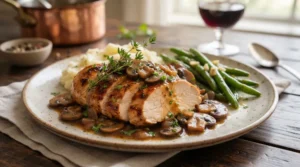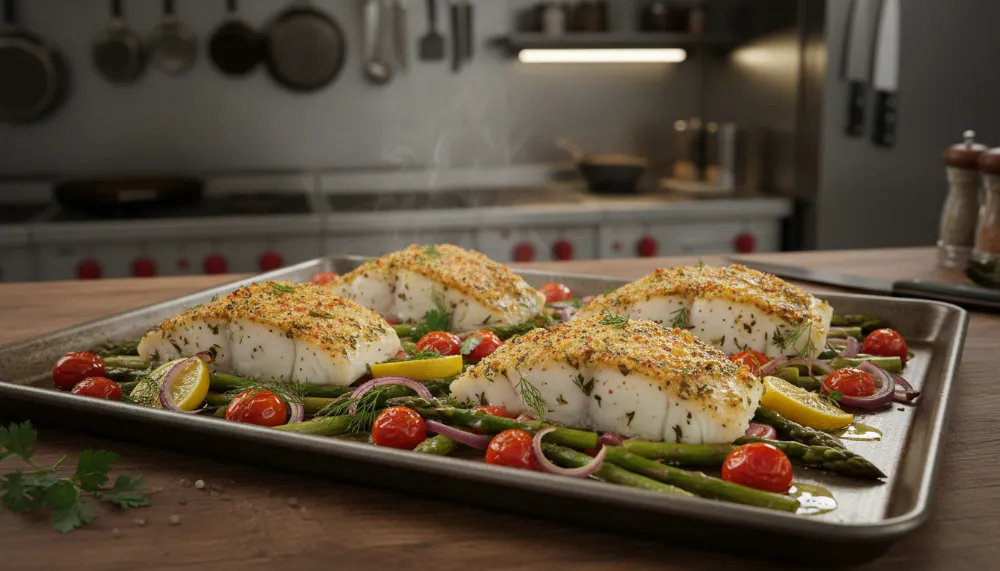

Sheet Pan Baked Cod is the ultimate solution for anyone seeking a restaurant-quality meal with minimal cleanup and maximum flavor. This vibrant dish transforms simple ingredients into a flaky, gold-crusted masterpiece that serves the whole family in under thirty minutes.
Sheet Pan Baked Cod with Lemon and Asparagus
Ingredients
- 4 Cod Fillets (6 oz each)
- 1 lb Baby Gold Potatoes, halved
- 1 bunch Asparagus, trimmed
- 3 tbsp Extra Virgin Olive Oil
- 3 cloves Garlic, minced
- 1/2 cup Panko Breadcrumbs
- 1 tsp Smoked Paprika
- 1/4 cup Seafood Broth (for moisture)
- 1 Lemon, sliced into rounds
Instructions
- 1 Preheat oven to 400°F (200°C). Toss potatoes with olive oil, salt, and pepper on a large sheet pan. Roast for 15 minutes.
- 2 Move potatoes to the edges. Add asparagus to the pan. Place cod fillets in the center.
- 3 Mix panko, garlic, and paprika with a drizzle of oil. Press onto the cod fillets.
- 4 Drizzle seafood broth over the vegetables and place lemon slices on top of the fish.
- 5 Bake for another 12 to 15 minutes until cod is opaque and flakes easily. Serve hot.
The Historical Evolution of Sheet Pan Baked Cod
The history of Sheet Pan Baked Cod is deeply rooted in the coastal traditions of New England and the Mediterranean. In New England, cod was so vital to the 18th-century economy that a “Sacred Cod” wood carving was hung in the Massachusetts State House as a symbol of prosperity. Historically, cod was often salt-cured or simply baked with butter and breadcrumbs, a precursor to modern sheet pan versions. This evolution reflects the transition from labor-intensive hearth cooking to the streamlined efficiency of the modern kitchen.
Mediterranean cultures have long prepared cod, often as bacalao, by roasting it with olives, tomatoes, and local vegetables. While “one-pan” cooking has existed for centuries in the form of stews and casseroles, the specific “sheet pan” trend gained mainstream popularity in the mid-to-late 20th century. Chefs began promoting the baking sheet as a versatile tool for roasting protein and vegetables simultaneously, maximizing flavor through caramelization while minimizing cleanup. Sheet Pan Baked Cod stands as a testament to this culinary ingenuity, merging ancient seafood heritage with contemporary lifestyle needs.
Why Sheet Pan Baked Cod is the Perfect Weeknight Meal
The brilliance of Sheet Pan Baked Cod lies in its simplicity and the science of high-heat roasting. When you place white fish like cod on a sheet pan alongside robust vegetables, you are utilizing conductive heat from the metal and convective heat from the oven air. This ensures that the vegetables develop a charred, sweet exterior while the fish remains succulent. By avoiding complex sauces and heavy fats, the natural sweetness of the cod is allowed to shine through, unencumbered by unnecessary additives.
Nutritional Profile: A Powerhouse of Lean Protein
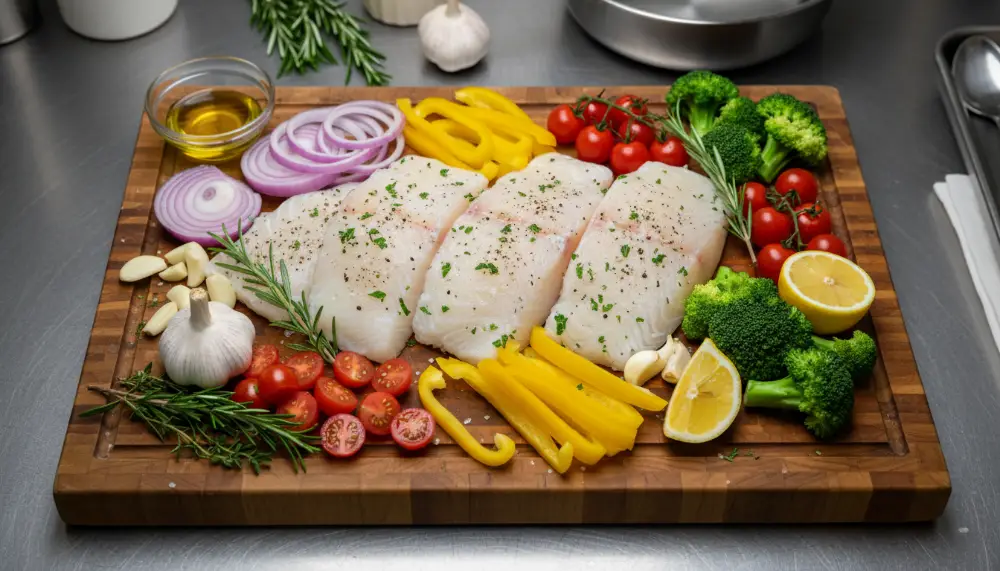
Cod is an exceptionally lean and nutrient-dense protein source. A standard four-ounce serving of Sheet Pan Baked Cod provides approximately 90 to 100 calories and 20 grams of highly bioavailable complete protein. Because this recipe excludes pork-based fats or alcohol-based reductions, the nutritional integrity remains focused on heart-healthy Omega-3 fatty acids like EPA and DHA. These fats are essential for cardiovascular health and cognitive function, making this a smart choice for all ages.
Furthermore, cod is a significant source of Selenium, a powerful antioxidant that supports thyroid health, and Vitamin B12, which is critical for nerve function. When paired with nutrient-dense vegetables like asparagus and potatoes, the result is a balanced macro-profile that provides fiber, complex carbohydrates, and essential minerals without the heaviness of traditional fried seafood.
Professional Flavor Variations
While the classic lemon-herb combination is a staple, professionals often utilize various flavor profiles to elevate Sheet Pan Baked Cod. These variations are designed to highlight the mild, flaky texture of the fish without the use of pork or alcohol, ensuring a clean and vibrant plate every time.
1. The Mediterranean Harvest Variation
This variation draws from traditional coastal Italian and Greek flavors, emphasizing acidity and brine. Instead of using wine, professionals use a combination of extra virgin olive oil and fresh lemon juice. To replicate this, add cherry tomatoes, Kalamata olives, capers, and sliced shallots to your sheet pan. As the tomatoes roast, they burst and release juices that create a natural pan sauce, perfectly coating the cod fillets as they bake. This method utilizes the Cuisinart 8 Cup Food Processor to quickly slice shallots and prep the herb garnish, ensuring even cooking times for all aromatics.
2. Spiced Cajun and Herb Crust
For those who prefer a bolder flavor profile, a Cajun-inspired rub can be applied. Mix smoked paprika, cayenne pepper, dried thyme, and onion powder with a touch of ghee. This provides a deep, smoky umami that pairs exceptionally well with the sweetness of the fish. If the spices begin to char too quickly, a splash of chicken or vegetable broth can be used to deglaze the pan, keeping the fillets moist. This technique is often seen in high-end seafood boils but adapted for the controlled environment of an oven.
3. Walnut-Parmesan Crust (Ramsay-Inspired)
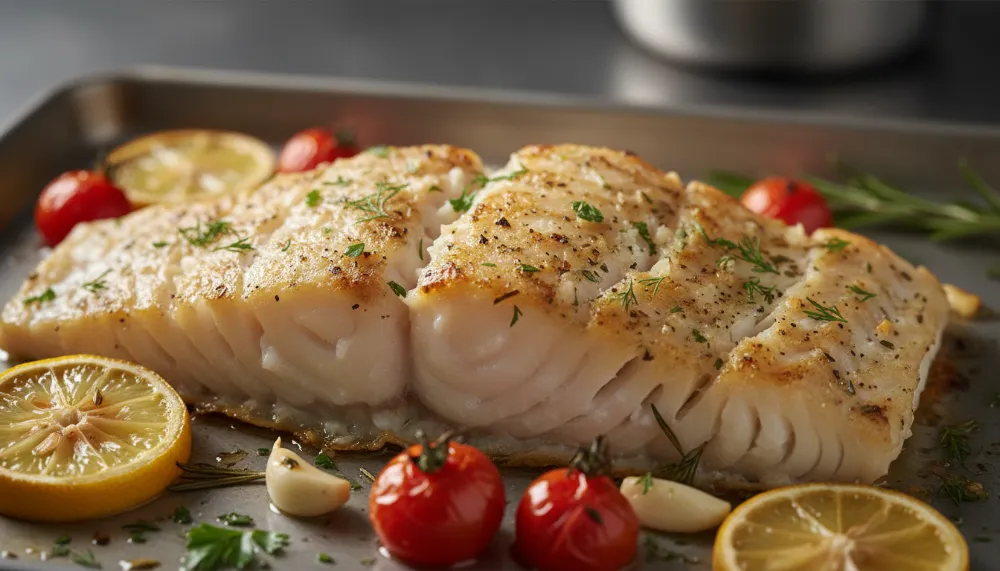
A variation that introduces healthy fats and earthiness is the walnut-Parmesan crust. Finely chopped walnuts provide a crunch that mimics the texture of fried fish without the extra oil. A thin layer of Dijon mustard, which contains vinegar for acidity, acts as a binder. For the ultimate texture, you can use the Ninja BN751 Professional Plus DUO Blender to pulse the walnuts into a coarse meal, ensuring they adhere perfectly to the cod. This creates a sophisticated, nutty finish that is usually reserved for fine-dining establishments.
Essential Kitchen Gear for the Perfect Roast
To achieve the best results with Sheet Pan Baked Cod, having the right equipment is non-negotiable. Professional-grade tools ensure that heat is distributed evenly and cleanup remains effortless.
- Ninja BN751 Professional Plus DUO Blender: Check Price on Amazon (Why Perfect: Its 1000W motor is ideal for creating herb pastes or pulsing nuts for crusts).
- Cosori 9-in-1 TurboBlaze Air Fryer 6 Qt: Check Price on Amazon (Why Perfect: If you are cooking for one or two, this air fryer can roast the vegetables and fish even faster than a traditional oven).
- Cuisinart 8 Cup Food Processor: Check Price on Amazon (Why Perfect: Fast chopping of aromatics and meal prep essentials makes this a kitchen workhorse).
- Rubbermaid Brilliance Glass Storage Set: Check Price on Amazon (Why Perfect: Perfect for storing leftovers, these are leak-proof and stackable).
- FoodSaver Vacuum Sealer Machine: Check Price on Amazon (Why Perfect: Keeps your fresh cod fillets from developing freezer burn, preserving their delicate flavor).
Mastering the Technique: Tips for Success
The most common pitfall when making Sheet Pan Baked Cod is overcooking the fish or undercooking the vegetables. Because potatoes take significantly longer to cook than cod, the “staged roasting” method is essential. Start your potatoes first, then add the faster-cooking vegetables and the fish in the final twelve to fifteen minutes. This ensures everything reaches the peak of perfection at the same moment.
Always pat your cod fillets dry with paper towels before seasoning. Moisture is the enemy of a crisp crust. If the fish is too wet, it will steam rather than roast, leading to a rubbery texture. By removing surface moisture, you allow the olive oil and panko to create a barrier that seals in the juices while providing that coveted crunch. If you are prepping in advance, using a Rubbermaid Brilliance Glass Storage Set will keep your ingredients fresh and organized until you are ready to hit the oven.
Frequently Asked Questions
Can I use frozen cod?
Yes, frozen cod is often “frozen at sea,” meaning it can be fresher than the “fresh” fish at the counter. Ensure it is fully thawed and patted dry before cooking. Using a FoodSaver Vacuum Sealer to store frozen fish helps maintain the best texture during the thawing process.
How do I know when the cod is done?
Cod is done when it reaches an internal temperature of 145°F. Visually, the meat will turn from translucent to opaque and will flake easily when pressed with a fork. Avoid the temptation to leave it in “just a few more minutes,” as lean fish dries out very quickly once it passes the target temperature.
What can I substitute for the potatoes?
If you want a lower-carb option, cauliflower florets or sliced zucchini make excellent substitutes. Just be aware that zucchini cooks much faster than potatoes, so you would add them at the same time as the cod rather than starting them early.