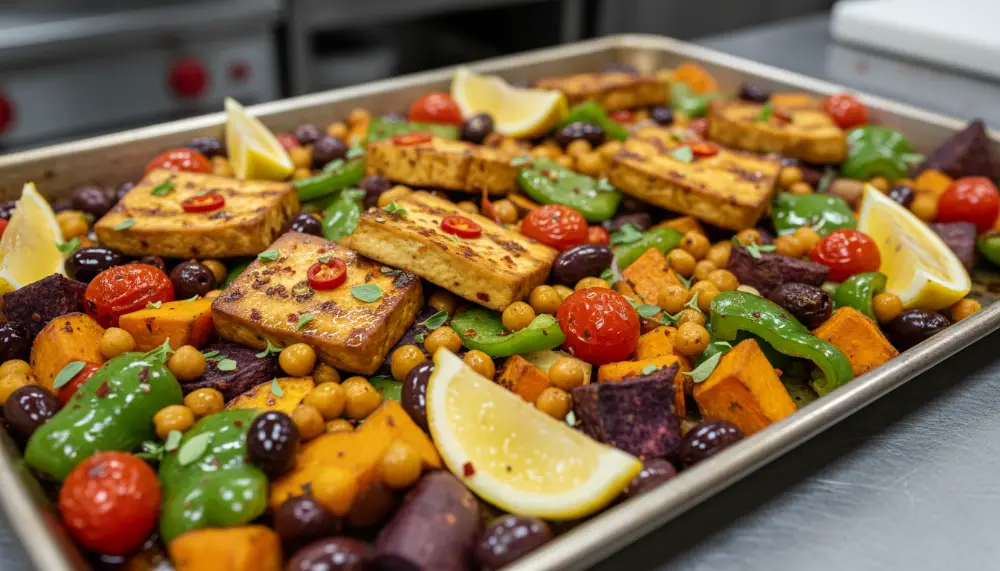

Forget about mountains of dishes and complicated techniques because this Vegan Mediterranean Sheet Pan recipe delivers restaurant-quality flavors with zero stress. It is the ultimate fusion of ancient roasting traditions and modern plant-based nutrition, all cooked on a single tray.
Vegan Mediterranean Sheet Pan
Ingredients
- 1 Can (15oz) Chickpeas, drained and patted dry
- 2 Medium Red Bell Peppers, sliced into wide strips
- 1 Large Zucchini, sliced into half-moons
- 1 Cup Cherry Tomatoes, kept whole
- 1 Large Red Onion, cut into wedges
- 1/4 Cup Extra Virgin Olive Oil
- 2 Tablespoons Lemon Juice
- 4 Cloves Garlic, minced
- 1 Tablespoon Dried Oregano
- 1 Teaspoon Smoked Paprika
- 1/2 Cup Kalamata Olives, pitted
Instructions
- 1 Preheat your oven to 400°F (200°C) and line a large sheet pan with parchment paper.
- 2 In a large mixing bowl, whisk together the olive oil, lemon juice, minced garlic, oregano, and smoked paprika.
- 3 Add the chickpeas, bell peppers, zucchini, cherry tomatoes, and red onion to the bowl. Toss thoroughly until everything is evenly coated.
- 4 Spread the mixture onto the prepared sheet pan in a single layer. Do not overcrowd the pan.
- 5 Roast for 25-30 minutes, tossing halfway through, until the vegetables are tender and slightly charred.
- 6 Remove from the oven and scatter the Kalamata olives over the top. Serve hot with a drizzle of fresh lemon.
The Historical Evolution of the Mediterranean Tray Bake
While the “sheet pan” might feel like a 21st-century invention born from a desire for minimal cleanup, the roots of the Vegan Mediterranean Sheet Pan reach back thousands of years. In the sun-drenched coastal regions of Greece, Turkey, and Spain, the concept of cooking a variety of seasonal vegetables together in one vessel was a matter of survival and practicality. Historically, rural families would gather whatever produce was at its peak, eggplants in July, peppers in August, and roast them slowly in communal village ovens or over open hearths.
In Greece, this tradition lives on through dishes like Briam. This “ladera” style of cooking, which literally translates to “oily,” emphasizes the use of high-quality extra virgin olive oil as both a cooking medium and a source of nutrition. The Turkish variation, known as Türlü, often includes chickpeas or lentils for protein, mirroring the exact structure of our modern Vegan Mediterranean Sheet Pan. These historical methods were designed to let the natural sugars of the vegetables caramelize through slow, steady heat, a process we now identify as the Maillard reaction.
The Science of Nutrition: A Plant-Based Powerhouse
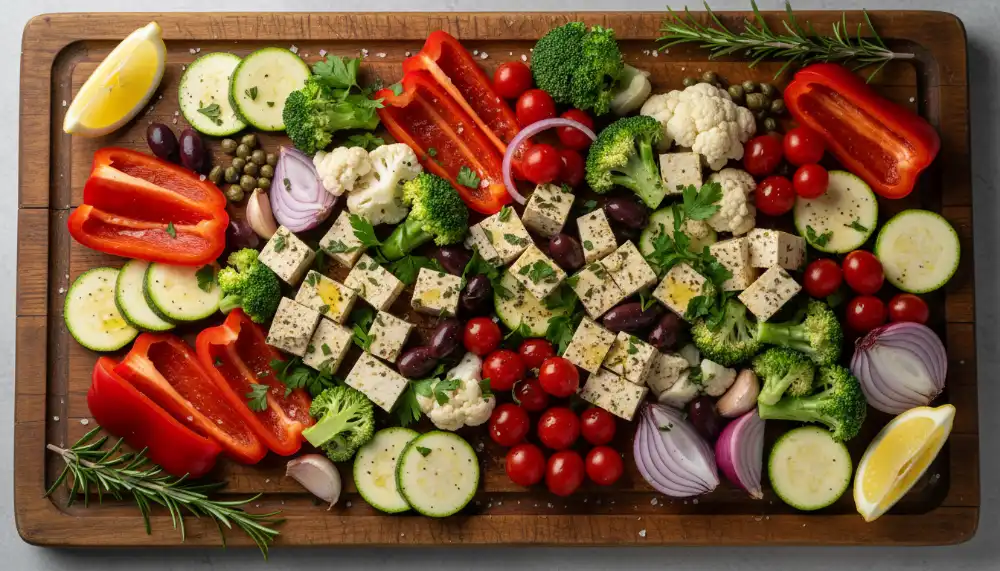
When you assemble a Vegan Mediterranean Sheet Pan, you aren’t just making dinner, you are building a nutritional fortress. This specific combination of ingredients is a masterclass in bioavailability and nutrient density. The lycopene in cherry tomatoes, for example, becomes much more accessible to the body once it has been heated and paired with a fat source like olive oil. This means your body absorbs more of this powerful antioxidant when the tomatoes are roasted than when they are eaten raw.
Macronutrient Breakdown and Fiber Benefits
From a macronutrient perspective, a single serving of this dish provides a balanced profile that keeps you satiated for hours. The chickpeas offer approximately 12-15 grams of plant-based protein per cup, while the fiber content, which often exceeds 10 grams per serving, supports a healthy gut microbiome. Fiber is essential for regulating blood sugar levels, preventing the post-meal “crash” often associated with high-carb meals. Additionally, the monounsaturated fats found in olive oil are renowned for their heart-healthy properties, helping to reduce systemic inflammation and support brain health.
Professional Tools for the Perfect Roast
To achieve that elusive balance of tender interiors and crispy, charred edges, having the right equipment is vital. Precision in preparation ensures that every piece of vegetable cooks at the same rate. Here are our top professional recommendations:
- Ninja BN751 Professional Plus DUO Blender: https://amzn.to/3LCDyNR (Why Perfect: Its 1000W motor is perfect for whipping up a creamy tahini sauce or a homemade harissa paste to drizzle over your finished sheet pan).
- Cosori 9-in-1 TurboBlaze Air Fryer 6 Qt: https://amzn.to/4hRWmVq (Why Perfect: If you are cooking for one or two, this air fryer roasts chickpeas and vegetables to perfection in half the time of a conventional oven).
- Cuisinart 8 Cup Food Processor: https://amzn.to/47Nhbg8 (Why Perfect: Essential for fast chopping and slicing during your Sunday meal prep sessions).
- Rubbermaid Brilliance Glass Storage Set of 9: https://amzn.to/4oD0YkY (Why Perfect: These are the gold standard for storing your roasted Mediterranean leftovers, they are leak-proof and stack beautifully).
- FoodSaver Vacuum Sealer Machine: https://amzn.to/4qWgVnS (Why Perfect: If you find yourself with an abundance of seasonal peppers or zucchini, this keeps your fresh ingredients shelf-stable and fresh for much longer).
Mastering the Technique: Avoiding the “Soggy” Veggie Trap
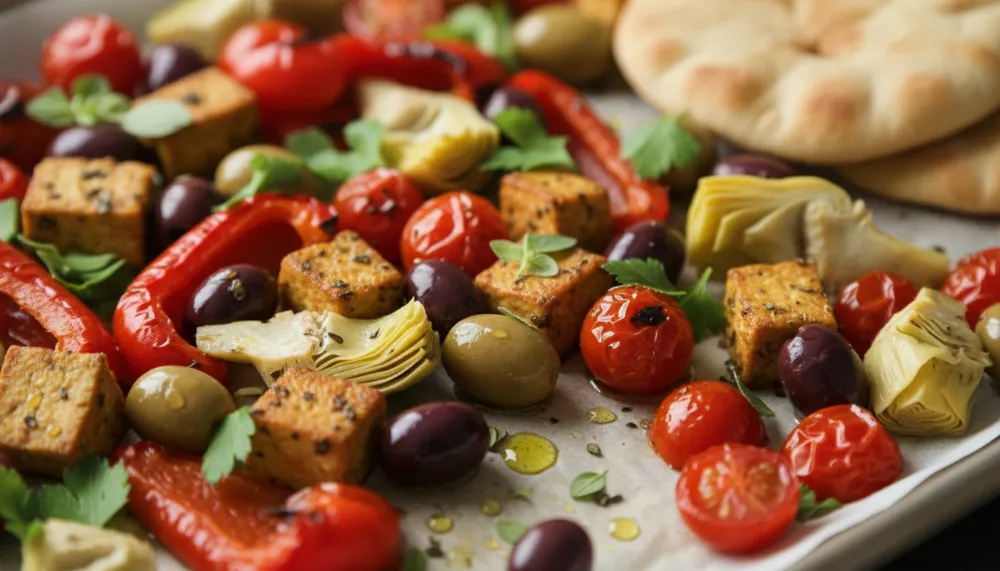
The biggest challenge with any Vegan Mediterranean Sheet Pan is moisture control. Vegetables like zucchini and tomatoes have a high water content. If you crowd the pan, the vegetables will steam instead of roast, leading to a mushy texture. To prevent this, professional chefs suggest using two sheet pans if necessary. You want at least half an inch of space between the vegetable pieces to allow the hot air to circulate freely. This circulation is what creates those beautiful, dark, caramelized edges that define Mediterranean cuisine.
The Importance of High Heat
We recommend a temperature of at least 400°F. Some ovens may vary, so keep an eye on your tray. High heat is necessary to evaporate the escaping moisture quickly. Furthermore, always pat your chickpeas dry with a clean kitchen towel or paper towel before tossing them in oil. If they are wet, they will never get that satisfying crunch that provides a necessary textural contrast to the soft roasted peppers and zucchini.
Regional Variations to Elevate Your Meal
Once you have mastered the basic Vegan Mediterranean Sheet Pan, you can begin to experiment with regional flavor profiles that highlight different parts of the Mediterranean basin. Since we are omitting alcohol, these variations rely on high-quality vinegars and citrus to provide the necessary acid balance.
The Levantine Spiced Version
For a flavor profile reminiscent of the Eastern Mediterranean, add a teaspoon of ground cumin and a pinch of cinnamon to your oil mixture. Before serving, drizzle the pan with a thick tahini-lemon sauce and sprinkle with fresh pomegranate seeds. This version is deeply aromatic and pairs beautifully with a side of warm pita bread.
The Catalan Smoky Twist
Inspired by the flavors of Spain, use double the amount of smoked paprika and add a splash of high-quality sherry vinegar after roasting. Instead of olives, consider adding fire-roasted red pepper strips and a handful of toasted slivered almonds for crunch. This variation is bold, smoky, and incredibly satisfying.
The Zen of Meal Prep
One of the reasons the Vegan Mediterranean Sheet Pan has become a staple in modern kitchens is its versatility for meal prep. You can roast a massive batch on Sunday and use the components in various ways throughout the week. The roasted vegetables and chickpeas can be served cold over a bed of arugula, folded into a wrap for a quick lunch, or even blended with a bit of vegetable broth to create a rich, roasted vegetable soup.
Because this recipe is naturally free of pork and alcohol, it is a universally accessible option for large gatherings. It allows the natural quality of the produce to shine through without the need for heavy sauces or animal fats. When storing your leftovers, ensure they have cooled completely before placing them in your Rubbermaid Brilliance containers to prevent condensation from making the vegetables soggy.
Final Thoughts on Sustainable Cooking
Choosing a Vegan Mediterranean Sheet Pan is also an environmentally conscious choice. By focusing on plant-based proteins like chickpeas and utilizing seasonal produce, you are significantly reducing the carbon footprint of your meal compared to meat-heavy dishes. It is a celebration of what the earth provides, transformed by the simple magic of heat and oil into a feast that is as beautiful to look at as it is to eat.