
Elevate your artisan baking by transforming your crust into a canvas with intricate floral sourdough scoring patterns that blend botanical beauty with traditional fermentation. These decorative techniques allow you to express culinary creativity while ensuring your bread achieves the perfect oven spring and texture.
Botanical Artisan Sourdough
Ingredients
- 1 500g High-Protein Bread Flour
- 2 375g Warm Filtered Water
- 3 100g Active Bubbly Sourdough Starter
- 4 10g Fine Sea Salt
- 5 Extra Flour for Dusting (Rice Flour works best for contrast)
Instructions
- 1 Whisk your starter and water until milky, then add flour and salt. Mix until a shaggy dough forms and let rest for 30 minutes.
- 2 Perform 4 rounds of stretch and folds every 30 minutes. Bulk ferment at room temperature until the dough has grown by 50 percent.
- 3 Shape into a tight boule and place in a banneton. Cold proof in the refrigerator for 12 to 24 hours to stiffen the dough for easier scoring.
- 4 Dust the cold dough with rice flour. Use a sharp lame to create floral sourdough scoring patterns like wheat stalks or lavender sprigs.
- 5 Bake in a preheated Dutch oven at 450 degrees Fahrenheit for 20 minutes with the lid on, and 20 minutes with the lid off.
The Historical Roots of Bread Scoring Art
The practice of scoring bread, known as grignage, is an ancient tradition that has evolved from a functional necessity to a modern artistic expression. In Ancient Egypt, bakers used sharp reeds or early metal blades to create slashes that controlled the expansion of the loaf. These marks were not just for aesthetics, they allowed the carbon dioxide produced during fermentation to escape in a predictable manner, preventing the loaf from exploding or cracking at the bottom. By directing the expansion, bakers could ensure a light, airy crumb and a beautiful exterior.
As bread production moved into communal ovens in Medieval Europe, floral sourdough scoring patterns and other unique signatures took on a social role. Since many families would bake their loaves in the same village oven, specific marks were legally required to identify ownership. A family might use a specific number of slashes or a primitive leaf design to ensure they took home their own bread. In 17th-century France, this practice became a point of professional pride. Master bakers developed intricate styles that signaled the quality of their flour and the skill of their fermentation. Today, we look back at these traditional marks as the foundation for the elaborate floral motifs that dominate modern artisanal baking.
Understanding the Physics of the Score
Before diving into specific floral sourdough scoring patterns, it is essential to understand why we score. When the cold dough hits the hot oven, the yeast goes into a final frenzy, producing a massive amount of gas, a phenomenon known as oven spring. If the surface of the dough is not cut, the pressure will find the weakest point and burst through, often resulting in an asymmetrical loaf. Deep cuts, usually about half an inch deep, provide the primary expansion path. Shallow cuts, which characterize most floral patterns, are purely decorative and do not typically open up significantly during the bake. The combination of deep functional cuts and shallow decorative lines creates a multi-dimensional, topographical effect on the crust.
Step-by-Step Floral Sourdough Scoring Patterns
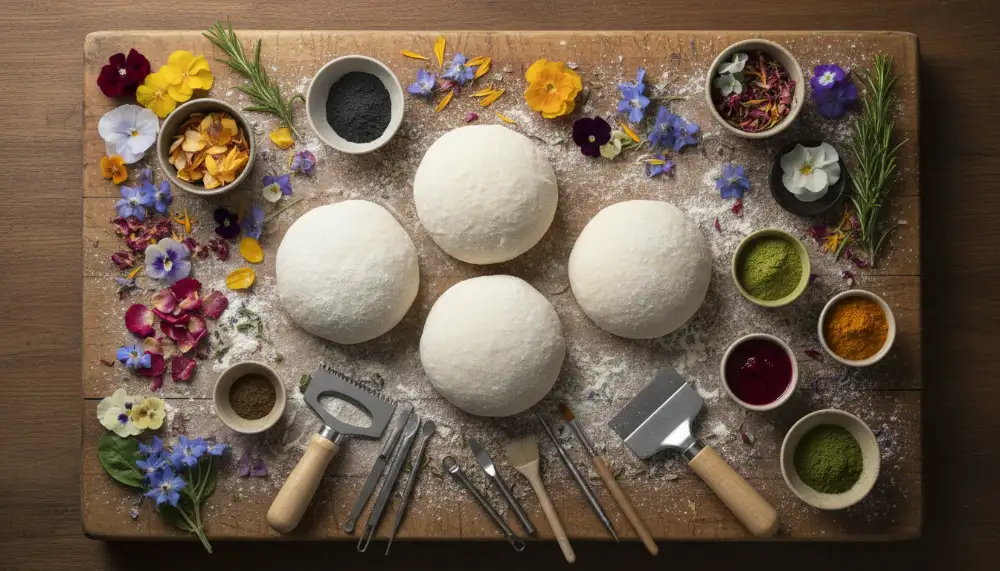
Creating beautiful botanical designs requires patience and the right tools. To achieve the best results, always score your dough while it is cold, directly from the refrigerator. The firm surface allows the blade to glide without dragging, resulting in cleaner lines. Here are four popular floral sourdough scoring patterns to master.
1. The Classic Wheat Stalk
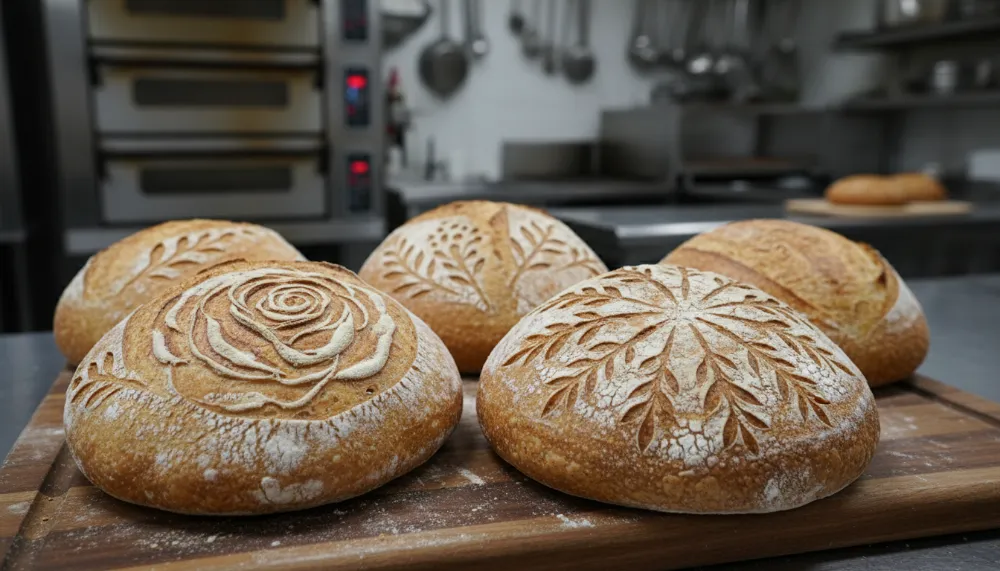
The wheat stalk is perhaps the most iconic of all floral sourdough scoring patterns. It represents the very essence of the bread itself. To create this pattern, start by making a long, slightly curved vertical line down one side of the loaf with a shallow depth. This acts as the stem. Next, use the corner of your lame to make small, diagonal snips moving upward along both sides of the stem. These snips should look like tiny V-shapes. As the bread bakes, these snips will peel back slightly, mimicking the appearance of grain kernels. For a more dramatic effect, combine a large wheat stalk with a deep expansion cut on the opposite side of the loaf.
2. The Elegant Rose Bouquet
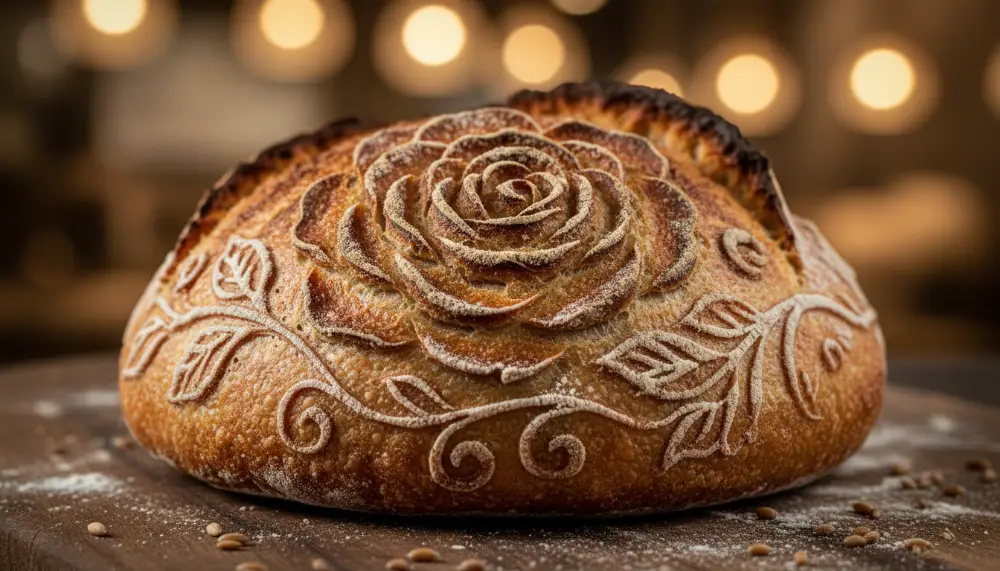
For a more intricate look, the rose pattern is a showstopper. Start in the center of the loaf and create a small, tight spiral. From the edges of that spiral, draw small, overlapping arcs that gradually get larger as you move outward. These arcs represent the rose petals. To complete the bouquet, draw a few long, thin lines extending from the bottom of the rose to act as stems, and add small, pointed leaf shapes along the stems. Use a very light touch for the petals to ensure they remain delicate and do not merge together during the bake.
3. Lavender Sprigs
Lavender sprigs are among the simplest yet most sophisticated floral sourdough scoring patterns. To achieve this look, draw three or four long, gently curving lines that originate from a single point at the bottom of the loaf. Along each line, create clusters of tiny, horizontal dashes. These dashes should be grouped together to mimic the small blossoms of a lavender plant. This pattern looks particularly beautiful when dusted with a heavy layer of white rice flour before scoring, as the dark crust will contrast sharply with the white surface.
4. The Fern Leaf
The fern leaf is an excellent pattern for long oval loaves, also known as batards. Draw a long line down the center of the loaf. From this central spine, draw slightly curved lines out toward the edges, spaced about half an inch apart. On each of these smaller branches, add tiny diagonal ticks. This creates a feathery, prehistoric look that is incredibly satisfying to reveal once the bread comes out of the Dutch oven. This pattern requires a steady hand and consistent depth to ensure the leaves look uniform.
Professional Flavor Variations for Floral Loaves
While the visual appeal of floral sourdough scoring patterns is undeniable, the flavor of the bread should be equally impressive. Professional bakers often infuse their dough with botanical elements that mirror the designs on the crust. It is important to remember that when adding inclusions, they should complement the natural acidity of the sourdough.
A popular variation is the Lavender and Wildflower Honey loaf. Culinary-grade lavender buds are folded into the dough during the final stretch and fold. This provides a floral aroma that pairs perfectly with the lavender sprig scoring pattern. Another classic is Rosemary and Lemon Zest, where the resinous herb and bright citrus oils enhance the sourdough tang. For a savory, hearty option, consider a Savory Beef and Thyme loaf. Finely shredded seasoned beef brisket or concentrated beef broth can be used to hydrate the dough, providing a rich, umami depth that pairs beautifully with forest-themed scoring. For a vibrant visual, Hibiscus powder can be added to the water to create a naturally pink or purple crumb, which looks stunning when revealed under a rose or wildflower score. Finally, a Rose and Pistachio combination offers a delicate, nutty profile that is often found in Mediterranean-inspired artisan breads.
Nutritional Profile of Artisan Sourdough
Floral sourdough scoring patterns aren’t the only reason to love this bread, the nutritional benefits are substantial. Unlike standard commercial bread, sourdough undergoes a long fermentation process that transforms the ingredients. A standard slice contains roughly 185 calories, 8 grams of protein, and less than 1 gram of fat. However, the true value lies in the bioavailability of nutrients. The lactic acid bacteria produced during fermentation neutralize phytic acid, an anti-nutrient that normally blocks the absorption of minerals like zinc and iron. This means your body can actually absorb more of the nutrients found in the wheat. Additionally, the fermentation process pre-digests many of the starches and modifies the gluten structure, which is why many people find sourdough much easier to digest than quick-rise breads. The presence of postbiotics, which are the beneficial byproducts of the fermentation, also supports a healthy gut environment.
Professional Recommendations for Better Baking
To master floral sourdough scoring patterns and achieve professional results at home, having the right equipment is vital. Here are some of our top-rated recommendations for the serious home baker:
- Ninja BN751 Professional Plus DUO Blender: https://amzn.to/3LCDyNR (Why Perfect: With a 1000W motor, this is perfect for creating smooth botanical infusions like hibiscus water or pureeing savory beef-based sauces for dough hydration).
- Cosori 9-in-1 TurboBlaze Air Fryer 6 Qt: https://amzn.to/4hRWmVq (Why Perfect: While you bake your bread in the oven, use this to roast chickpeas or beef morsels to serve alongside your fresh floral loaf).
- Cuisinart 8 Cup Food Processor: https://amzn.to/47Nhbg8 (Why Perfect: This is an essential meal prep tool for fast chopping of herbs like rosemary or thyme that you want to incorporate into your floral-scored dough).
- Rubbermaid Brilliance Glass Storage Set of 9: https://amzn.to/4oD0YkY (Why Perfect: Ideal for storing your sourdough starter in the fridge or keeping your dried botanical inclusions fresh and organized).
- FoodSaver Vacuum Sealer Machine: https://amzn.to/4qWgVnS (Why Perfect: Keeps your specialty flours and dried flowers fresh for months, preventing oxidation and preserving those delicate floral aromas).