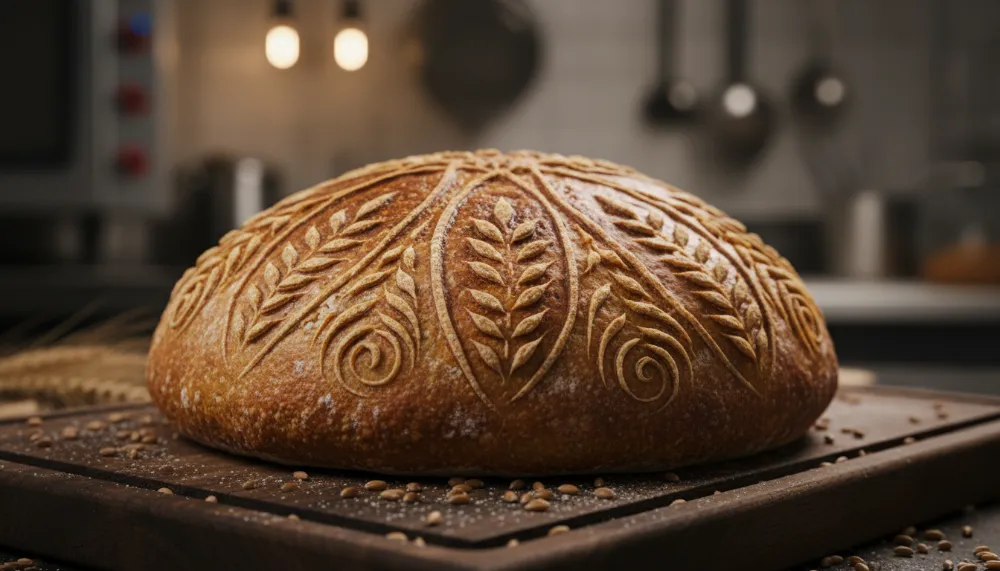

Mastering the art of intricate wheat stalk scoring transforms a simple loaf of sourdough into a breathtaking edible masterpiece that celebrates the rustic beauty of the harvest. This decorative technique serves as both a functional vent for controlled oven spring and a signature of high-level artisanal craftsmanship.
Artisan Wheat Stalk Boule
Ingredients
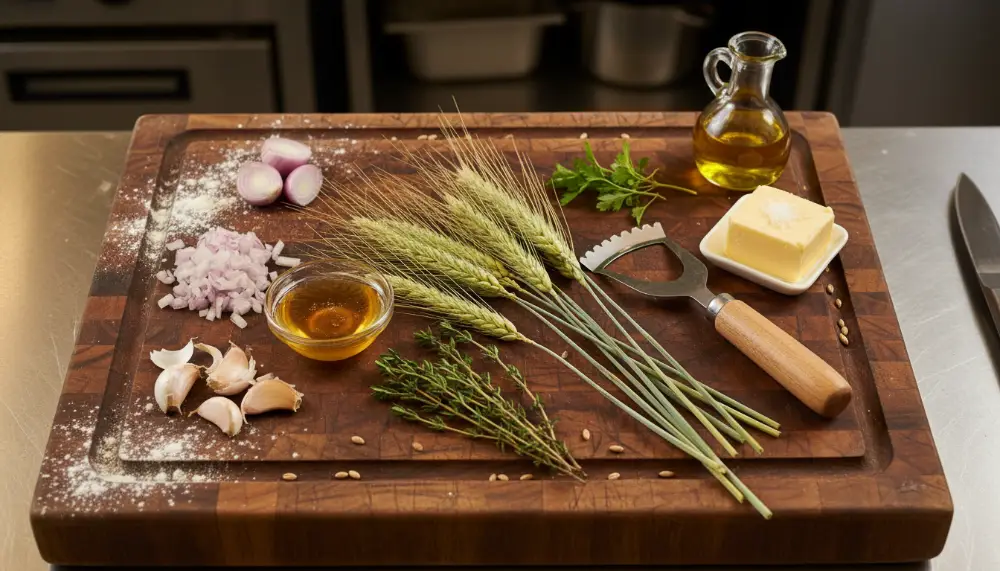
- 1 500g High-Protein Bread Flour
- 2 350g Filtered Room Temperature Water
- 3 100g Active Sourdough Starter (or 7g Instant Yeast)
- 4 10g Sea Salt
- 5 Extra Rice Flour for Dusting the Surface
Instructions
- 1 Mix flour and water, let autolyse for 45 minutes before adding starter and salt.
- 2 Perform 4 rounds of stretch and folds every 30 minutes, then bulk ferment until dough grows by 50 percent.
- 3 Shape into a tight boule and cold proof in the refrigerator for 12 to 18 hours.
- 4 Dust the cold dough heavily with rice flour. Using a sharp lame, score a long central vertical line.
- 5 Create the wheat stalk by making short, diagonal V-shaped cuts along both sides of the center line, alternating as you move upward.
- 6 Bake at 450F in a preheated Dutch oven for 20 minutes covered, then 20 minutes uncovered until golden brown.
The Historical Significance of Bread Scoring
The practice of scoring bread is far more than a decorative flair, it is a technique steeped in scientific necessity and cultural history. While the formalization of surface cuts was documented in the 19th century by French scientist Vaudry, the roots of this practice go back centuries. Vaudry recognized that without controlled incisions, the internal gasses produced during fermentation would cause the loaf to rupture at its weakest point, leading to unsightly and irregular shapes. By introducing intricate wheat stalk scoring, bakers could direct the expansion while creating a visual tribute to the source of their craft: the wheat field.
Historically, intricate wheat stalk scoring served as an elite status symbol. In the prestigious bakeries of Paris, a complex wheat design signaled that the bread was intended for wealthy families or high-end establishments. Because the design requires significant time and a steady hand, it was a hallmark of a master baker. Furthermore, in the era of communal village ovens, these patterns acted as personal trademarks. Families would bring their shaped dough to a public oven, and unique scoring patterns allowed each household to identify their specific loaves once the baking was complete. The wheat stalk, representing abundance and prosperity, remains the most iconic of these traditional signatures.
The Science Behind the Score
To achieve successful intricate wheat stalk scoring, one must understand the biological and physical forces at play inside the oven. When dough enters a hot oven, the yeast experiences a final burst of activity known as “oven spring.” The rapid expansion of gasses and the evaporation of water require an exit point. If the surface of the dough is not scored, it will burst randomly. The wheat stalk pattern is particularly effective because it combines a primary expansion cut (the “stem”) with smaller decorative cuts (the “grains”) that allow the crust to expand evenly across the surface.
The depth of the cut is critical. The central stem of the wheat stalk should be slightly deeper (about 1/2 inch) to provide the main vent for expansion, while the lateral V-shaped cuts should be shallower (about 1/4 inch). This ensures that the decorative elements retain their shape without tearing apart during the bake. Using a high-protein bread flour is essential for this technique, as the strong gluten network provides the tension necessary for the cuts to stay open and distinct. For the best results, we recommend utilizing a Cuisinart 8 Cup Food Processor to quickly mix dough components if you are working with large batches or preparing vegetable-based inclusions.
Nutritional Profile of Artisan Wheat Bread
Artisan bread that features intricate wheat stalk scoring is typically made with long-fermentation methods like sourdough, which significantly alters its nutritional profile compared to mass-produced bread. The long fermentation helps break down gluten and neutralizes phytic acid, making the minerals within the wheat more bioavailable to the body.
| Nutrient | Typical Value (per 60g) |
|---|---|
| Calories | 180 – 260 kcal |
| Total Carbohydrates | 30g – 52g |
| Protein | 5g – 9g |
| Fiber | 2g – 4g |
| Iron | 13-15% DV |
| Selenium | 32% DV |
Professional Flavor Variations (No-Pork)
While the visual appeal of intricate wheat stalk scoring is paramount, the flavor of the loaf must match its aesthetic beauty. Professionals often substitute the liquid component of the dough to create unique profiles. For a deeply umami and savory loaf, try the Beef and Onion Boule. Replace 50 percent of the water with a high-quality, chilled beef broth. This creates a rich, dark crumb that contrasts beautifully with the white flour dusting on the crust. Fold in caramelized onions during the final shaping for added texture.
If you prefer a lighter, herbal profile, a Chicken and Thyme Sourdough is an excellent choice. Use cold chicken stock as the primary liquid and incorporate fresh thyme and roasted garlic. To ensure your ingredients like roasted garlic or sun-dried tomatoes stay fresh before baking, the FoodSaver Vacuum Sealer Machine is an essential tool for any professional home kitchen. For vegetarian options, dissolving white miso paste into your dough water provides a complex, earthy saltiness that enhances the natural sweetness of the wheat without the need for animal products. If you are preparing large quantities of these savory additions, the Cosori 9-in-1 TurboBlaze Air Fryer is perfect for roasting garlic cloves or dehydrating herbs quickly.
Alcohol-Free Liquid Replacements
In traditional baking, some recipes call for stout or wine to add acidity and depth. However, you can achieve the same complexity without alcohol. To replicate the dark, fermented richness of a stout, use a strong infusion of black coffee or barley malt syrup. For recipes requiring the acidity of wine, a mixture of apple cider vinegar and apple juice (in a 3 to 1 ratio) provides the necessary pH balance to strengthen gluten development while contributing a subtle, fruity undertone that complements the grain.
Advanced Technique for Intricate Wheat Stalk Scoring
To execute the perfect wheat stalk, follow these professional steps:
- Cold Proofing: Always score dough that has been cold-proofed in the refrigerator. Cold dough is firmer and less sticky, allowing the lame to glide through the surface without dragging.
- The Canvas: Dust the surface of your dough with a fine layer of white rice flour. Rub it gently into the skin. This creates a high-contrast background that makes the scoring lines pop once they expand in the oven.
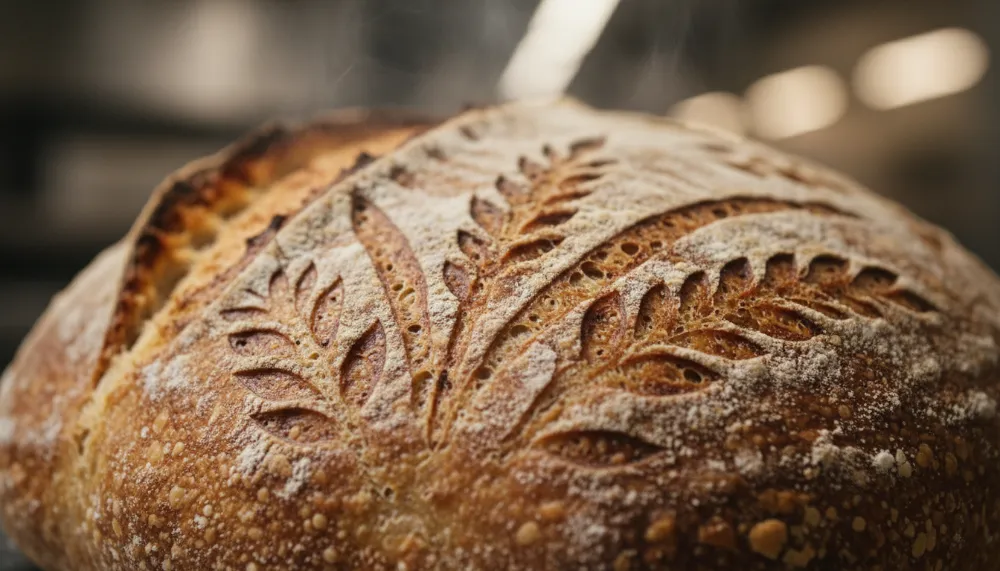
- The Stem: Hold your lame at a 90-degree angle for the central stem. Start from the bottom of the boule and draw a slightly curved line toward the top.
- The Grains: Switch to a 45-degree angle for the diagonal cuts. Start at the top of the stem and make small, quick V-shaped incisions. Imagine the shape of a grain of wheat, the cuts should be slightly teardrop-shaped.
- Tension: Ensure your dough has a tight “skin” from proper shaping. If the dough is loose, the intricate wheat stalk scoring will flatten out rather than blooming.
For those who love to pair their artisan bread with fresh dips or spreads, using a high-powered blender is key. The Ninja BN751 Professional Plus DUO Blender is perfect for creating smooth tahini sauces or harissa pastes that look stunning alongside a freshly baked, scored loaf. Once your bread is baked and cooled, store any leftovers in a Rubbermaid Brilliance Glass Storage Set to maintain the crust’s integrity while keeping the crumb moist.
Troubleshooting Common Scoring Issues
Even experienced bakers encounter challenges when attempting intricate wheat stalk scoring. If your cuts are “shagging” or tearing, it is likely that your blade is dull or the dough is too warm. Always use a fresh, sharp razor blade for every bake. If the design disappears or becomes distorted, the bread may be over-proofed. Over-proofed dough loses its structural integrity and cannot support the expansion required for the design to bloom.
Conversely, if the loaf bursts at the bottom (a phenomenon known as “blowout”), your scores were likely too shallow. The steam needs a path of least resistance to escape, if the wheat stalk isn’t deep enough, the steam will find another way out. By focusing on the depth of the central stem, you provide that necessary exit, allowing the decorative grains to remain pristine and beautiful.