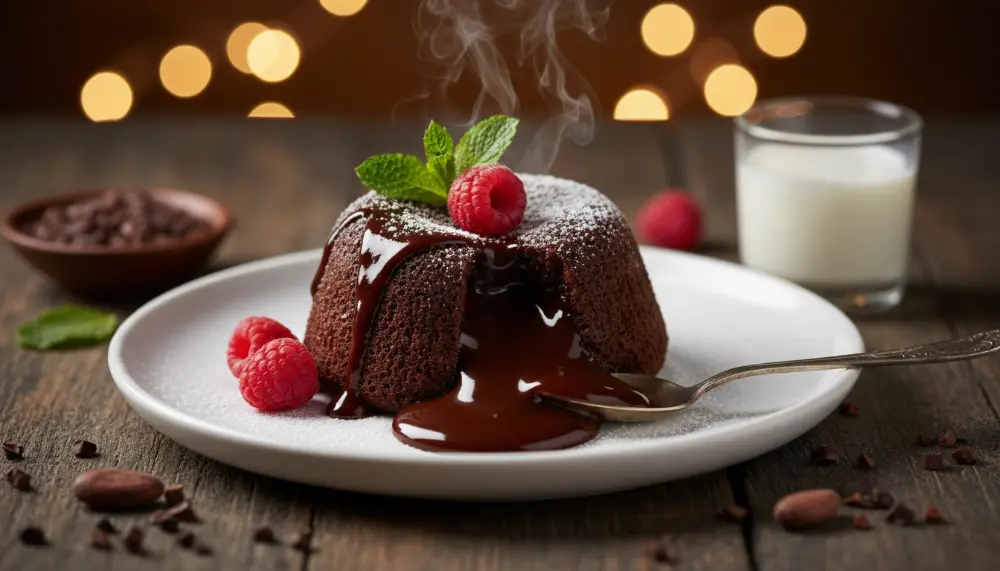

The Molten Lava Cake stands as a global symbol of dessert sophistication, combining a structured sponge with a luxurious, flowing heart. Mastering this dish requires a blend of precise timing and high-quality ingredients to achieve the iconic contrast between its firm exterior and decadent liquid center.
Classic Molten Lava Cake
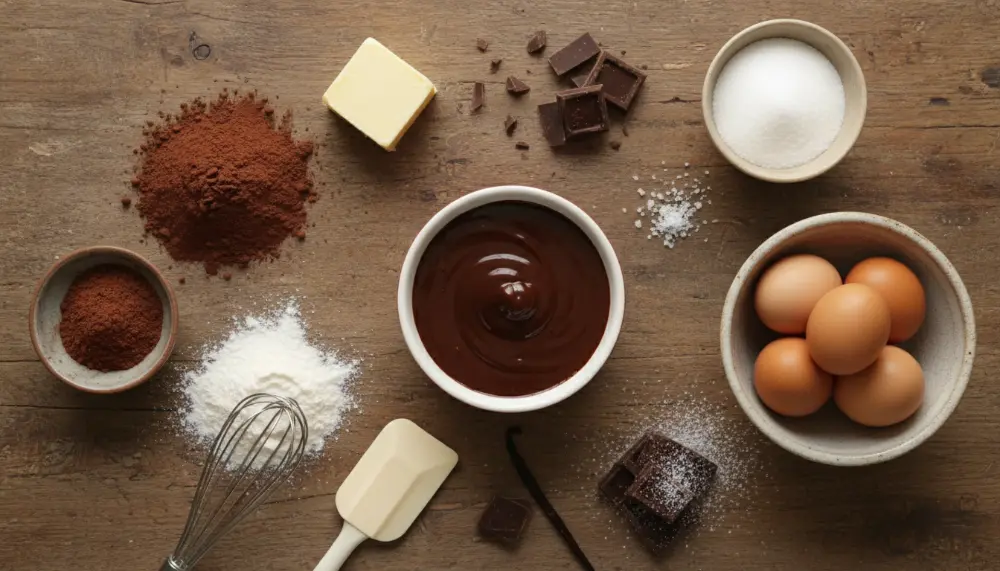
Ingredients
- 1 6 oz Bittersweet Baking Chocolate (70% Cacao)
- 2 1/2 Cup Unsalted Butter (or Rendered Beef Tallow)
- 3 2 Large Whole Eggs + 2 Egg Yolks (Room Temp)
- 4 1/4 Cup Granulated Sugar
- 5 2 Tablespoons All-Purpose Flour
- 6 1 tsp Alcohol-Free Vanilla Extract + Pinch of Salt
- 7 1 tsp Instant Espresso Powder
Instructions
- 1 Preheat your oven to 425°F (218°C). Grease four 6-ounce ramekins thoroughly with butter or beef tallow and dust with cocoa powder.
- 2 Melt the chocolate and butter/tallow together using a double boiler or 30-second microwave intervals until glossy.
- 3 In a separate bowl, beat the whole eggs, yolks, sugar, salt, and alcohol-free vanilla until thick and pale yellow.
- 4 Fold the chocolate mixture into the eggs, then gently sift in the flour and espresso powder. Fold until just combined.
- 5 Pour into ramekins and bake for 11-12 minutes. The edges should be set, but the center must remain jiggly.
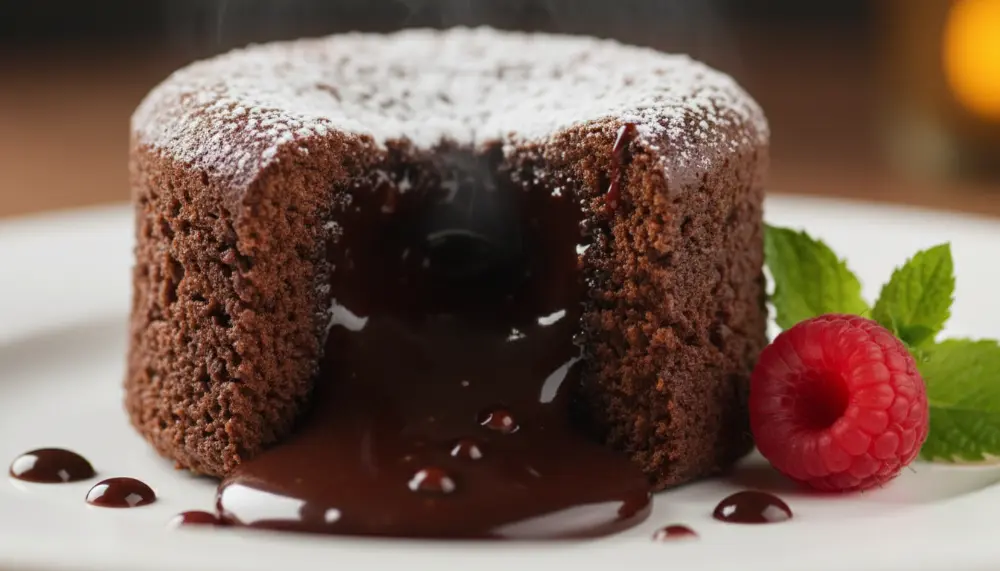
- 6 Cool for 1 minute, invert onto a plate, and serve immediately.
The Historical Duel: Who Invented the Molten Lava Cake?
The history of the Molten Lava Cake is as rich as its center. While diners today take this dessert for granted on every steakhouse menu, its origins were once the subject of a heated culinary debate. Two French culinary masters claim the title, and both methods offer unique insights into the physics of baking. Michel Bras, the legendary chef of Laguiole, France, is often credited with the original creation in 1981. Bras spent two years perfecting what he called the ‘Biscuit de Chocolat Coulant’. His approach was highly technical, involving a frozen ganache core inserted into a cake batter. As the cake baked, the outer layer solidified while the frozen core melted into a viscous, lava-like stream. This method remains the gold standard for many high-end pastry chefs because it guarantees a liquid center every time.
On the other side of the Atlantic, Jean-Georges Vongerichten introduced his version to the New York dining scene in 1987. Vongerichten describes his discovery of the Molten Lava Cake as a ‘happy accident’. While preparing a standard chocolate sponge, he pulled the cakes from the oven too early. To his surprise, the undercooked centers were not only edible but profoundly delicious. Vongerichten’s ‘one-part’ method, simply underbaking a rich batter, democratized the dessert. It allowed home cooks to recreate the magic without the complexity of a two-stage ganache process. Whether you prefer the precision of Bras or the serendipity of Vongerichten, the Molten Lava Cake remains a testament to the beauty of chocolate in all its states.
Essential Equipment for Success
Achieving the perfect Molten Lava Cake requires more than just a good recipe; it requires the right tools to handle delicate temperatures and textures. To prepare your chocolate, a Cuisinart 8 Cup Food Processor is a meal prep essential that makes fast work of chopping high-quality chocolate blocks, ensuring an even melt. If you find yourself making the batter in advance, storing it in a Rubbermaid Brilliance Glass Storage Set of 9 is perfect for keeping the mixture fresh and leak-proof in the refrigerator until you are ready to bake.
For those who want to experiment with modern techniques, the Cosori 9-in-1 TurboBlaze Air Fryer 6 Qt is surprisingly effective for small-batch baking. It roasts chickpeas and vegetables perfectly, but its precise convection heating can also produce a Molten Lava Cake with a beautifully set crust in record time. Furthermore, if you are creating a custom alcohol-free mocha sauce or a smooth fruit coulis to accompany your cake, the Ninja BN751 Professional Plus DUO Blender with its 1000W motor is perfect for achieving that velvet-smooth consistency required for high-authority plating.
The Science of the Molten Center
Understanding the chemistry of the Molten Lava Cake is the key to mastering its texture. Unlike a brownie or a standard sponge cake, the lava cake relies on a high ratio of fat and sugar relative to the amount of flour. This inhibits the formation of a dense gluten network, keeping the crumb tender. When heat is applied, the proteins in the eggs begin to denature and coagulate, creating the structure of the outer walls. However, because the baking time is so short and the temperature is relatively high, the heat does not reach the center fast enough to cook the eggs and flour in the middle.
This creates a thermal gradient. The exterior reaches a temperature where the starch in the flour gelatinizes and the eggs set, while the interior remains at a temperature just high enough to melt the chocolate and butter but not high enough to solidify the batter. This is why timing is the most critical variable. Even 60 extra seconds in the oven can transform your Molten Lava Cake from a liquid masterpiece into a solid, albeit delicious, chocolate muffin. Using an oven thermometer to verify your temperature is a common practice among pros to ensure consistency every time they fire up a batch.
Ingredient Quality: From Cacao to Fats
When there are only a handful of ingredients, each one must be of the highest quality. For the chocolate, aim for bittersweet or semi-sweet bars with 60% to 70% cacao. Avoid using standard chocolate chips, as they often contain stabilizers meant to help them keep their shape under heat, which can result in a grainy or less-fluid ‘lava’. Instead, use the Cuisinart 8 Cup Food Processor to finely mince a professional-grade chocolate bar.
Regarding the fat, while butter is the traditional choice, many professional kitchens have explored the use of animal fats like rendered beef tallow or suet. Because beef tallow has a higher melting point and a distinct richness, it can add a savory depth to the Molten Lava Cake that balances the sweetness of the sugar. This is a fantastic option for those adhering to strict dietary guidelines where pork products are prohibited. When combined with a pinch of sea salt, the flavor profile becomes incredibly complex and gourmet.
Step-by-Step Technical Mastery
To begin your Molten Lava Cake journey, you must first prepare your ramekins. This is a step many skip, only to have their cakes stick and break upon inversion. Use a pastry brush to apply a thick layer of softened butter or beef tallow in vertical strokes. This encourages the cake to ‘climb’ the sides evenly. Dusting with cocoa powder rather than flour ensures there are no white streaks on your dark chocolate exterior.
When mixing your batter, focus on the aeration of the eggs. Whisking the eggs and sugar until they reach the ‘ribbon stage’, where the mixture falls off the whisk in a thick, trail-like pattern, provides the necessary lift. Since this recipe uses very little flour, the air trapped in the eggs is the primary leavening agent. Once the chocolate is melted, ensure it has cooled to roughly body temperature before folding it into the eggs. If the chocolate is too hot, it will deflate the air bubbles and potentially scramble the eggs, ruining the delicate balance of the Molten Lava Cake.
Baking is the final hurdle. For a standard 6-ounce ramekin, 12 minutes at 425°F is the sweet spot. When you pull them out, the center should look like it is slightly undercooked. This is intentional. Residual heat (carryover cooking) will continue to set the very center for the 60 seconds the cake rests before inversion. This resting period is vital; it allows the outer structure to firm up enough to support the weight of the liquid interior once it is flipped onto a plate.
Flavor Variations Without Alcohol
Many traditional recipes call for orange liqueur or coffee-flavored spirits. To keep your Molten Lava Cake high-authority and inclusive, you can substitute these with concentrated flavor shots. For an orange-infused lava cake, use the zest of two oranges and a tablespoon of reduced orange juice. For a mocha version, the addition of instant espresso powder or a shot of highly concentrated cold brew coffee provides that sophisticated bitterness without any alcohol content.
You can also explore internal surprises. Some chefs place a single square of white chocolate or a dollop of creamy peanut butter into the center of the batter before baking. As the Molten Lava Cake cooks, these inserts melt, creating a multi-colored or multi-flavored ‘lava’ flow that surprises the guest. Always ensure your additives are free of prohibited ingredients, sticking to high-quality fats and natural extracts. For further inspiration on dessert structures and technical baking, you can explore the resources at Revealed Recipe Sitemap.
Troubleshooting Common Molten Lava Cake Issues
The most common failure is a cake that collapses. This is usually caused by one of two things: either the cake was underbaked by just a minute too much, or the ramekin wasn’t properly prepared. If your cake breaks, don’t panic, it still tastes incredible. Serve it in the ramekin next time if you aren’t confident in the inversion process. This is often called a ‘chocolate pot de crème’ style service and is perfectly acceptable in a casual setting.
Another issue is a ‘lava’ that is too thick. This happens when the flour content is too high or the cake is overbaked. Remember, the Molten Lava Cake is essentially a compromise between a cake and a ganache. If the center is solid, try reducing your bake time by 90 seconds in the next batch. Conversely, if the cake is raw and won’t hold its shape at all, ensure your oven is truly reaching 425°F. Many home ovens run cold, which prevents the exterior from ‘locking’ before the interior gets too hot. Using a reliable storage system like the Rubbermaid Brilliance Glass Storage Set of 9 allows you to keep a ‘test’ ramekin in the fridge, so you can practice your timing with a single cake before serving a full dinner party.
Finally, ensure your eggs are at room temperature. Cold eggs can cause the melted chocolate and butter/tallow to seize, resulting in a lumpy batter. If your batter does become lumpy, a quick pulse in the Ninja BN751 Professional Plus DUO Blender can save the mixture, smoothing out the fats and proteins before they hit the oven. Mastery of the Molten Lava Cake is a journey of trial and error, but once you find the perfect timing for your specific oven, you will have a world-class dessert in your repertoire forever.