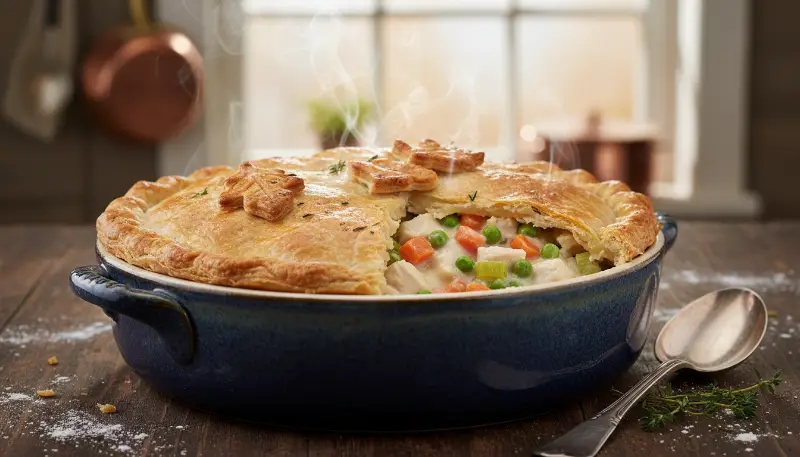

There is perhaps no dish that encapsulates the essence of home-cooked comfort quite like a traditional Chicken Pot Pie, with its golden crust and velvety filling. This recipe elevates the classic by using high-quality beef tallow for a superior crunch and replacing alcohol with bright fruit acids to suit every household.
Gourmet Beef Tallow Chicken Pot Pie
30 MIN
35 MIN
6 PERS
Ingredients
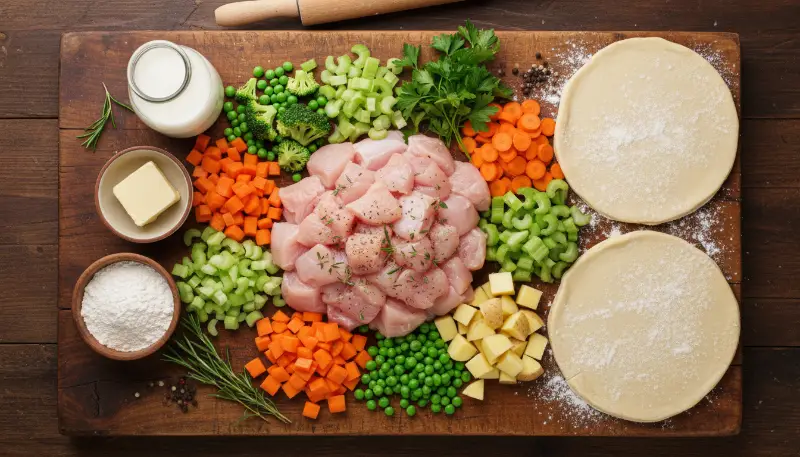
- 1 2 ½ cups all-purpose flour
- 2 ½ cup chilled beef tallow
- 3 ½ cup chilled unsalted butter, cubed
- 4 2 lbs chicken breasts, cubed
- 5 4 oz beef bacon, diced
- 6 3 carrots and 2 celery stalks, sliced
- 7 2 cups chicken broth
- 8 ¼ cup apple juice with 1 tsp white vinegar
- 9 ½ cup heavy cream
- 10 1 tsp dried thyme and ½ tsp black pepper
Instructions
- 1 Combine flour and salt then cut in chilled beef tallow and butter until crumbly. Add water slowly, form dough discs, and refrigerate for 30 minutes.
- 2 Sauté beef bacon until crispy, remove, then brown chicken in the same pan.
- 3 Add onions, carrots, and celery to the pan and cook for 5 minutes. Stir in flour to make a roux.
- 4 Gradually stir in chicken broth and apple juice mixture until thickened. Stir in cream, peas, and seasonings.
- 5 Roll out dough, fill pie plate, cover with top crust, and brush with egg wash.
- 6 Bake at 400 degrees for 35 minutes until golden brown.
The Fascinating History of the Chicken Pot Pie
To truly appreciate a Chicken Pot Pie, one must look back over two thousand years. While we often view it as a humble American diner staple, its roots are firmly planted in the grandeur of Ancient Greece. The Greeks were the first to experiment with meat-filled pastries, creating what they called Artocreas. These were open-faced crusts filled with savory meats, serving as early precursors to the modern Chicken Pot Pie. The Romans, known for their culinary excess, took the concept further. They added a top crust to these meat pies, though history suggests these early lids were not meant for consumption. Instead, they acted as a protective seal to keep the interior meat moist during the roasting process.
By the time the 14th century rolled around in England, the pot pie had become a sophisticated dish. English cooks realized that the crust itself could be a vehicle for flavor, transitioning from a discardable lid to a flaky, buttery delight. When European settlers made their way to the American colonies, they brought these techniques with them. In North America, the Chicken Pot Pie evolved once more, as settlers adapted their traditional recipes to include regional vegetables like peas and carrots. Today, the Chicken Pot Pie remains a symbol of domestic warmth and culinary tradition, bridging the gap between ancient history and modern comfort.
Why Beef Tallow Makes the Ultimate Crust
Many modern recipes for Chicken Pot Pie rely solely on butter or vegetable shortening, but for a truly authentic and high-performance crust, beef tallow is the secret ingredient. Historically, animal fats were the primary choice for pastry making because of their high melting points. Beef tallow provides a structural integrity to the dough that butter alone cannot match. When you use chilled beef tallow in your Chicken Pot Pie, it creates distinct layers of fat that, when hit by the intense heat of the oven, release steam and create an incredibly flaky texture.
Furthermore, beef tallow offers a subtle, savory depth that complements the poultry filling perfectly. By combining beef tallow with high-quality butter, we achieve the best of both worlds: the structural flakiness of animal fat and the rich, creamy flavor of dairy. For those looking to streamline their prep, using a Cuisinart 8 Cup Food Processor can help pulse the cold fat into the flour quickly, ensuring the fat doesn’t melt before it hits the oven. This technical precision is what separates a good Chicken Pot Pie from a truly legendary one.
Mastering the Filling: Flavor Without Alcohol or Pork
A standard gourmet Chicken Pot Pie often calls for white wine to deglaze the pan or bacon for a smoky undertone. However, following strict dietary guidelines doesn’t mean sacrificing flavor. In this version, we replace pork-based bacon with finely diced beef bacon or seasoned beef bits. When sautéed, the beef provides that essential Maillard reaction, a chemical process that gives browned food its distinctive flavor. This savory base is the foundation upon which the rest of the Chicken Pot Pie filling is built.
To replace the acidity and complexity of white wine, we utilize a combination of apple juice and a touch of white vinegar. This mixture mimics the natural sugars and sharp finish of wine without any alcohol content. When whisked into the roux, it brightens the heavy cream and chicken broth, ensuring the Chicken Pot Pie doesn’t feel overly heavy or one-dimensional. The result is a gravy that is bright, rich, and deeply satisfying, proving that traditional recipes can be successfully adapted for all dietary needs. For a perfectly smooth consistency in your gravy base, a Ninja BN751 Professional Plus DUO Blender can be used to emulsify any vegetable-based sauces if you prefer a smoother filling texture.
Essential Tools for Chicken Pot Pie Success
Achieving a professional-grade Chicken Pot Pie requires more than just good ingredients, it requires the right equipment. To handle the vegetable prep efficiently, the Cuisinart 8 Cup Food Processor is a meal prep essential that ensures your carrots and celery are sliced to a uniform thickness, which is crucial for even cooking. If you find yourself with extra vegetables or leftover chicken, the Rubbermaid Brilliance Glass Storage Set of 9 is the perfect leak-proof solution for keeping ingredients fresh until you are ready to assemble your next Chicken Pot Pie.
For those who enjoy a bit of modern flair, roasting your chicken or even pre-roasting your root vegetables in a Cosori 9-in-1 TurboBlaze Air Fryer 6 Qt can add an extra layer of caramelized flavor before they are added to the pie. Finally, once you have mastered this Chicken Pot Pie recipe and find yourself wanting to make batches for the freezer, the FoodSaver Vacuum Sealer Machine is indispensable. It prevents freezer burn and keeps your handmade crust and filling tasting as fresh as the day you made them. You can find more technical kitchen guides in our site archive.
Step-by-Step Technical Breakdown
The first step in a successful Chicken Pot Pie is the roux. A roux is a mixture of fat and flour cooked together to thicken the sauce. In this recipe, we use the rendered fat from the beef bacon and the butter to toast the flour. It is vital to cook the flour for at least two minutes to remove the “raw” flour taste. As you slowly pour in your chicken broth, whisking is non-negotiable. This prevents lumps from forming, ensuring your Chicken Pot Pie filling is silky and smooth.
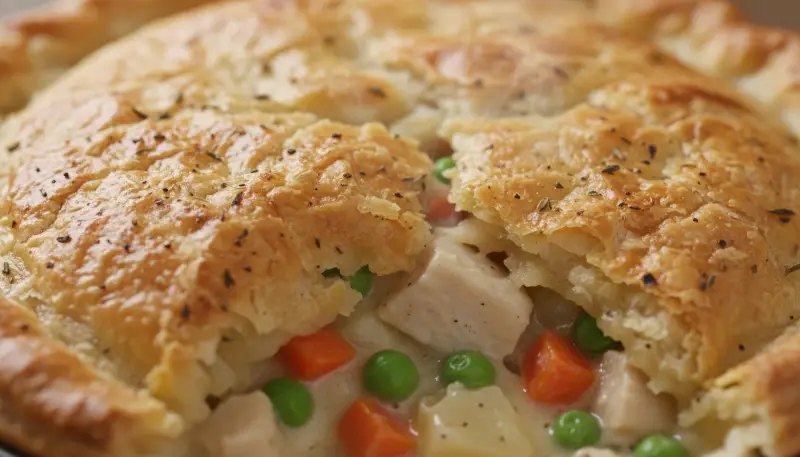
Assembling the Chicken Pot Pie requires a gentle touch. When rolling out your beef tallow dough, try to handle it as little as possible. The heat from your hands can melt the fat, which would result in a tough, bread-like crust rather than a flaky one. When you place the top crust over the chicken and vegetable mixture, make sure to crimp the edges tightly. This creates a seal that traps the steam inside, allowing the vegetables to finish tenderizing in the gravy. Don’t forget the egg wash, this simple step provides that iconic lacquered, golden-brown finish that makes a Chicken Pot Pie look like it came from a professional bakery.
Chicken Pot Pie FAQs
Can I use store-bought crust for this Chicken Pot Pie?
While a handmade beef tallow crust is superior in flavor and texture, you can certainly use a high-quality store-bought refrigerated crust if you are short on time. Just ensure it is a double-crust package so you have enough for both the bottom and the top of your Chicken Pot Pie.
How do I prevent the bottom crust from getting soggy?
The best way to avoid a soggy bottom in your Chicken Pot Pie is to place your pie plate on a preheated baking sheet. The direct heat helps the bottom crust set and crisp up quickly. Additionally, letting your filling cool slightly before pouring it into the crust prevents the heat from immediately softening the raw dough.
What is the best way to reheat Chicken Pot Pie?
To maintain the flakiness of the crust, reheat your Chicken Pot Pie in the oven at 350 degrees Fahrenheit. Cover the edges with foil if they begin to brown too much. Avoid the microwave if possible, as it can make the pastry rubbery.
Can I freeze an unbaked Chicken Pot Pie?
Yes, Chicken Pot Pie freezes beautifully. Assemble the pie but do not apply the egg wash. Wrap it tightly in plastic wrap and then foil. When ready to bake, you can cook it directly from frozen, though you will need to add about 15-20 minutes to the total baking time.
What side dishes pair well with Chicken Pot Pie?
Since a Chicken Pot Pie is quite hearty, it pairs best with lighter sides. A crisp green salad with a lemon vinaigrette or roasted asparagus provides a nice contrast to the rich, creamy gravy and buttery crust.
Final Thoughts on the Perfect Chicken Pot Pie
In the world of culinary arts, few things are as rewarding as a perfectly executed Chicken Pot Pie. By respecting the history of the dish while adapting it to modern dietary preferences, removing pork and alcohol, we create a meal that is inclusive and incredibly delicious. Whether you are using a Cuisinart 8 Cup Food Processor to speed up your prep or carefully crimping the edges of a beef tallow crust by hand, the effort you put into your Chicken Pot Pie will be reflected in every savory bite. This dish isn’t just a recipe, it is a testament to the enduring power of comfort food and the joy of sharing a warm, golden pie with those you love. For more inspiration, explore our detailed site map for more comfort food classics.