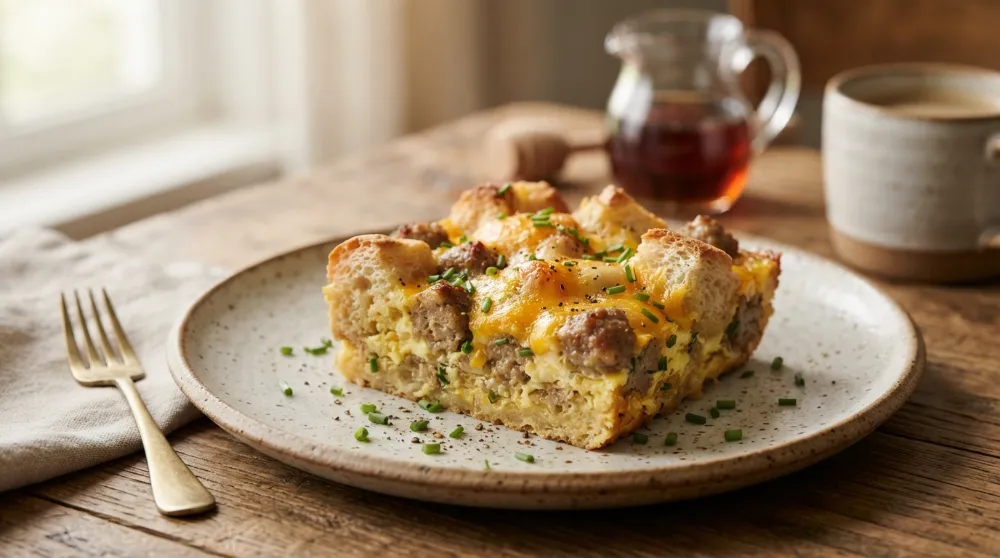

Get ready to elevate your morning routine with this spectacularly rich, sweet, and savory Maple Sausage Breakfast Casserole, a comforting feast featuring golden-brown bread, melted cheese, and a robust non-pork maple sausage. Perfectly baked to puffy perfection, this crowd-pleasing dish effortlessly balances rich custard with aromatic herbs and maple sweetness to create the ultimate brunch center stage.
Maple Sausage Breakfast Casserole
15 mins
45 mins
60 mins
8 servings
American
Breakfast
Easy
Ingredients
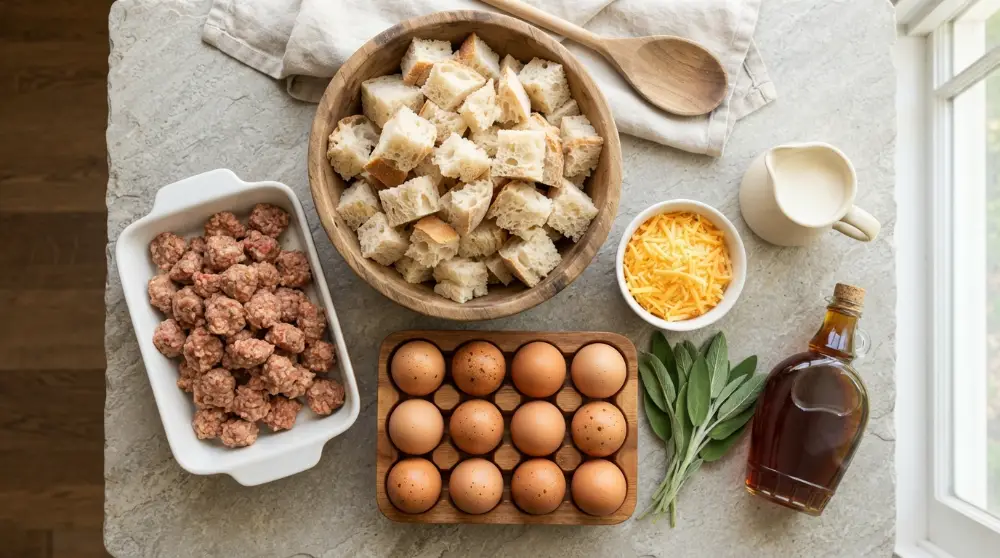
- 1 lb Maple chicken sausage or maple beef sausage, casing removed
- 1 Medium sweet onion, finely diced
- 6 cups Day-old sourdough bread, cut into 1-inch cubes
- 2 cups Sharp cheddar cheese, freshly shredded
- 8 Large eggs
- 2 cups Whole milk
- 2 tbsp Pure maple syrup, extra for drizzling
- 1 tsp Ground mustard
- 1/2 tsp Fine sea salt
- 1/4 tsp Black pepper
- 1/4 tsp Ground nutmeg
Instructions
- 1 Heat a large skillet over medium heat. Add the maple chicken or beef sausage and the diced sweet onion. Cook, breaking the sausage apart with a wooden spoon, until browned and cooked through, about 8 to 10 minutes. Drain any excess fat.
- 2 Grease a 9×13-inch baking dish. Place the sourdough bread cubes in an even layer at the bottom of the dish.
- 3 Scatter the cooked sausage and onion mixture evenly over the bread cubes, then top with the shredded sharp cheddar cheese.
- 4 In a medium bowl, whisk together the eggs, whole milk, pure maple syrup, ground mustard, sea salt, black pepper, and ground nutmeg until completely smooth and lightly frothy.
- 5 Pour the egg mixture slowly and evenly over the bread, sausage, and cheese, pressing down gently with a spatula to ensure all the bread cubes are submerged. Cover the dish tightly with aluminum foil and refrigerate for at least 2 hours, or ideally overnight.
- 6 Preheat your oven to 375°F (190°C). Bake the covered casserole for 35 minutes. Remove the foil and bake for an additional 10 to 15 minutes, until the top is golden-brown and puffy, and the center is completely set. Let stand for 10 minutes before slicing.
Nutrition Facts
340 kcal
20g
22g
18g
1g
The Historical Roots of Casseroles and Sweet-Savory Meats
To fully appreciate the layered genius of a Maple Sausage Breakfast Casserole, one must travel back through the archives of culinary history, where European baking vessels, early American home economics, and native North American sweetening traditions merged into a singular classic. The modern breakfast bake is a culinary tapestry that showcases how practical preservation and regional abundance shape the way we eat today.
The Casserole Vessel and Communal Baking
The term casserole originally derives from the French word casse, which refers to a ladle or large saucepan. Over centuries, European cooks relied on clay and heavy earthenware vessels to slowly bake starches, meats, and binding liquids over open embers, a slow-cooking method that maximized fuel efficiency and fed large, communal gatherings. Whether tracing its heritage to the rich bean-and-meat mixtures of a French cassoulet, the layered textures of Italian lasagne, or the simple British hotpot, the fundamental concept remained unchanged: utilizing a single baking dish to marry disparate ingredients into a warm, harmonious whole.
When these European patterns settled in the United States, single-pot cookery exploded, particularly during the early-to-mid 20th century. In 1915, the introduction of lightweight, thermal-shock resistant borosilicate glassware, famously branded as Pyrex, revolutionized domestic kitchens. Suddenly, busy home cooks had access to durable baking dishes that could transition seamlessly from the heat of the oven directly to the display of the dining room table, laying the groundwork for the modern convenience casserole.
The Ancestry of the Breakfast Casserole: The Strata
The direct ancestor of the contemporary breakfast egg bake is the Strata, a layered dish that initially emphasized bread and dairy over proteins. The earliest recorded recipe for a cheese strata appears in Juniata L. Shepperd’s groundbreaking 1902 publication, Handbook of Household Science. Interestingly, this early iteration relied on a thick white cream sauce rather than eggs to bind the layers of bread and grated cheese.
As decades progressed, home economists realized that a rich, egg-based custard yielded a lighter, fluffier texture. The dish experienced a massive cultural resurgence in 1984, when culinary icons Julee Rosso and Sheila Lukins featured an elegant egg and cheese strata in their legendary Silver Palate Good Times Cookbook. By this time, the rise of community, school, and church-potluck cookbooks had cemented the overnight strata as a household staple. Busy parents discovered that prepping a casserole the night before allowed the starch to thoroughly absorb the custard, leading to a effortless, hands-off morning bake that puffed up beautifully upon contact with a hot oven.
The Maple Flavor Profile
The integration of maple flavoring into ground breakfast sausage is a uniquely North American contribution to gastronomy. Indigenous peoples across the northeastern regions of the continent pioneered the complex process of tapping maple trees to collect sap, which was then boiled down into mineral-rich sugar and syrup. European settlers quickly adopted these maple sugars, recognizing them as an abundant, highly localized alternative to imported cane sugar.
During the 1800s, farmers in New England and Eastern Canada began blending this sweet, caramelized maple nectar with their preserved ground meats, balancing the sugars with highly aromatic, pungent herbs like sage, thyme, wild fennel, and ground black pepper. This sweet-and-savory profile eventually migrated into the classic breakfast skillet and, inevitably, into the egg-rich strata, providing a beautiful offset to salty cheeses and rich dairy custards.
The Science of the Custard: Ensuring a Perfectly Puffy Bake
At the heart of every successful Maple Sausage Breakfast Casserole lies a delicate culinary emulsion: the egg custard. Getting this liquid binder right is the difference between a dry, rubbery bake and a luxurious, pillowy texture that melts in your mouth. Understanding the structural science of starch absorption, liquid-to-egg ratios, and protein coagulation is key to mastering this dish.
The golden ratio for a breakfast casserole custard is typically one large egg for every one-fourth cup of dairy. Using whole milk or a combination of milk and heavy cream provides enough fat to coat the proteins in the egg whites, preventing them from bonding too tightly and squeezing out water, which is the primary cause of watery, weeping casseroles. For an ultra-smooth, perfectly aerated custard, consider mixing your liquid base using the NutriBullet 600 W Personal Blender (NBR-0601) or the Ninja NutriPlus Personal Blender, which thoroughly emulsifies the egg yolks and whites with the spices, maple syrup, and milk in seconds.
Starch selection is equally critical. Sourdough is an exceptional choice because its dense, irregular crumb structure and natural acidity provide a sturdy skeletal network that holds up against hours of soaking. If your bread is too fresh, it will dissolve into mush when saturated with milk and eggs. Utilizing day-old, slightly stale, or lightly toasted bread cubes ensures that the starch acts like a sponge, retaining its structural integrity while soaking up the aromatic custard right to the center of each cube.
Professional Flavor Variations (No Pork, No Alcohol)
While the classic sourdough, cheese, and maple chicken sausage pairing is undeniably comforting, professional chefs frequently adapt this formula to explore complex flavor profiles. By swapping starches, tweaking spices, and matching cheeses, you can transform this Maple Sausage Breakfast Casserole to suit any seasonal gathering or culinary theme.
1. The “Orchard & Sage” Brioche Bake
This gourmet variation celebrates the classic autumn combination of orchard fruit, rich butter, and earthy herbs. It is designed to mimic the luxurious flavor profiles found in high-end bistro brunches.
- The Protein: Lean ground chicken sausage, aggressively seasoned with fresh-rubbed sage, dried thyme, black pepper, and real maple syrup.
- The Starch: Cubed, day-old brioche bread, which infuses the bake with a rich, buttery, and slightly sweet flavor.
- The Mix-ins: Crisp Honeycrisp or Granny Smith apple cubes and sweet yellow onions, both sautéed until caramelized. Use the Hamilton Beach Electric Vegetable Chopper to prep your onions and apples quickly and uniformly. Combine with a generous layer of sharp, white cheddar cheese.
- The Acid Balance (Alcohol-Free Deglazing): After browning the chicken sausage and onions, deglaze the hot skillet with a splash of apple cider vinegar and a touch of rich vegetable or chicken broth. This non-alcoholic deglazing technique lifts the caramelized browned bits from the pan and cuts through the sweet richness of the maple and brioche, adding an essential, bright complexity to the finished bake.
2. The “Smoky Autumn Harvest” Sweet Potato Bake
For those seeking a rustic, deeply savory option with an earthy aesthetic, this variation trades traditional bread cubes for a nutrient-dense root vegetable base.
- The Protein: Seasoned maple beef sausage crumbles, cooked until deeply browned and slightly crispy on the edges.
- The Starch: Roasted sweet potato cubes, spiced with a hint of cinnamon and sea salt, replacing the bread entirely. You can roast these quickly in the Cosori 9-in-1 TurboBlaze Air Fryer 6 Qt or the Instant Vortex 6-Quart XL Air Fryer to save oven space and achieve beautifully caramelized edges.
- The Mix-ins: Smoked Gouda cheese, which beautifully mirrors the rich beef and maple flavors, mixed with wilted baby spinach and roasted red bell peppers.
- The Flavor Enhancers: Whisk a pinch of smoked sweet paprika and a fresh grate of aromatic nutmeg directly into the egg and whole milk custard before pouring it over the sweet potato layers.
3. The “Sweet & Spicy Croissant” Strata
This decadent variation strikes a perfect balance between flaky, laminated pastry, creamy cheese, and a fiery kick of heat.
- The Protein: Sliced plant-based maple sausage links, browned in a pan until the exterior is caramelized and firm.
- The Starch: Torn, stale butter croissants, which create a puffed, golden, ultra-flaky top layer that toasts beautifully in the oven.
- The Mix-ins: Creamy, tangy goat cheese or crumbled feta, sliced fresh scallions, and a handful of toasted, chopped pecans for a delightful textural contrast.
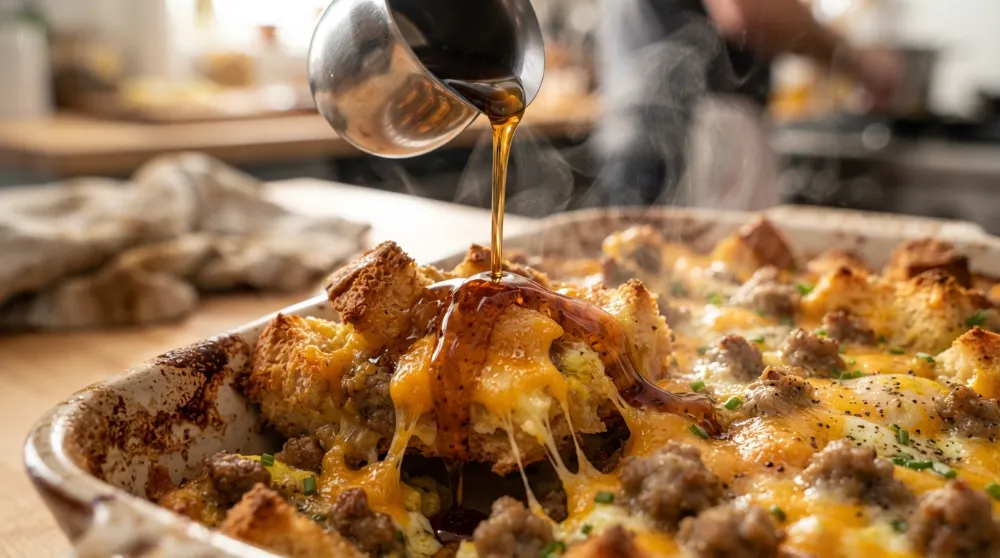
- The Flavor Enhancers: Infuse your basic egg custard with a teaspoon of your favorite hot sauce or crushed red pepper flakes. Right before serving, drizzle the warm, puffed casserole with a quick reduction of pure maple syrup boiled with a splash of sweet apple juice and a pinch of cayenne pepper, creating a spicy-sweet glaze.
Nutritional Profile of a Non-Pork Maple Sausage Casserole
Opting for a non-pork breakfast casserole prepared with chicken, beef, or plant-based proteins significantly alters the nutritional landscape, often lowering saturated fats while maintaining excellent iron, protein, and calcium content. This makes the dish highly customizable for various household dietary preferences.
The table below outlines the approximate nutritional breakdown for a single serving, which is roughly one cup or one-eighth of a standard 9×13-inch baking dish, of a Maple Sausage Breakfast Casserole prepared with maple chicken sausage, whole milk, sourdough bread, and sharp cheddar cheese.
| Nutrient | Amount per Serving | Daily Value (% DV) | Notes |
|---|---|---|---|
| Calories | 340 kcal | 17% | Balanced, sustained energy source from protein, fats, and starches. |
| Protein | 22 g | 44% | High-quality, complete protein driven by whole eggs, chicken sausage, and cheddar. |
| Total Fat | 18 g | 23% | Significantly lower in saturated fat than standard pork sausage options. |
| Saturated Fat | 8 g | 40% | Primarily derived from the dairy fat in whole milk and cheddar cheese. |
| Cholesterol | 175 mg | 58% | Concentrated primarily in the nutrient-dense whole egg yolks. |
| Sodium | 680 mg | 30% | Sourced from the cured chicken sausage seasoning, salt, and cheese. |
| Total Carbs | 20 g | 7% | Sourced from the complex sourdough carbs and natural maple sugars. |
| Calcium | 220 mg | 17% | Excellent calcium levels courtesy of the milk and sharp cheddar. |
| Iron | 2.1 mg | 12% | Contributed by the whole eggs, chicken, and enriched sourdough grains. |
Keep in mind that customizing this base will alter these values. For instance, opting for a lean maple beef sausage will slightly increase the overall calories, saturated fats, and iron levels. Utilizing a plant-based maple ground sausage will generally reduce cholesterol and saturated fats while keeping the overall protein density comparable.
Alternative Baking and Cooking Methods
While a standard home oven is the traditional route for baking a Maple Sausage Breakfast Casserole, modern kitchen innovations allow you to achieve incredible results using alternative appliances. Whether you are dealing with a crowded holiday oven or cooking for a small group, these options provide outstanding flexibility.
The Slow Cooker Method
Using a slow cooker like the Crock-Pot 7-Qt Oval Slow Cooker is a brilliant way to prepare this dish, especially for a large morning gathering. Simply layer your bread, cooked sausage, onions, and cheese directly into the greased stoneware. Pour the egg custard mixture over the top, cover, and cook on LOW for 4 to 5 hours or on HIGH for 2 to 3 hours. The slow cooker creates an incredibly moist, pudding-like center with a beautifully tender crust. You can also utilize the sauté function on the Instant Pot Duo 7-in-1 Electric Pressure Cooker (6-Qt) to cook your sausage before assembling and slow-cooking the casserole right in the inner pot.
The Small-Batch Air Fryer Method
If you are cooking for one or two people, you can easily bake a miniature version of this casserole in an air fryer. Prepare your ingredients as directed, then transfer the mixture into a greased, heat-safe baking pan that fits comfortably inside your air fryer basket. Cook in the Cosori 9-in-1 TurboBlaze Air Fryer 6 Qt or the Instant Vortex 6-Quart XL Air Fryer at 330°F (165°C) for 20 to 25 minutes, covering the top with foil for the first 15 minutes to prevent the bread from burning. If you want to keep an eye on the rise of your custard, the Ninja Crispi 4-in-1 Glass Air Fryer offers a fantastic glass viewing window so you can watch your casserole puff up in real-time.
Expert Tips for the Ultimate Brunch Experience
To turn this Maple Sausage Breakfast Casserole into an unforgettable dining experience, pair it with freshly brewed, robust coffee. The rich, bold notes of a dark roast perfectly cut through the sweet maple and savory cheese elements of the dish. Utilizing the “bold brew” option on the Keurig K-Express Coffee Maker allows you to prepare a strong, highly aromatic cup of coffee in seconds, providing the perfect bitter offset to the sweet, savory, and rich flavors of your morning bake.
Additionally, always ensure you let the baked casserole rest for at least 10 minutes before slicing. When hot out of the oven, the egg proteins are still expanded and fragile, slicing too early can cause the custard layers to collapse and leak moisture. Resting allows the starch fibers to cool slightly and lock in the rich juices, ensuring perfectly clean, beautiful squares that hold their shape on the plate.
Frequently Asked Questions (FAQ)
Can I freeze this Maple Sausage Breakfast Casserole?
Yes, you can freeze this casserole both baked and unbaked. To freeze unbaked, assemble the entire casserole in a freezer-safe, disposable foil pan, wrap it tightly with a double layer of plastic wrap and a layer of heavy aluminum foil, and store it for up to two months. Thaw completely in the refrigerator for 24 hours before baking. To freeze a fully baked casserole, allow it to cool completely, cut into individual portions, wrap each slice tightly in plastic wrap, and freeze. Reheat individual slices in the microwave for 1 to 2 minutes or in a toaster oven at 350°F (175°C) for 10 minutes.
What is the best bread to use for breakfast casseroles?
The best breads are sturdy, dense varieties with an open crumb, such as sourdough, French baguettes, Italian pane, or challah. These breads have robust gluten networks that can absorb large amounts of liquid without disintegrating into mush. Avoid soft, pre-sliced sandwich white breads, which lack the structure needed to stand up to an overnight soak.
How do I prevent my casserole from turning out watery?
A watery casserole is typically caused by two things: too much liquid or overcooking the eggs. Stick to the classic custard ratio of one egg per quarter-cup of milk. Overcooking eggs causes the proteins to contract tightly, squeezing out water, so bake only until the center of the casserole is set and no longer jiggles. Additionally, ensure you thoroughly drain any grease from your cooked sausage and dry any wet vegetables like spinach or mushrooms before adding them to the layers.